
San Diego, California, beckons travelers with its sun-drenched beaches, vibrant culture, and consistently pleasant climate. Often lauded as “America’s Finest City,” a significant part of its allure lies in its remarkably temperate weather, making it an attractive destination year-round. Understanding the nuances of San Diego’s temperature is key to planning an unforgettable visit, whether you’re dreaming of a summer beach escape or a mild winter getaway. This guide delves into the typical temperatures, seasonal variations, and microclimates that define San Diego’s inviting atmosphere, helping you pack appropriately and make the most of your exploration of this Southern California gem.
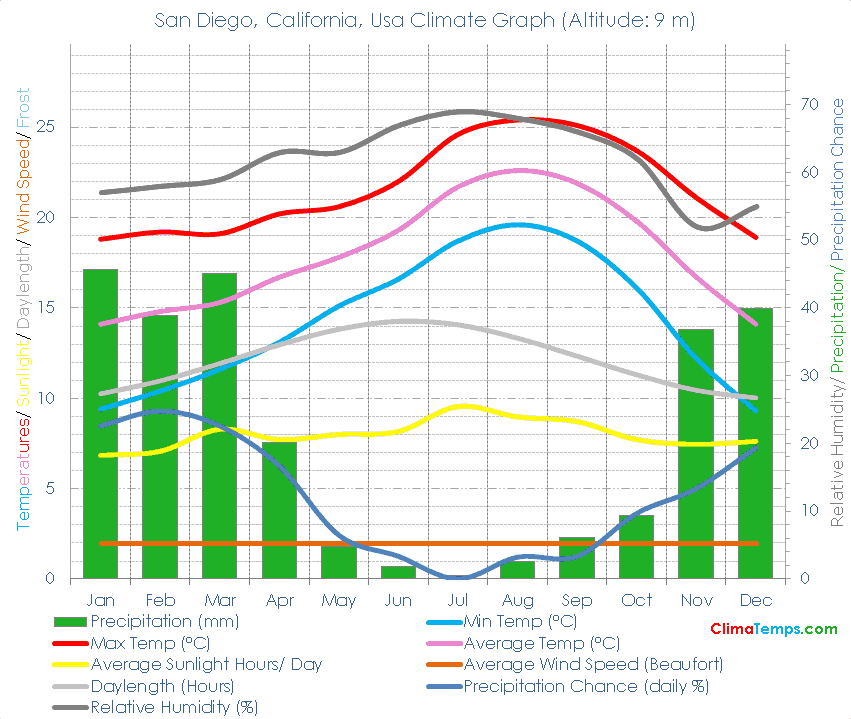
Understanding San Diego’s Mediterranean Climate
San Diego benefits from a classic Mediterranean climate, characterized by warm, dry summers and mild, wetter winters. This type of climate is largely influenced by its coastal location along the Pacific Ocean. The ocean acts as a moderating force, preventing extreme temperature fluctuations that might be experienced in inland areas.
The Influence of the Pacific Ocean
The vast Pacific Ocean plays a pivotal role in regulating San Diego’s temperatures. During the summer months, cool ocean currents help to dissipate the intense heat that can build up on land. This creates a refreshing coastal breeze that significantly lowers the perceived temperature, especially in areas closest to the water. Even on the hottest days inland, the coastal regions often remain comfortably cool. Conversely, in winter, the ocean retains heat, preventing temperatures from dropping too severely. This oceanic influence is the primary reason why San Diego rarely experiences freezing temperatures and enjoys such a mild overall climate.
Diurnal Temperature Variation
While the oceanic influence keeps extreme temperatures at bay, there is still a noticeable diurnal temperature variation – the difference between the daytime high and nighttime low. Typically, the temperature can drop by 10 to 20 degrees Fahrenheit from its peak in the afternoon to its coolest point in the early morning. This is a natural phenomenon in most climates, and in San Diego, it means that evenings can feel pleasantly cool, even after a warm day, making it ideal for outdoor dining or enjoying a stroll along the waterfront.
Seasonal Temperature Trends in San Diego
San Diego’s appeal as a destination is amplified by its predictable and pleasant seasonal temperature trends. While there aren’t drastic shifts, each season offers a distinct weather experience, catering to different preferences for outdoor activities and exploration.
Spring (March – May): A Gentle Awakening
Spring in San Diego is a beautiful transition period. Temperatures gradually warm up, moving from the cooler, wetter winter months into the drier, sunnier summer.
- March: Expect average daytime highs in the low 70s Fahrenheit (around 21-23°C) and nighttime lows in the mid-50s Fahrenheit (around 13-15°C). There’s still a chance of occasional rain showers, but they become less frequent as the month progresses.
- April: The temperatures continue to climb, with daytime highs often reaching the mid-70s Fahrenheit (around 23-25°C). Evenings remain mild, typically in the upper 50s Fahrenheit (around 15-17°C). The landscape begins to bloom, adding to the city’s charm.
- May: This month often marks the beginning of what locals refer to as “May Gray” and “June Gloom.” While daytime highs can reach the upper 70s Fahrenheit (around 25-27°C), coastal areas might experience overcast skies in the morning that burn off by the afternoon, revealing sunshine. Nighttime lows hover in the low 60s Fahrenheit (around 17-19°C).
Summer (June – August): Warm Days and Cool Evenings
Summers in San Diego are renowned for their warmth and sunshine, though the coastal influence keeps it from becoming overwhelmingly hot. This is peak tourist season, perfect for beach lovers and outdoor adventurers.
- June: As mentioned, “May Gray” can extend into early June, with marine layer clouds often blanketing the coast until late morning or early afternoon. Daytime highs are typically in the upper 70s Fahrenheit (around 25-27°C), but can climb into the low 80s Fahrenheit (around 27-29°C) further inland. Nighttime lows are pleasant, in the low 60s Fahrenheit (around 17-19°C).
- July: This is generally one of the warmest and sunniest months. Daytime highs consistently range from the low to mid-80s Fahrenheit (around 27-29°C) along the coast, with inland areas potentially reaching the high 80s or even low 90s Fahrenheit (around 30-34°C). Evenings remain comfortable, with lows in the mid-60s Fahrenheit (around 18-20°C).
- August: Similar to July, August offers reliably warm and sunny weather. Average highs are in the mid-80s Fahrenheit (around 29-31°C) near the coast, and inland temperatures can be significantly warmer. Nighttime lows are in the mid-60s Fahrenheit (around 18-20°C). Humidity is generally low, making the heat feel more manageable.
Autumn (September – November): Extended Summer Bliss
San Diego’s autumn is often considered its most idyllic season, with warm days and cooler, clearer nights as the marine layer typically dissipates.
- September: This month often feels like an extension of summer, with daytime highs frequently in the mid-80s Fahrenheit (around 29-31°C). The ocean is at its warmest, making it perfect for swimming and water sports. Evenings are pleasant, with lows in the low 60s Fahrenheit (around 17-19°C).
- October: Temperatures begin to gently decline, with average highs in the low 80s Fahrenheit (around 27-29°C). The skies are usually clear and sunny, and the ocean still retains much of its warmth. Nighttime lows are in the high 50s Fahrenheit (around 15-17°C).
- November: Autumn officially arrives with cooler temperatures. Daytime highs are typically in the mid-70s Fahrenheit (around 23-25°C), and evenings become noticeably cooler, dropping into the mid-50s Fahrenheit (around 13-15°C). This is a great time to visit for those who prefer slightly cooler weather for exploring attractions like Balboa Park or SeaWorld San Diego.
Winter (December – February): Mild and Refreshing

San Diego winters are exceptionally mild, attracting visitors seeking to escape colder climates. While it’s the “wet” season, significant rainfall is not the norm, and sunny days are abundant.
- December: Expect average daytime highs in the low 70s Fahrenheit (around 21-23°C). This is a popular time for holiday festivities and enjoying the city’s attractions without the summer crowds. Nighttime lows are in the mid-50s Fahrenheit (around 13-15°C).
- January: This is typically the coolest month, with average daytime highs around 70°F (around 21°C). However, sunny days are common, making it feel warmer than the thermometer suggests. Nighttime lows can drop to the low 50s Fahrenheit (around 11-13°C).
- February: Temperatures begin to rise again, with daytime highs in the low 70s Fahrenheit (around 21-23°C). The chance of rain decreases, and the city starts to prepare for the blooming spring. Nighttime lows are typically in the mid-50s Fahrenheit (around 13-15°C).
Navigating San Diego’s Microclimates
While the general temperature trends are consistent across San Diego, the city’s diverse geography creates several distinct microclimates. This means that the temperature can vary significantly depending on where you are, even within a short distance. Understanding these variations can help you plan your activities and dress accordingly.
Coastal Zones: The Ocean’s Embrace
Areas directly along the coast, from La Jolla to Coronado, benefit most from the Pacific Ocean’s moderating influence.
- Summer: These areas experience the coolest summer temperatures, often remaining in the low to mid-80s Fahrenheit (around 27-29°C) during the day. The cooling ocean breeze is constant and refreshing. Mornings can be foggy or overcast due to the marine layer.
- Winter: Coastal zones experience the mildest winters, rarely dropping below the low 60s Fahrenheit (around 17-19°C) during the day and staying in the low 50s Fahrenheit (around 11-13°C) at night.
Inland Valleys: Warmer Summers, Cooler Winters
Moving a few miles inland, away from the immediate coastal influence, the temperatures become more pronounced.
- Summer: Inland valleys like Escondido or parts of Rancho Bernardo can experience significantly higher temperatures during the summer months, often reaching the high 80s to low 90s Fahrenheit (around 30-34°C) or even higher. The ocean breeze has less impact here.
- Winter: While still mild compared to many other parts of the country, inland areas can experience slightly cooler winter temperatures, with nighttime lows sometimes dipping into the high 40s Fahrenheit (around 9-11°C).
Downtown and Bay Areas: A Blend of Influences
The downtown core and areas around San Diego Bay offer a blend of coastal and urban influences.
- Summer: Temperatures here are generally a few degrees warmer than the immediate coast but still moderated by the bay breeze. Expect daytime highs in the mid-80s Fahrenheit (around 29-31°C).
- Winter: These areas remain pleasant throughout the winter, with daytime highs in the low 70s Fahrenheit (around 21-23°C) and nighttime lows in the mid-50s Fahrenheit (around 13-15°C). The bay itself can also provide a thermal buffer.
Planning Your Trip Based on Temperature
Knowing what to expect regarding San Diego’s temperatures can greatly enhance your travel experience. Whether you’re packing for a beach vacation, a city exploration, or a hiking adventure, consider these temperature-related tips.
What to Pack for Every Season
- Spring: Pack light layers. Include t-shirts, long-sleeved shirts, jeans, and a light jacket or sweater for cooler evenings. A swimsuit is recommended for the ocean, which is still cool but often swimmable. Comfortable walking shoes are essential.
- Summer: Focus on light, breathable clothing like shorts, t-shirts, sundresses, and swimwear. A light jacket or sweatshirt is advisable for evenings, especially along the coast. Sunscreen, hats, and sunglasses are non-negotiable. Water shoes can be useful for rocky beach areas.
- Autumn: Similar to spring, layers are key. You can get away with more short-sleeved clothing, but having a light jacket or sweater for the evenings is wise. The ocean is still warm enough for swimming in early autumn.
- Winter: Pack comfortable, casual clothing. Long pants, sweaters, and a light to medium-weight jacket are suitable. While you won’t need heavy winter gear, a light scarf might be appreciated on cooler mornings or evenings. Rain gear is a good idea, though often not heavily utilized.

Ideal Times for Specific Activities
The temperature in San Diego directly influences the best times for certain activities.
- Beach and Water Sports: Summer (July-September) offers the warmest ocean temperatures and most consistent sunshine, making it ideal for swimming, surfing, and kayaking. Autumn also provides excellent conditions for water activities as the ocean retains its heat.
- Theme Parks and Outdoor Attractions: Spring and Autumn offer the most comfortable temperatures for exploring attractions like LEGOLAND California or walking through neighborhoods like Old Town San Diego State Historic Park. Summer can be hot, especially for those who dislike heat, but the ocean breeze helps.
- Hiking and Outdoor Adventures: Mild temperatures in spring and autumn are perfect for hiking in areas like Torrey Pines State Reserve or exploring trails in the nearby mountains. Summer can be too hot for strenuous daytime hikes away from the coast.
- Exploring the City: San Diego’s pleasant climate means you can explore its urban attractions year-round. However, the shoulder seasons of spring and autumn offer the most comfortable temperatures for extended walking tours, visiting museums in Downtown San Diego, or enjoying outdoor dining.
By considering the predictable temperature patterns and microclimates of San Diego, California, you can better prepare for your visit and ensure that you pack appropriately for a comfortable and enjoyable experience, no matter the season.
LifeOutOfTheBox is a participant in the Amazon Services LLC Associates Program, an affiliate advertising program designed to provide a means for sites to earn advertising fees by advertising and linking to Amazon.com. Amazon, the Amazon logo, AmazonSupply, and the AmazonSupply logo are trademarks of Amazon.com, Inc. or its affiliates. As an Amazon Associate we earn affiliate commissions from qualifying purchases.