
Florida, often dubbed the Sunshine State, is a premier destination drawing millions of visitors annually with its pristine beaches, world-famous theme parks, vibrant cities, and unique natural landscapes. From the magical enchantment of Orlando to the dynamic energy of Miami and the tranquil beauty of the Florida Keys, the state offers an unparalleled array of experiences for every type of traveler. Whether you’re planning a luxurious escape, a budget-friendly family trip, a romantic getaway, or an essential business stay, understanding the local time is a fundamental aspect of seamless travel. Far from being a simple detail, knowing the precise time in Florida is crucial for everything from catching flights and making hotel check-ins to scheduling attraction visits and coordinating business meetings.
The seemingly straightforward question, “What is the time at Florida?” actually carries a layer of complexity that often surprises first-time visitors and even some seasoned travelers. Unlike many states in the United States that adhere to a single time zone, Florida straddles two distinct zones: Eastern Time (ET) and Central Time (CT). This geographical nuance, combined with the observance of Daylight Saving Time, means that staying informed about the correct local time is paramount to optimizing your travel itinerary and ensuring a smooth, stress-free experience. This comprehensive guide will delve into the intricacies of Florida’s time zones, detailing how they impact your travel plans, accommodation bookings, tourism activities, and overall lifestyle choices while exploring this captivating state.
Understanding Florida’s Time Zones: A Traveler’s Guide
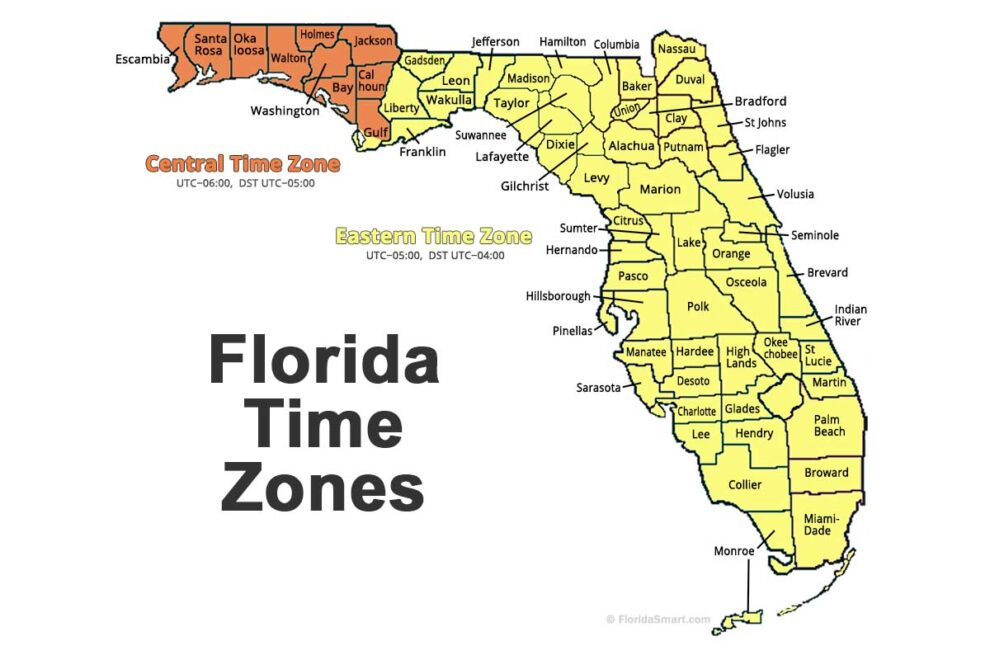
The vast majority of Florida operates on Eastern Time (ET). This includes all of the peninsula and a significant portion of the Florida Panhandle to the east of the Apalachicola River. This means that popular destinations such as Orlando, Miami, Tampa, Jacksonville, Fort Lauderdale, Sarasota, Naples, and the entire Florida Keys chain are all in the Eastern Time Zone. During standard time, this is Eastern Standard Time (EST), which is UTC-5. When Daylight Saving Time is observed from mid-March to early November, these areas switch to Eastern Daylight Time (EDT), which is UTC-4.
However, a crucial exception exists in the western part of the Florida Panhandle. This region, bordering Alabama, observes Central Time (CT). The counties primarily affected are Escambia, Santa Rosa, Okaloosa, and Walton, along with parts of Bay and Gulf counties. This includes well-known vacation spots like Pensacola, Destin, and a significant portion of Panama City Beach. During standard time, this is Central Standard Time (CST), which is UTC-6. With Daylight Saving Time, it shifts to Central Daylight Time (CDT), which is UTC-5. This means that travelers moving between, for example, Tallahassee (ET) and Pensacola (CT) will experience a one-hour time change.
The significance of Daylight Saving Time cannot be overstated. When the clocks “spring forward” in March, Florida gains an hour of daylight in the evenings, impacting everything from sunset views to attraction closing times. Conversely, when clocks “fall back” in November, evenings become darker earlier. Travelers should always verify whether their travel dates fall within or outside of Daylight Saving Time and adjust their expectations accordingly. Many modern smartphones and devices automatically update time zones, but it’s always wise to manually confirm, especially when crossing the ET/CT boundary or immediately after a Daylight Saving Time change.

Navigating Time for Your Florida Adventure: Planning and Practicalities
Understanding Florida’s time zones is far more than an academic exercise; it’s a practical necessity that touches every aspect of your trip. From the moment you book your flights to the minute you check out of your accommodation, time synchronization is key to a smooth journey.
Impact on Travel Planning and Logistics
For travelers flying into or out of Florida, time zones dictate critical aspects of their journey. Flight schedules are always listed in local time, meaning a flight departing Atlanta (Georgia, ET) for Pensacola (CT) will reflect an hour’s difference upon arrival. This can be particularly confusing if you’re not aware of the time zone change, potentially leading to missed connections or unnecessary stress. When booking ground transportation, whether it’s a rental car pickup or a shuttle service, confirming the local time at your specific destination is paramount. Even train schedules, though less common for inter-state travel within Florida, adhere to strict local times. Always double-check your itinerary, paying close attention to whether times are listed in your departure zone, your arrival zone, or UTC.
Accommodation Considerations
Hotels, resorts, and other accommodation types throughout Florida operate strictly on their local time. This impacts check-in and check-out times, which are often set in stone. Arriving an hour late for check-in because you miscalculated a time zone change could lead to delays or even a lost reservation, particularly if you’ve booked a late arrival. Similarly, misjudging check-out time could result in additional fees. When booking suites, apartments, or villas, particularly for a long-term stay, confirm all scheduling details directly with the property, especially if your journey involves crossing the time zone boundary within the state. Many amenities, from spa appointments to restaurant reservations within your resort, will also adhere to local time, making accurate time awareness essential for a hassle-free stay.
Tourism Activities and Experiences
Florida’s vibrant tourism sector thrives on schedules. Theme parks like Walt Disney World Resort and Universal Orlando Resort in Orlando (ET) have precise opening and closing times, parade schedules, and showtimes that are crucial for visitors to maximize their experience. Similarly, airboat tours in the Everglades National Park (ET), deep-sea fishing charters off Key West (ET), or historical tours in St. Augustine (ET) all run on strict timetables. If you’re visiting attractions in the Panhandle such as the National Naval Aviation Museum in Pensacola (CT) or enjoying the nightlife in Panama City Beach (CT), remember you are an hour behind the rest of the state. Missing a pre-booked excursion or a coveted dinner reservation due to a time zone miscalculation can be disappointing and costly. Always consult your booking confirmations and the attraction’s official website for the local time.
Lifestyle and Business Stays
For those on a business stay in Florida, time zone awareness is even more critical. Meeting schedules, conference calls, and deadlines will strictly adhere to local time. If you’re coordinating with colleagues in different parts of the state or across the country, clear communication about the time zone is essential to avoid misunderstandings. For family trips, coordinating schedules for meals, naps, and activities across different family members can be challenging enough without adding a time zone discrepancy. Even for leisurely pursuits like catching a sunset or planning a morning jog, knowing the local time and its relation to Daylight Saving Time can influence your daily rhythm and enjoyment.
Iconic Destinations and Their Time Zones: A Regional Breakdown
To illustrate the practical implications of Florida’s dual time zones, let’s explore some of its most beloved destinations.
Central and South Florida (Eastern Time)
The heart of Florida’s tourism, including its world-famous theme parks and vibrant coastal cities, unequivocally falls within the Eastern Time Zone.
Orlando and Central Florida
Orlando is synonymous with family fun, primarily due to the colossal Walt Disney World Resort and Universal Orlando Resort. Both operate on Eastern Time year-round, observing Daylight Saving Time. When visiting, all park opening hours, showtimes, dining reservations, and fast pass slots are set to ET. Other nearby attractions like the Kennedy Space Center Visitor Complex on the Space Coast also follow ET. This consistent time zone across the region simplifies planning for visitors arriving from other ET locations but requires adjustment for those from CT or further west.
Miami, Fort Lauderdale, and South Florida
The glamorous cities of Miami and Fort Lauderdale, renowned for their luxurious resorts, buzzing nightlife, and beautiful beaches like South Beach, are also firmly in the Eastern Time Zone. Exploring the Art Deco Historic District, dining at world-class restaurants, or embarking on a cruise from PortMiami will all adhere to ET. This region’s fast-paced lifestyle means punctuality is highly valued, making accurate time awareness essential for business travelers and those enjoying the city’s upscale offerings.
Tampa Bay Area and Southwest Florida
On the Gulf of Mexico coast, cities like Tampa, St. Petersburg, and Clearwater offer a blend of cultural attractions, beautiful beaches, and family entertainment like Busch Gardens Tampa Bay. All these areas operate on Eastern Time. Further south, destinations like Sarasota and Naples, known for their arts scene and upscale living, also observe ET.
The Florida Keys
The picturesque archipelago of the Florida Keys, stretching from Key Largo down to Key West and beyond to Dry Tortugas National Park, consistently operates on Eastern Time. This makes planning activities like snorkeling, diving, or sunset cruises from Key West straightforward, as the entire chain maintains a unified time.
The Florida Panhandle (Eastern and Central Time)
The Florida Panhandle presents the unique challenge of crossing a time zone within the state itself.
Eastern Panhandle (Eastern Time)
Cities like Tallahassee, Gainesville, and areas along the Forgotten Coast such as St. George Island and Apalachicola adhere to Eastern Time. This region blends Florida’s natural beauty with its historical and political significance.
Western Panhandle (Central Time)
The westernmost counties of the Florida Panhandle — including cities like Pensacola, Destin, and the majority of Panama City Beach — observe Central Time. This means they are one hour behind the rest of the state. For example, if it’s 3:00 PM in Orlando, it will be 2:00 PM in Pensacola. This distinction is vital for travelers driving along Interstate 10 or flying into regional airports in this area. A day trip from Tallahassee to Destin requires a mental clock adjustment, which can impact restaurant reservations, attraction visits, and even coordinating with friends or family back in the main Florida peninsula.
Maximizing Your Florida Experience Across Time Zones
A little preparation regarding time zones can go a long way in ensuring your Florida vacation or business trip is as enjoyable and stress-free as possible.
Tips for Adjusting and Planning
- Verify All Bookings: Before your trip, reconfirm all flight times, hotel check-in/check-out, tour schedules, and dining reservations, paying explicit attention to the local time zone of each specific location.
- Use Reliable Time Sources: Rely on your smartphone, which usually updates automatically, but cross-reference with a reliable online source or a local clock, especially when crossing the ET/CT boundary.
- Communicate Clearly: When coordinating with others, explicitly state the time zone (e.g., “7 PM ET” or “6 PM CT”) to avoid confusion. This is particularly important for business stays or meeting family members arriving from different areas.
- Allow Buffer Time: When driving between time zones or arriving at a new destination, build in extra time to account for potential confusion or delays. This is especially helpful for families with young children or those managing a tight schedule.
- Adjust for Jet Lag: If arriving from a significantly different time zone (e.g., from the West Coast of the United States or international destinations like Europe or South America), understand that your body will need time to adjust. Even a one-hour shift when traveling from Central Time to Eastern Time can impact sensitive individuals.
Benefits of Being Time-Aware
By proactively understanding Florida’s time zones, you can:
- Prevent Missed Opportunities: Avoid missing out on a unique local culture experience, a must-see landmark, or a special dining event.
- Optimize Your Itinerary: Strategically plan day trips across time zones to maximize daylight hours or catch specific events. For instance, knowing you gain an hour when traveling west into the CT zone of the Panhandle might influence your departure time.
- Ensure Punctuality: Arrive on time for everything, enhancing your overall experience and projecting professionalism during business stays.
- Reduce Stress: Eliminate the anxiety of second-guessing the time, allowing you to fully immerse yourself in the beauty and excitement of your chosen destination.
Whether you’re visiting for its theme parks, stunning beaches, historical landmarks, or the vibrant local culture and food scene, Florida offers an unforgettable experience. However, the seemingly simple question of “What is the time at Florida?” reveals a geographical nuance that is crucial for every traveler. By understanding the distinction between Eastern Time and Central Time and being mindful of Daylight Saving Time, you can navigate the Sunshine State with confidence, ensuring that your journey is as smooth and enjoyable as the Floridian sunshine itself. A well-planned trip, attentive to these temporal details, will leave you free to focus on creating lasting memories in one of the United States’ most beloved destinations.
LifeOutOfTheBox is a participant in the Amazon Services LLC Associates Program, an affiliate advertising program designed to provide a means for sites to earn advertising fees by advertising and linking to Amazon.com. Amazon, the Amazon logo, AmazonSupply, and the AmazonSupply logo are trademarks of Amazon.com, Inc. or its affiliates. As an Amazon Associate we earn affiliate commissions from qualifying purchases.