
Florida, often hailed as the “Sunshine State,” is a premier global destination, drawing millions with its captivating beaches, vibrant cities, and world-class attractions. From the magical theme parks of Orlando to the sun-drenched shores of Miami, and the historic charm of St. Augustine to the tranquil beauty of the Florida Keys, this state offers an unparalleled diversity of experiences for every traveler. Whether you’re planning a luxurious escape, a budget-friendly family adventure, or a business trip, understanding the local time is far more crucial than simply glancing at your watch. It dictates everything from flight schedules and hotel check-ins to tour bookings, dining reservations, and even coordinating with loved ones back home.
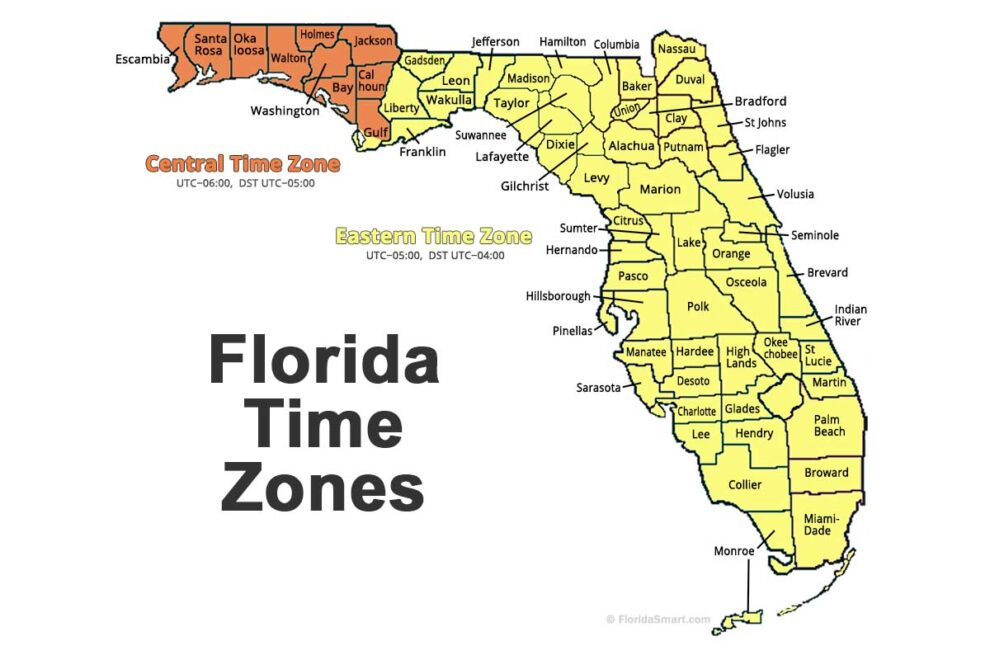
What many visitors don’t realize, however, is that Florida isn’t homogenous when it comes to time. Unlike many states that adhere to a single time zone, the USA’s southeastern peninsula is uniquely split across two distinct zones, with the vast majority observing Eastern Time (ET) and a significant portion of its western Panhandle operating on Central Time (CT). This subtle but critical detail can have profound implications for your travel plans, particularly if your itinerary involves traversing the state or communicating with people beyond its borders. Navigating this time zone divide, coupled with the seasonal shift of Daylight Saving Time, becomes an essential aspect of seamless travel planning. This comprehensive guide will illuminate Florida’s time complexities, providing invaluable insights for ensuring your trip unfolds without a hitch, from the moment your plane touches down to your final sunset stroll on a pristine beach.
Understanding Florida’s Time Zones: A Traveler’s Essential Guide
The notion that an entire state might not share a single time can be surprising to many, but it’s a geographic reality that shapes daily life and travel logistics in Florida. Pinpointing the exact time necessitates understanding which of the two time zones applies to your specific destination.
The Eastern Time Zone (ET): Most of Florida
The lion’s share of Florida’s landmass, including its most famous cities and tourist hubs, falls squarely within the Eastern Time Zone (ET). This zone observes Eastern Standard Time (EST) during the cooler months and Eastern Daylight Time (EDT) when Daylight Saving Time is in effect. Generally, ET is five hours behind Coordinated Universal Time (UTC-5) during standard time and four hours behind (UTC-4) during daylight saving.
When you think of iconic Florida destinations, chances are they’re in ET. This includes:
- Miami and Fort Lauderdale: The bustling heart of South Florida, known for its vibrant nightlife, Art Deco Historic District on South Beach, and cruise ship terminals.
- Orlando: Home to the world-renowned Walt Disney World Resort, Universal Orlando Resort, and countless other theme parks and entertainment venues.
- Tampa and St. Petersburg: Key cities on the Gulf Coast, offering beautiful beaches, cultural attractions like Busch Gardens Tampa Bay, and a thriving culinary scene.
- Jacksonville: The largest city by land area in the contiguous United States, situated in Northeast Florida, boasting extensive coastlines and a dynamic urban core.
- Key West and the Florida Keys: The tropical paradise stretching off Florida’s southern tip, famous for its laid-back atmosphere, snorkeling, and stunning sunsets.
- Sarasota: A Gulf Coast gem known for its cultural institutions and pristine beaches along Sarasota Bay.
- Gainesville: Home to the University of Florida, a vibrant college town in North Central Florida.
- Tallahassee: The state capital, located in the northern part of the state, but still firmly within the Eastern Time Zone.
For most visitors, especially those heading to the major tourist destinations, the time in Florida will align with Eastern Time.
The Central Time Zone (CT): Florida’s Panhandle
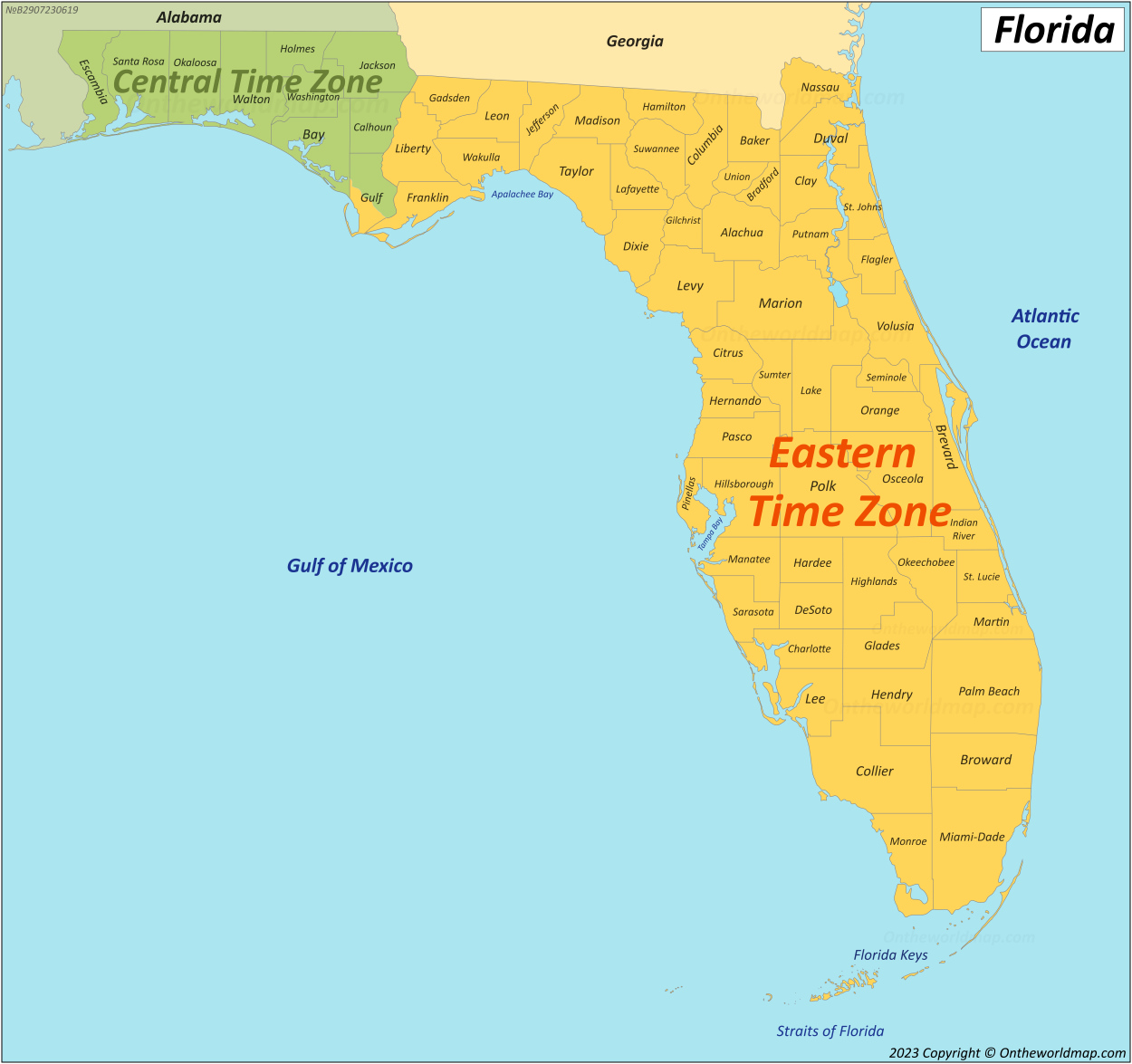
The geographical anomaly occurs in the western part of the Florida Panhandle, where the state crosses into the Central Time Zone (CT). This zone observes Central Standard Time (CST) and Central Daylight Time (CDT). CST is UTC-6, and CDT is UTC-5. This means that these areas are consistently one hour behind the rest of Florida.
The cities and regions primarily located in the Central Time Zone include:
- Pensacola: A historic city with beautiful beaches and a strong military presence.
- Panama City Beach: Famous for its stunning white sand beaches, clear emerald waters, and vibrant spring break scene.
- Destin: Known as the “World’s Luckiest Fishing Village” and a popular spot on the Emerald Coast.
- South Walton (including areas like Seaside and Rosemary Beach): Upscale coastal communities offering a luxurious getaway.
- Fort Walton Beach: Another popular destination along the Emerald Coast.
The precise dividing line between ET and CT in Florida is somewhat jagged but generally follows the Apalachicola River and Bay system. Towns like Port St. Joe and Mexico Beach are often cited as being near this invisible boundary, where residents and businesses must frequently clarify which time zone they operate under. Travelers moving from, say, Tallahassee (ET) to Panama City Beach (CT) will experience a one-hour shift, essentially gaining an hour when heading west and losing an hour when heading east. This is crucial for synchronizing schedules, especially if you have tightly packed itineraries involving flights, appointments, or coordinated meet-ups.
Daylight Saving Time (DST) in Florida
Like most of the United States, Florida observes Daylight Saving Time. This means that on the second Sunday in March, clocks “spring forward” one hour, and on the first Sunday in November, they “fall back” one hour. During DST, both Eastern Time and Central Time advance by an hour, becoming EDT (UTC-4) and CDT (UTC-5), respectively.
This annual change is important to note because it affects not only the local time but also the time difference between Florida and other regions that may or may not observe DST, or observe it on different dates. For international travelers, understanding DST is paramount to avoid confusion with flight departure times, connecting with overseas contacts, or simply knowing when attractions open and close. Always remember to adjust your clocks or ensure your electronic devices are set to update automatically when traveling during these transition periods. While Florida has debated ending DST permanently, as of now, it continues to observe the annual shift.
Practical Implications for Your Florida Trip
The nuances of Florida’s time zones extend far beyond mere curiosity; they have tangible, practical implications for every aspect of your trip. Misunderstanding them can lead to missed flights, forfeited reservations, or general disarray.
Travel Planning and Logistics

Effective time zone management begins long before you arrive. When booking flights, especially those involving connections within Florida or originating from different time zones, always confirm the departure and arrival times in the local time of each airport. A flight from Pensacola (CT) to Orlando (ET) will technically “lose” an hour during the flight, meaning a 9:00 AM departure might have a 10:30 AM arrival for a 30-minute flight. Failing to account for this can cause significant stress.
Similarly, hotel check-in and check-out times, car rental pick-up/drop-off, and tour departures are all strictly enforced according to local time. Imagine booking an exciting airboat tour in the Everglades National Park (ET) and arriving an hour late because your internal clock is still on Central Time. That’s a memorable experience lost and potentially non-refundable. When making restaurant reservations, especially for popular fine dining establishments or character meals at theme parks, double-check the time zone if you’re traveling across the CT/ET boundary. A reservation at a Ritz-Carlton or Four Seasons resort, often sought months in advance, could be jeopardized by a simple time zone oversight.
Navigating Attractions and Activities
Florida’s incredible array of attractions operates on precise schedules. The opening and closing times for theme parks like Walt Disney World Resort and Universal Orlando Resort, or cultural landmarks such as the Kennedy Space Center and the Castillo de San Marcos, are always stated in their local time. Planning your day efficiently, from catching early park entry to staying for nighttime spectaculars, hinges on accurate timekeeping.
For beach-goers, understanding local time affects everything from sunset viewing times, which are spectacular in places like Key West, to planning water sports activities. Nightlife in vibrant cities like Miami or Tampa also adheres to local time, so knowing when bars close or when live music starts is essential for a fun evening. Even seemingly simple activities like museum visits, paddleboarding lessons, or charter fishing trips require punctuality based on the local time zone.
Communication Across Time Zones
For many travelers, staying connected with family, friends, or business contacts is an integral part of any trip. The time difference within Florida and between Florida and other states or countries can complicate communication. If you’re on vacation in Panama City Beach (CT) and trying to call family in New York City (ET), remember they are two hours ahead of you (one hour due to time zone, another due to time difference with CT).
For business travelers, scheduling video conferences or phone calls with colleagues in different time zones requires meticulous planning to avoid early morning calls or late-night disruptions. International visitors must also factor in the significant time difference between their home country and Florida, exacerbated by the possibility of DST changes occurring at different times of the year globally. Clear communication and calendar invites with specified time zones (Eastern Time or Central Time) are your best defense against missed connections.
Lifestyle and Leisure: Making the Most of Florida Time
Beyond the strict logistics of travel, time zones also influence the broader lifestyle and leisure aspects of your Florida experience, affecting everything from your well-being to your enjoyment of premium services.
Business Travel Considerations
For the professional on the go, Florida’s time zones add a layer of complexity to an already demanding schedule. Attending conferences in Orlando while needing to connect with headquarters in Los Angeles (Pacific Time, three hours behind ET) means careful time alignment for critical meetings. Similarly, if your business takes you from Miami (ET) to a client in Destin (CT), remembering that hour shift is vital for punctuality and professional courtesy. Companies with remote teams across the United States often designate a common time zone for meetings, but local appointments will always follow the specific Florida time zone of the location. Accommodation providers like Marriott and Hyatt often cater to business travelers with amenities like 24-hour business centers and meeting spaces, but these services still operate within the local time framework, impacting availability and response times.
Family Vacations and Jet Lag
Family trips to Florida are often about creating magical memories, but time zone changes, even a slight one, can disrupt routines, particularly for younger children. Traveling from the West Coast USA to Florida means gaining three hours, potentially leading to jet lag that affects sleep patterns and overall mood. Even the single-hour shift between Eastern Time and Central Time can confuse a child’s internal clock if not managed properly.
Parents must factor in these adjustments when scheduling theme park visits, meals, and naps to minimize meltdowns and maximize enjoyment. Early mornings at Magic Kingdom or late nights watching fireworks require a well-rested family, which means understanding and respecting the local time from day one. Planning for a relaxed first day or incorporating downtime can help everyone acclimate smoothly.
Luxury and Relaxation
For those indulging in luxury travel experiences, precision timing is often part of the impeccable service. A spa appointment at a five-star resort in Palm Beach, a sunset cruise off Key Largo, or a tee time at a championship golf course – all are meticulously scheduled according to local Eastern Time. If you are enjoying the serene beaches of the Emerald Coast in Destin, your gourmet dinner reservation will be in Central Time, an hour earlier than the same reservation further east.
Misjudging the time could mean missing a coveted reservation, cutting short a planned activity, or simply feeling rushed. The essence of a luxury vacation is often its seamlessness and freedom from stress, which precise time management greatly facilitates. Whether it’s coordinating a private charter, a VIP tour, or simply ensuring you arrive promptly for that exclusive dining experience, being acutely aware of the local time zone enhances the overall quality and relaxation of your high-end Florida getaway.
Tips for a Seamless Florida Experience
Navigating Florida’s time zones doesn’t have to be a source of stress. With a few proactive measures, you can ensure your trip remains on schedule and fully enjoyable.
- Set Devices to Automatic Time Updates: Most smartphones and smartwatches automatically adjust to local time zones. Ensure this feature is enabled before your trip. This is your most reliable tool for accurate local time.
- Double-Check All Reservations: Before departing and upon arrival, review all your booking confirmations (flights, hotels, tours, restaurant reservations) and note the specified time zone. If it’s not explicitly stated, assume local time but confirm with the provider if you are crossing the CT/ET boundary.
- Use a Reliable Time Zone Converter: For complex itineraries or when communicating across multiple time zones, a dedicated time zone converter app or website can be invaluable. It helps visualize the time differences clearly.
- Be Aware of the Panhandle’s Unique Situation: If your travels take you to the Florida Panhandle, especially around the Apalachicola River area, always confirm the local time with businesses and services. Don’t assume. A quick “What time zone are you in?” can save you a lot of trouble.
- Build in Buffer Time: When transitioning between time zones or planning tight connections, always build in extra buffer time. This allows for unexpected delays and helps mitigate any potential confusion related to the hour shift.
- Communicate Clearly: When scheduling meet-ups or calls with others, explicitly state the time zone (e.g., “Let’s meet at 2 PM Eastern Time”). This eliminates ambiguity.
- Adjust Gradually: If you’re coming from a significantly different time zone, try to adjust your sleep schedule gradually a few days before your trip. Once in Florida, expose yourself to natural light in the mornings and avoid heavy meals late at night to help reset your internal clock.
- Stay Informed About DST: Keep an eye on the dates for Daylight Saving Time shifts, as these can affect not only Florida’s time but also the time difference with your home location.
By keeping these points in mind, your journey through the diverse landscapes and vibrant communities of Florida will be as smooth and enjoyable as the state’s famously calm waters. Understanding “what is the time in Florida” isn’t just about knowing the hour; it’s about unlocking a perfectly synchronized and stress-free travel experience. So, set your watches, confirm your schedules, and get ready to soak up every moment the Sunshine State has to offer.
LifeOutOfTheBox is a participant in the Amazon Services LLC Associates Program, an affiliate advertising program designed to provide a means for sites to earn advertising fees by advertising and linking to Amazon.com. Amazon, the Amazon logo, AmazonSupply, and the AmazonSupply logo are trademarks of Amazon.com, Inc. or its affiliates. As an Amazon Associate we earn affiliate commissions from qualifying purchases.