
Planning a trip to the Sunshine State often involves meticulously organizing every detail, from flights and accommodation to attractions and dining reservations. Amidst the excitement of discovering Florida‘s diverse offerings, one crucial element often overlooked until the last minute is understanding its time zones. As a pivotal state within America (the United States), Florida spans two distinct time zones, a detail that can significantly impact your travel logistics, especially if your itinerary involves moving across the state or coordinating with people in different regions. Knowing the precise time in Florida at any given moment is not just a matter of curiosity; it’s a cornerstone for a seamless and stress-free travel experience, influencing everything from flight connections to theme park opening hours and dinner reservations.
This comprehensive guide will delve into the intricacies of Florida’s time zones, explain the nuances of Daylight Saving Time, and provide practical insights into how these temporal distinctions affect various aspects of your visit. Whether you’re chasing the sunrise over South Beach, exploring the magical realms of Orlando’s theme parks, or unwinding on the serene Gulf Coast, understanding the clock will empower you to maximize every moment of your Floridian adventure.
Understanding Florida’s Diverse Time Zones
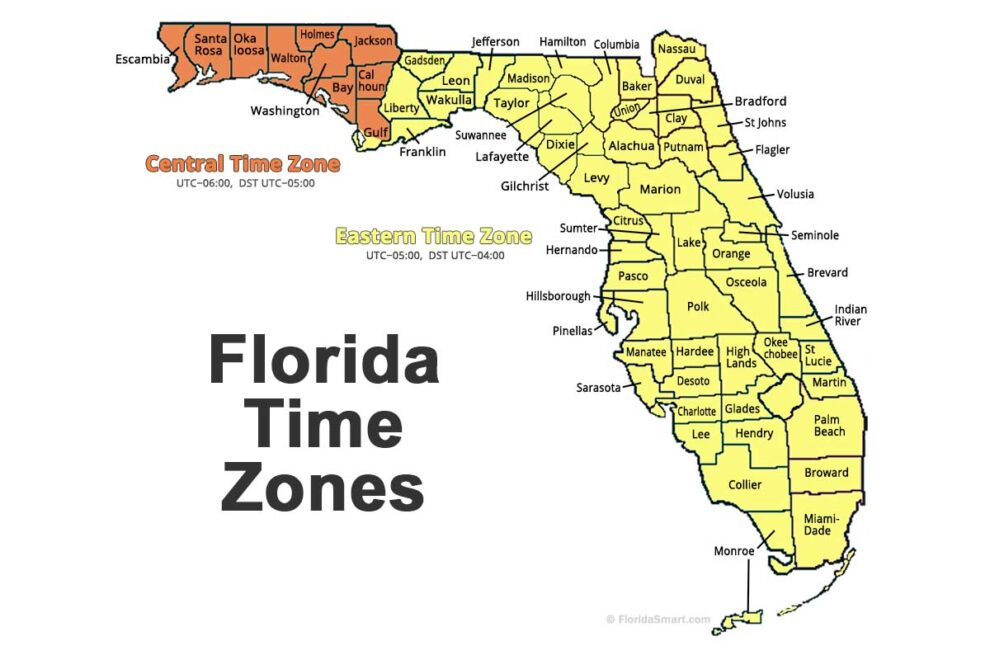
At first glance, one might assume a state like Florida operates under a single, unified time. However, due to its geographical breadth, the state is split between two primary time zones: Eastern Standard Time ([EST]) and Central Standard Time ([CST]). This division is primarily observed in the panhandle region, while the vast majority of the peninsula adheres to the Eastern Time Zone.
The Dominant Eastern Time Zone (EST/EDT)
The predominant time zone for most of Florida is the Eastern Time Zone. During standard time, this is Eastern Standard Time ([EST]), which is UTC-5. When Daylight Saving Time is in effect, typically from early March to early November, it switches to Eastern Daylight Time ([EDT]), which is UTC-4. This means clocks are moved forward by one hour to make better use of daylight.
This zone encompasses all the major tourist hubs and metropolitan areas that draw millions of visitors annually. Cities like Miami, Orlando, Tampa, Jacksonville, Fort Lauderdale, St. Petersburg, and the entirety of the Florida Keys (including Key West) fall within the Eastern Time Zone. If your travel plans are centered around theme parks like Walt Disney World Resort or Universal Orlando Resort, the vibrant nightlife of South Beach, or the historical charm of St. Augustine, you will be operating on EST or EDT. For most travelers, especially those visiting Florida for leisure and family vacations, the Eastern Time Zone is the only one they will need to consider.
The Western Panhandle: Central Time Zone (CST/CDT)
While the peninsula enjoys the Eastern Time Zone, a portion of Florida’s panhandle operates under the Central Time Zone. During standard time, this is Central Standard Time ([CST]), which is UTC-6. During Daylight Saving Time, it shifts to Central Daylight Time ([CDT]), which is UTC-5. This means there is always a one-hour difference between the two zones within Florida, with the Central Time Zone being one hour behind the Eastern Time Zone.
Specifically, counties west of the Apachicola River, including Bay County (home to Panama City Beach), Walton County, Okaloosa County (featuring Destin and Fort Walton Beach), Santa Rosa County, and Escambia County (where Pensacola is located), all observe Central Time. If your travels take you to the pristine white sands and emerald waters of the Florida Panhandle for a relaxing beach vacation or exploring the naval aviation heritage in Pensacola, you’ll need to adjust your clock accordingly. For those driving across the state, particularly from the peninsula into the panhandle, it’s essential to remember this one-hour time shift. Many digital devices automatically update, but a quick check upon crossing the time zone boundary is always a good idea.
Why Time Awareness Is Critical for Your Florida Trip
Understanding Florida’s time zones goes beyond merely knowing what time it is; it’s about optimizing your travel experience across every facet of your journey. From the moment you plan your departure to your daily activities and interactions, time plays an invisible yet powerful role.
Streamlining Travel and Accommodation Logistics
The impact of time zones begins even before you touch down in Florida. When booking flights, especially those with connections or arriving late at night, confirming the local time of arrival at your destination airport (e.g., Orlando International Airport in EDT vs. Pensacola International Airport in CDT) is paramount. A miscalculation could lead to missed connections, late arrivals for pre-booked transfers, or even an unexpected night in an airport if hotels are no longer checking in.
For accommodations, check-in and check-out times are strictly adhered to, and these are always based on the hotel’s local time zone. If you’ve booked a luxury stay at The Breakers Palm Beach in Palm Beach or a family-friendly suite at a Walt Disney World resort like the Walt Disney World Dolphin Resort, remember these are in the Eastern Time Zone. Conversely, if your destination is a cozy apartment rental in Panama City Beach, those times will be Central Time. Ignoring this distinction could result in unexpected delays or even forfeited reservations. Furthermore, if you’re coordinating with tour operators or shuttle services, confirming their operating hours in relation to your current location’s time is vital for a smooth transition from your hotel to your chosen destination.
Maximizing Your Tourism and Attraction Experiences
Florida is renowned for its world-class attractions, from the thrilling rides of Universal Studios Florida to the pristine wilderness of Everglades National Park. Each of these landmarks and tourist destinations operates on specific schedules, and these schedules are invariably tied to their local time zone. For instance, if you’re planning a full day at Busch Gardens Tampa Bay or hoping to catch a rocket launch viewing at the Kennedy Space Center Visitor Complex, all timing will be in EDT.
Similarly, cultural experiences like visiting the Vizcaya Museum & Gardens in Miami or exploring the historic fortress of Castillo de San Marcos in St. Augustine require adherence to their published operating hours. For those venturing to the Florida Panhandle, such as visiting the National Naval Aviation Museum in Pensacola, remember that you will have an extra hour of morning daylight compared to the Eastern Time Zone, but attractions will also close an hour “earlier” relative to Eastern Time. This hour can make a significant difference in maximizing your time, especially if you have pre-booked tickets or tours that are time-sensitive. Always double-check event start times, restaurant reservation times, and theme park parade schedules against the local time to avoid disappointment.
Planning Your Florida Adventure: Accommodation, Attractions, and Logistics
Strategic planning, informed by a clear understanding of Florida’s time zones, is the key to unlocking the full potential of your trip. Integrating this knowledge into your itinerary will not only prevent minor hiccups but also enhance your overall travel lifestyle, whether you’re seeking luxury, adventure, or a family-friendly escape.
Designing a Seamless Itinerary Across Time Zones
For travelers whose itineraries span both the Eastern and Central Time Zones of Florida, careful planning is essential. Imagine flying into Orlando (EDT) and then driving to Panama City Beach (CDT). The journey itself is several hours, and upon arrival, you’ll “gain” an hour. This can be a welcome bonus, but it also means any pre-booked activities in Panama City Beach (like a sunset cruise or dinner reservation) will effectively start an hour later than your departure city’s time, so adjust your expectations. Conversely, traveling from Pensacola (CDT) to Tallahassee (EST), the state capital and gateway to the peninsula, means “losing” an hour, requiring you to adjust your internal clock and plans accordingly.
When planning activities, consider the implications for communication as well. If you’re coordinating with family or friends across the time zones, be explicit about which time zone you’re referring to for meeting points or call times. This simple practice prevents misunderstandings and ensures everyone is on the same page, whether you’re gathering for a group experience at SeaWorld Orlando or enjoying a quiet evening at a boutique hotel in Sarasota.
Embracing the Florida Lifestyle: Beyond the Clock
Beyond the practicalities, understanding Florida’s time zones allows you to fully immerse yourself in its diverse lifestyles. For those seeking a vibrant urban experience, the rhythm of Miami or Tampa is set to Eastern Time, offering late-night dining, bustling entertainment districts, and early morning activities like exploring the Art Deco Historic District in Miami Beach.
Budget travelers or luxury seekers, families, or business professionals – everyone benefits from precision. A business traveler on a tight schedule needs to confirm meeting times across cities. A family heading to Walt Disney World Resort will want to know exactly when Magic Kingdom opens to maximize their time. Those on a budget will appreciate knowing precise bus schedules. Even for more laid-back experiences, like watching a sunrise over the Atlantic Ocean from Cocoa Beach or a sunset over the Gulf of Mexico from Naples, knowing the local time is essential to catch these natural spectacles. Florida’s natural landmarks, from the serene waters of Biscayne National Park to the remote beauty of Dry Tortugas National Park, also adhere to local time, impacting ferry schedules and ranger-led programs.
In conclusion, while the question “What is the time in Florida, America now?” might seem straightforward, the answer reveals a fascinating layer of complexity that is integral to effective travel planning. By recognizing that Florida operates on both Eastern and Central Time, especially with the seasonal shift of Daylight Saving Time, you empower yourself to navigate the state’s diverse offerings with confidence. From booking your ideal accommodation at a Hyatt Regency Orlando to scheduling your visit to a unique landmark like the Ringling Museum of Art in Sarasota, or simply ensuring you’re punctual for a captivating local cultural event, time awareness is your ultimate travel companion. Embrace the clock, and unlock an even richer, more rewarding exploration of everything the vibrant state of Florida has to offer.
LifeOutOfTheBox is a participant in the Amazon Services LLC Associates Program, an affiliate advertising program designed to provide a means for sites to earn advertising fees by advertising and linking to Amazon.com. Amazon, the Amazon logo, AmazonSupply, and the AmazonSupply logo are trademarks of Amazon.com, Inc. or its affiliates. As an Amazon Associate we earn affiliate commissions from qualifying purchases.