
Nestled along the Atlantic coast, Boston, Massachusetts, is a city defined by its rich history, vibrant culture, and perhaps most notably, its distinct and often dramatic four-season weather. For any traveler planning a visit, understanding Boston’s climate is paramount to ensuring a comfortable, enjoyable, and memorable experience. Whether you’re dreaming of a summer stroll along the Freedom Trail, a crisp autumn day exploring Beacon Hill, a cozy winter escape, or the blossoming beauty of spring in the Public Garden, the weather plays a pivotal role in shaping your itinerary and packing list. This guide delves deep into Boston’s meteorological nuances, offering insights for every type of traveler, from budget explorers to those seeking luxury accommodations, and ensures you’re prepared for whatever Mother Nature has in store for this iconic New England city.

The dynamic nature of Boston’s weather, influenced by its coastal proximity and continental air masses, means that conditions can shift rapidly. Summers can be warm and humid, while winters often bring significant snowfall and biting cold. Spring is a season of delightful unpredictability, and autumn paints the city in breathtaking hues. Understanding these patterns is not just about comfort; it’s about optimizing your travel experience, from choosing the right hotel or resort to selecting the perfect attractions and activities to suit the day’s forecast. Let’s explore the seasonal specifics and how they intertwine with the best of Boston tourism.
Understanding Boston’s Four Distinct Seasons
Boston’s climate is characterized by its four unmistakable seasons, each offering a unique perspective on the city’s charm and demanding a different approach to travel and exploration. From the thawing landscapes of spring to the frosty architecture of winter, knowing what to expect seasonally is key to planning your ideal visit.
Spring: A Reawakening of Charm (March – May)
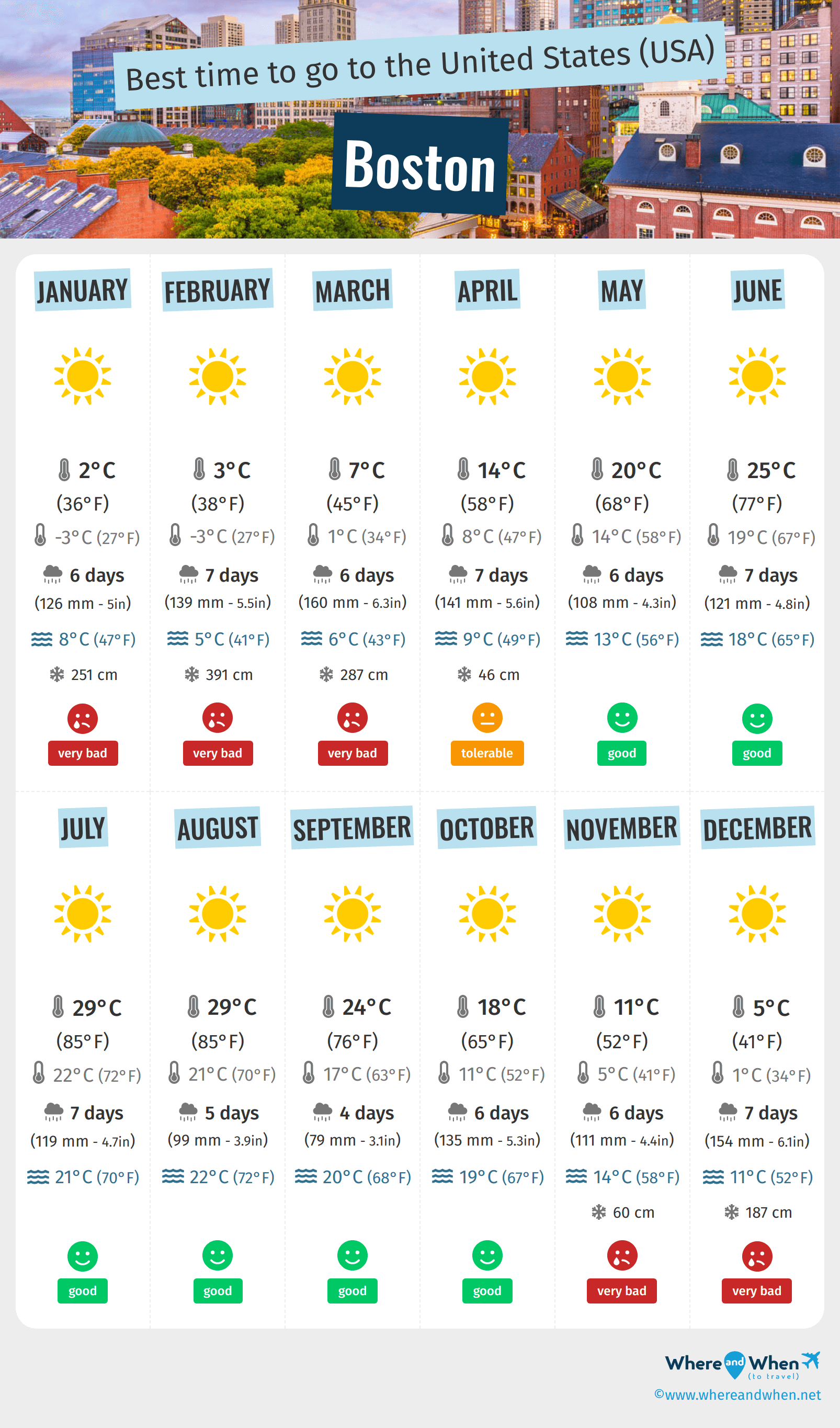
Spring in Boston is a season of transition, marked by warming temperatures and the gradual reawakening of vibrant urban life. March can still feel quite wintry, with average temperatures ranging from 30°F (-1°C) to 45°F (7°C), and late-season snowfalls are not uncommon. However, by April, the city typically experiences milder conditions, averaging between 40°F (4°C) and 55°F (13°C), with budding trees and blooming flowers beginning to transform the Public Garden and Boston Common. May brings truly pleasant spring weather, with averages between 50°F (10°C) and 68°F (20°C), perfect for outdoor exploration. Rainfall is moderate throughout the spring, often coming in passing showers rather than prolonged downpours.
For travelers, spring offers a beautiful window to witness Boston shake off its winter slumber. The city’s famous historical sites, such as the Freedom Trail and Paul Revere House, are delightful to explore on foot, with fewer crowds than in peak summer. Consider a lifestyle travel experience focused on history and culture, perhaps staying in a charming boutique hotel in Beacon Hill or North End to fully immerse yourself. Packing layers is essential, as mornings can be cool and afternoons surprisingly warm. A waterproof jacket or umbrella is also a wise addition for unpredictable spring showers. Accommodation tends to be more readily available and often more affordable than in summer, making it an excellent option for budget travel without sacrificing comfort. Events like the Boston Marathon in April draw significant crowds, so booking accommodation well in advance is crucial if your visit coincides with such major happenings.
Summer: Vibrant and Bustling (June – August)
Boston’s summer is typically warm, humid, and bustling with activity, drawing visitors from around the globe. June generally offers pleasant warmth, with temperatures ranging from 60°F (15°C) to 75°F (24°C). July and August are the warmest months, with averages between 68°F (20°C) and 82°F (28°C), often punctuated by heatwaves where temperatures can soar into the 90s (32°C+) with high humidity. Occasional thunderstorms can provide relief from the heat. The long daylight hours are perfect for maximizing outdoor experiences.
Summer is peak tourism season in Boston, with the city’s parks, waterfront, and historical sites teeming with visitors. Popular attractions like Fenway Park, the New England Aquarium, and Faneuil Hall Marketplace are in full swing. Consider taking a Boston Harbor cruise or exploring the Charles River by kayak. For family trips, the Boston Children’s Museum and Museum of Science offer air-conditioned relief on hot days. When packing, think light and breathable clothing, along with sunscreen, hats, and sunglasses. Comfortable walking shoes are a must. Due to high demand, booking hotels and resorts well in advance is highly recommended, especially in popular areas like Back Bay or the Seaport District. Many accommodations offer excellent amenities like pools and air conditioning, which are invaluable during warm spells.
Autumn: A Canvas of Colors (September – November)
Autumn is arguably Boston’s most celebrated season, renowned for its spectacular fall foliage and comfortably crisp weather. September sees a gradual cool-down from summer, with temperatures between 55°F (13°C) and 70°F (21°C). October is often idyllic, with average temperatures from 45°F (7°C) to 60°F (15°C), characterized by bright, sunny days and cool, clear nights. November ushers in colder weather, with averages dipping to 35°F (2°C) to 50°F (10°C), and the first hints of winter’s chill begin to set in. Rainfall is generally moderate, making for excellent outdoor conditions.
The vibrant reds, oranges, and yellows of the autumn leaves transform the city’s parks and historic streets into a photographer’s dream. A stroll through the Public Garden, Boston Common, or a day trip to nearby Cambridge and Harvard University offers stunning views. The Head of the Charles Regatta in October is a major event. This is an ideal time for tourism focused on historical landmarks and enjoying the local culture at outdoor markets or festivals. Packing should include layers, sweaters, light to medium jackets, and comfortable closed-toe shoes. For luxury travel, consider staying at a historic hotel like the Omni Parker House or The Langham Boston, where you can enjoy elegant interiors and prime access to the city’s autumnal beauty. While popular, autumn crowds can be slightly less intense than summer, though specific foliage-peaking weekends and major events will see increased visitor numbers and higher accommodation prices.
Winter: A Snowy Wonderland (or Chilly Urban Escape) (December – February)
Boston’s winters are cold, often snowy, and can be quite blustery, particularly with winds off the Atlantic. Average temperatures hover between 20°F (-7°C) and 38°F (3°C). Snowfall is common, with the city receiving an average of 40-50 inches annually, and winter storms (nor’easters) can bring significant accumulations and disruptive conditions. January and February are typically the coldest and snowiest months. Despite the cold, winter days can also be surprisingly bright and crisp, offering beautiful snowy vistas of the cityscape.
For winter visitors, Boston transforms into a picturesque, if chilly, urban escape. This season is perfect for exploring the city’s world-class museums, such as the Museum of Fine Arts or the Isabella Stewart Gardner Museum, enjoying indoor attractions like the Boston Tea Party Ships & Museum, or catching a performance in the Theater District. Ice skating on the Boston Common Frog Pond is a classic activity. Layering is paramount for winter packing: thermal underwear, warm sweaters, a heavy winter coat, waterproof boots, hats, gloves, and scarves are essential. Accommodation in winter can sometimes offer better deals outside of the holiday season, making it an attractive option for budget travel or those seeking a cozy urban retreat. Many hotels and suites feature warm lobbies and excellent heating, providing a comfortable sanctuary from the cold.
Planning Your Trip: Weather-Wise Travel Tips

Successfully navigating Boston’s varied climate requires careful planning, especially when it comes to packing and scheduling your activities. These tips will help you prepare for any weather scenario.
What to Pack for Boston Weather
The key to packing for Boston is versatility and layers. Regardless of the season, conditions can change quickly.
- Spring: Light to medium jackets, sweaters, long-sleeved shirts, T-shirts, jeans, comfortable walking shoes, and a waterproof umbrella or rain jacket.
- Summer: Light and breathable clothing (cotton, linen), shorts, skirts, T-shirts, swimsuits (if visiting coastal areas or hotels with pools), a light jacket or cardigan for evenings, sunscreen, hat, sunglasses, and comfortable sandals or walking shoes.
- Autumn: Sweaters, long-sleeved shirts, jeans, medium-weight jacket, scarf, comfortable walking shoes, and a light waterproof layer.
- Winter: Heavy winter coat (waterproof/windproof recommended), thermal layers, sweaters, warm pants, waterproof boots with good grip, hat, gloves/mittens, and scarf.
Always check the local forecast a few days before your departure, as this will give you the most accurate picture of what to expect.
Best Time to Visit Boston
The “best” time to visit Boston largely depends on your priorities and tolerance for crowds.
- For pleasant weather and fewer crowds: Late spring (May) and early autumn (September to early October) are often considered ideal. The weather is generally comfortable, and the city is vibrant without the peak summer crush.
- For festivals and outdoor activities: Summer (June-August) is perfect, but be prepared for high temperatures, humidity, and larger crowds, especially around major landmarks and attractions.
- For fall foliage and crisp air: Mid-October offers breathtaking scenery, but it’s also a popular time, so book accommodations in advance.
- For budget-conscious travelers and indoor pursuits: Winter (November-March, excluding holidays) can offer lower hotel rates and fewer crowds, perfect for museum-hopping and enjoying cozy local culture.
Considering specific events, like the Boston Marathon in April or the Head of the Charles Regatta in October, is also important as these will significantly impact accommodation availability and pricing.
Accommodation and Activities Tailored to Boston’s Climate
Your choice of accommodation and planned activities can greatly enhance your Boston travel experience, especially when aligned with the seasonal weather.
Choosing the Right Stay: Hotels, Resorts, and More
Boston offers a diverse range of accommodation options, from historic hotels to modern apartments and luxury resorts.
- Summer Heat: Look for hotels with excellent air conditioning, and ideally, a pool or close proximity to waterfront areas like the Seaport District or Boston Harbor for cooling breezes. Many suites and extended-stay apartments in areas like Copley Square offer welcome space and comfort.
- Winter Cold: Prioritize accommodations known for their warmth, comfortable common areas, and perhaps even fireplaces. Proximity to subway stations (the “T”) is a huge plus for easy, warm travel to indoor attractions like the Museum of Fine Arts or Faneuil Hall Marketplace. Consider luxury hotels like the Four Seasons Hotel Boston or The Ritz-Carlton for their top-tier amenities and impeccable service, perfect for a cozy winter retreat.
- All Seasons: Read reviews carefully to gauge guest satisfaction with heating and cooling systems. Location is always key; being close to public transportation (especially in Boston’s walkable neighborhoods) can save you from long treks in extreme weather. For long-term stays, apartments or serviced villas offer greater flexibility and home-like comforts.
Experiencing Boston: Activities for Every Forecast
Boston’s wealth of attractions means there’s always something to do, regardless of the weather.
- Sunny & Pleasant Days (Spring, Summer, Autumn): Embrace the outdoors! Walk the entire Freedom Trail, explore the Public Garden and Boston Common, enjoy a picnic on the Esplanade along the Charles River, visit Castle Island, or take a ferry to Spectacle Island for harbor views. Catch a Red Sox game at Fenway Park.
- Rainy, Cold & Snowy Days (Winter, unpredictable Spring/Autumn): Dive into Boston’s incredible indoor offerings. Spend hours at the Museum of Fine Arts, the Isabella Stewart Gardner Museum, the Museum of Science, or the New England Aquarium. Explore the shops and eateries of Quincy Market within Faneuil Hall Marketplace. Take a tour of the USS Constitution or the Boston Tea Party Ships & Museum. Indulge in Boston’s renowned food culture – from seafood in the Seaport District to Italian delicacies in the North End. The Prudential Center offers indoor shopping and dining, and you can even take in panoramic views from the View Boston Observatory (located in the Prudential Tower).
- Cultural & Educational Pursuits: Visit the campuses of Harvard University and the Massachusetts Institute of Technology (MIT) in Cambridge. Explore Old North Church and the Bunker Hill Monument to delve into colonial and revolutionary history.
In conclusion, while Boston’s weather can be a mixed bag, its vibrant spirit and endless array of destinations, attractions, and experiences shine through every season. By understanding its climate and preparing accordingly, you can craft a truly unforgettable Boston adventure, whether you’re seeking luxury travel, a budget trip, or a memorable family vacation. From the blossoming charm of spring to the snowy elegance of winter, Boston invites you to discover its unique beauty, come rain or shine, heat or snow.