
Florida, often dubbed the Sunshine State, is a vibrant mosaic of cultures, landscapes, and experiences, drawing millions of visitors to its shores, theme parks, and historic cities each year. From the bustling metropolis of Miami to the enchanting beaches of the Florida Panhandle, this peninsular state offers an unparalleled travel destination. However, one common question that often arises for travelers planning their visit, or even residents navigating its expanse, pertains to its time zones. Unlike many states in the United States that operate under a single time zone, Florida is uniquely situated across two primary time zones: Eastern Time and Central Time. Understanding this geographical nuance is crucial for seamless travel planning, from booking flights and accommodation to scheduling visits to world-renowned landmarks and enjoying local tourism activities. This comprehensive guide will delve into the specifics of Florida’s time zones, their implications for your journey, and practical tips to ensure your Florida adventure unfolds without a hitch.
Navigating Florida’s Time Zones: Eastern vs. Central
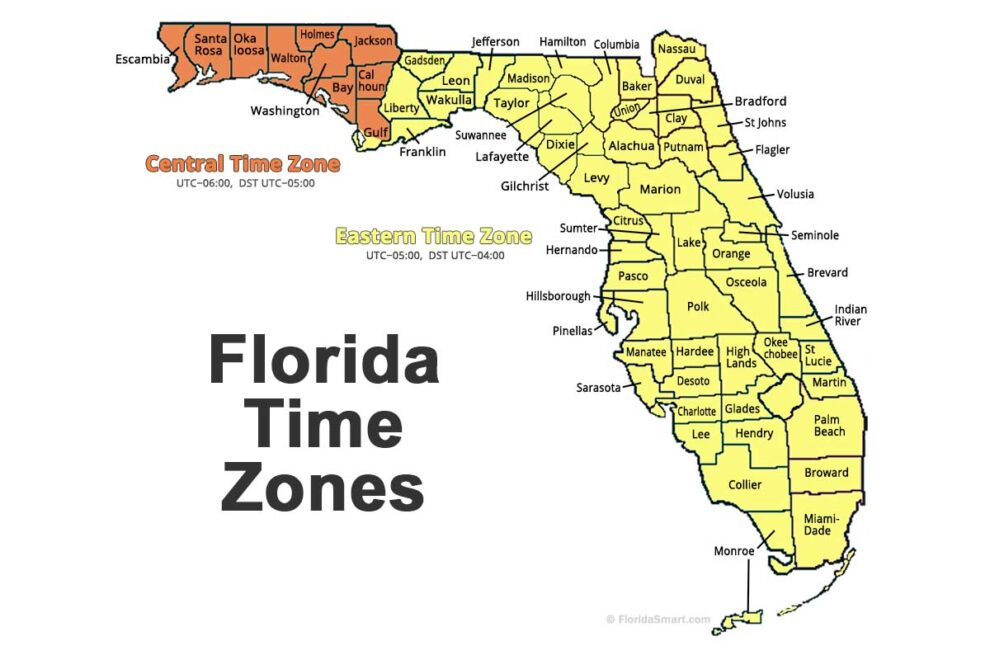
The division of Florida into two time zones is a geographical characteristic that primarily affects the westernmost part of the Florida Panhandle. The vast majority of the state operates on Eastern Time, aligning with much of the East Coast of the United States. This means that whether you are planning a family trip to Orlando’s theme parks, a luxurious escape to Palm Beach, or exploring the vibrant local culture of Key West, you’ll likely be on Eastern Time.
Eastern Standard Time (EST) / Eastern Daylight Time (EDT) Dominance
The dominant time zone across Florida is the Eastern Time Zone, which observes Eastern Standard Time (EST) during the winter months and Eastern Daylight Time (EDT) when daylight saving is in effect. This means it is typically five hours behind Coordinated Universal Time (UTC-5) in winter and four hours behind (UTC-4) in summer.
Major cities and regions that fall within the Eastern Time Zone include:
- Miami and Miami Beach
- Orlando
- Tampa
- Jacksonville
- Fort Lauderdale
- Tallahassee (the state capital)
- Key West and the entirety of The Florida Keys
- St. Petersburg
- Daytona Beach
- Palm Beach
- St. Augustine
For travelers, this widespread adherence to Eastern Time simplifies planning for most popular destinations. If you’re heading to Walt Disney World Resort, Universal Orlando Resort, or the Kennedy Space Center Visitor Complex, all your bookings, showtimes, and opening hours will be on Eastern Time. This uniformity across the most visited parts of the state makes itinerary management relatively straightforward, particularly for those flying into major international airports like Miami International Airport (MIA) or Orlando International Airport (MCO).
The Panhandle’s Central Standard Time (CST) / Central Daylight Time (CDT)
The exception to Florida’s Eastern Time rule is the western part of the Florida Panhandle. This region observes the Central Time Zone, which is typically six hours behind Coordinated Universal Time (UTC-6) during Central Standard Time (CST) and five hours behind (UTC-5) during Central Daylight Time (CDT). This means that areas in the Florida Panhandle are one hour behind the rest of the state.
Cities and popular coastal resorts in the Central Time Zone include:
- Pensacola
- Panama City
- Destin
- Fort Walton Beach
- Miramar Beach
The time zone boundary primarily runs along the Apalachicola River, effectively splitting some counties. For instance, most of Gulf County and Franklin County remain in Eastern Time, while counties further west like Bay County (home to Panama City) and Escambia County (home to Pensacola) are in Central Time.
This time difference is a significant consideration if your travel plans involve moving between the main peninsula and the western Panhandle. For example, a drive from Tallahassee (EST/EDT) to Panama City (CST/CDT) will involve setting your clock back an hour. While seemingly minor, a missed flight, a late check-in, or a closed attraction can quickly dampen a vacation. Being aware of this boundary is key, especially for road trips along Florida’s scenic Gulf Coast.

Practical Implications for Your Florida Travel
Understanding Florida’s dual time zones isn’t just a matter of trivia; it has real-world implications for every aspect of your travel experience. From the initial planning stages to enjoying the diverse lifestyle and tourism activities, a keen awareness of local time can save you from potential headaches and help you maximize your stay.
Planning Your Itinerary and Bookings
One of the foremost areas where time zone awareness is critical is in the meticulous planning of your itinerary. When booking flights, always confirm the arrival and departure times in local time. A flight departing Orlando at 10:00 AM EDT and arriving in Pensacola at 10:30 AM CDT might seem like a mere 30-minute journey, but the actual travel time is 1 hour and 30 minutes, due to the one-hour time difference. This applies equally to ground transportation schedules, such as train or bus services, which will always operate on the local time of their origin and destination.
Beyond transportation, nearly every aspect of your trip hinges on accurate timekeeping:
- Hotel Check-ins and Check-outs: Accommodation policies are strictly adhered to in local time. Arriving an hour late for a check-in could mean a frantic call or even a forfeited booking, especially at busy resorts or boutique hotels.
- Attraction Opening Hours: Whether you’re planning to explore the historic Castillo de San Marcos in St. Augustine or embark on an airboat tour in the Florida Everglades, all operating hours will be listed in local time. Miscalculating this could lead to arriving at a closed gate, particularly near the time zone border.
- Dining Reservations and Tour Bookings: From a waterfront dinner reservation in Sarasota to a fishing charter off the Gulf Coast, confirming the correct local time is vital. Many popular activities, like tours of Dry Tortugas National Park or excursions from Key West, operate on strict schedules.

Modern mobile devices are generally reliable in automatically adjusting to local time zones, a convenience that has largely mitigated common time-related mishaps. However, it’s always prudent to manually double-check your device’s settings and verify times, especially when traveling close to a time zone transition point or if you rely on older technology.
The Lifestyle and Tourism Experience Across Time Zones
Florida’s diverse offerings are deeply intertwined with its geographical setting, and time zones subtly influence the local lifestyle and tourism experience. The shift in time across the state can affect everything from sunset viewing opportunities to the rhythm of daily activities.
For example, those in Miami Beach (EDT) might enjoy an earlier sunrise and sunset compared to travelers in Destin (CDT), where the sun typically rises and sets an hour later. This can influence planning for beach days, watersports, or even nightlife activities. A later sunset in the Panhandle might allow for more evening beach time, while the East Coast’s earlier sunsets are perfect for enjoying vibrant evening events in cities like St. Petersburg or Fort Lauderdale.
The unique culture and food scene also adapt to these rhythms. From early morning fishing charters in the Florida Keys to late-night dining in South Beach’s Art Deco Historic District, businesses and activities cater to the local clock. Whether you are on a luxury travel excursion seeking exclusive experiences or a budget travel adventure exploring hidden gems, remembering the time zone specific to your current location is a small detail that makes a big difference in the seamless flow of your day.
Accommodation and Landmarks: Time Zone Considerations
When choosing your accommodation and planning visits to iconic landmarks in Florida, the time zone factor should always be in your consideration. It impacts not only your arrival and departure but also your ability to fully experience the unique offerings of each locale.
Hotels and Resorts: Ensuring a Smooth Stay
Hotels, resorts, apartments, and villas across Florida operate strictly according to their local time zones for check-in and check-out procedures. Imagine booking a stay at The Breakers Palm Beach in Palm Beach (EDT) or Loews Portofino Bay Hotel in Orlando (EDT). All services, from restaurant hours to pool access and spa amenities, will follow Eastern Time.
Conversely, if your chosen accommodation is in the Panhandle, such as the Sandestin Golf and Beach Resort in Destin (CDT), all listed times will be Central Time. This becomes especially pertinent if you’re traveling a long distance within the state on the same day as your check-in. For instance, if you depart from Jacksonville (EDT) and plan to arrive at a Panama City (CDT) hotel for a 3:00 PM check-in, you must account for the one-hour time shift. Failing to do so could lead to an unexpected delay or even a missed first-day activity. Always consult your booking confirmations and hotel websites, which invariably list times in local context.
Landmarks and Attractions: Maximizing Your Visit
Florida’s rich array of landmarks and attractions also necessitate time zone awareness. From natural wonders to historical sites and entertainment complexes, their operating hours are always local. For instance, the serene Bok Tower Gardens in Lake Wales operates on Eastern Time, as does the iconic Walt Disney World Resort in Orlando. Planning your day at these popular sites requires you to adhere to their respective time zones, which for the majority of Florida is Eastern Time.
However, if your journey takes you to the pristine beaches and state parks of the western Panhandle, such as Gulf Islands National Seashore near Pensacola, these attractions will operate on Central Time. This means that a morning visit planned for 9:00 AM in Destin would correspond to 10:00 AM on an Eastern Time clock. This can be particularly important for timed entry tickets, guided tours, or specific events like ranger programs at Everglades National Park (which operates on Eastern Time). By understanding and respecting the local time zones, you ensure you don’t miss out on any of the incredible experiences that make Florida such a cherished destination.
General Tips for Time Zone Management in Florida
While navigating two time zones within a single state might seem daunting, it’s easily manageable with a few simple tips. The key is proactive awareness and verification, which ensures your Florida travel remains smooth and enjoyable.
- Always Verify Local Times: Regardless of what your itinerary or booking confirmation says, make it a habit to double-check all times against the local time zone of your current location or intended destination. When in doubt, a quick search for “current time in Panama City” or “current time in Orlando” can prevent mishaps.
- Utilize Technology Wisely: Your smartphone or GPS device is usually your best friend. Most modern devices automatically update to the correct time zone based on your location. However, be cautious when near the time zone border, as your device might take a moment to adjust or might pick up a signal from the “wrong” zone. A good practice is to carry a traditional watch set to local time or use a reliable world clock application as a backup.
- Adjust Gradually When Crossing Zones: If you’re driving across the Florida time zone boundary, particularly between Tallahassee and Panama City or areas surrounding the Apalachicola River, manually reset your watch or confirm your device’s auto-update. Adjusting your internal clock as soon as you cross the boundary can help you avoid confusion.
- Consider the Impact on Daily Rhythms: Even a one-hour shift can subtly affect your body clock, especially if you’re sensitive to changes. For example, a 7:00 AM start in Pensacola (CDT) might feel like 8:00 AM to someone accustomed to Eastern Time, potentially making mornings feel earlier or evenings stretch longer. Embrace the different pace each zone offers, whether it’s a later sunset for dinner or an earlier one for reflection.
- Factor Time Differences into Communication: If you’re coordinating with people in different parts of Florida (e.g., meeting a friend from Miami in Destin), always specify whether you’re referring to Eastern Time or Central Time to prevent miscommunication.
In conclusion, while Florida operates on two distinct time zones – Eastern Time for the vast majority of the state and Central Time for the westernmost Panhandle – this unique characteristic is easily navigated with a bit of foresight. By paying attention to local times for all your bookings, accommodations, and activities, you can ensure a seamless and unforgettable experience in the Sunshine State. From the thrill of Orlando’s theme parks to the tranquil beauty of the Gulf Coast beaches, Florida’s diverse destinations await your exploration, perfectly timed for your enjoyment.
LifeOutOfTheBox is a participant in the Amazon Services LLC Associates Program, an affiliate advertising program designed to provide a means for sites to earn advertising fees by advertising and linking to Amazon.com. Amazon, the Amazon logo, AmazonSupply, and the AmazonSupply logo are trademarks of Amazon.com, Inc. or its affiliates. As an Amazon Associate we earn affiliate commissions from qualifying purchases.