
The enchanting islands of Hawaii, a jewel in the heart of the Pacific Ocean, beckon travelers with their stunning natural beauty, vibrant culture, and unparalleled hospitality. As visitors plan their dream vacations, a common question arises: “What language do Hawaiians speak?” The answer is far richer and more nuanced than a simple reply, reflecting a deep historical tapestry woven with indigenous roots, global influences, and a unique local identity. While English is the predominant language you’ll hear and use for most interactions, the story of language in Hawaii is truly captivating, offering a glimpse into its past, present, and the spirit of aloha.
Understanding the linguistic landscape of Hawaii is not just about communication; it’s about appreciating the local culture, connecting with its people, and enriching your travel experience. From the melodious echoes of the native Hawaiian language to the colorful expressions of Hawai’i Creole English, commonly known as Pidgin, the islands offer a fascinating journey for the ears as much as for the eyes.
The Dual Official Languages: English and Hawaiian
At its core, Hawaii proudly boasts two official languages: English and Hawaiian. This dual recognition underscores the state’s unique heritage and its commitment to preserving its indigenous roots while embracing its role within the United States.
English: The Dominant Tongue
For the vast majority of visitors and residents alike, English is the primary language of daily life, business, and tourism across all the major islands, including Oahu, Maui, Kauai, and the Big Island (Hawaii Island). Street signs, restaurant menus, hotel information, and communication with staff at resorts like the Grand Hyatt Kauai Resort & Spa or the Four Seasons Resort Maui at Wailea will invariably be in English. If you’re coming from an English-speaking country, or have a basic grasp of the language, you’ll have no trouble navigating your way through Honolulu’s bustling streets, exploring the historic sites of Pearl Harbor, or hiking up to the majestic Diamond Head crater.
This dominance of English is a legacy of Hawaii’s annexation by the United States in 1898 and the subsequent establishment of English-only policies in schools and government. While this facilitated integration, it unfortunately led to a severe decline in the use of the native Hawaiian language for much of the 20th century.
Hawaiian: The Language of the Ancestors
The Hawaiian language, or ʻŌlelo Hawaiʻi as it’s known to its speakers, is a Polynesian language and the ancestral tongue of the indigenous people of Hawaii. Its roots trace back thousands of years to the voyagers who settled these islands after epic journeys across the Pacific Ocean from places like the Marquesas Islands and Tahiti.
For centuries, ʻŌlelo Hawaiʻi was the sole language spoken across the archipelago. The arrival of Captain James Cook in 1778 marked the beginning of increased Western contact, but it was the arrival of American missionaries in the 1820s that truly transformed the linguistic landscape. These missionaries developed a written form of the Hawaiian language using the Latin alphabet, leading to a flourishing period of literacy. The Kingdom of Hawaii under rulers like King Kamehameha I even adopted a constitution and laws written in ʻŌlelo Hawaiʻi.
However, the late 19th and early 20th centuries saw a dramatic shift. Following the overthrow of the Hawaiian monarchy and annexation by the United States, the Hawaiian language was suppressed, becoming largely confined to private homes and dwindling communities. For a time, it was even forbidden to speak ʻŌlelo Hawaiʻi in schools, leading to generations growing up without their ancestral tongue.
Fortunately, a powerful revitalization movement began in the 1970s. Thanks to dedicated educators, activists, and cultural practitioners, ʻŌlelo Hawaiʻi has made an inspiring comeback. Today, it is taught in immersion schools from preschool through university (University of Hawaii), and its presence is increasingly felt in public life. You’ll hear it in songs, see it on official documents alongside English, and experience its spirit through traditional practices like hula and luaus.
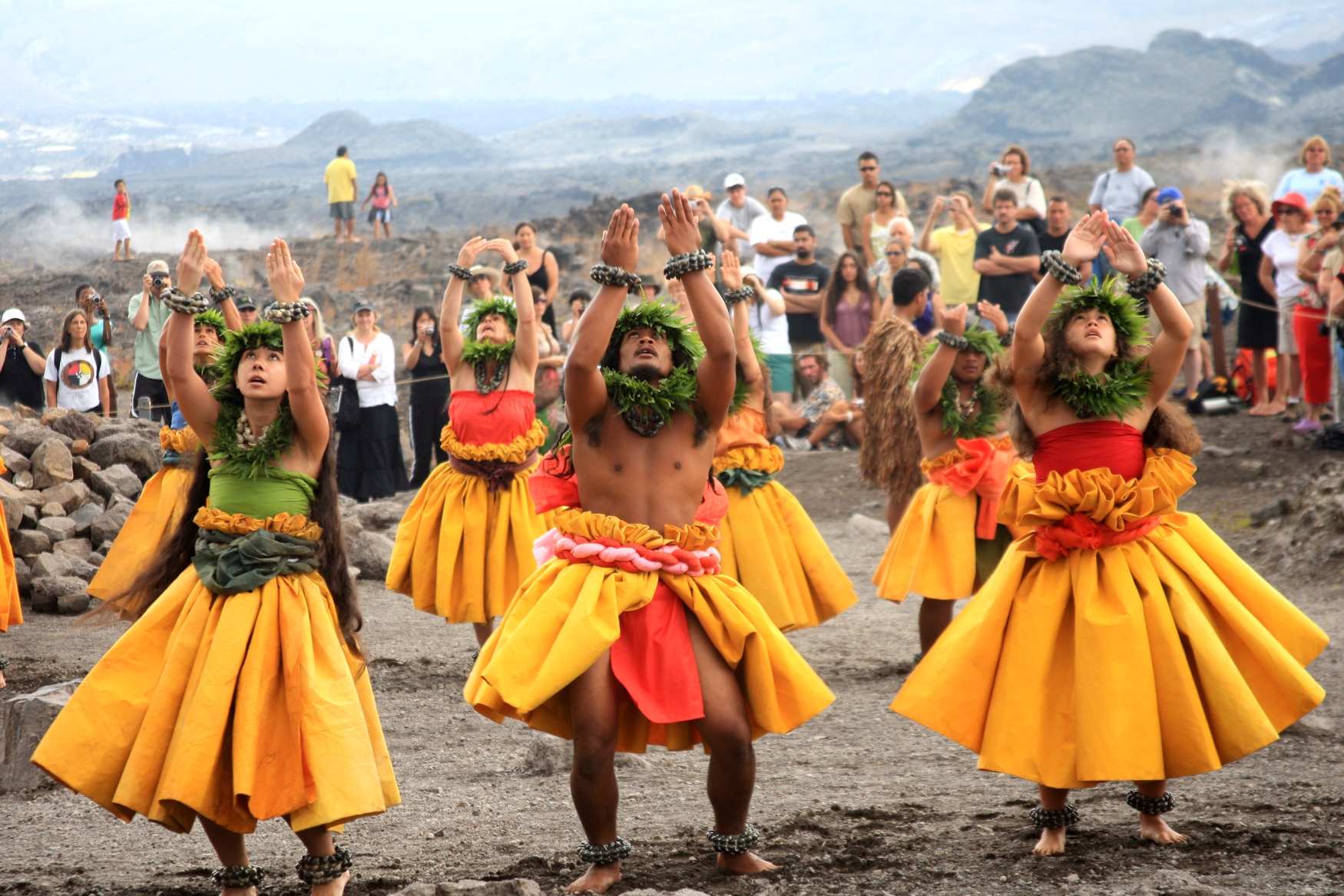
While not commonly used for everyday transactions by the general population, learning a few basic Hawaiian phrases like Aloha (hello, goodbye, love), Mahalo (thank you), and Ohana (family) will not only be appreciated by locals but will also deepen your connection to the islands’ unique cultural heartbeat. Many street names, place names, and natural landmarks – from Mauna Kea and Kilauea to Waikiki and Kona – are derived from ʻŌlelo Hawaiʻi, each carrying a story or description of the land.
The Colorful Tapestry of Hawai’i Creole English (Pidgin)
Beyond the official languages, Hawaii has its own distinct linguistic gem: Hawai’i Creole English, affectionately known as Pidgin. This vibrant and expressive creole language is an integral part of the local identity, spoken by many kama’aina (locals) across the islands.
Origins and Evolution
Pidgin developed in the late 19th and early 20th centuries on Hawaii’s sugar plantations. Laborers from diverse backgrounds – including China, Japan, the Philippines, Portugal, Korea, Puerto Rico, and the indigenous Hawaiians – needed a common language to communicate. They developed a simplified form of English that incorporated words, grammatical structures, and intonations from their native tongues, creating a rich linguistic fusion. Over generations, this pidgin language evolved into a fully-fledged creole, meaning it became the primary language for children born into these communities, developing its own consistent grammar and vocabulary.
Characteristics and Usage
Pidgin is characterized by its unique rhythm, cadence, and lexicon. While it draws heavily from English, it often uses a simplified sentence structure, omits articles, and incorporates words and phrases from Hawaiian, Japanese, Filipino (Tagalog and Ilocano), Portuguese, and Chinese. For example, Pau hana (from Hawaiian) means “finished work,” while slippahs refers to flip-flops. Phrases like Howzit? (How is it? / How are you?) and Chee hoo! (an exclamation of excitement or approval) are common in Pidgin conversations.
While English is used in formal settings, Pidgin thrives in casual conversation among locals, reflecting a shared heritage and sense of community. It’s the language of jokes, family gatherings, and everyday interactions in local eateries or surf spots along the North Shore of Oahu. Travelers will likely encounter Pidgin when interacting with locals in less tourist-centric areas, or simply by observing conversations around them. While not necessary for communication, a basic understanding of Pidgin’s characteristics can offer a deeper insight into the local culture and its distinct charm.
A Kaleidoscope of Cultures: Other Languages and Tourist Interaction
Hawaii’s history as a melting pot of cultures means that beyond English, Hawaiian, and Pidgin, you’ll encounter a rich array of other languages, particularly in urban centers like Honolulu and in communities with strong immigrant populations.
Linguistic Diversity from Around the World
Due to historical immigration patterns, particularly from Asia and other Pacific islands, you’ll find significant communities where languages like Japanese, Tagalog, Ilocano, Korean, and various Chinese dialects are spoken. Many locals are bilingual or even multilingual, especially those who grew up in households speaking a language other than English or Pidgin. This multicultural linguistic landscape adds another layer of depth to Hawaii’s identity, influencing everything from the diverse culinary scene to the vibrant local festivals.
For travelers, this diversity often means that tour operators catering to international tourists, especially from Japan or Korea, may offer services in those languages. Similarly, in popular tourist destinations, you might find staff in hotels, shops, and attractions who are proficient in multiple languages, ready to assist visitors from across the globe.

Practical Tips for Travelers and Embracing the Local Lexicon
For the vast majority of tourists, English will be perfectly sufficient for navigating Hawaii. However, making an effort to learn a few basic Hawaiian phrases is a wonderful way to show respect for the local culture and enhance your overall experience.
Here are a few essential Hawaiian words and phrases that will undoubtedly come in handy and be appreciated:
- Aloha: The most versatile word, meaning hello, goodbye, love, peace, and compassion. It embodies the spirit of Hawaii.
- Mahalo: Thank you.
- E komo mai: Welcome.
- A hui hou: Until we meet again.
- Ohana: Family (including chosen family and community). This concept is central to Hawaiian culture.
- Keiki: Child.
- Pau: Finished, done.
- Kokua: Help, assistance.
- Pono: Righteousness, balance.
You’ll also frequently encounter Hawaiian terms integrated into everyday English conversation, especially when referring to local food, landmarks, or cultural practices. Think of a lei (flower garland), a luau (traditional feast), a kahuna (priest or expert), or a pali (cliff). Learning these terms will not only help you understand directions or menu items but also give you a deeper appreciation for the unique lexicon that defines life in Hawaii.
When interacting with locals, don’t be afraid to strike up a conversation. Hawaiians are generally friendly and welcoming. If you hear Pidgin being spoken, it’s usually among locals, and they’ll happily switch to standard English if they perceive you might not understand. Attempting to speak Pidgin as a visitor is generally not recommended unless you are truly fluent, as it can sometimes come across as inauthentic or even mocking. The genuine effort to use Aloha and Mahalo, however, is always appreciated.
For those interested in delving deeper into the linguistic and cultural nuances, attending a cultural workshop, visiting a museum, or reading local literature can provide invaluable insights. Many hotels and resorts, particularly those that focus on local culture and experiences, like the Maui Hyatt Regency Resort or the Halekulani in Waikiki, offer cultural programs that introduce guests to ʻŌlelo Hawaiʻi and its significance.
In essence, the languages of Hawaii are a reflection of its soul: resilient, diverse, and steeped in history. While English provides the universal key to communication, the spirit of Aloha is truly unlocked by recognizing and respecting the melodic echoes of ʻŌlelo Hawaiʻi and the vibrant cadence of Pidgin. Your journey to Hawaii is not just about exploring its breathtaking landscapes and luxurious accommodations; it’s also an opportunity to immerse yourself in a truly unique linguistic and cultural experience, one that will enrich your understanding of these magical islands long after you’ve returned home.