
Aloha! Stepping onto the shores of the Hawaiian Islands is an immersion into a vibrant tapestry of cultures, and central to this experience is understanding the languages that have shaped and continue to resonate throughout this Pacific paradise. While English is undeniably the dominant language of daily life, tourism, and commerce, to truly appreciate Hawaii, one must delve into the rich linguistic heritage that predates its modern existence. The islands are a unique blend, a testament to centuries of history, migration, and cultural exchange.
The Enduring Voice of Hawaiian
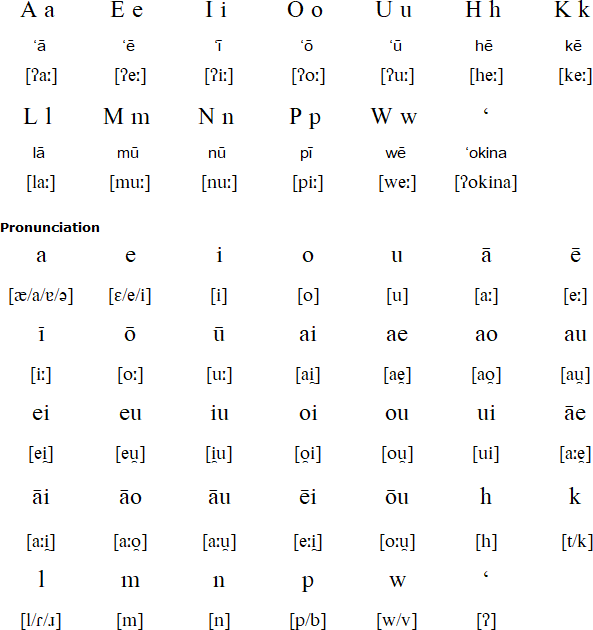
The most distinctive language spoken in Hawaii, and the one that holds profound cultural significance, is ʻŌlelo Hawaiʻi, the Hawaiian language. For centuries, it was the sole language of the native Polynesian people who first settled these islands. Its melodic sounds, rich vocabulary, and intricate grammatical structures are deeply intertwined with the very essence of Hawaiian identity, spirituality, and connection to the land (ʻāina).
A Language Reborn: From Near Extinction to Revitalization
The story of ʻŌlelo Hawaiʻi is one of resilience. Following the arrival of Western explorers and missionaries in the late 18th and early 19th centuries, English began to gain prominence. The annexation of Hawaii by the United States in 1898 marked a critical turning point, with ʻŌlelo Hawaiʻi being officially banned from public schools in 1896. This policy, tragically, had a devastating impact, leading to a rapid decline in the number of native speakers. For decades, the language teetered on the brink of extinction, kept alive primarily by older generations and in isolated communities.
However, the spirit of the Hawaiian people is tenacious. Beginning in the 1970s, a powerful cultural renaissance swept across the islands, with a renewed commitment to preserving and revitalizing ʻŌlelo Hawaiʻi. This movement, fueled by dedicated educators, cultural practitioners, and community leaders, has seen remarkable success. Today, ʻŌlelo Hawaiʻi is taught in immersion schools, universities, and community programs. It is heard in traditional chants (mele), hula performances, and increasingly, in everyday conversations. Signs across the islands often feature both English and Hawaiian place names, a visual reminder of this linguistic revival. Understanding a few basic Hawaiian phrases can significantly enrich your travel experience, showing respect for the local culture and opening doors to more authentic interactions.
The Multifaceted Linguistic Landscape of Modern Hawaii
While ʻŌlelo Hawaiʻi is the ancestral tongue, the modern linguistic landscape of Hawaii is far more diverse, reflecting its history as a crossroads of the Pacific. This diversity is a direct result of migration patterns that have brought people from all corners of the globe to these islands, each contributing their linguistic heritage.
English: The Lingua Franca of Today
As mentioned, English is the de facto language of Hawaii. It is the language of government, business, education, and the vast majority of day-to-day communication. For most tourists, navigating Hawaii will be a seamless experience using English. This includes interacting with hotel staff at renowned establishments like the Grand Hyatt Hotel, Four Seasons Resort Maui at Wailea, or the Moana Surfrider, A Westin Resort & Spa. You’ll hear it in bustling tourist hubs like Waikiki and in the more secluded beaches and national parks, such as Haleakala National Park.
Pidgin: A Unique Island Creole
Beyond formal English, Hawaii boasts a vibrant and widely spoken creole language known as Pidgin or Hawaiʻi Creole English. This unique dialect is a fascinating product of the Hawaiian Islands’ plantation era, where laborers from diverse linguistic backgrounds – including Chinese, Japanese, Filipino, and Portuguese – needed a common means of communication. Over time, Pidgin evolved, incorporating vocabulary and grammatical structures from these various languages, blended with English.
Pidgin is more than just a collection of words; it’s a distinct cultural expression, a symbol of shared identity and belonging for many Kamaʻāina (long-time residents). It’s characterized by its own unique slang, rhythm, and intonation. While it might sound like broken English to an outsider, Pidgin is a fully formed language with its own rules and nuances. You’ll hear it in casual conversations, at local diners, and among friends. While some might shy away from using it, understanding common Pidgin phrases can offer a glimpse into the local way of life and foster a deeper connection with the community. For travelers looking for authentic experiences beyond the typical tourist trails, encountering and appreciating Pidgin adds another layer to their Hawaiian adventure.
Other Languages: Echoes of the Past and Present
The rich tapestry of Hawaii’s languages also includes the echoes of its diverse immigrant communities. For a significant period, languages like Japanese, Chinese, Korean, Tagalog, and Portuguese were widely spoken, particularly within their respective communities. While the use of these languages has naturally declined with subsequent generations, they still hold cultural importance. You might still encounter older residents who converse in Japanese at a traditional grocery store in Honolulu, or hear Tagalog spoken in certain neighborhoods.
These linguistic remnants are part of the unique character of Hawaii. They contribute to the island’s charm and offer a window into its complex social history. Even if you don’t speak these languages, their presence is a subtle reminder of the multitude of journeys that have converged on these islands, creating the vibrant, multicultural society that Hawaii is today.
Embracing the Linguistic Richness for a Deeper Travel Experience
Understanding the languages of Hawaii is not just about knowing what to say; it’s about appreciating the history, culture, and people. For travelers, engaging with this linguistic diversity can transform a typical vacation into a truly immersive and enriching experience.
Cultural Immersion Through Language
When you visit Hawaii, whether you’re staying at a luxurious resort like the Halekulani Hotel or exploring the natural wonders of Volcanoes National Park on the Big Island, taking the time to learn a few basic Hawaiian words can go a long way. Simple greetings like “Aloha” (hello, goodbye, love) and “Mahalo” (thank you) are universally appreciated and demonstrate a genuine interest in the local culture. Learning the names of local foods, such as poi or laulau, can enhance your culinary exploration.
The revitalization of ʻŌlelo Hawaiʻi is a testament to the resilience and pride of the Hawaiian people. Supporting businesses that incorporate the language, visiting cultural centers, and attending events that celebrate Hawaiian heritage are all ways to contribute to its ongoing preservation. This not only enriches your travel but also supports the living culture of the islands.

Navigating with Linguistic Awareness
While English will serve you well for all practical purposes, a little linguistic awareness can enhance your interactions. Understanding that Pidgin is a valid and cherished form of communication can help you appreciate casual conversations you might overhear. Rather than being confused, you can recognize it as a unique linguistic expression of the islands.
When exploring different islands, like Oahu, Maui, Kauai, or the Big Island (also known as Hawaii Island), you’ll find that while the primary languages remain consistent, local dialects and cultural nuances can vary slightly. This adds to the charm and individuality of each destination. Whether you are marveling at the dramatic cliffs of the Na Pali Coast on Kauai or witnessing the active lava flows at Kilauea on the Big Island, the linguistic landscape is a subtle yet significant part of the overall Hawaiian experience.
In conclusion, the question of “What language is in Hawaii?” has a multifaceted answer. It is a land where the ancient and the modern coexist, where the melodic strains of ʻŌlelo Hawaiʻi are being reborn, the ubiquitous presence of English facilitates global connection, and the vibrant creole of Pidgin binds communities together. By acknowledging and appreciating this linguistic richness, travelers can unlock a deeper understanding and a more profound connection to the spirit of Aloha that defines these extraordinary islands.