
For enthusiasts of gripping drama and intricate character development, the “One Chicago” franchise offers an unparalleled viewing experience. Centered around the heroic first responders and dedicated medical professionals of the Windy City, Chicago Fire, Chicago P.D., and Chicago Med have captivated audiences worldwide. These shows, created by the masterful Dick Wolf, are more than just individual series; they are a sprawling universe, intricately woven together by crossover events, shared characters, and a deep reverence for the vibrant backdrop of Chicago, Illinois, in the United States.
For travelers and tourism aficionados, these series offer a unique way to explore Chicago’s iconic landmarks, diverse neighborhoods, and the dynamic lifestyle of its residents, all from the comfort of your home. However, navigating the expansive storylines across three concurrent shows can be daunting. The key to unlocking the full narrative depth and emotional impact of the franchise lies in watching them in the correct, chronological order, especially when it comes to their famous crossover events. This guide will provide a comprehensive viewing strategy to ensure you experience the One Chicago universe exactly as its creators intended, offering a virtual tour of one of America’s most beloved cities along the way.
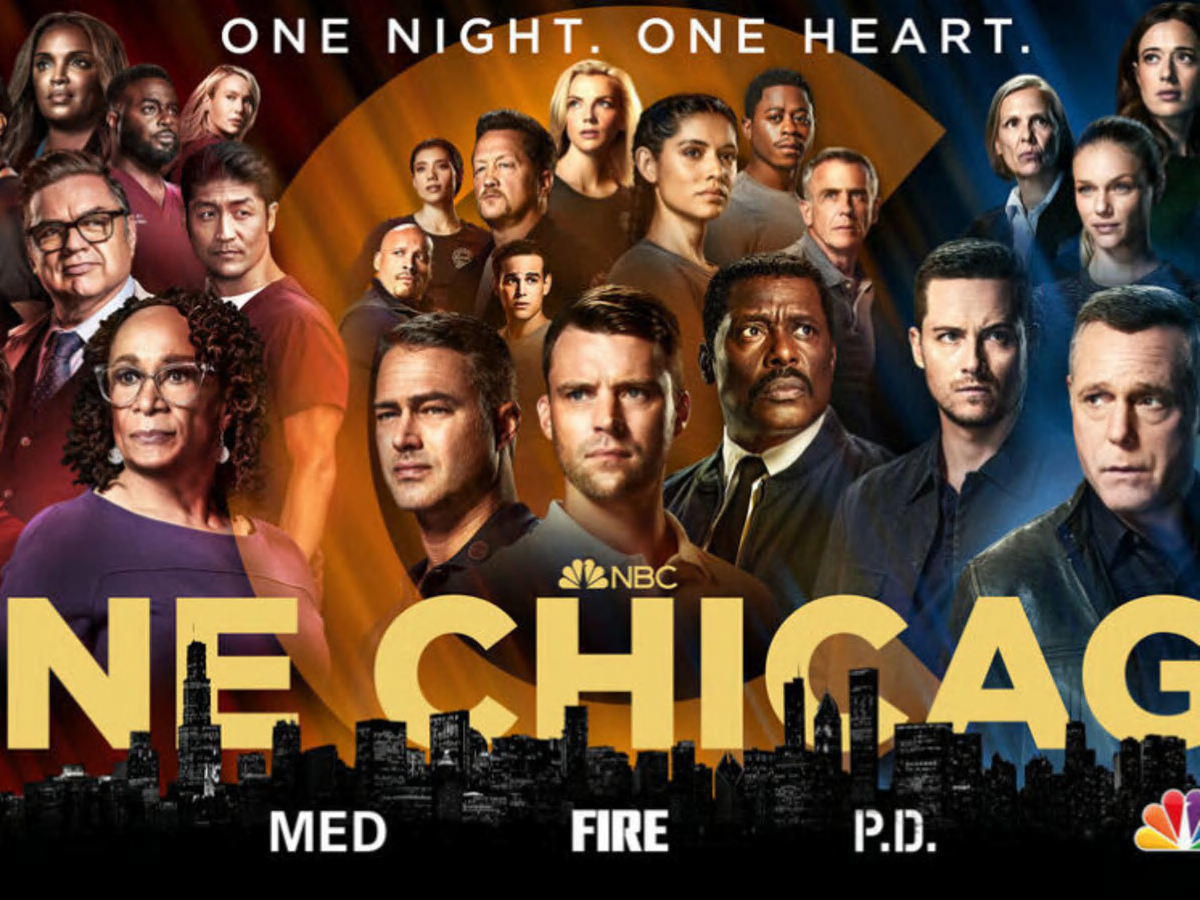
Understanding the One Chicago Universe: A City of Heroes
The One Chicago universe, produced by Wolf Entertainment and airing on NBC, delves into the high-stakes lives of firefighters, police officers, and doctors. Each show offers a distinct perspective on public service, yet they are intrinsically linked by their shared setting and frequent character interactions.
-
Chicago Fire: The flagship series, launched in 2012, follows the courageous paramedics and firefighters of Firehouse 51. It’s a drama rich in personal relationships, professional challenges, and the daily heroism required to save lives in perilous situations. From blazing infernos to harrowing rescues, the show highlights the camaraderie and sacrifices made by these first responders. Fans of travel and local culture will appreciate the detailed depiction of various Chicago neighborhoods and the city’s unique architectural landscape as the firefighters respond to calls across the metropolis.
-
Chicago P.D.: Spun off from Chicago Fire in 2014, this series focuses on the Intelligence Unit of District 21 of the Chicago Police Department. Led by the enigmatic Sergeant Hank Voight, the unit tackles organized crime, drug trafficking, and other serious offenses that plague the city. The show explores the moral complexities of law enforcement, often pushing the boundaries of traditional policing. It offers a grittier view of Chicago’s underbelly, contrasting sharply with the city’s grand public spaces and luxury accommodations.
-
Chicago Med: The third pillar of the franchise, debuting in 2015, transports viewers into the emergency department of Gaffney Chicago Medical Center. The series chronicles the daily chaos and life-and-death decisions faced by the doctors and nurses, intertwining their personal struggles with the medical cases they confront. This show provides insights into the healthcare system and the emotional toll of working in a demanding urban hospital, offering a glimpse into another vital aspect of Chicago’s infrastructure and lifestyle.
These series are not merely set in Chicago; the city itself is a character. Viewers get to witness the iconic Michigan Avenue skyline, the bustling streets of the Loop, and the unique charm of neighborhoods like Pilsen or Logan Square. This virtual exploration adds a rich layer for anyone interested in travel, tourism, and experiencing diverse urban destinations.
The Best Order: Navigating the Crossovers for a Seamless Story
The most rewarding way to watch the One Chicago series is to follow the original air date order. This approach is crucial because the shows frequently feature crossover episodes where characters and storylines seamlessly transition from one series to another. Watching these events out of sequence can lead to confusion, missed plot points, and a diminished understanding of character arcs that span across the franchise.
A General Guideline: Prioritizing Air Dates
The golden rule for watching the One Chicago universe is simple: always watch episodes in the order they originally aired. This typically means alternating between the shows, especially during crossover weeks. Major crossovers are often heavily advertised and designed as multi-part events, but even minor character appearances or ongoing plot threads can be confusing if not watched chronologically.
Key Periods for Chronological Viewing:
- Beginning with Chicago Fire: Start with Chicago Fire Season 1. This is the foundation of the universe, introducing key characters and the gritty reality of the city’s fire department.
- Integrating Chicago P.D.: Chicago P.D. was introduced in the middle of Chicago Fire Season 2. After watching Chicago Fire S2E19, you would then begin Chicago P.D. Season 1. From this point, you’ll be alternating between the two shows based on their air dates.
- Adding Chicago Med: Chicago Med premiered during Chicago Fire Season 4 and Chicago P.D. Season 3. There’s usually an introductory episode in one of the existing shows before Chicago Med officially begins. From this point forward, you will be juggling all three series based on their weekly air dates.
Example of a Major Crossover Event (e.g., Infection Crossover, Season 8 Fire, Season 7 P.D., Season 5 Med):
A typical major crossover involves a storyline that starts in one show, continues in the next, and concludes in the third. For instance, an outbreak might begin with a call to Firehouse 51, leading the firefighters to discover the initial source. This might then transition to the Intelligence Unit of District 21 investigating the criminal element behind it, and finally, the victims being treated at Gaffney Chicago Medical Center, where the doctors race to find a cure.
To watch such an event, you would literally watch the first part (e.g., Chicago Fire episode), then the second part (Chicago P.D. episode), and finally the third part (Chicago Med episode), all in succession, before returning to the regular programming schedule of each show.
Resources for Tracking the Order

While memorizing every episode number can be arduous, many fan-made viewing guides and online resources provide detailed chronological lists. A quick search for “One Chicago viewing order” will yield excellent results that break down each season episode-by-episode, highlighting crossover points. Streaming platforms often list episodes by their original air dates, which can also serve as a reliable guide. This meticulous approach ensures that you catch every nuance, every character development, and every shared storyline, deepening your appreciation for the interconnectedness of this sprawling fictional world.
Beyond the Chronology: Alternative Viewing Approaches
While the chronological, air-date order is recommended for the ultimate immersive experience, not every viewer has the time or inclination for such a detailed approach. Depending on your preferences, alternative viewing strategies can still offer enjoyment without missing too much of the core appeal.
Binge-Watching Each Series Individually
If the idea of constantly switching between shows feels too cumbersome, you can opt to watch each series from beginning to end, one at a time. For example, you could watch all seasons of Chicago Fire, then all seasons of Chicago P.D., and finally all seasons of Chicago Med.
- Pros: This method simplifies the viewing process, allowing you to focus on the specific characters and challenges of one profession at a time. It’s ideal for those who prefer to complete one narrative arc before moving to the next.
- Cons: You will inevitably miss out on the full impact of crossover events. Major plot points might seem to appear out of nowhere, and character relationships that develop across shows might feel less organic. References to events from other series might not make sense without context. However, for a casual viewer primarily interested in the standalone stories, this is a perfectly acceptable way to enjoy the shows.
Focusing on Specific Crossover Arcs
Another approach is to identify and watch only the major crossover events. These are typically multi-part episodes designed to be impactful and often drive significant plot developments.
- How to do it: Use online guides to find a list of all major One Chicago crossover events. Watch only these specific episodes in their chronological order.
- Pros: This is a time-efficient way to experience the most significant interconnected stories without committing to every single episode. It allows you to grasp the overarching narrative of the universe without getting bogged down in individual weekly plots.
- Cons: You will miss the character development and subplots that lead up to and follow these major events, making the emotional stakes potentially less resonant. This method is best for viewers who are already familiar with the shows or simply curious about the big franchise-wide stories.
Ultimately, the choice depends on your viewing style. However, for those seeking the most immersive and coherent narrative, the original air date order remains the gold standard.
Experiencing Chicago Through the Series: Travel & Lifestyle Connections
Beyond the compelling drama, the One Chicago series serves as an incredible virtual travel guide to the city of Chicago. For anyone planning a visit or simply dreaming of exploring new destinations, the shows offer a rich tapestry of the city’s unique charm, vibrant culture, and daily life. The production teams meticulously film on location, giving viewers an authentic glimpse into the city.
The exterior of Firehouse 51, for instance, is the actual Chicago Fire Department Engine 18 house located on S. Blue Island Ave in the city’s Near West Side neighborhood. The police station of District 21 is filmed at the historic Maxwell Street Station, offering a tangible connection to Chicago’s law enforcement history. While Gaffney Chicago Medical Center is a fictional hospital, many of its interior scenes are filmed at Rush University Medical Center and Cinespace Chicago Film Studios, seamlessly blending real locations with cinematic magic.
Watching the series allows you to virtually visit world-renowned landmarks and attractions. You’ll see characters navigating the bustling streets near Millennium Park with its iconic Cloud Gate sculpture, racing past the towering skyscrapers of the Loop, or engaging in intense scenes along the Chicago River and its magnificent bridges. The famous Magnificent Mile, a shopper’s paradise and a hub for luxury hotels like The Langham Chicago or The Peninsula Chicago, often serves as a backdrop, showcasing the city’s upscale lifestyle.
Beyond the major attractions, the shows delve into the heart of various Chicago neighborhoods, from the historic architecture of the Gold Coast to the vibrant nightlife of River North or the community spirit of Wrigleyville near Wrigley Field. This provides a nuanced understanding of Chicago’s diverse culture, its architectural marvels, and the everyday rhythms of its people.
If you’re planning a trip, consider staying at a historic Chicago hotel like The Blackstone Hotel, which itself has a rich past. You can then embark on your own “One Chicago” inspired tour, visiting filming locations, sampling Chicago’s legendary deep-dish pizza, or simply taking a stroll down State Street to soak in the atmosphere. The series highlights not just emergencies, but also the vibrant food scene, the supportive communities, and the resilience that defines Chicago. It’s a testament to the city’s tourism appeal, showcasing it as a destination rich in history, innovation, and unwavering spirit. Whether you are interested in accommodations, local culture, famous landmarks, or simply the lifestyle of a major American city, the One Chicago universe provides a captivating lens through which to explore it.
Conclusion
The “One Chicago” franchise offers a thrilling and emotionally resonant journey through the lives of the city’s everyday heroes. While the sheer volume of episodes across three interconnected series might seem daunting, following a chronological viewing order based on original air dates is undoubtedly the most rewarding approach. This strategy ensures you experience every major crossover event, every subtle character development, and every significant plot twist exactly as intended, fostering a deeper connection to the expansive narrative woven by Dick Wolf and his team.
Beyond the captivating storylines, these shows are a love letter to Chicago, showcasing its iconic landmarks, diverse neighborhoods, and the indomitable spirit of its residents. For armchair travelers and potential visitors alike, Chicago Fire, Chicago P.D., and Chicago Med provide an immersive experience that blurs the lines between entertainment and virtual tourism. So, queue up the episodes, prepare for an emotional rollercoaster, and get ready to fall in love with the heroes and the dynamic cityscape of Chicago. Whether you’re planning a future trip or simply seeking an engaging escape, the One Chicago universe is a destination worth exploring, one episode at a time.
LifeOutOfTheBox is a participant in the Amazon Services LLC Associates Program, an affiliate advertising program designed to provide a means for sites to earn advertising fees by advertising and linking to Amazon.com. Amazon, the Amazon logo, AmazonSupply, and the AmazonSupply logo are trademarks of Amazon.com, Inc. or its affiliates. As an Amazon Associate we earn affiliate commissions from qualifying purchases.