
For anyone planning a visit, considering a relocation, or simply conducting business with the Lone Star State, understanding “what is the time in Texas?” is more than a trivial detail – it’s a critical piece of information that can make or break travel plans, ensure smooth business operations, and enhance your overall experience. Texas, a sprawling and diverse state in the southern United States, is so vast that it actually spans two distinct time zones, presenting a unique challenge and opportunity for travelers and residents alike.
From the vibrant cosmopolitan energy of Houston and Dallas to the cultural richness of San Antonio and the live music capital of Austin, and stretching westward into the rugged landscapes near El Paso, Texas offers an incredible array of destinations and experiences. Whether you’re booking flights, scheduling hotel check-ins, planning a road trip across its expansive highways, or simply coordinating a virtual meeting, a clear grasp of Texas’s time zones and their seasonal adjustments is paramount. This guide will delve into the intricacies of Texas time, offering practical insights and tips to ensure your adventures, accommodations, and lifestyle pursuits in the state are perfectly timed.
Navigating Texas Time Zones: Central vs. Mountain
The geographical immensity of Texas dictates its division into two primary time zones. The vast majority of the state, including all its major metropolitan areas, observes one time zone, while a crucial western sliver operates on another. This distinction is vital for anyone planning to traverse the state or engage with different regions.
Central Standard Time (CST) Dominance
The predominant time zone across Texas is Central Standard Time (CST). This encompasses an overwhelming majority of the state’s population centers and tourist hotspots. During standard time, CST is 6 hours behind Coordinated Universal Time (UTC). When Daylight Saving Time is in effect, it shifts to Central Daylight Time (CDT), which is UTC.
Major cities and regions that observe CST (or CDT during Daylight Saving Time) include:
- Houston, renowned for its space exploration history at Space Center Houston and world-class Museum District Houston.
- Dallas, a hub for business, luxury travel, and historical sites like the Sixth Floor Museum at Dealey Plaza. The Dallas Arts District offers a rich cultural experience, while the Klyde Warren Park provides an urban oasis.
- Austin, the state capital and a vibrant center for live music, outdoor activities around Lady Bird Lake and Barton Springs Pool, and innovative cuisine. The Texas State Capitol is a landmark of historical and political significance.
- San Antonio, famous for the historic Alamo and the picturesque River Walk San Antonio, offering unique cultural and culinary experiences.
- Fort Worth, embracing its Western heritage at the Fort Worth Stockyards National Historic District, complemented by a thriving arts scene.
- Corpus Christi, a coastal city known for its beaches and proximity to Padre Island National Seashore and Mustang Island.
- Galveston, a historic island city with beautiful beaches and attractions like the Kemah Boardwalk nearby.
- Waco, popular for the Magnolia Market at the Silos and its rich history.
- Other significant cities like College Station, Lubbock, and Amarillo.
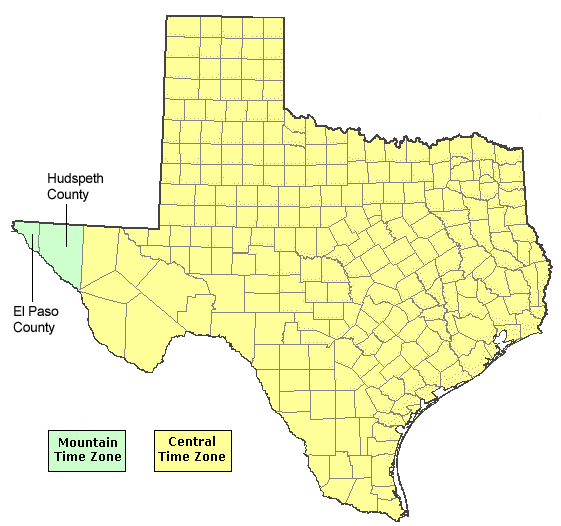
For travelers, staying within the CST portion of Texas simplifies planning significantly. You won’t need to adjust your watch as you travel between these major destinations, allowing for seamless transitions between attractions, hotel check-ins, and dining reservations. This uniformity makes planning multi-city itineraries relatively straightforward, whether you’re embarking on a vibrant urban escape or a scenic drive through the Texas Hill Country.
The Mountain Time Zone (MT) Exception
The most crucial exception to Texas’s predominant CST is the extreme western part of the state, which observes Mountain Standard Time (MST). This area is centered around the city of El Paso and includes the entirety of Hudspeth County, which borders New Mexico and Mexico. During standard time, MST is 7 hours behind UTC ([UTC-7]), and during Daylight Saving Time, it shifts to Mountain Daylight Time (MDT), which is UTC.
The key areas in the Mountain Time Zone are:
- El Paso, a unique border city with a rich blend of cultures and proximity to stunning natural landmarks like Franklin Mountains State Park.
- Hudspeth County, which includes small towns like Dell City and Salt Flat, and parts of the breathtaking Guadalupe Mountains National Park.
For travelers venturing into far West Texas from other parts of the state, this one-hour time difference can easily be overlooked but is immensely important. For example, driving from Midland or Odessa (CST) to El Paso (MST) means you gain an hour upon arrival, but going the opposite direction, you lose an hour. This can impact flight connections, meeting times, and even hotel check-in/check-out deadlines. Always double-check the local time when making plans that involve El Paso or other parts of Hudspeth County.
Daylight Saving Time in Texas: A Seasonal Shift
Like most of the United States, Texas observes Daylight Saving Time (DST). This annual adjustment means clocks are moved forward by one hour in the spring and back by one hour in the fall. This shift applies to both the Central Time Zone and the Mountain Time Zone within Texas.
- Spring Forward: Typically, clocks spring forward on the second Sunday in March, at 2:00 AM local time. CST becomes CDT ([UTC-5]), and MST becomes MDT ([UTC-6]).
- Fall Back: Clocks fall back on the first Sunday in November, at 2:00 AM local time. CDT reverts to CST ([UTC-6]), and MDT reverts to MST ([UTC-7]).
The observance of Daylight Saving Time means that for roughly eight months of the year, Texas operates on “daylight” time, offering more daylight in the evenings, which is fantastic for tourism and outdoor activities. For travelers, it’s crucial to be aware of these biannual shifts. Ensure your electronic devices automatically adjust, but always manually confirm if you’re traveling around these dates or relying on older clocks. This is especially important for international travelers who might already be contending with significant time zone differences, and adding DST to the mix requires careful attention to avoid missed flights or appointments.
Time-Sensitive Travel: Planning Your Texas Adventure
Understanding Texas’s time landscape is fundamental for crafting a smooth and enjoyable travel experience. From the initial booking stages to daily activity planning, time plays a pivotal role in ensuring you maximize your adventure.
Booking and Logistics: Seamless Journeys
For travelers, time zones directly impact the practicalities of travel and accommodation. Here’s how to navigate them:
- Flights and Transportation: When booking flights into or out of Texas, always confirm the local departure and arrival times. A flight arriving in Houston at 3 PM CST will feel very different to someone flying in from, say, California (PST), who might perceive it as 1 PM their time. For inter-state bus or train travel, such as with Amtrak, pay close attention to schedule changes, especially when crossing into or out of the Mountain Time Zone.
- Hotel Check-ins and Check-outs: Most hotels, whether it’s a luxury stay at the Marriott Marquis Houston, a boutique experience at The Joule Dallas, the expansive facilities of Hyatt Regency Austin, or the historic charm of Hotel Emma San Antonio, adhere to strict local check-in and check-out times. Arriving an hour late due to a time zone miscalculation could mean an unexpected wait or even an extra night’s charge if you miss the check-out deadline. For long-term accommodation, like apartments or villas, communicating arrival times with hosts is even more crucial.
- Restaurant Reservations and Tour Bookings: Texas boasts an incredible culinary scene and diverse tour offerings. Whether you’re hoping for a coveted reservation at Uchi Austin, aiming to snag some famous barbecue at Franklin Barbecue, or joining a guided tour of Big Bend National Park, all these experiences are time-bound. Always book and confirm in the local time zone to avoid disappointment.
- Business Stays and Meetings: For those on business trips, understanding the exact time in Texas is non-negotiable. Scheduling virtual meetings with local contacts, arranging factory visits in Fort Worth, or attending conferences in Dallas requires precision to avoid embarrassing miscommunications and missed opportunities.
Maximizing Your Texas Experience: Day and Night
Beyond logistics, being time-aware allows you to truly immerse yourself in the Texan lifestyle and enjoy its attractions to the fullest, from dawn till dusk.
- Mornings (Sunrise to Noon): Start your day early to beat the heat, especially during summer. Enjoy a classic breakfast taco in Austin, take a peaceful morning stroll along the River Walk San Antonio before the crowds gather, or embark on an invigorating hike in Big Bend National Park to witness the desert come alive. Many historical landmarks, such as The Alamo, open their doors in the morning, offering a serene experience before peak visitor hours.
- Afternoons (Noon to Sunset): This is prime time for indoor attractions and cultural explorations. Visit Space Center Houston for an awe-inspiring journey through space history, delve into the past at the Sixth Floor Museum in Dallas, or explore the vibrant Dallas Arts District. Shopping enthusiasts can indulge in retail therapy at the upscale Galleria Houston or explore unique boutiques in Fredericksburg in the Texas Hill Country. For nature lovers, afternoon kayaking on Canyon Lake or exploring the underground wonders of Natural Bridge Caverns or Caverns of Sonora are perfect.
- Evenings (Sunset to Late Night): Texas truly shines in the evening. Experience the legendary live music scene in Austin, with venues showcasing everything from blues to rock. Enjoy fine dining in Houston or Dallas, catch a professional sports game at AT&T Stadium or Globe Life Field in Arlington, or attend a rodeo in the Fort Worth Stockyards National Historic District. For a truly unique experience, head to West Texas for unparalleled stargazing opportunities at the McDonald Observatory or witness the mysterious Marfa lights near Marfa. Many festivals, like South by Southwest in Austin or the Pecan Street Festival, come alive in the evening hours.
Consider the seasonal timing as well. Spring brings the famous Bluebonnet Trail in Ennis and pleasant weather for outdoor activities. Summer is perfect for water parks like Schlitterbahn Waterpark in New Braunfels or beach trips to South Padre Island. Fall offers cooler temperatures ideal for exploring Palo Duro Canyon State Park or enjoying the vibrant foliage of the Texas Hill Country wine region.
Overcoming Time Differences: Tips for Travelers
Whether you’re traveling internationally or simply from one coast of the United States to Texas, managing time differences effectively can significantly enhance your travel experience and overall well-being.
- Combatting Jet Lag: For international visitors or those arriving from distant time zones, jet lag can be a real challenge.
- Adjust Gradually: Try to shift your sleep schedule by an hour or two each day in the days leading up to your trip.
- Hydrate and Avoid Caffeine/Alcohol: Stay well-hydrated during your flight and upon arrival. Limit caffeine and alcohol, as they can disrupt sleep.
- Seek Sunlight: Upon arrival, expose yourself to natural light, especially in the morning, to help reset your internal clock.
- Stick to Local Time: As soon as you arrive, try to follow the local time for meals and sleep, even if you’re not feeling tired.
- Short Naps: If you must nap, keep it short (20-30 minutes) to avoid deeper sleep cycles that can worsen jet lag.
- Communication Strategies:
- Inform Contacts: If you’re traveling for business or need to stay in touch with family, inform them of the time difference beforehand.
- Use Time Zone Converters: Utilize online tools or smartphone apps that display multiple time zones simultaneously. This is invaluable for scheduling calls or meetings with people in different locations.
- Scheduled Communication: Agree on specific times for calls or check-ins that are convenient for both parties, considering the time change.
- Utilize Technology:
- Smartphone Auto-Adjust: Most modern smartphones automatically update to the local time zone, but it’s always wise to double-check in your settings.
- World Clock Apps: Dedicated world clock apps allow you to easily see the current time in your home city and your Texas destination.
- Airline and Hotel Apps: Many airline and hotel apps will display local times for flights and accommodation bookings, providing an extra layer of reassurance.
- Embrace the Local Pace: Beyond the numerical time, consider the local rhythm of life. Early mornings might be quiet for contemplation at Big Bend Ranch State Park, while late evenings in Austin are for music and socializing. In Marfa, the art galleries and installations like Prada Marfa often have unique operating hours reflective of the relaxed desert lifestyle. Allowing yourself to adapt to the flow of the local time, rather than fighting it, will lead to a more authentic and less stressful travel experience.
In conclusion, understanding “what is the time in Texas?” is more than just a quick glance at a clock. It’s an essential part of planning, experiencing, and appreciating the vast and vibrant culture of this incredible state. By being mindful of the Central and Mountain Time Zones, accounting for Daylight Saving Time, and strategically planning your activities, you can ensure your Texas adventure unfolds smoothly and memorably, allowing you to immerse yourself fully in everything from its world-class hotels and iconic landmarks to its rich local culture and diverse lifestyle offerings. So, set your watch, plan your journey, and get ready to experience Texas on its own terms.