
Planning a getaway to the Sunshine State? Florida beckons with its sun-drenched beaches, world-famous theme parks, vibrant cities, and lush natural landscapes. From the magical realm of Walt Disney World Resort in Orlando to the Art Deco charm of Miami Beach, and the pristine shores of the Florida Panhandle, this diverse state offers an unparalleled array of experiences for every kind of traveler. However, before you book your flights, reserve your accommodation, or plan your itinerary, there’s one crucial detail you’ll want to clarify: Florida’s time zones.
While most of the state observes a single time zone, a significant portion of the Florida Panhandle operates on a different clock. This seemingly minor detail can have a major impact on your travel plans, from catching flights and making dinner reservations to coordinating with loved ones or ensuring you don’t miss out on a once-in-a-lifetime excursion. Understanding Florida’s time zones, and how Daylight Saving Time affects them, is key to a smooth, stress-free, and thoroughly enjoyable Florida adventure. Let’s delve into the intricacies of Florida’s time zones and equip you with the knowledge to navigate them like a seasoned traveler.
Navigating Florida’s Dual Time Zones: A Traveler’s Guide
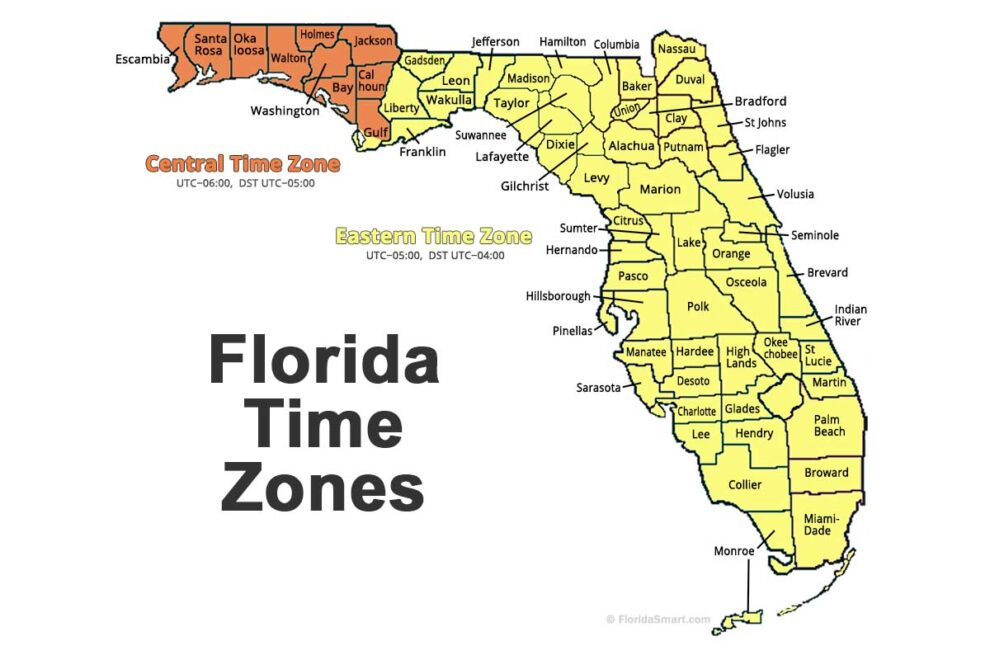
Unlike many states that fall entirely within a single time zone, Florida straddles two distinct zones: the Eastern Time Zone and the Central Time Zone. This geographical quirk is a legacy of the state’s expansive east-west reach and its connection to neighboring regions. For travelers, this means a little extra planning is required, especially if your journey takes you from one end of the state to the other.
The Eastern Time Zone (EST/EDT): The Sunshine State’s Dominant Clock
The vast majority of Florida, including all of its most popular tourist destinations, falls within the Eastern Time Zone. This means that for most visitors, their entire trip will be governed by Eastern Standard Time (EST) during the winter months and Eastern Daylight Time (EDT) during the spring, summer, and early autumn.
Key areas observing Eastern Time Zone include:
- South Florida: The bustling metropolitan areas of Miami, Fort Lauderdale, and Palm Beach. Here, you’ll find luxury resorts, world-class dining, and vibrant nightlife, all operating on EST/EDT. The subtropical paradise of the Florida Keys, stretching from Key Largo to Key West, also adheres to this time.
- Central Florida: Home to the globe’s most visited theme parks, Orlando is firmly in the Eastern Time Zone. This includes iconic destinations like Universal Orlando Resort, SeaWorld Orlando, and countless other attractions that draw millions of visitors annually. Nearby, cities like Tampa and Sarasota on the Gulf Coast also follow EST/EDT, offering stunning beaches, cultural attractions, and fantastic dining.
- North Florida: The historic city of St. Augustine, the vibrant metropolis of Jacksonville, and the state capital, Tallahassee, are all on Eastern Time. Even a portion of the Florida Panhandle, specifically east of the Apalachicola River (including all of Franklin County and parts of Gulf County), remains in the Eastern Time Zone. This means that if you’re traveling through the Panhandle, you’ll encounter the time zone change as you head west.
For most travelers, especially those flying into major hubs like Orlando International Airport (MCO) or Miami International Airport (MIA), their entire Florida experience will unfold within the familiar rhythm of the Eastern Time Zone.
Embracing the Central Time Zone (CST/CDT): The Panhandle’s Unique Rhythm
While the Eastern Time Zone dominates, a significant and beautiful part of Florida operates on the Central Time Zone. This encompasses the majority of the Florida Panhandle, which includes several counties west of the Apalachicola River and the eastern portion of the Apalachicola Bay. Here, during the colder months, the clock will read Central Standard Time (CST), shifting to Central Daylight Time (CDT) when Daylight Saving Time is in effect.
Counties primarily in the Central Time Zone include:
- Escambia County (home to Pensacola)
- Santa Rosa County
- Okaloosa County (including Destin)
- Walton County
- Holmes County
- Washington County
- Bay County (home to Panama City Beach)
- Jackson County
- Calhoun County
- The western part of Gulf County
The Panhandle is renowned for its sugar-white sands, emerald waters, and a more laid-back atmosphere compared to the bustling south and central regions. Destinations like Destin, Panama City Beach, and Pensacola offer incredible beaches, fantastic fishing, and diverse outdoor activities. However, if your itinerary involves driving across the Panhandle or flying into airports like Northwest Florida Beaches International Airport (ECP) near Panama City Beach or Pensacola International Airport (PNS), you’ll be operating on Central Time.
The time zone boundary roughly follows the Apalachicola River. This can be a point of confusion for travelers driving west from Tallahassee (which is in Eastern Time) towards Panama City or Destin. A simple drive of an hour or so can mean suddenly losing an hour on the clock, or gaining one if you’re traveling eastward. It’s a phenomenon that can lead to missed appointments or early arrivals if not accounted for.
Daylight Saving Time in Florida: Adjusting Your Travel Clock
Adding another layer of complexity to Florida’s time zones is the annual observance of Daylight Saving Time (DST). Like most of the United States, Florida “springs forward” one hour in early March and “falls back” one hour in early November. This means that during roughly eight months of the year, both the Eastern Time Zone and the Central Time Zone shift from Standard Time (EST/CST) to Daylight Time (EDT/CDT).
Impact of DST on your Florida trip:
- Timing is Everything: If your trip coincides with the changeover dates, be acutely aware of whether the clocks are advancing or retreating. This can affect everything from your flight departure and arrival times to your pre-booked excursions and dinner reservations.
- More Sunlight for Activities: The primary benefit of DST for travelers is the extended daylight hours in the evening. This means more time to enjoy Florida’s outdoor attractions, whether it’s an afternoon on the beach, an evening stroll through a historic district, or a late-night visit to a theme park.
- The “Sunshine Protection Act”: It’s worth noting that Florida passed the “Sunshine Protection Act” in 2018, which would make Daylight Saving Time permanent year-round. However, this act requires federal approval to take effect, and as of now, that approval has not been granted. Therefore, for your Florida trip, you should still anticipate the annual shift to and from Daylight Saving Time. Always double-check current practices close to your travel dates.
Practical Implications for Your Florida Itinerary
Understanding Florida’s time zones isn’t just about academic knowledge; it has tangible effects on the practicalities of your travel. A miscalculation could lead to missed flights, forfeited bookings, or simply unnecessary stress during what should be a relaxing vacation.
Booking Flights and Accommodations: Beyond the Clock
- Flight Times: Always confirm whether flight times are listed in local time or your origin time zone. While most airlines specify local times for departure and arrival, a connection within Florida that crosses the time zone boundary could easily cause confusion. For instance, a flight departing Pensacola (CST) at 10:00 AM might arrive in Orlando (EST) at 12:00 PM, meaning a 2-hour flight takes 2 hours, but the clock shows a 2-hour difference.
- Hotel Check-in/Check-out: When booking hotels, resorts, or villas in the Panhandle, be mindful of the check-in and check-out times. If you’re driving from Eastern Time, ensure your arrival isn’t unexpectedly an hour later than planned by the local clock, potentially leading to late check-in fees or a scramble.
- Transportation Services: Whether it’s a rental car pickup, a shuttle service, or a pre-booked taxi, all these services will operate on local time. Double-check all confirmation emails for time zone clarification.
Seamless Sightseeing and Activity Planning
- Theme Parks and Attractions: Major attractions like Walt Disney World Resort and Universal Orlando Resort in Orlando (EST/EDT) operate on a precise schedule. However, if you plan to visit attractions in the Panhandle, such as the National Naval Aviation Museum in Pensacola or the Gulfarium Marine Adventure Park in Fort Walton Beach (both CST/CDT), remember the one-hour difference. Opening and closing times, show schedules, and tour departures are all tied to the local clock.
- Restaurant Reservations: Nothing can spoil a special evening quite like arriving an hour late for a prized restaurant reservation. When dining out, especially in a new time zone, always confirm the local time. This is particularly crucial if you’re venturing from one time zone to another on the same day.
- Boat Tours and Excursions: From deep-sea fishing charters off Destin to dolphin-watching boat tours in Key West, these activities operate on a strict schedule. Ensure you know which time zone the activity provider is using, and adjust your personal clock accordingly.
Communication and Coordination Across Time Zones
- Connecting with Tour Operators: If you’ve booked a guided tour or specific experience, confirm communication times with the operator. They will usually specify local time, but it’s always best to be absolutely sure.
- Family and Friends: If you’re coordinating with family or friends traveling separately, or meeting up at a certain point in Florida, ensure everyone is on the same page regarding the current time zone. A simple phone call can avert confusion.
- Business Stays: For those on business stays or mixing leisure with work, scheduling conference calls or meetings across the time zone boundary within Florida (or with colleagues outside the state) demands extra attention.
- Leverage Technology: Your smartphone is your best friend when it comes to time zones. Most modern phones automatically update to the local time zone when you cross a boundary. Utilize the world clock feature to track both Eastern and Central Time simultaneously.
Making the Most of Your Florida Visit: Time Zone Savvy Tips
With a little preparation, navigating Florida’s time zones can be effortless, ensuring your trip is filled with joy and free from time-related mishaps. Here are some savvy tips to keep in mind:
- Always Confirm Local Times: When making any reservation, booking, or planning an activity, explicitly ask or look for confirmation of the local time zone. Don’t assume.
- Trust Your Smartphone: Let your phone do the work. It’s programmed to automatically update as you travel. Just ensure your location services are enabled.
- Use a World Clock Widget: For added peace of mind, set up a world clock widget on your phone or smartwatch showing both Eastern and Central Time for Florida. This is especially useful if you’re constantly crossing the boundary.
- Factor in Transition Time: If you’re driving from, say, Tallahassee (EST) to Destin (CST), remember that you’ll “gain” an hour as you cross into the Central Time Zone. This might sound like a bonus, but it means a 9 AM appointment in Destin would require you to leave Tallahassee an hour earlier by the clock, in addition to the actual driving time.
- Inform Your Travel Companions: If you’re traveling in a group, ensure everyone is aware of the time zone changes, especially if someone relies on a traditional watch.
- Embrace the Adventure: While it requires a bit of attention, crossing a time zone boundary within a single state is a unique aspect of traveling through Florida. Consider it part of the adventure and a fun fact to share!
- Plan Buffer Times: Build in extra buffer time for important appointments, especially when traveling between zones, to account for any unforeseen delays or confusion.
Florida is a magnificent destination, brimming with diverse attractions and unforgettable experiences. From the vibrant city lifestyle of Miami to the serene natural beauty of the Everglades National Park and the family fun of Orlando’s theme parks, there’s truly something for everyone. By understanding and accounting for its dual time zones and the observance of Daylight Saving Time, you can ensure your trip unfolds smoothly, allowing you to fully immerse yourself in all the magic the Sunshine State has to offer. Pack your bags, set your clock (or let your phone do it!), and get ready for an incredible Florida adventure.
