
Florida, often dubbed the “Sunshine State,” is a premier destination for travelers from across the globe. Its allure spans from the world-renowned theme parks of Orlando to the vibrant nightlife of Miami, the serene beaches of the Florida Keys, and the historical charm of St. Augustine. This vast and diverse state, however, operates on a particular time zone that can be crucial for planning your travel itinerary, booking accommodations, and understanding local events. Navigating the nuances of time in Florida ensures you make the most of your experiences, whether you’re catching an early morning flight, booking a sunset cruise, or simply trying to synchronise with local happenings.
The question “What time is it in Florida?” might seem straightforward, but understanding the state’s time zone, potential for Daylight Saving Time adjustments, and the subtle differences between its regions is key to a seamless trip. This comprehensive guide will delve into the temporal landscape of Florida, offering insights that will enhance your travel planning and overall experience.
Understanding Florida’s Time Zones
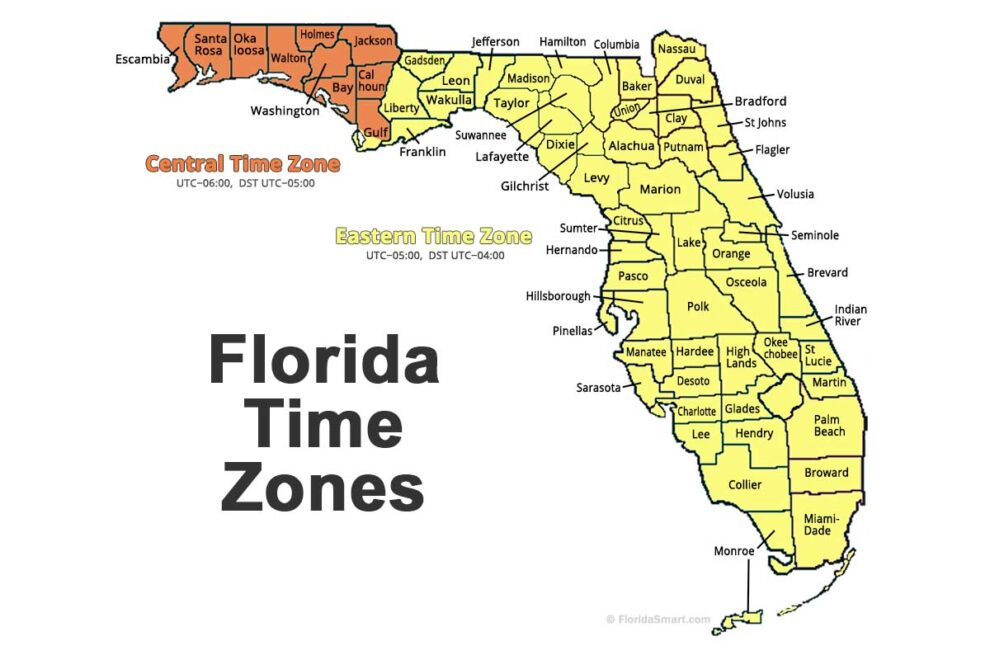
Florida is unique in that it is divided into two distinct time zones: the Eastern Time Zone (ET) and the Central Time Zone (CT). This division is not arbitrary but reflects geographical and historical considerations. The vast majority of Florida, including its most populated areas like Miami, Orlando, Fort Lauderdale, and Jacksonville, observes Eastern Standard Time (EST) during standard months and Eastern Daylight Time (EDT) during daylight saving months. This is the same time zone observed by much of the eastern seaboard of the United States.
However, a sliver of the western panhandle of Florida, west of the Apalachicola River, falls within the Central Time Zone. This includes cities like Pensacola and Panama City. This means that while a significant portion of the state is observing ET, a smaller, western segment operates on CT. It is vital for travelers, especially those venturing into the panhandle or needing to connect with people or services in both regions, to be aware of this distinction. For instance, if you have a business meeting scheduled in Tampa (ET) and a dinner reservation in Destin (CT), you’ll need to factor in that one-hour difference.
The Eastern Time Zone: The Heart of Sunshine
The Eastern Time Zone is the predominant time zone in Florida, encompassing nearly 80% of the state’s landmass and population. For most visitors, when they think of Florida time, they are thinking of ET. This zone adheres to the standard time observed across a wide swathe of the United States, from Maine down to Georgia and into Florida.
- Eastern Standard Time (EST): This is the time observed during the fall and winter months. EST is UTC-5, meaning it is five hours behind Coordinated Universal Time.
- Eastern Daylight Time (EDT): During the spring and summer months, from the second Sunday in March to the first Sunday in November, clocks are moved forward by one hour. EDT is UTC-4. This transition is a national observance in the United States, designed to maximize daylight hours during warmer months.
This means that popular tourist hubs like Walt Disney World Resort, Universal Orlando Resort, Everglades National Park, and the beaches of South Beach all operate on Eastern Time. When planning your theme park visits, character dining reservations, or catching a flight from Miami International Airport, you’ll be working with EDT in the summer and EST in the winter. Understanding EDT/EST is crucial for aligning with park opening and closing times, show schedules, and local restaurant reservations.
The Central Time Zone: A Western Slice
The Central Time Zone in Florida is confined to the westernmost part of the panhandle, extending from the Apalachicola River westward. Cities such as Pensacola, Fort Walton Beach, and Panama City are in this zone. Like the Eastern Time Zone, the Central Time Zone also observes Daylight Saving Time.
- Central Standard Time (CST): During standard months, CT is UTC-6.
- Central Daylight Time (CDT): During daylight saving months, CT becomes UTC-5.
The one-hour difference between ET and CT is a significant point for travelers moving between these regions. For example, if it’s 2:00 PM EDT in Miami, it’s only 1:00 PM CDT in Pensacola. This is particularly important for travel logistics. If you are driving from Orlando to Destin, you will cross into a different time zone. Ensure your GPS and travel apps are set to reflect the correct time zone for your destination to avoid confusion and missed appointments. Many travelers are unaware of this distinction, leading to potential miscalculations when planning their journeys across the state.
Planning Your Florida Adventures: Time-Sensitive Considerations

The temporal nuances of Florida play a critical role in planning various aspects of your trip, from booking hotels and tours to experiencing local attractions and cuisine. Being mindful of the time zones and Daylight Saving Time can prevent costly mistakes and enhance your overall travel experience.
Aligning with Attractions and Activities
Florida boasts an incredible array of attractions and activities, many of which have specific operating hours that are strictly adhered to. When booking your tickets for Walt Disney World, for example, all showtimes, parade schedules, and park opening/closing hours are based on Eastern Time. Likewise, if you’re planning to visit the historical sites in St. Augustine, explore the marine life at SeaWorld Orlando, or experience the thrill of Busch Gardens Tampa Bay, their schedules will be set to ET.
For those venturing into the western panhandle, such as exploring the pristine beaches of Gulf Shores (though technically in Alabama, often accessed via Florida’s panhandle) or visiting Navarre Beach, you’ll need to consider the Central Time Zone. A 7:00 PM sunset cruise departing from Clearwater (ET) will occur an hour later relative to the sun’s position than a similar cruise from Destin (CT), if both are scheduled for the same local time. This distinction is vital for activities heavily reliant on natural light, like beachcombing, dolphin watching tours, or enjoying a sunset dinner by the coast.
When booking tours, especially those that involve travel between different parts of the state or that have early morning departures, always confirm the departure time and the time zone it is referenced in. Tour operators are usually clear, but double-checking can save you from an unwanted early start or a missed opportunity.
Navigating Accommodation Bookings
Booking your accommodation in Florida requires careful attention to the time zone, especially if you’re coordinating with a group or have specific check-in/check-out times. Most hotels, resorts, apartments, and villas will operate according to the local time zone of their location.
If you are staying in a large hotel chain with properties in both Eastern and Central time zones, ensure you are referencing the correct local time for your specific booking. For example, a late check-in at a Four Seasons Resort in Miami will have a different actual clock time than a late check-in at a Sandestin Golf and Beach Resort in the panhandle.
Consider the impact of time zones on your arrival and departure. If you have a flight arriving in Tampa International Airport (ET) and are driving to a vacation rental in Seaside (CT), you’ll gain an hour on your journey. Conversely, if your departure is from Pensacola International Airport (CT) after a stay in Orlando (ET), you’ll need to account for that hour difference when calculating your travel time to the airport. This is particularly important for ensuring you arrive on time for your flight, especially if you’re navigating the complexities of airport security and check-in procedures.

Embracing the Lifestyle: Luxury, Budget, and Family Trips
The diverse lifestyle offerings in Florida mean that time can impact your choices across the spectrum, from high-end luxury escapes to budget-friendly family vacations.
For those indulging in luxury travel, booking spa appointments, fine dining reservations, or exclusive private tours in cities like Palm Beach or Naples will be governed by Eastern Time. The ambiance of a sunset cocktail at a rooftop bar in Miami might feel an hour earlier or later depending on whether you are on the Atlantic coast or the Gulf Coast.
For budget travelers and family trips, understanding time is crucial for maximizing your fun and minimizing stress. Planning your visits to attractions like Kennedy Space Center Visitor Complex or the numerous water parks ensures you arrive during opening hours without rushing. If your family trip involves exploring both the historical sites of St. Augustine and the natural beauty of Biscayne National Park, you’ll be navigating within Eastern Time. However, if your itinerary takes you further west to explore the unique dune lakes near Santa Rosa Beach or the Gulf Islands National Seashore in the panhandle, remember the Central Time Zone.
For business stays, punctual arrivals for meetings and conferences are paramount. Whether you’re attending a convention in Orlando, meeting clients in Jacksonville, or conducting business in the western panhandle, a clear understanding of the local time is non-negotiable.
In conclusion, while the question “What time is it in Florida?” might seem simple, the answer is layered with regional distinctions and seasonal adjustments. By understanding the Eastern and Central Time Zones and the impact of Daylight Saving Time, travelers can plan their Florida adventures with greater precision, ensuring they capture every moment of the Sunshine State’s diverse offerings, from its iconic landmarks and vibrant cities to its serene natural landscapes and exciting theme parks. A little temporal awareness goes a long way in making your Florida vacation truly unforgettable.