
In an increasingly connected world, knowing the local time in a distant city is more than just a matter of curiosity; it’s a practical necessity for travelers, business professionals, and anyone planning a visit or communication across time zones. For those wondering about the current moment in Minneapolis, Minnesota, the answer lies within the Central Time Zone. As of any given moment, Minneapolis observes either Central Standard Time (CST) or Central Daylight Time (CDT), depending on the time of year. Specifically, Minneapolis is typically six hours behind Coordinated Universal Time (UTC) during Central Standard Time (UTC-6) and five hours behind during Central Daylight Time (UTC-5), which is observed from early March to early November.
But understanding the time in Minneapolis is just the first step in appreciating what this vibrant Midwest gem has to offer. Whether you’re planning a trip, connecting with loved ones, or simply curious about life in this dynamic United States city, delving into its unique attractions, diverse culture, and accommodating lifestyle reveals why so many are drawn to its charm. This article will not only clarify the current time but also serve as your comprehensive guide to travel, tourism, and accommodation in the “City of Lakes,” ensuring you make the most of every moment during your visit.
Understanding Central Time: Minnesota’s Temporal Anchor
Minnesota is firmly situated within the Central Time Zone (CT), a geographical region that spans much of the central United States, parts of Canada, and Mexico. This time zone distinction is crucial for anyone coordinating plans with residents or businesses in Minneapolis from other parts of the world. The constant shift between Central Standard Time and Central Daylight Time adds another layer to this understanding, impacting everything from flight schedules to dinner reservations.
Central Standard Time (CST) vs. Central Daylight Time (CDT)
The concept of Daylight Saving Time (DST) means that the clocks in Minneapolis do not remain static throughout the year. From the second Sunday in March to the first Sunday in November, Minneapolis observes Central Daylight Time (CDT). During this period, clocks are moved forward by one hour, making Minneapolis UTC-5. This adjustment is designed to make better use of natural daylight, pushing sunset later into the evening.
When Daylight Saving Time ends, typically on the first Sunday of November, clocks are moved back one hour, returning to Central Standard Time (CST). At this point, Minneapolis operates at UTC-6. This cycle means that depending on the season, there’s a different time difference to account for when communicating internationally or planning your arrival. For instance, if you’re traveling from London, which observes Greenwich Mean Time (GMT) or British Summer Time (BST), the time difference could be anywhere from six to eight hours, emphasizing the importance of a quick online check before scheduling. Reliable sources for current time include timeanddate.com, worldclock.com, or a simple Google search for “current time in Minneapolis.”
Practical Implications for Travelers
Understanding the time zone in Minneapolis extends beyond mere curiosity; it has tangible impacts on the traveler’s experience. Jet lag, for instance, can be a significant factor for those arriving from distant time zones. Travelers from the east will likely find themselves adjusting to waking up later, while those from the west might struggle with earlier mornings. Planning your arrival with this in mind, perhaps scheduling a lighter itinerary for your first day, can greatly ease the transition.
Flight schedules, hotel check-ins, restaurant reservations, and attraction opening hours are all tied to the local time. For business travelers, being aware of the time difference is critical for scheduling meetings, virtual conferences, and communicating with clients or colleagues. Confirming all booked times in local Minneapolis time is a simple yet effective way to avoid misunderstandings and ensure a smooth start to your trip. Moreover, many modern devices automatically adjust to local time upon arrival, but it’s always wise to double-check your phone or watch against a reliable local source.
Beyond the Clock: Why Minneapolis is a Timeless Destination
While knowing the current time in Minneapolis is essential for practical planning, it merely scratches the surface of what makes this city a truly exceptional travel destination. Minneapolis is a vibrant hub of art, culture, natural beauty, and culinary innovation, offering a diverse array of experiences that cater to every type of traveler. From its iconic landmarks to its thriving arts scene and delectable food, the city invites visitors to explore and immerse themselves in its unique character.
Urban Adventures and Iconic Landmarks
Minneapolis is famous for its stunning natural landscapes seamlessly integrated into an urban environment. The city is often referred to as the “City of Lakes” due to its impressive Chain of Lakes system, which includes Lake Harriet, Lake of the Isles, and Bde Maka Ska (formerly Lake Calhoun). These lakes, connected by scenic parkways and walking/biking trails, provide endless opportunities for outdoor recreation, from kayaking and paddleboarding in summer to ice skating in winter.
Another must-visit landmark is the historic Stone Arch Bridge. Offering breathtaking views of the Mississippi River and the downtown skyline, this former railroad bridge is now a pedestrian and bike path, perfect for a leisurely stroll. Nearby, Minnehaha Park captivates visitors with its majestic 53-foot Minnehaha Falls, lush trails, and vibrant gardens, providing a tranquil escape within the city limits.
For art enthusiasts, the Minneapolis Sculpture Garden, home to the iconic “Spoonbridge and Cherry,” is an essential stop. Adjacent to the Walker Art Center, one of the nation’s leading contemporary art museums, this area offers a blend of outdoor spectacle and indoor artistic exploration. Sports fans will find themselves at home with world-class venues like U.S. Bank Stadium, home to the NFL’s Minnesota Vikings, and Target Field, where the MLB’s Minnesota Twins play.
Culinary Delights and Local Culture
Minneapolis’s cultural scene is as diverse as its population. The city boasts a thriving performing arts community, anchored by institutions like the Guthrie Theater, renowned for its innovative productions and stunning architecture overlooking the Mississippi River. Live music venues, from the legendary First Avenue (a launchpad for artists like Prince) to intimate jazz clubs, ensure there’s always a beat to follow.
The culinary landscape in Minneapolis is equally impressive. From farm-to-table restaurants showcasing local produce to a burgeoning craft brewery scene, foodies will find plenty to savor. Neighborhoods like Northeast Minneapolis are hubs for artisanal eateries and breweries, offering unique flavors and experiences. Don’t miss the chance to try a “Juicy Lucy,” Minneapolis’s iconic cheese-stuffed burger, a true local delicacy. Additionally, the Midwest location makes for a unique fusion of hearty traditional fare and modern, globally inspired cuisine, reflecting the city’s diverse ethnic communities. For a truly unique shopping and entertainment experience, the nearby Mall of America in Bloomington offers over 500 stores, an indoor amusement park, and an aquarium, making it a destination in itself.

Where to Stay: Accommodations for Every Minneapolis Experience
When planning your trip to Minneapolis, choosing the right accommodation is key to enhancing your overall experience. The city offers a wide spectrum of lodging options, from opulent luxury hotels to comfortable budget-friendly stays and unique vacation rentals, ensuring every traveler finds their perfect home away from home. Proximity to attractions, desired amenities, and travel style will guide your decision, but rest assured, Minneapolis has something for everyone.
Luxury and Boutique Stays
For those seeking an indulgent experience, Minneapolis boasts several upscale hotels that combine sophisticated design with impeccable service. The Hotel Ivy, a Luxury Collection Hotel, offers an elegant retreat in the heart of downtown, known for its lavish rooms, world-class spa, and fine dining options. Housed within a historic skyscraper, the W Minneapolis – Foshay provides a trendy, upscale stay with panoramic city views from its observation deck. Its Art Deco charm blended with modern amenities makes it a standout choice.
Another excellent option is the Loews Minneapolis Hotel, which offers luxurious comfort and direct access to the city’s skyway system, perfect for navigating downtown during colder months. These luxury hotels often feature high-end restaurants, fitness centers, and concierge services, catering to guests who appreciate refined experiences and convenient access to the city’s business and entertainment districts. They are ideal for business travelers or those on a romantic getaway seeking an elevated stay.
Budget-Friendly and Family Options
Travelers on a tighter budget or those visiting with family will find a wealth of accommodating choices in Minneapolis. Many well-known hotel chains offer comfortable and affordable rooms in various locations, including downtown, near the University of Minnesota, and closer to the Mall of America in Bloomington. Options like Holiday Inn Express, Hampton Inn, and Comfort Inn provide reliable amenities such as complimentary breakfast, free Wi-Fi, and often indoor pools, which are a big hit with families.
For extended stays or those preferring more space and a home-like environment, vacation rentals through platforms like Airbnb or VRBO are increasingly popular. These options range from cozy apartments in vibrant neighborhoods to spacious homes, offering kitchens and multiple bedrooms, ideal for families or groups. They also provide an opportunity to experience Minneapolis like a local, immersing oneself in residential areas and local culture. When booking, always read reviews and consider the proximity to public transport or the attractions you plan to visit to ensure convenience and ease of travel.
Navigating Minneapolis Lifestyle: Tips for a Seamless Visit
Experiencing Minneapolis goes beyond checking off a list of attractions; it’s about embracing the city’s unique lifestyle. From its efficient transportation system to seasonal considerations and insider tips, understanding how to navigate the city will help you maximize your enjoyment and ensure a seamless, memorable visit. The city prides itself on being accessible, welcoming, and full of opportunities for both relaxation and adventure.
Getting Around
Minneapolis is known for its excellent public transportation network, making it easy to explore without a car. The METRO Light Rail system, particularly the Blue and Green lines, connects major points of interest including downtown Minneapolis, St. Paul, the University of Minnesota, Minnehaha Park, and Minneapolis-St. Paul International Airport (MSP). The extensive bus system further expands reach to virtually every neighborhood. A Metro Transit pass or app can simplify fare payment.
For a unique urban experience, Minneapolis is incredibly bike-friendly, boasting miles of dedicated bike lanes and trails. Bike-sharing programs are available seasonally, offering an eco-conscious and enjoyable way to see the sights, especially along the Chain of Lakes and the Mississippi Riverfront. Ridesharing services (Uber, Lyft) and traditional taxis are also readily available. While a car rental might offer more flexibility for day trips outside the city or visits to more distant suburbs, it’s often not necessary for exploring the main attractions within Minneapolis itself.
Best Time to Visit and What to Pack
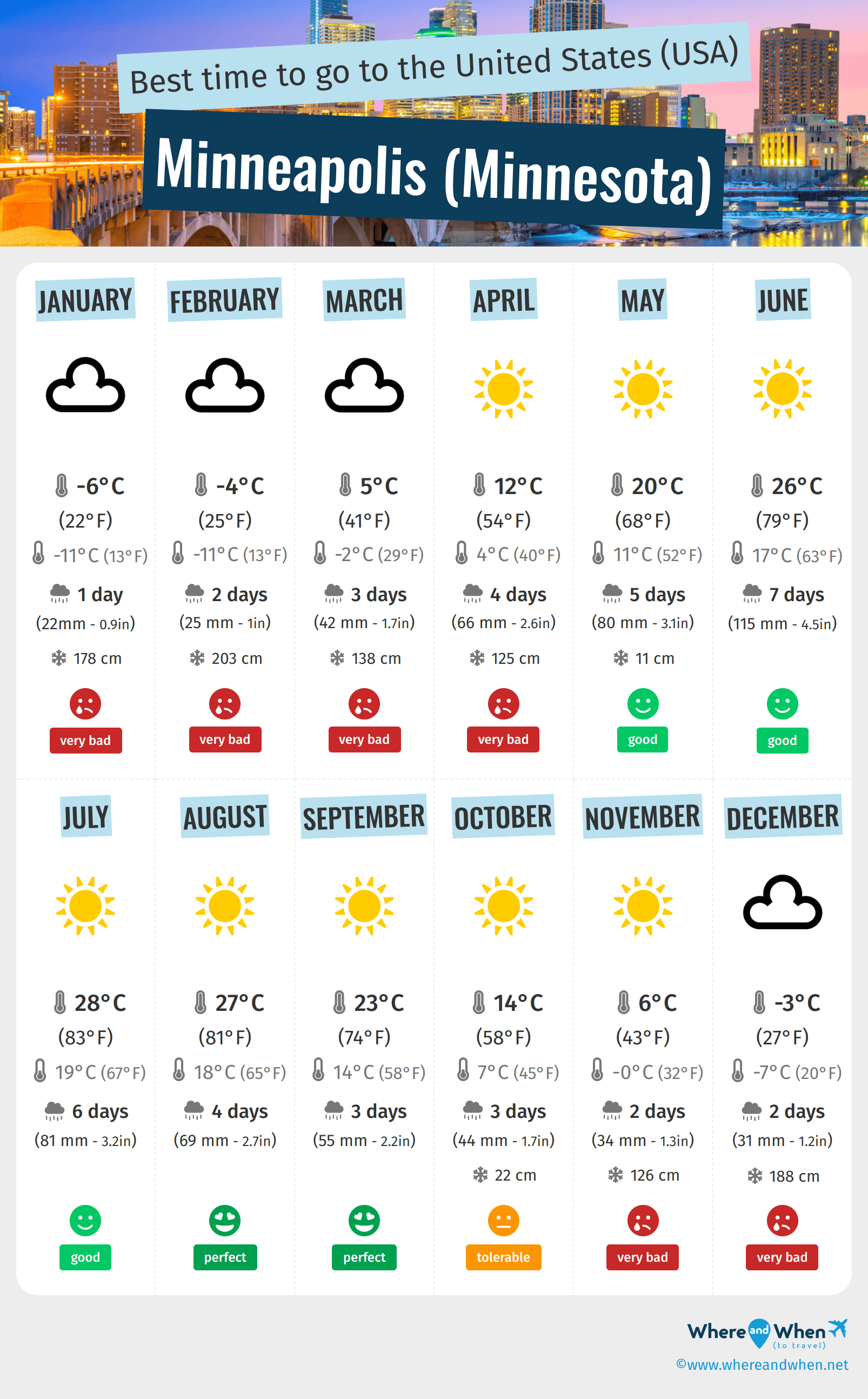
The best time to visit Minneapolis largely depends on your preferred activities. Summer (June to August) offers warm, sunny weather perfect for outdoor pursuits like lake activities, concerts in the park, and festivals. However, it’s also peak tourist season, so expect larger crowds and higher prices for accommodation. Spring (April to May) and Fall (September to October) provide milder temperatures, beautiful foliage, and fewer tourists, making them ideal for exploring the city’s parks and cultural sites.
Winter (November to March) in Minneapolis can be very cold and snowy, but it also transforms the city into a winter wonderland with opportunities for ice skating, cross-country skiing, and cozy indoor activities. The city’s extensive skyway system connects many downtown buildings, offering a climate-controlled way to navigate shops, restaurants, and entertainment venues during the colder months. Regardless of the season, packing layers is always a good idea. In summer, light clothing with a jacket for cooler evenings; in winter, heavy coats, hats, gloves, and waterproof boots are essential.

Maximizing Your Minneapolis Experience
To truly embrace the Minneapolis lifestyle, consider stepping off the beaten path. Explore diverse neighborhoods like Northeast Minneapolis for its vibrant arts district and craft breweries, or Uptown for its trendy boutiques and lively nightlife. Utilizing local guides or joining walking tours can provide deeper insights into the city’s history and culture. Don’t be afraid to engage with locals; Minneapolitans are generally known for their friendly demeanor.
Take advantage of the city’s green spaces, whether it’s a picnic at Lake Harriet, a stroll through the Eloise Butler Wildflower Garden and Bird Sanctuary, or simply relaxing by the Mississippi River. Check local event calendars for festivals, farmers’ markets, and free concerts, which are abundant, especially during the warmer months. By planning ahead and being open to new experiences, you’ll uncover the many layers that make Minneapolis such a rewarding destination.
In conclusion, while knowing the precise time in Minneapolis is a foundational piece of information for any visitor or planner, it’s merely the gateway to appreciating the rich tapestry of experiences the city offers. From its efficient time zone management to its stunning natural beauty, thriving cultural scene, diverse culinary landscape, and welcoming accommodations, Minneapolis invites travelers to immerse themselves fully. So, whether you’re calculating a time difference for a virtual meeting or planning an unforgettable urban adventure, rest assured that every moment spent in this dynamic North American city will be time well invested.
LifeOutOfTheBox is a participant in the Amazon Services LLC Associates Program, an affiliate advertising program designed to provide a means for sites to earn advertising fees by advertising and linking to Amazon.com. Amazon, the Amazon logo, AmazonSupply, and the AmazonSupply logo are trademarks of Amazon.com, Inc. or its affiliates. As an Amazon Associate we earn affiliate commissions from qualifying purchases.