
Texas, the second-largest state in the United States by both area and population, is a land of vast plains, bustling metropolises, stunning deserts, and rich history. From its vibrant cities like Houston and Dallas to the rugged beauty of Big Bend National Park, the Lone Star State offers an unparalleled array of experiences for every kind of traveler. Given its immense size, spanning over 268,596 square miles, a common and crucial question arises for those planning to explore this diverse state: “What time is it in Texas?”
The answer, surprisingly for some, isn’t a simple, singular one. While the majority of Texas operates on one primary time zone, a significant portion of its westernmost reaches observes another. Understanding these time zones is not merely a matter of academic interest; it’s a practical necessity for seamless travel planning, efficient business stays, and fully immersing oneself in the local lifestyle. Whether you’re booking accommodation, scheduling a meeting, or planning to catch a sunset at a specific landmark, knowing the correct time zone is paramount. This comprehensive guide will delve into the intricacies of time in Texas, providing clarity for both first-time visitors and seasoned residents. We’ll explore the two time zones, pinpoint where they divide, and offer invaluable tips for navigating your temporal journey across this magnificent state.
Understanding Texas’ Time Zones: A Tale of Two Times
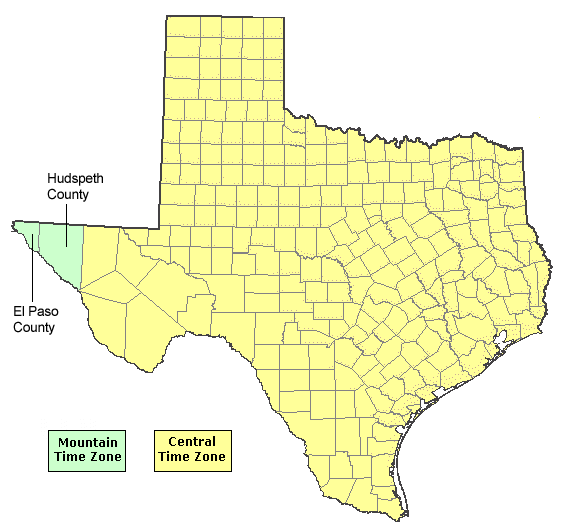
Texas primarily falls within the Central Time Zone. However, its far western corner, most notably the metropolitan area of El Paso, operates under the Mountain Time Zone. This distinction is vital, as it means a one-hour difference can significantly impact schedules and perceptions of time. Let’s break down each zone.
Central Standard Time (CST) and Central Daylight Time (CDT)
The vast majority of Texas observes the Central Time Zone. During standard time, this is Central Standard Time (CST), which is UTC-6. When Daylight Saving Time is in effect, typically from early March to early November, the state switches to Central Daylight Time (CDT), which is UTC-5. This means that during CDT, clocks are moved forward by one hour.
Major Texas cities that observe Central Time include:
- Houston: A sprawling metropolis known for its Space Center Houston and diverse culinary scene.
- Dallas: A hub for commerce, culture, and sports, featuring the Dallas Arts District.
- San Antonio: Home to historic landmarks like The Alamo and the famous Riverwalk.
- Austin: The state capital and “Live Music Capital of the World,” offering vibrant nightlife along Sixth Street and the Texas State Capitol.
- Fort Worth: Known for its Western heritage and the historic Stockyards National Historic District.
- Corpus Christi: A coastal city popular for its beaches and the USS Lexington Museum.
- Amarillo: Located in the Texas Panhandle, famous for Cadillac Ranch.
- Lubbock: The birthplace of Buddy Holly and a center for agriculture.

For most visitors and residents, when they think of “time in Texas,” they are referring to Central Time.
Mountain Standard Time (MST) and Mountain Daylight Time (MDT)
The westernmost tip of Texas observes the Mountain Time Zone. During standard time, this is Mountain Standard Time (MST), which is UTC-7. Similar to Central Time, Daylight Saving Time shifts this to Mountain Daylight Time (MDT), which is UTC-6, moving clocks forward by one hour. This means that El Paso and its surrounding areas are consistently one hour behind Central Texas.
The primary city in Texas operating on Mountain Time is El Paso. This vibrant border city sits right on the Rio Grande, sharing a rich bicultural identity with Ciudad Juárez, Mexico. The region is also home to natural attractions like the Franklin Mountains State Park and is a gateway to the vast Chihuahuan Desert.
The Time Zone Line: Where Texas Divides
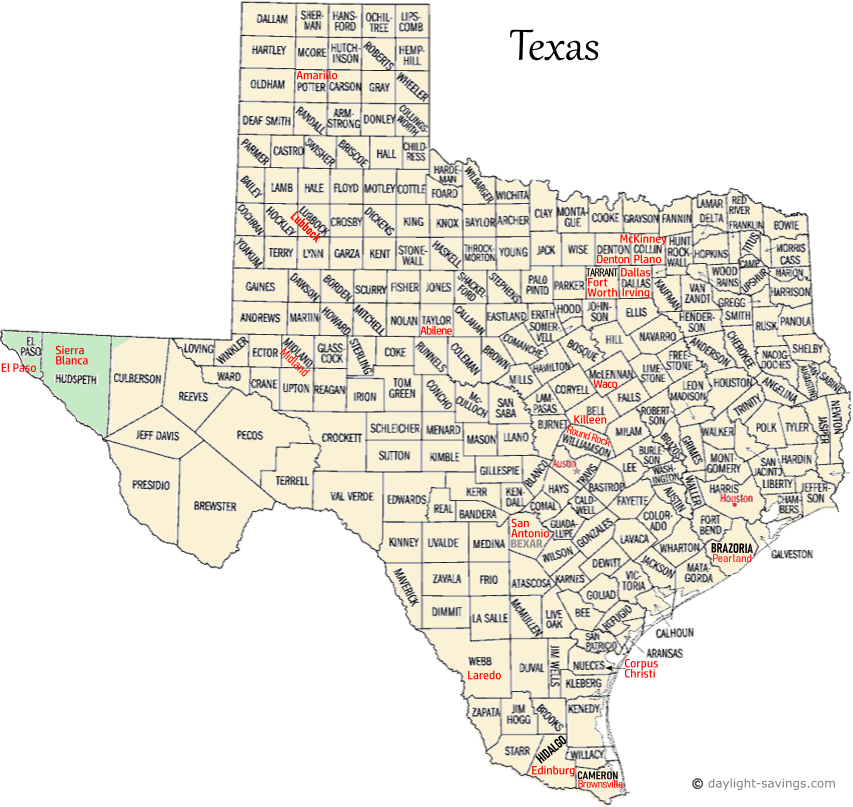
The division between Central Time and Mountain Time in Texas is relatively straightforward but crucial to understand. The entire county of Hudspeth County, which is directly east of El Paso County, and El Paso County itself, observe Mountain Time. All other 252 counties in Texas observe Central Time.
Practically, this means that if you are traveling east from El Paso into, say, Culberson County (home to Guadalupe Mountains National Park), you will cross into the Central Time Zone and need to adjust your clock forward by one hour. Conversely, traveling west into El Paso means turning your clock back one hour. This makes for an interesting geographical quirk, especially when visiting destinations like Guadalupe Mountains National Park or portions of Big Bend National Park, which technically sit on the cusp, although most park operations and visitor services typically align with Central Time for convenience, requiring visitors to double-check. Always confirm the local time, especially in rural areas near the boundary.
Navigating Time for Texas Travelers and Residents
The dual time zones of Texas present unique considerations for anyone planning a visit or conducting business within the state. From catching flights to checking into hotels, a mindful approach to time management can prevent misunderstandings and ensure a smooth journey.
Planning Your Itinerary: Flights, Road Trips, and Appointments
When orchestrating travel plans within Texas, especially involving El Paso or other parts of Far West Texas, careful attention to time zones is essential.
- Flights: When booking flights into or out of El Paso International Airport, be acutely aware that arrival and departure times will be in Mountain Time. If connecting from a Central Time city like Dallas or Houston, your flight duration will appear shorter or longer than expected due to the one-hour time shift. For example, a two-hour flight from Dallas (CST) to El Paso (MST) might show an arrival time only an hour later than departure time, effectively “gaining” an hour.
- Road Trips: For those embarking on epic Texas road trips, particularly along Interstate 10 which traverses the state from east to west, crossing the time zone line is a definite event. Modern smartphones and GPS devices will typically adjust automatically, but it’s wise to have a backup check (like local signage or a traditional watch) to avoid confusion, especially in areas with spotty cell service. A drive from San Antonio to El Paso involves a significant time change, so factor that into your arrival estimations.
- Appointments and Events: If you’re scheduling a business meeting, a dinner reservation, or planning to attend a local event that involves participants from both time zones, always clarify which time zone is being used. Stating “2 PM Central Time” or “1 PM Mountain Time” eliminates ambiguity and ensures everyone is on the same page. This is particularly important for remote workers or businesses with operations across the state.
Accommodation Considerations: Check-in, Check-out, and Hotel Bookings
When making hotel bookings or arranging other forms of accommodation in Texas, remember the time zone implications:
- El Paso Hotels: If you’re staying in El Paso, all check-in and check-out times will be in Mountain Time. If you’re arriving from a Central Time location, ensure you adjust your internal clock to avoid missing check-in cutoffs or inadvertently extending your stay. Many resorts and hotels offer flexible amenities, but strict adherence to local time is key for seamless service.
- Vacation Rentals and Apartments: Similar to hotels, if you’re utilizing services like Airbnb or other long-term stay options, the host will expect communication and adherence to local time. Double-check all listed times for key handoffs, cleaning services, or property access.
- Planning Across Zones: If your travel involves staying in both Central and Mountain Time areas, mentally (or physically) adjusting your clock upon crossing the boundary will help manage your itinerary more effectively. This is where a detailed travel guide with local time zone information can be incredibly useful.
Business and Remote Work: Staying Synced Across the State
For business travelers or those engaging in remote work across Texas, time zone awareness is a constant requirement.
- Meetings and Conference Calls: When scheduling virtual meetings or phone calls with colleagues or clients located in different time zones within Texas, clarity is paramount. Always specify the time zone (e.g., “10 AM CST” or “9 AM MST”). Calendar invites should also clearly reflect the correct time zone to prevent confusion.
- Deadlines and Deliverables: Project deadlines can become complicated if not explicitly tied to a specific time zone. If a deadline is “5 PM today,” ensure everyone understands if that’s Central Time or Mountain Time. This becomes even more critical for interstate business dealings.
- Client Management: Managing clients or partners across time zones requires an understanding of their local hours to schedule appropriate communication, support, and sales outreach. The “one hour behind” rule for El Paso can be a useful mental note.
Texas Landmarks and Local Experiences Across Time
Texas is a treasure trove of landmarks and unique local culture. Experiencing these attractions means embracing the local rhythm, which inherently includes its time zone.
Central Texas Wonders: Austin, San Antonio, and Houston
The majority of Texas’s most famous places and popular tourist destinations lie within the Central Time Zone.
- Austin: Explore the live music scene, visit the Texas State Capitol, or enjoy outdoor activities along Lady Bird Lake. All schedules, concert times, and restaurant hours will be on Central Time.
- San Antonio: Wander the historic Riverwalk, explore The Alamo and the other San Antonio Missions (a UNESCO World Heritage Site). Their opening and closing times, as well as any tour schedules, will be listed in Central Time. Dining along the Riverwalk or catching a show will also adhere to CST/CDT.
- Houston: From the wonders of Space Center Houston to the world-class museums in the Museum District, Houston’s vast offerings are all governed by Central Time. Planning visits to these attractions and navigating the city’s extensive food scene will require you to be on Central Time.
These cities, and many others like Dallas, Fort Worth, and Galveston, form the backbone of Texas tourism, and visitors will spend the vast majority of their time on Central Time.
Far West Texas: The El Paso Experience
Far West Texas, with its rugged mountains and unique desert landscapes, offers a distinctly different Texas experience, complete with its own time zone.
- El Paso: As mentioned, El Paso operates on Mountain Time. When exploring the historic Missions Trail, hiking in the Franklin Mountains State Park, or enjoying the vibrant downtown area, remember that it’s an hour behind the rest of Texas. This means a call to a business in Dallas that opens at 9 AM CST would need to be made at 8 AM MST from El Paso.
- Natural Wonders Near the Divide: While Big Bend National Park is officially in Central Time, its sheer size and proximity to the time zone line can cause confusion. Many visitors arrive from El Paso and need to remember to “spring forward” an hour. Similarly, Guadalupe Mountains National Park, which is geographically very close to El Paso but primarily observed in Central Time for park operations, requires careful time adjustment. Always check the park’s official website for current operating hours and time zone adherence when planning your visits to these magnificent natural landmarks.
The Lifestyle Impact of Time Zones in the Lone Star State
Beyond the practicalities of travel and business, time zones subtly weave themselves into the fabric of daily life and local culture. The split in Texas adds a unique layer to its diverse lifestyle.
Dining, Events, and Local Culture
Texas’s culinary scene is legendary, from BBQ joints to fine dining. Its events calendar is packed with music festivals, rodeos, and cultural celebrations.
- Dining Hours: Restaurants in El Paso might close an hour “earlier” by Central Time standards, which could be a surprise if you’re not adjusted. Planning a late dinner after a long drive from Central Texas to El Paso needs this consideration.
- Festivals and Events: Large state-wide events will generally use Central Time as a reference point. However, local festivals and smaller community gatherings in El Paso will operate on Mountain Time. When purchasing tickets or planning to attend, always confirm the local time for the specific event location.
- Daily Rhythms: The one-hour difference can influence when schools start, when businesses open, and even when local news broadcasts air. It shapes the daily rhythm for residents, fostering slightly different routines between the far west and the rest of the state. This can be an interesting aspect to observe for those keen on understanding true local culture.
Staying Connected: Family and Friends Across Texas
For Texans with family and friends spread across the state, the time zone boundary is a constant, albeit minor, consideration.
- Communication: A casual phone call from Houston to El Paso might mean an 8 PM call is received at 7 PM. While a minor inconvenience, it’s something many Texans are accustomed to, often mentally converting times on the fly.
- Shared Experiences: Planning virtual gatherings or watching major sports events can involve a small time shift. A 7 PM kickoff in Dallas will be at 6 PM for someone in El Paso, allowing for an earlier evening or more pre-game celebration. This offers a unique dynamic in a state known for its strong community and family ties.
In conclusion, understanding “What time is it in Texas?” is more than just checking a clock. It’s about recognizing the geographic scale and diversity of this incredible state. While the majority operates on Central Time, the Mountain Time Zone in the far west adds an interesting layer to planning travel, managing business, and experiencing the unique lifestyle that Texas has to offer. By being aware and making small adjustments, you can ensure your time in the Lone Star State is as smooth and enjoyable as possible, no matter which time zone you find yourself in. From booking the perfect suite in Austin to exploring the historic architecture of El Paso, navigating Texas’ time zones is just another part of the adventure.