
Planning a trip to the Sunshine State, or perhaps you’re a resident curious about the nuances of Florida’s timekeeping? The question “What Time Zone For Florida?” might seem straightforward, but the reality is a little more complex and depends on precisely where in the sprawling state you find yourself. Florida, a popular destination for millions of travelers each year, straddles two distinct time zones, a fact that can sometimes lead to confusion for visitors and even locals. Understanding these zones is crucial for everything from booking flights and hotel stays to planning your daily itinerary of attractions and culinary adventures. This guide will demystify Florida’s time zones, helping you navigate your Florida experience with ease.
The primary driver behind time zones is the Earth’s rotation and the sun’s position. As the Earth spins, different parts of the planet face the sun at different times, creating day and night. Time zones are a human construct designed to standardize time across geographical regions, aligning local time with daylight hours. Historically, timekeeping was a localized affair, but with the advent of railroads and telegraphs, the need for a more consistent system became apparent. Today, standardized time zones ensure that businesses can operate efficiently, transportation schedules remain reliable, and global communication is synchronized. For Florida, this means a significant portion of the state adheres to one time and a smaller, but still important, part to another.
Understanding Eastern Time and Central Time in Florida
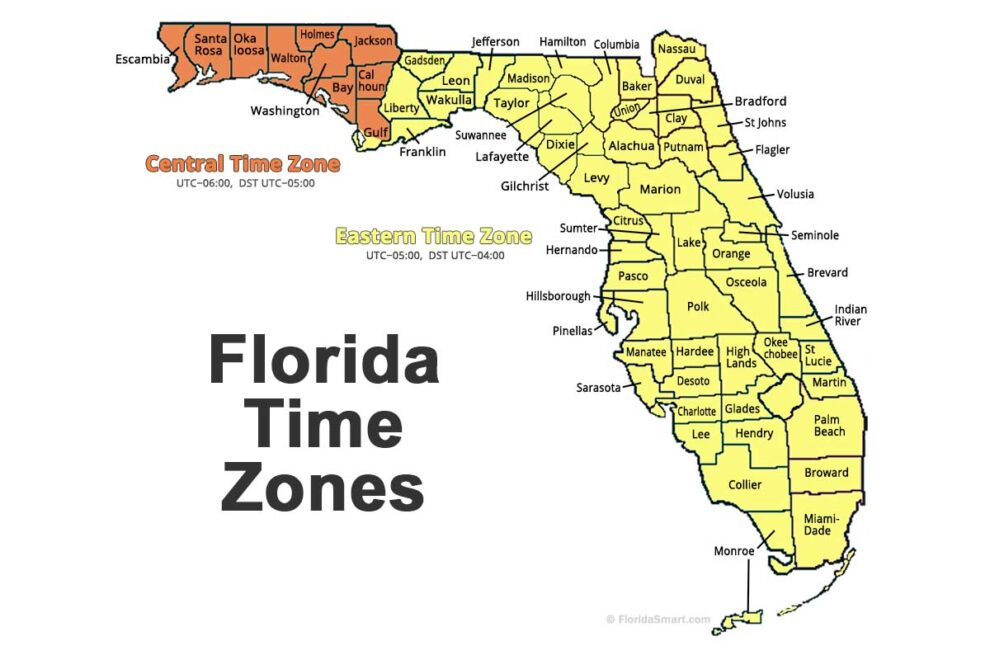
The vast majority of Florida falls under the Eastern Time Zone (ET). This is the time zone that covers much of the eastern half of the United States, including major population centers like New York City and Washington D.C. Within the Eastern Time Zone, Florida observes Eastern Standard Time (EST) during the winter months, which is UTC-5, and Eastern Daylight Time (EDT) during the warmer months, which is UTC-4. Daylight Saving Time (DST) is the practice of advancing clocks forward by one hour during spring and setting them back in the fall. This is done to make better use of daylight during the evening hours.
However, a sliver of the Florida Panhandle, west of the Apalachicola River, observes the Central Time Zone (CT). This zone also encompasses states like Texas, Oklahoma, and Louisiana. Similar to the Eastern Time Zone, Central Time observes Central Standard Time (CST) during winter, which is UTC-6, and Central Daylight Time (CDT) during summer, which is UTC-5. The distinction between ET and CT in Florida is a geographical one, dictated by historical boundaries and population distribution. For travelers, this means if you’re visiting popular destinations like Miami, Orlando, or Tampa, you’ll be in the Eastern Time Zone. If your travels take you to the westernmost parts of the Panhandle, such as Pensacola or Destin, you will be in the Central Time Zone.
The Eastern Time Zone: The Majority’s Clock
The Eastern Time Zone is where most of Florida’s major cities and tourist attractions are located. This includes the vibrant cultural hub of Miami with its renowned beaches and Art Deco architecture, the theme park capital of the world, Orlando, home to Walt Disney World Resort and Universal Orlando Resort, and the bustling metropolis of Tampa, known for its vibrant nightlife and historical districts. Traveling to these popular locales means you’ll be operating on Eastern Time.
When you book your flights into Miami International Airport (MIA) or Orlando International Airport (MIA), the flight times will be listed in Eastern Time. Similarly, any hotel reservations at iconic establishments like the Fontainebleau Miami Beach or the luxurious Ritz-Carlton Orlando, Grande Lakes will be based on EST or EDT. Attractions such as the historic St. Augustine or the natural beauty of the Everglades National Park will have operating hours and tour schedules aligned with Eastern Time. Even the culinary scene, from upscale dining in South Beach to casual seafood shacks along the coast, will follow the rhythm of Eastern Time. This standardization makes planning your days much simpler, as you won’t have to constantly adjust your watch when moving between different cities within the eastern half of the state.
The observance of Daylight Saving Time in the Eastern Time Zone means that clocks are moved forward by an hour in the spring and back in the fall. This shift can sometimes cause a bit of disorientation, especially if you’re traveling from a region that does not observe DST. However, for most domestic travel within the Eastern Time Zone, this change is uniform across the participating states and territories, minimizing confusion once you’re settled in.
The Central Time Zone: A Western Slice of Florida
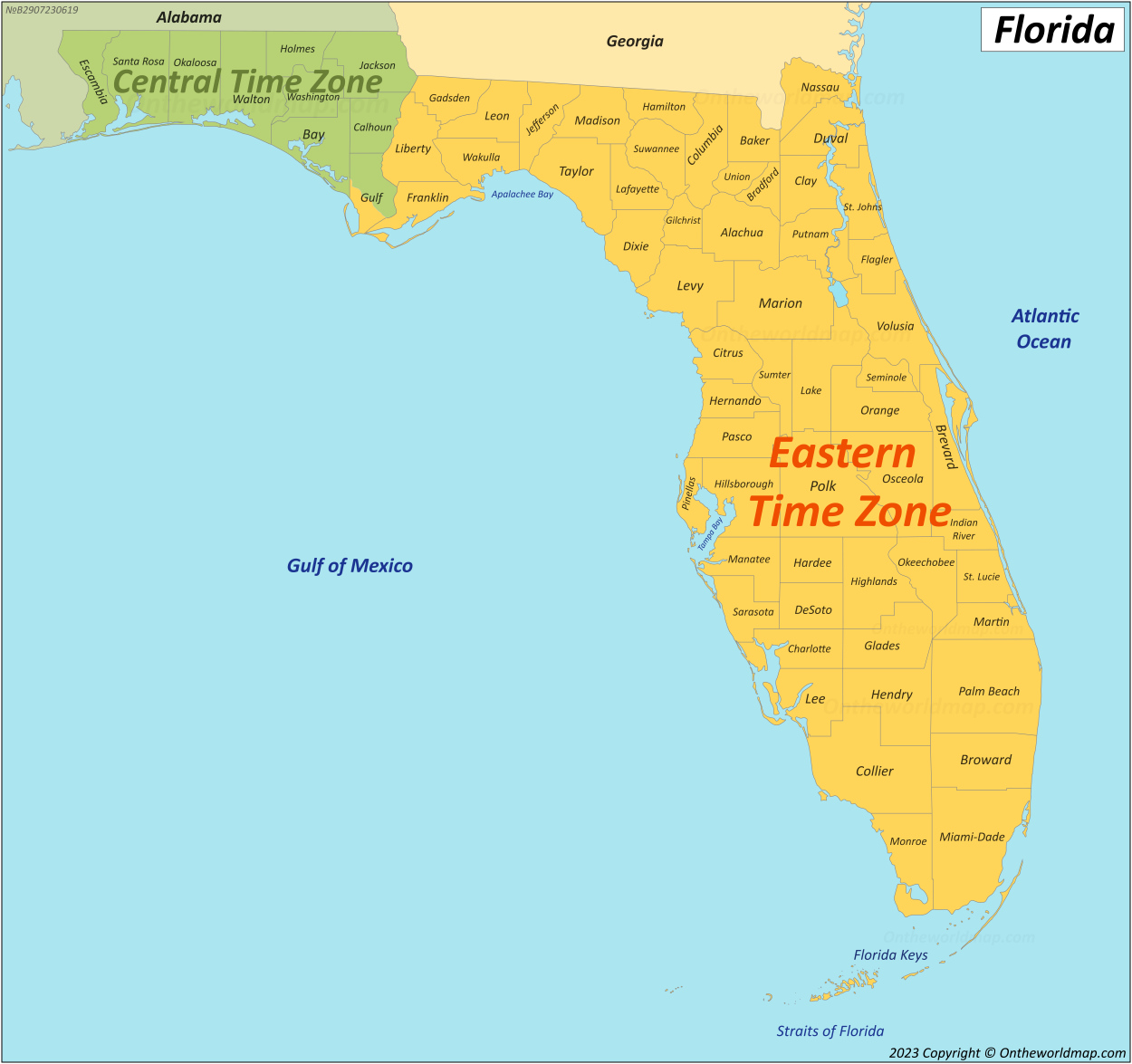
The Central Time Zone in Florida is confined to the westernmost portion of the Panhandle, west of the Apalachicola River. This region, often referred to as the “Florida Panhandle,” includes cities like Pensacola, Panama City Beach, and Fort Walton Beach. While this area is a significant draw for its beautiful white-sand beaches and relaxed atmosphere, it represents a smaller geographical area and population compared to the rest of the state.
If your travel plans include a visit to the Naval Aviation Museum in Pensacola or the lively beach scene in Panama City Beach, you will be operating under Central Time. This means that a 2:00 PM flight departing from Pensacola International Airport (PNS) will depart an hour later in actual solar time than a 2:00 PM flight departing from Miami International Airport (MIA). Hotels in this region, whether it’s a cozy beachside villa or a resort in Destin, will also adhere to Central Time for check-in and check-out times.
The impact of being in a different time zone becomes particularly noticeable when coordinating travel or communication with friends and family in the Eastern Time Zone. A quick phone call at 10:00 AM in Pensacola is equivalent to 11:00 AM in Orlando. This difference is crucial for making dinner reservations, scheduling meetups, or even just staying in touch. While the time difference is only one hour, it’s enough to warrant attention, especially for business travelers or those with tight schedules.
Navigating Time Zones for Travel and Accommodation
For travelers, understanding Florida’s dual time zones is not just a matter of trivia; it directly impacts practical aspects of your trip. From booking flights and rental cars to planning excursions and ensuring you don’t miss a reservation, temporal accuracy is key.
When booking flights, airlines will clearly indicate the time zone for departure and arrival. However, it’s always wise to double-check your itinerary. If you’re flying into Tallahassee International Airport (TLH), which is located in the Panhandle, you’ll need to be aware if your onward journey or destination is in the Eastern Time Zone. Similarly, if you’re driving across the state, pay attention to the time zone boundaries. Crossing the invisible line from Central to Eastern Time (or vice versa) means your watch will need to be adjusted. This is especially important when you consider that some of Florida’s most iconic landmarks, like the historic St. Augustine Lighthouse & Maritime Museum, are firmly within the Eastern Time Zone.
For accommodation, hotels and resorts across the state will operate on their local time zone. Booking a suite at the Grand Hyatt Hotel in Tampa means you’ll be on Eastern Time, while a booking at a beachfront resort in Destin will place you on Central Time. This is generally straightforward, as hotels will list their local times. However, if you’re comparing deals or making last-minute changes, be mindful of the time zone of the property you’re interested in. Long-term stays or apartment rentals will also adhere to the local time zone of their location.

Practical Tips for Time Zone Travelers
To avoid any temporal confusion, here are a few practical tips for navigating Florida’s time zones:
- Set Your Devices: Most smartphones and smart devices automatically update their time based on location. Ensure this feature is enabled. If not, manually set your time zone to “Eastern Time” or “Central Time” depending on your location.
- Confirm Flight Times: Always reconfirm flight departure and arrival times with the airline, paying close attention to the specified time zone.
- Map Your Route: If you are driving between the Eastern and Central Time Zones, consult a map that indicates the boundary, typically around the Apalachicola River. Be prepared to adjust your watch by one hour as you cross.
- Communicate Clearly: When coordinating with others, always specify the time zone. For example, “Let’s meet at 2 PM ET” (Eastern Time) or “Dinner reservation is at 7 PM CT” (Central Time).
- Factor in DST: Remember that Daylight Saving Time shifts can occur. While the shift is synchronized within each zone across the US, it’s good to be aware of the dates for the spring forward and fall back. For most of the US, DST begins on the second Sunday in March and ends on the first Sunday in November.
By keeping these simple guidelines in mind, you can ensure that your journey through Florida is as smooth and stress-free as possible, allowing you to fully immerse yourself in the state’s diverse attractions, from the vibrant nightlife of South Beach to the tranquil shores of the Panhandle. Whether you’re seeking luxury travel experiences, budget-friendly adventures, or family trips filled with laughter, understanding Florida’s time zones is a foundational element of a well-planned itinerary, ensuring you never miss a moment of your Sunshine State escape. From exploring historic landmarks like Castillo de San Marcos to indulging in the local food scene, every minute counts, and accurate timekeeping is your first step to a perfect visit.
LifeOutOfTheBox is a participant in the Amazon Services LLC Associates Program, an affiliate advertising program designed to provide a means for sites to earn advertising fees by advertising and linking to Amazon.com. Amazon, the Amazon logo, AmazonSupply, and the AmazonSupply logo are trademarks of Amazon.com, Inc. or its affiliates. As an Amazon Associate we earn affiliate commissions from qualifying purchases.