
Florida, the Sunshine State, beckons millions of travelers each year with its pristine beaches, world-famous theme parks, vibrant cities, and serene natural landscapes. From the magical enchantment of Orlando to the Art Deco splendor of Miami, and the laid-back charm of the Florida Panhandle, this diverse state offers an unparalleled array of experiences. However, one often-overlooked detail that can significantly impact a meticulously planned itinerary is Florida’s unique time zone situation. Unlike many states in the United States that adhere to a single time zone, Florida spans two, a crucial piece of information for anyone planning to visit, reside, or conduct business within its borders.
Understanding the temporal nuances of the Sunshine State is more than just a trivial fact; it’s an essential aspect of successful travel planning, ensuring seamless transitions between destinations, punctual arrivals for flights and hotel check-ins, and ultimately, a stress-free exploration of all that Florida has to offer. For those embarking on a multi-city adventure, a cruise departure, or simply coordinating with friends and family, grasping the intricacies of Florida’s time zones is paramount. This comprehensive guide will delve into the specifics of Florida’s time zones, how they affect travelers and locals alike, and provide invaluable tips for navigating the temporal divide with ease.
Understanding Florida’s Dual Time Zones: EST and CST
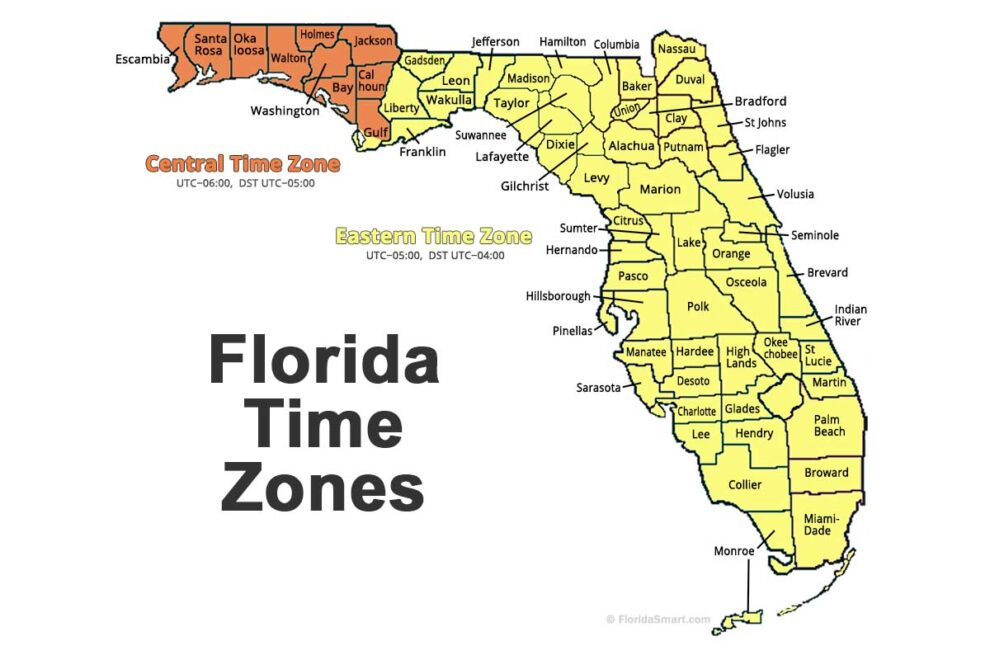
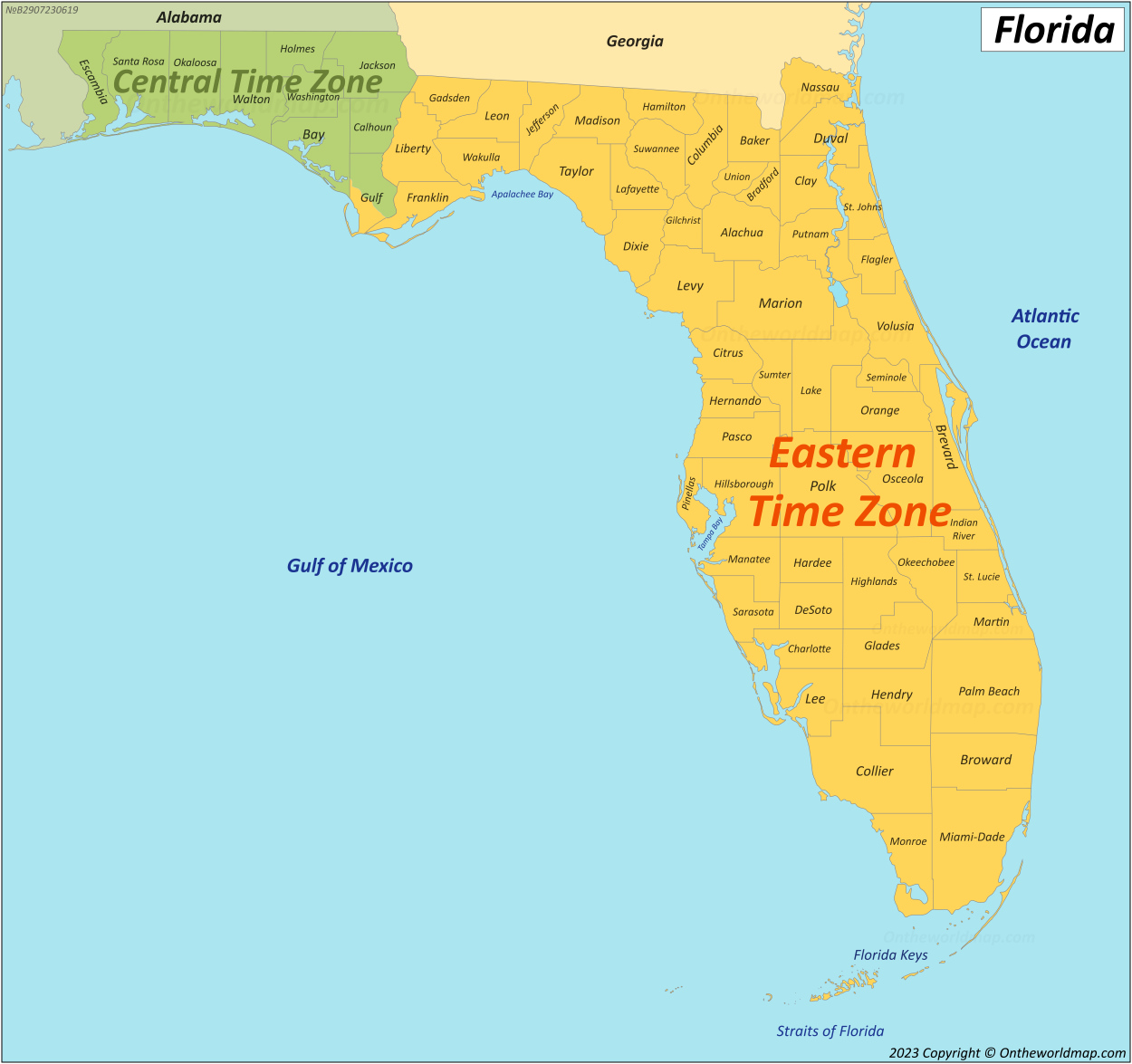
At first glance, it might seem counterintuitive for a state of Florida’s size to be split between two time zones. However, its geographical elongation, particularly the western stretch of its panhandle, makes this division a practical necessity. The vast majority of Florida operates on Eastern Time Zone, while a distinct portion of the panhandle observes Central Time Zone. Both zones also observe Daylight Saving Time, meaning they switch between standard and daylight saving hours annually.
The Eastern Time Zone (EST/EDT): The Heart of Florida Travel
The dominant time zone across Florida is the Eastern Time Zone (ET). This encompasses nearly all of the Florida Peninsula, stretching from the northern border with Georgia down to the southernmost tip of Key West. During standard time, this is Eastern Standard Time (EST), which is UTC-5. When Daylight Saving Time is in effect, it becomes Eastern Daylight Time (EDT), shifting to UTC-4.
This zone is home to Florida’s most famous and bustling tourist destinations, making it highly probable that most international and domestic visitors will spend the majority of their time, if not their entire trip, within ET. Iconic cities such as Miami, Orlando, Tampa, Jacksonville, and Fort Lauderdale all fall under the Eastern Time Zone.
For travelers, this means that flights into major international airports like Miami International Airport (MIA), Orlando International Airport (MCO), or Tampa International Airport (TPA) will operate on ET. Hotel bookings, tour schedules, and reservations for world-renowned attractions such as Walt Disney World Resort and Universal Orlando Resort are all meticulously synchronized with the Eastern Time Zone. Similarly, cruises departing from bustling hubs like PortMiami, Port Canaveral, or Port Everglades will adhere strictly to ET for their embarkation and disembarkation times, a critical detail for travelers to avoid missing their ship. Even local experiences, from enjoying gourmet dining in South Beach to exploring the historic streets of St. Augustine, will follow the Eastern clock.

The Central Time Zone (CST/CDT): The Florida Panhandle’s Unique Rhythm
While the peninsula marches to an Eastern beat, a significant western portion of the Florida Panhandle operates on the Central Time Zone (CT). During standard time, this is Central Standard Time (CST), which is UTC-6, making it one hour behind EST. With Daylight Saving Time, it becomes Central Daylight Time (CDT), shifting to UTC-5, which is still one hour behind EDT.
This region is famous for its stunning white-sand beaches, emerald waters, and a more relaxed, often less crowded, atmosphere compared to the peninsula’s bustling hubs. Cities and popular vacation spots within the Central Time Zone include Pensacola, Panama City Beach, Destin, and Fort Walton Beach. These destinations are particularly popular with travelers from neighboring states like Alabama and Georgia, many of whom are already accustomed to CST.
For travelers heading to these areas, it’s crucial to remember that arrival times, hotel check-ins, and any booked activities will be one hour earlier than they would be on the Eastern side of the state. Missing a dinner reservation or a fishing charter by an hour due to time zone confusion is a common mistake that can easily be avoided with proper planning. The slightly different pace of life in the panhandle also plays into its time zone; many visitors appreciate the extra hour of daylight in the evening during the summer months for beach activities and outdoor recreation.
The Dynamic of Daylight Saving Time (DST)
Both the Eastern Time Zone and the Central Time Zone in Florida observe Daylight Saving Time (DST). This means that on the second Sunday in March, clocks “spring forward” one hour, and on the first Sunday in November, they “fall back” one hour. The time difference between the two zones – one hour – remains constant throughout the year.
There has been considerable discussion and legislative action regarding DST in Florida. In 2018, the state legislature passed the Sunshine Protection Act, which proposed making Daylight Saving Time permanent year-round. While the act was signed into law by the governor, it requires federal approval from the United States Congress to take effect. As of now, that federal approval has not been granted, meaning Florida continues to observe the traditional DST changes twice a year. Travelers should always verify the current DST status, especially when planning trips around the spring or fall clock changes, as these shifts can subtly impact flight schedules, connection times, and hotel availability.
Navigating Time Zones as a Traveler in Florida
A seamless travel experience in Florida hinges significantly on understanding and accounting for its time zones. From booking flights to coordinating activities, temporal awareness is a traveler’s best friend.
Planning Your Itinerary and Bookings
When piecing together your dream Florida itinerary, meticulous attention to time zones for each destination is non-negotiable.
- Flights and Transportation: Always confirm flight departure and arrival times based on the local time zone of each airport. A flight from Miami (ET) to Pensacola (CT) will involve a one-hour time shift. If you depart Miami at 10:00 AM ET, you might arrive in Pensacola at 10:30 AM CT, after a 1.5-hour flight, effectively losing an hour relative to your origin time. This same principle applies to train, bus, or even long-distance car rental pick-up/drop-off times.
- Accommodation: When booking hotels, resorts, apartments, or villas, double-check the check-in and check-out times relative to the local time zone. A “3:00 PM check-in” means 3:00 PM local time at your specific accommodation. This is particularly relevant if you’re traveling across the time zone line; arriving too early or too late can lead to unnecessary waiting or even a missed night. For instance, a luxurious resort in Destin will operate on CT, while a family-friendly hotel in Orlando uses ET.
- Attractions and Experiences: Florida’s attractions, whether it’s an exhilarating ride at Busch Gardens Tampa Bay, a historical tour in St. Augustine, or a deep-sea fishing excursion from Panama City Beach, all adhere to their respective local time zones. Confirm opening hours, show times, and reservation slots carefully. Missing a timed entry to a popular theme park or an important museum exhibit due to time confusion can be a significant disappointment.
- Dining and Appointments: If you’ve made restaurant reservations, especially for popular spots in cities like Miami or Sarasota, or if you have any pre-booked appointments (e.g., spa treatments, golf tee times), ensure you convert the time correctly based on your location.
The Time Zone Line: A Practical Guide
The precise delineation between the Eastern Time Zone and the Central Time Zone in Florida primarily follows the Apalachicola River. Generally, all counties west of the Apalachicola River are in CT, with a few notable exceptions. Franklin County and Gulf County are officially split, but for practical purposes, most of Gulf County east of the Apalachicola River bridge observes ET, while the part of Gulf County west of the Apalachicola River (which includes Port St. Joe) observes CT. Similarly, Franklin County also officially straddles the line, but most communities there operate on ET.
For those undertaking a road trip across the Florida Panhandle, awareness of this boundary is critical. Your smartphone and most GPS devices will automatically adjust to the local time zone as you cross the line, but it’s always wise to have a backup plan or manually confirm. Consider the impact on arrival times for pre-booked accommodation or activities; if you’re driving from Tallahassee (ET) to Panama City Beach (CT), you will gain an hour as you cross the line, effectively making your travel time seem shorter on the clock. Conversely, driving from Panama City Beach to Tallahassee will mean you “lose” an hour.
Communication and Coordination
Beyond personal travel, time zones significantly impact communication, especially for those with business obligations or who need to coordinate with family and friends.
- Business Stays: For business travelers, understanding the correct time zone for meetings, conference calls, and deadlines is paramount. A 9:00 AM meeting in Pensacola (CT) is 10:00 AM in Miami (ET). Misinterpretations can lead to missed opportunities or perceived unreliability.
- Family Trips and Social Calls: When planning family reunions or coordinating virtual catch-ups with loved ones back home or in different parts of the United States (or internationally), be mindful of the local time. A call placed at 7:00 PM in Orlando (ET) would be 6:00 PM in Chicago (CT) or 4:00 PM in Los Angeles (PT). Modern smartphones and laptops usually adjust automatically to local time, but cross-referencing with a reliable world clock app is always a good practice.
Lifestyle and Local Culture Implications
The time zone split isn’t just a technical detail; it subtly weaves into the fabric of local life and impacts various aspects of tourism and lifestyle within Florida.
Daily Life and Local Rhythms
For residents, the time zone dictates the daily rhythm of work, school, and leisure. In the bustling metropolises of the Eastern Time Zone, life often begins early, catering to financial markets and national business schedules that align with New York City. Schools, government offices, and local businesses, from the smallest boutique hotels to expansive resort properties, operate strictly within their designated time. The early morning traffic in Tampa or Jacksonville is timed to ET.
In the Florida Panhandle, the pace can feel a bit more relaxed, often attributed to the Central Time Zone aligning with a slightly later start to the day relative to the East Coast. This contributes to the distinct local culture, where evenings on the beach might stretch a little longer, and morning commutes align with other cities in the Central Time Zone like New Orleans or Houston. For tourists seeking local culture and experiences, being aware of these subtle differences can enhance their understanding and appreciation of each region’s unique vibe.
Impact on Major Events and Festivals
Florida is a hub for major events, from international music festivals and sporting events to cultural celebrations and conferences.
- Sporting Events: Whether it’s a Miami Heat basketball game, an Orlando Magic match, or a Jacksonville Jaguars football game, all professional sports in Florida adhere to the time zone of their host city. This is crucial for fans traveling to games or watching broadcasts from different time zones.
- Concerts and Cultural Festivals: Large-scale concerts, art fairs, and food festivals often draw attendees from across the state and beyond. All published event schedules will correspond to the local time zone of the venue. Travelers making accommodation bookings or travel plans around such events must confirm times accurately to avoid disappointment. For example, a spring break festival in Panama City Beach will operate on CT, while a winter music festival in Miami operates on ET.
Tips for a Seamless Florida Trip Across Time Zones
Embarking on a Florida adventure, especially one that spans both time zones, requires a bit of foresight. Here are some invaluable tips to ensure your trip is as smooth and enjoyable as possible:
- Double-Check All Reservations: Before confirming any booking – flights, hotels, car rentals, tours, or restaurant reservations – explicitly verify the time zone for each. When receiving confirmation emails, look for explicit mentions of ET or CT.
- Utilize Technology Wisely: Most modern smartphones, smartwatches, and laptops automatically update to the local time zone when connected to a network. Ensure this feature is enabled on your devices. Additionally, world clock apps can be very helpful for quickly comparing times between different locations in Florida or back home.
- Be Aware of DST Changes: If your travel dates coincide with the start or end of Daylight Saving Time (March or November), be extra vigilant. Confirm all schedules, as some older systems or less frequently updated websites might not reflect the change immediately.
- Allow Buffer Time: When traveling across the time zone line, especially if you have connecting flights or tight schedules, build in a buffer of at least an hour. This extra time can absorb minor delays and prevent stress related to time zone adjustments.
- Communicate Clearly: When coordinating with travel companions, tour operators, or anyone else, explicitly state the time zone you are referring to. For instance, “Let’s meet at 2:00 PM ET” or “Our flight lands at 11:00 AM CT.”
- Stay Informed: While the Sunshine Protection Act has not yet received federal approval, staying updated on news regarding time zone legislation can prevent future surprises.
In conclusion, while the question “What time zone in Florida?” may seem straightforward, the answer reveals a nuanced reality. Florida operates on both Eastern Time Zone for its bustling peninsula and Central Time Zone for its picturesque panhandle, with both observing Daylight Saving Time. For any traveler, from luxury seekers staying at a grand resort in Naples to budget explorers camping in a state park near Tallahassee, understanding this temporal duality is key to a smooth and enjoyable journey. By taking a few simple precautions and being mindful of the time differences, visitors can confidently navigate the Sunshine State, ensuring every moment of their Florida experience is perfectly timed.
LifeOutOfTheBox is a participant in the Amazon Services LLC Associates Program, an affiliate advertising program designed to provide a means for sites to earn advertising fees by advertising and linking to Amazon.com. Amazon, the Amazon logo, AmazonSupply, and the AmazonSupply logo are trademarks of Amazon.com, Inc. or its affiliates. As an Amazon Associate we earn affiliate commissions from qualifying purchases.