
Texas, the second-largest state in the United States by both area and population, is a land of vast plains, bustling metropolises, rugged mountains, and sun-drenched coastlines. Its sheer size hints at the possibility of more than one time zone, a detail that often surprises visitors and even some residents. For anyone planning a trip, scheduling a business call, or simply coordinating with friends and family across its expansive landscape, understanding Texas’ time zones is not just a trivial fact – it’s a critical piece of information for seamless travel and daily life. Whether you’re flying into Dallas, exploring the vibrant culture of Austin, or venturing into the desert beauty of El Paso, knowing the correct local time ensures your plans unfold without a hitch. This comprehensive guide will demystify Texas’ time zones, explain the nuances, and offer practical tips for navigating its temporal landscape.
The Dominant Time Zone: Central Standard Time (CST) and Central Daylight Time (CDT)
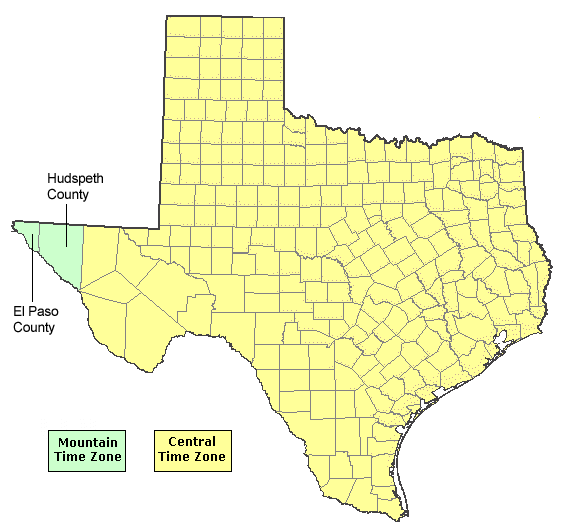
The overwhelming majority of Texas operates on Central Standard Time (CST) during the standard months and shifts to Central Daylight Time (CDT) when daylight saving rules are observed. This covers the vast expanse from the eastern borders bordering Louisiana and Arkansas, through the heart of the state, and extending westward until a specific geographic demarcation point. For most travelers and residents, this is the time zone they will encounter and interact with.
Understanding CST and CDT
Central Standard Time (CST) is defined as six hours behind Coordinated Universal Time (UTC-6). When daylight saving time comes into effect, usually on the second Sunday in March, clocks “spring forward” one hour, moving to Central Daylight Time (CDT), which is five hours behind Coordinated Universal Time (UTC-5). This shift provides an extra hour of daylight in the evenings during the warmer months, a boon for outdoor activities, tourism, and simply enjoying the longer days. The clocks “fall back” to CST on the first Sunday in November.
Major Texas cities that fall within the CST/CDT zone include some of the nation’s largest and most vibrant urban centers:
- Houston: A global hub for energy, space exploration, and a diverse culinary scene.
- Dallas: Known for its rich history, upscale shopping, and thriving arts district.
- Austin: The state capital, famous for its live music, technological innovation, and vibrant outdoor lifestyle.
- San Antonio: Home to the historic Alamo and the picturesque River Walk, steeped in Texan history.
- Fort Worth: Epitomizing the “West Meets East” spirit, with its historic Stockyards and world-class museums.
- Corpus Christi: A coastal city offering beautiful beaches and a gateway to the Padre Island National Seashore.

For travelers arriving from Eastern Standard Time (EST) zones, Texas’ CST means gaining an hour, which can be a welcome adjustment. Conversely, those coming from Mountain Standard Time (MST) will lose an hour. These shifts are crucial for coordinating flight connections, hotel check-ins, scheduled tours, and any pre-booked experiences or events. A missed connection or a late arrival due to a time zone oversight can disrupt even the most meticulously planned itinerary.
The Exception: Mountain Standard Time (MST) in Far West Texas
While the majority of Texas observes Central Time, there’s a significant and geographically distinct exception that often catches travelers by surprise: a small portion of West Texas operates on Mountain Standard Time (MST) and Mountain Daylight Time (MDT). This temporal divide highlights the vastness of the state and its geographical alignment with neighboring regions.
Where the Time Zone Shifts
The shift to Mountain Time primarily occurs in two counties in the far western part of the state:
- El Paso County
- Hudspeth County
The largest city in this region is El Paso, a vibrant border city known for its unique blend of American and Mexican cultures, stunning desert landscapes, and the majestic Franklin Mountains State Park. Other smaller communities within these counties, such as Sierra Blanca and Dell City, also follow Mountain Time.
Mountain Standard Time (MST) is UTC-7, meaning it is one hour behind Central Standard Time. During daylight saving, it becomes Mountain Daylight Time (MDT), which is UTC-6. This means that for anyone traveling from Houston or Dallas to El Paso, they will “lose” an hour upon arrival. Conversely, traveling eastward from El Paso to the rest of Texas will result in “gaining” an hour.
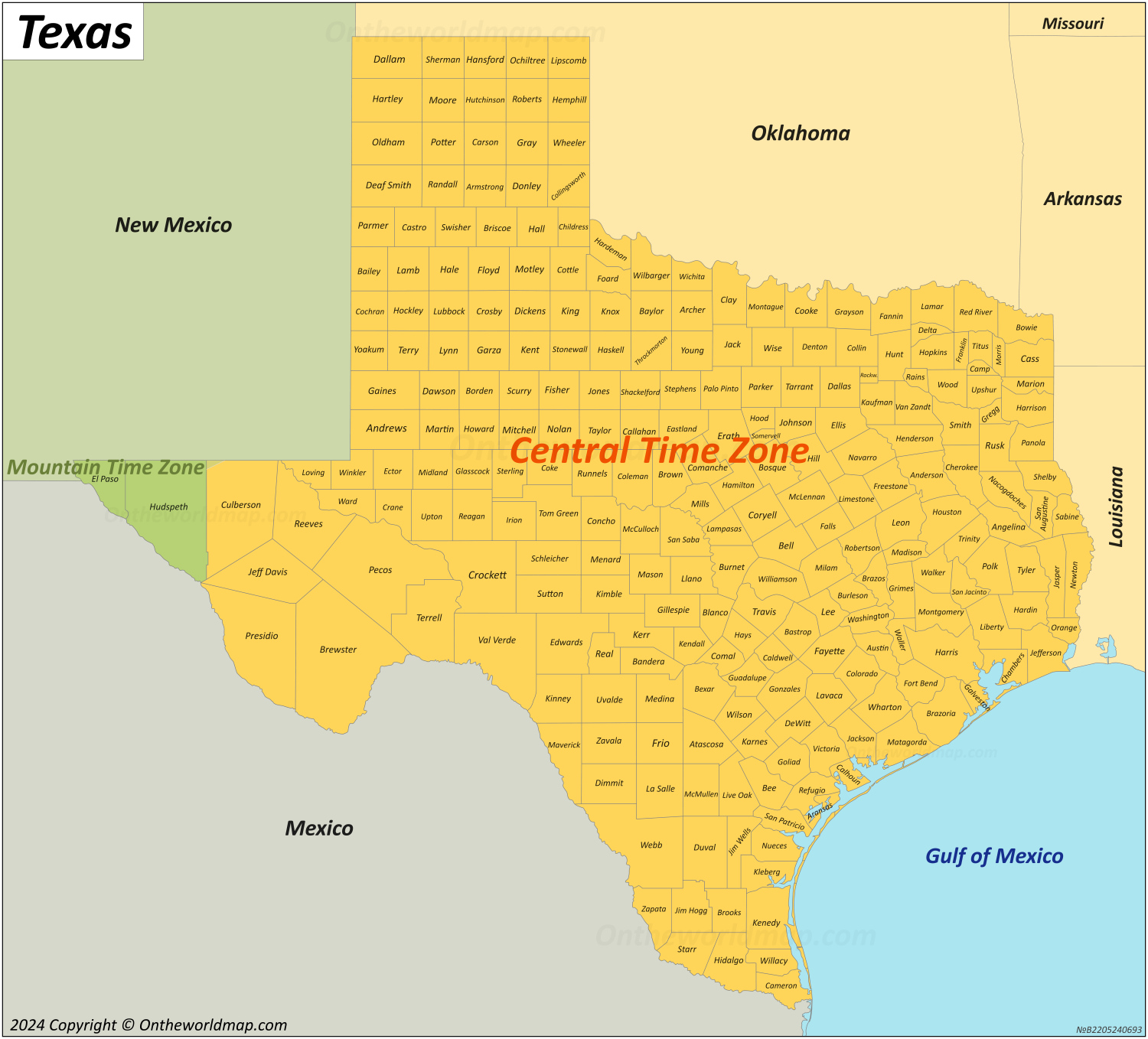
The rationale behind this exception is primarily geographical and historical. El Paso and its surrounding areas are much more aligned with the timekeeping practices of its western neighbors, New Mexico and Arizona, which are predominantly in the Mountain Time Zone, rather than the distant eastern parts of Texas. This alignment facilitates commerce, communication, and daily life for residents who frequently interact across state lines. Understanding this distinction is vital, especially for those embarking on cross-state road trips or scheduling specific appointments that straddle these time zones. Imagine driving from San Antonio to El Paso for a pre-booked tour; failing to account for the hour difference could mean missing your slot entirely.
Why Time Zones Matter for Travelers and Residents
The implications of Texas’ dual time zones extend far beyond a simple numeric difference. For both travelers exploring the state and residents managing their daily lives, awareness of these distinctions is paramount for efficiency, enjoyment, and avoiding frustrating logistical hiccups.
Seamless Travel Planning and Logistics
Effective travel planning hinges on accurate timing. Neglecting time zone differences can lead to a cascade of problems that can quickly sour a trip:
- Flights and Transportation: Missing a connecting flight in Dallas/Fort Worth International Airport because you miscalculated the arrival time from El Paso. Or, arriving at El Paso International Airport an hour earlier or later than expected can throw off ground transportation arrangements, potentially leading to additional costs or delays. Amtrak train schedules, local bus services in specific regions, and even shared ride services all operate on local time.
- Accommodation Bookings: Check-in and check-out times at hotels, resorts, or vacation rentals are always local. Imagine booking a stay at the Hotel ZaZa Dallas or a boutique hotel in Austin, only to arrive an hour off due to confusion between CST and MST if you’re coming from West Texas. This can result in waiting for rooms, being charged for an extra night, or simply causing unnecessary stress after a long journey. Even for properties like the JW Marriott San Antonio Hill Country Resort & Spa, precise timing is essential for maximizing amenity use.
- Meeting Schedules and Appointments: For business travelers, scheduling virtual meetings or in-person appointments across the state requires careful attention. A conference call with participants in Houston and El Paso needs to account for the one-hour difference. Similarly, personal appointments, medical visits, or even coordinating meet-ups with local friends become complex without this awareness.
- Event Attendance: Concerts at the Moody Center in Austin, sports events at AT&T Stadium in Arlington, or festivals like South by Southwest are all meticulously timed. Missing the start of a live show or a crucial part of a cultural event due to a time zone miscalculation can be a major disappointment.
Maximizing Your Texas Experience
Beyond mere logistics, understanding time zones and daylight saving can significantly enhance your travel experience and daily lifestyle:
- Daylight Saving Time Considerations: The shift to CDT and MDT means longer daylight hours during spring, summer, and early fall. This is fantastic for sightseeing, hiking in Big Bend National Park, enjoying a sunset cruise on Lake Travis, or simply lingering longer at outdoor attractions. When planning activities, especially those outdoors, be mindful of the sunset times, which vary significantly between the eastern and western ends of the state, compounded by the time zone difference.
- Planning Road Trips: Texas is a premier destination for road trips. Driving from East Texas (like the Piney Woods region) across the entire state to West Texas involves crossing the time zone boundary. A multi-day itinerary needs to factor in this hour shift, particularly when estimating arrival times at destinations like the Guadalupe Mountains National Park or the McDonald Observatory in Fort Davis. An hour can make a difference for reaching a hotel before dark or making a timed entry reservation.
- Communication: Whether coordinating with tour operators, local guides, hotel staff, or even checking in with family and friends back home, clear communication about local time is essential. A simple “meet at 9 AM” needs clarification if participants are in different time zones.
Historical Context and the Uniform Time Act
The concept of standardized time zones across the United States is relatively modern, largely driven by the exigencies of railroad travel in the late 19th century. Before 1883, towns often set their clocks based on local solar noon, leading to thousands of different local times across the country.
The railroads, needing a coordinated schedule for their rapidly expanding networks, took the initiative to divide the continent into four standard time zones in 1883: Eastern, Central, Mountain, and Pacific. These zones were officially recognized by the Standard Time Act of 1918, which also introduced daylight saving time for the first time on a national level.
Over time, various amendments and legislative acts refined these rules, culminating in the Uniform Time Act of 1966. This act established the system of uniform daylight saving time observed today and mandated that states either observe daylight saving time in its entirety or exempt themselves from it statewide (as Arizona and most of Hawaii do). The authority for setting and modifying time zone boundaries rests with the Department of Transportation (DOT), which considers factors like public convenience, economic impact, and historical practice when making decisions.
The historical rationale for El Paso’s inclusion in the Mountain Time Zone, despite being in Texas, is rooted in its geographic and economic ties. El Paso historically faced west, with closer connections to New Mexico and Arizona than to Dallas or Houston hundreds of miles to the east. Placing El Paso in Mountain Time made practical sense for cross-border commerce, communication, and social interaction with its immediate neighbors. This decision, though a slight anomaly within Texas, reflects a pragmatic approach to timekeeping that prioritizes local realities over rigid state lines.
Practical Tips for Navigating Time Zones in Texas
For a truly worry-free experience exploring the Lone Star State, or simply conducting business within its borders, a few practical considerations regarding time zones can make all the difference.
Essential Tools and Best Practices
- Always Confirm Times: This is the golden rule. When booking flights, hotels, tours, or making reservations, always confirm the time zone applicable to the specific location. Many online booking systems will automatically adjust, but a manual double-check never hurts. For instance, if you’re booking a stay at the Hotel Indigo El Paso Downtown, ensure your arrival time aligns with MST/MDT.
- Utilize Technology: Modern smartphones, smartwatches, and laptops automatically detect and adjust to local time zones when connected to the internet. This is perhaps the most reliable tool at your disposal. Ensure your device’s automatic time zone setting is enabled, especially if you’re traveling from other states or internationally.
- Ask Locals: If ever in doubt, particularly when crossing the CST/MST boundary, don’t hesitate to ask a local. Hotel receptionists, gas station attendants, or even fellow travelers can quickly confirm the current local time.
- Understand Daylight Saving: Be aware of the dates when daylight saving time begins and ends. These biannual shifts affect the entire state (except for some very minor, almost imperceptible local exceptions not relevant to travelers), so knowing when clocks “spring forward” or “fall back” is key for coordinating travel plans around those specific weekends.
- Create a Detailed Itinerary: For complex trips, especially those involving multiple destinations within Texas or crossing the time zone line, create a detailed itinerary that explicitly lists all times in their respective local zones. For example: “Arrive El Paso (MDT) at 3:00 PM,” “Dinner reservation Austin (CDT) at 7:00 PM.”
- For Road Trippers: If you’re driving from Central Texas to El Paso or vice-versa, plan your stops and estimated arrival times carefully. There are no dramatic “time zone change” signs on the highway, so rely on your devices or mental calculations to avoid confusion. The boundary between Central and Mountain Time runs between Hudspeth County and Culberson County to the east, so be aware as you approach or leave El Paso.
In conclusion, Texas proudly stands as a state of immense diversity, both geographically and culturally. While its primary time zone is Central Standard Time / Central Daylight Time, the unique exception of El Paso County and Hudspeth County observing Mountain Standard Time / Mountain Daylight Time is a detail no traveler or resident should overlook. A little foresight and awareness regarding these temporal boundaries will ensure your adventures across the Lone Star State are smooth, punctual, and entirely enjoyable. By keeping these time zone insights in mind, you’re well-equipped to experience all the wonders Texas has to offer, from the vibrant cityscape of Houston to the majestic desert expanses around El Paso, without missing a beat.