
The vast, wild frontier of Alaska conjures images of snow-capped mountains, abundant wildlife, and rugged independence. Today, it stands as the 49th state of the United States, a land of breathtaking natural beauty and unique cultural heritage. But what existed before the stars and stripes were permanently raised over the Last Frontier? To understand modern Alaska, we must delve into its rich and complex history, exploring the peoples, the powers, and the pivotal moments that shaped it long before statehood.
From Indigenous Homelands to Imperial Claims
For millennia, the land now known as Alaska was the ancestral home of numerous indigenous peoples. These diverse groups, including the Inupiat, Yupik, Aleut, Tlingit, Haida, and Tsimshian, developed intricate societies, unique languages, and deep spiritual connections to the land and sea. Their lives were intricately woven with the rhythms of nature, relying on fishing, hunting, and gathering for survival and prosperity. They navigated the intricate waterways, established complex social structures, and passed down rich oral traditions that chronicled their history and worldview. These indigenous cultures represent the foundational layers of Alaska’s story, a testament to human resilience and adaptation in one of the world’s most challenging environments.

The arrival of Europeans marked a significant shift in Alaska’s history. In the 18th century, Russian explorers, driven by the lucrative fur trade, began to chart the northern Pacific. Vitus Bering, a Danish navigator sailing for the Russian Empire, made significant voyages in the 1740s, laying claim to the region for Russia. This period saw the establishment of Russian America, a vast territory primarily focused on the harvesting of sea otter pelts. The Russians established trading posts and missions, often clashing with indigenous populations. The economic driver of this era was the sea otter, whose luxurious fur was highly prized in Europe and Asia. However, the relentless hunting led to a dramatic decline in otter populations, impacting the sustainability of the Russian enterprise. The Russian Orthodox Church also played a role, establishing missions and converting many indigenous people to Orthodoxy, a legacy that continues to influence Alaskan culture today.
The Sale to the United States: A Strategic Bargain
By the mid-19th century, Russia found its Alaskan holdings increasingly difficult and expensive to maintain. The Crimean War (1853-1856) had strained Russian resources, and the fur trade was no longer as profitable. Furthermore, Russia feared that Great Britain, a rival power with significant interests in neighboring Canada, might seize the territory during any future conflict. Facing these challenges, Russia began to look for a buyer.
Enter William Seward, the U.S. Secretary of State under President Andrew Johnson. Seward was a staunch expansionist and saw immense potential in Alaska, despite widespread skepticism. He believed that acquiring the territory would bolster American influence in the Pacific and provide access to valuable natural resources. Negotiations with Russia commenced, and on March 30, 1867, the Treaty of Cession was signed, transferring Alaska to the United States for the sum of $7.2 million.
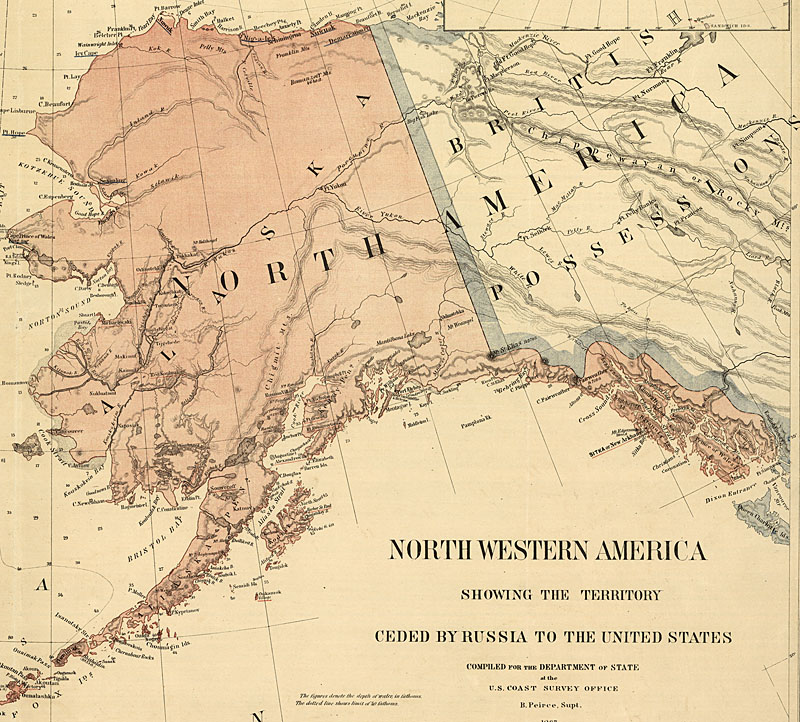
This purchase was met with considerable ridicule and opposition in the United States. Critics derisively nicknamed Alaska “Seward’s Folly” or “Seward’s Icebox,” mocking the seemingly barren and worthless land acquired for such a hefty price. The public and many politicians failed to grasp the long-term strategic and economic value of the territory. However, Seward remained steadfast in his belief that this was a wise investment for the nation’s future. The transfer officially took place on October 18, 1867, when the U.S. flag was raised in Sitka, marking the beginning of a new chapter for Alaska.
Life Under American Rule: From Neglect to Development
Following the purchase, Alaska experienced a period of relative neglect from the U.S. government. It was initially administered by the U.S. Army, then the U.S. Navy, and eventually by civilian authorities. The territory lacked a clear governmental structure and experienced a degree of lawlessness. The early years under American rule were marked by a focus on resource extraction, particularly mining and fishing, but often without adequate regulation or benefit to the indigenous population.
The discovery of gold, however, dramatically changed the trajectory of Alaska’s development. The Klondike Gold Rush, which began in earnest in the late 1890s, drew hundreds of thousands of prospectors to the region, with Skagway and Juneau becoming booming centers of activity. While many prospectors sought their fortune in the Yukon Territory of Canada, Alaska itself also yielded significant gold discoveries. This influx of people led to the establishment of new towns, infrastructure development, and a greater U.S. presence in the territory. The gold rush brought both opportunity and hardship, and its legacy continues to be felt in Alaska’s history and its iconic landscapes.
Beyond gold, Alaska’s vast natural resources began to be recognized. The fishing industry, particularly for salmon, became a major economic driver. The timber industry also grew, utilizing Alaska’s extensive forests. However, the true economic game-changer arrived in the mid-20th century: oil. The discovery of vast oil reserves on the Kenai Peninsula and later in the North Slope transformed Alaska’s economy and its relationship with the federal government. The development of the Trans-Alaska Pipeline System was a monumental engineering feat that facilitated the extraction and transport of oil, bringing unprecedented wealth to the state and fueling the movement towards statehood.
The Path to Statehood: A Long-Awaited Dream
The desire for Alaska to become a fully recognized state within the United States grew throughout the early to mid-20th century. Residents felt that as a territory, they lacked full representation and had limited control over their own governance and resources. The economic boom, particularly from oil revenues, strengthened the case for statehood, as Alaska demonstrated its ability to contribute significantly to the national economy.
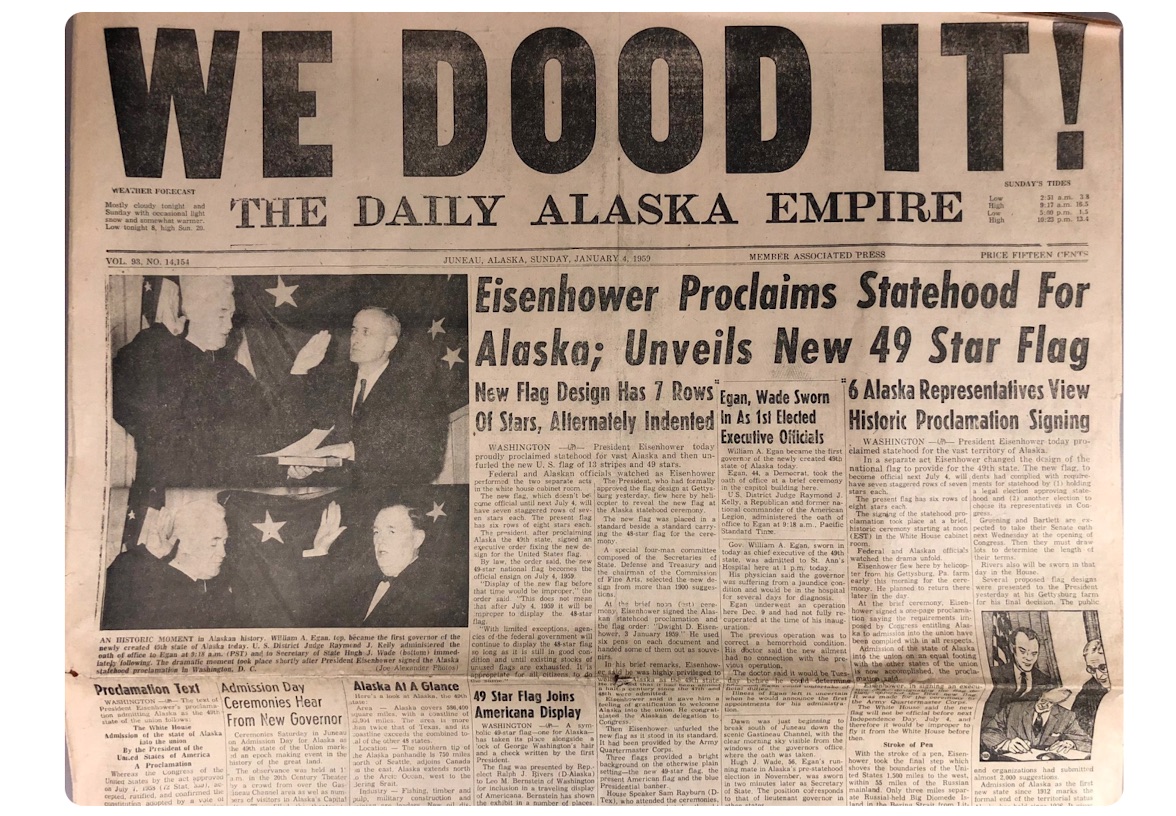
Various efforts were made to achieve statehood, with Alaskans lobbying Congress and advocating for their cause. The Alaska Statehood Committee and dedicated political leaders tirelessly worked to overcome the remaining obstacles. Finally, after decades of advocacy, President Dwight D. Eisenhower signed the Alaska Statehood Act into law on July 7, 1958. This landmark legislation paved the way for Alaska to officially join the United States as the 49th state.
The proclamation of statehood occurred on January 3, 1959. This momentous occasion marked the culmination of a long journey, transforming Alaska from a remote territory with a complex history into a full-fledged member of the American union. The transition brought new opportunities for self-governance, economic development, and a stronger voice in national affairs. It cemented Alaska’s place on the map not just as a land of natural wonders, but as a dynamic and integral part of the United States, carrying with it the echoes of its indigenous past, its Russian heritage, and its adventurous American frontier spirit.
LifeOutOfTheBox is a participant in the Amazon Services LLC Associates Program, an affiliate advertising program designed to provide a means for sites to earn advertising fees by advertising and linking to Amazon.com. Amazon, the Amazon logo, AmazonSupply, and the AmazonSupply logo are trademarks of Amazon.com, Inc. or its affiliates. As an Amazon Associate we earn affiliate commissions from qualifying purchases.