
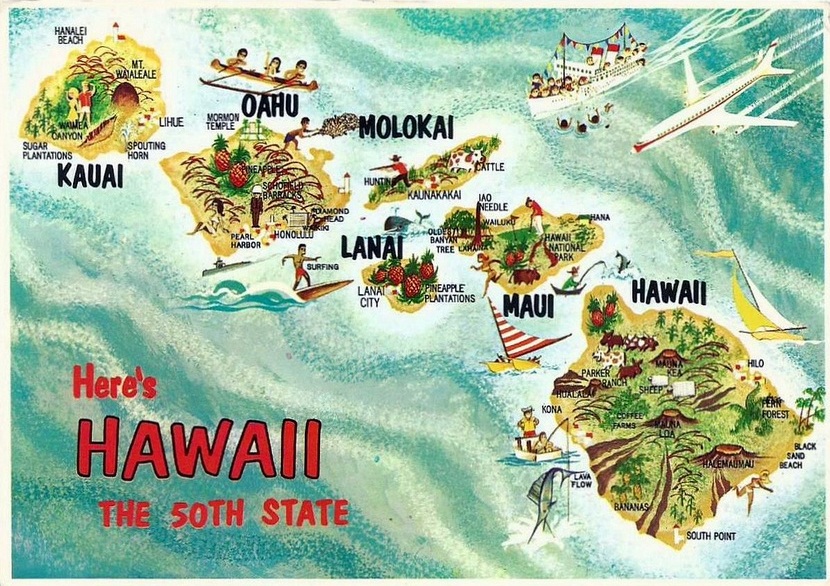
Today, Hawaii is celebrated as the United States’ 50th state, a breathtaking archipelago synonymous with pristine beaches, vibrant culture, and unparalleled natural beauty. Millions flock to its shores annually, seeking everything from luxurious resort stays to adventurous explorations of its volcanic landscapes. Yet, beneath the veneer of modern tourism and contemporary conveniences, lies a rich, complex, and profound history that predates statehood by centuries. To truly appreciate the islands’ enduring allure, from its iconic landmarks to its unique local culture, one must journey back in time and understand what Hawaii was before it joined the Union. It was a land shaped by intrepid Polynesian navigators, a proud independent kingdom, and a territory caught in the currents of global power shifts – a narrative that deeply informs every aspect of the travel experience today.
Ancient Roots: The Polynesian Legacy
Long before contact with Western explorers, the Hawaiian Islands were a beacon for master navigators from Polynesia. Their incredible voyages across vast expanses of the Pacific Ocean represent one of humanity’s most astonishing feats of exploration and settlement. Understanding this foundational era is key to appreciating the deep cultural heritage that remains a cornerstone of Hawaiian tourism and lifestyle.
The Arrival and Settlement
The first settlers arrived in Hawaii sometime between 300 and 800 CE, undertaking epic canoe journeys from the Marquesas Islands. A second wave of migration, beginning around 1100 CE, brought settlers from Tahiti, further enriching the cultural tapestry. These intrepid voyagers brought with them not only their knowledge of wayfinding, celestial navigation, and canoe building, but also essential plants and animals – pigs, chickens, dogs, taro, breadfruit, and sweet potatoes – that formed the bedrock of a thriving agricultural society.
Upon arrival, they established sophisticated communities, developing an intricate social structure rooted in the kapu (taboo) system, which dictated religious, political, and social norms, ensuring order and resource management. Society was hierarchical, led by the Aliʻi Nui, a ruling class believed to possess sacred power (mana). This period saw the construction of impressive heiau (temples), agricultural terraces, and complex irrigation systems, testaments to their ingenuity and organized society. For visitors today, exploring sites like Pu’uhonua o Hōnaunau National Historical Park on the Big Island offers a profound glimpse into this ancient past, illustrating the spiritual significance and community life of the early Hawaiians.
A Flourishing Indigenous Society
For centuries, the Hawaiian Islands existed in relative isolation, allowing a distinct and vibrant culture to flourish. The isolation fostered innovation and a deep connection to the land and sea, encapsulated by the philosophy of mālama ʻāina (to care for the land). Food, activities, and daily life were intimately connected to the natural environment. Traditional practices like hula, initially a sacred dance, and he’e nalu (surfing), which was reserved for the Aliʻi Nui, developed into sophisticated art forms and cultural expressions.
Villages thrived through sustainable practices, developing aquaculture ponds (loko iʻa) that provided abundant fish, and cultivating vast fields of taro for poi, a staple food. This era of self-sufficiency and cultural richness laid the foundation for the unique traditions that travelers experience in Hawaii today, from the welcoming aloha spirit to the enduring respect for nature. Modern tourism initiatives often highlight these ancient practices, offering experiences that allow visitors to connect with the authentic heart of Hawaiian culture, from traditional luaus that echo ancient feasts to outrigger canoe rides that recall ancestral voyages.
The Dawn of a Kingdom: Unification and Monarchy
The serene isolation of the Hawaiian Islands was irrevocably altered in 1778 with the arrival of European explorers. This contact initiated a period of dramatic transformation, leading to the unification of the islands under a single monarch and the establishment of an internationally recognized kingdom.
Kamehameha the Great and Unification
The arrival of Captain James Cook at Kealakekua Bay marked a pivotal moment. While tragic for Cook, his visits introduced the Hawaiians to Western technology, particularly iron and firearms, which would profoundly influence inter-island conflicts. It was from this tumultuous environment that Kamehameha I, a powerful and visionary chief from the Big Island, rose to prominence. Utilizing strategic alliances and acquired Western weaponry, Kamehameha embarked on a decades-long campaign to unify the islands. His decisive victory at the Battle of Nuʻuanu on Oʻahu solidified his control over most of the archipelago. By 1810, with the peaceful cession of Kauaʻi and Niʻihau, Kamehameha I successfully established the Kingdom of Hawaii, marking a new era of centralized rule.

This unified kingdom brought relative peace and stability, fostering trade and creating a national identity. Landmarks like the majestic Kamehameha I Statue in downtown Honolulu stand as powerful tributes to his legacy, reminding visitors of the strength and vision required to forge a nation. For those interested in historical landmarks, understanding Kamehameha’s story enriches any visit to these sites, offering context to the grandeur of Hawaii’s royal past.
A Century of Change and Challenge
Following Kamehameha I’s death in 1819, his successors, including Kamehameha II and most notably Kamehameha III, faced immense pressure from growing foreign influence. Just months after Kamehameha I’s passing, the ancient kapu system was abolished, a revolutionary act that preceded the arrival of Christian missionaries from New England in 1820. The missionaries brought Western education, medicine, and religious beliefs, profoundly altering Hawaiian society and culture.
The 19th century saw Hawaii navigate complex international relations, successfully gaining recognition as a sovereign nation by major world powers. However, this period also brought significant economic shifts. The lucrative sandalwood trade, followed by the booming whaling industry, integrated Hawaii into the global economy. Later, the rise of sugar plantations transformed the landscape and introduced a diverse array of immigrant labor from China, Japan, Portugal, and the Philippines, creating the multicultural society that thrives today.
The Hawaiian monarchs, including King David Kalākaua, who traveled the world, and his sister, Queen Liliʻuokalani, strived to balance modernization with the preservation of Hawaiian identity. ʻIolani Palace, the only official residence of a reigning monarch in the United States, stands as a powerful symbol of this era, showcasing both the grandeur of the monarchy and its embrace of modernity. Visitors can tour its opulent rooms, learning about the lives of the last Hawaiian monarchs and the challenges they faced in maintaining independence amidst increasing foreign encroachment. Understanding this period is crucial for any traveler interested in the historical depth of Hawaii’s famous places.
The Twilight of Sovereignty: Overthrow and Annexation
The late 19th century proved to be a tragic period for the Hawaiian monarchy and its people. Growing foreign economic interests and political manipulation ultimately led to the kingdom’s demise and Hawaii’s eventual annexation by the United States.
The End of the Monarchy
The influence of American businessmen, particularly powerful sugar planters, steadily grew throughout the latter half of the 19th century. These foreign residents sought greater political power to protect their economic interests, often at the expense of native Hawaiian sovereignty. This tension culminated in 1887 with the imposition of the Bayonet Constitution, which drastically limited the monarch’s power and disenfranchised many native Hawaiians and Asian immigrants. King David Kalākaua was forced to sign it under duress, marking a significant step towards the monarchy’s weakening.
Upon King Kalākaua’s death in 1891, his sister, Queen Liliʻuokalani, ascended to the throne. A fiercely patriotic and educated woman, she attempted to restore native Hawaiian rights and power by promulgating a new constitution. However, her efforts were met with staunch opposition from the powerful, American-backed planter and business elite. On January 17, 1893, a group of these businessmen, with the support of the United States Minister to Hawaii and the landing of U.S. Marines, orchestrated the overthrow of the Hawaiian Kingdom. Queen Liliʻuokalani peacefully surrendered to avoid bloodshed, marking the end of nearly a century of monarchical rule. The figures involved, such as Sanford B. Dole, who would become the first president of the provisional government, remain controversial subjects in Hawaiian history.

The Republic and Territory
Following the overthrow, the conspirators established a Provisional Government, which soon became the Republic of Hawaii in 1894, with Sanford B. Dole as its president. Despite widespread protests from native Hawaiians and efforts by Queen Liliʻuokalani to restore the monarchy through appeals to the United States government, their pleas were ultimately unsuccessful.
The Spanish-American War in 1898 created a strategic imperative for the United States in the Pacific, leading to Hawaii’s formal annexation by the U.S. Congress, despite ongoing protests by a majority of the Hawaiian population. In 1900, Hawaii was designated as the Territory of Hawaii. This period saw significant development under American influence, particularly in infrastructure, military installations, and the expansion of the pineapple industry alongside sugar. The attack on Pearl Harbor on December 7, 1941, brought Hawaii to the forefront of World War II, further cementing its strategic importance to the United States and paving the way for eventual statehood in 1959. This transformation from sovereign kingdom to U.S. territory is a complex and often painful chapter that profoundly shaped the modern Hawaiian identity. Visiting sites like Pearl Harbor offers a powerful, albeit somber, connection to this territorial past.
The Legacy Endures: Connecting Past to Present Travel
Understanding Hawaii’s journey before statehood isn’t just an academic exercise; it profoundly enriches the contemporary travel experience. The ancient traditions, the legacy of the monarchy, and the territorial period have all left indelible marks, shaping the unique culture, landscapes, and attractions that draw visitors from across the globe.
Experiencing Ancient Culture Today
Even amidst modern developments, the spirit of ancient Hawaii thrives. The values of aloha (love, peace, compassion) and mālama ʻāina (care for the land) are still deeply embedded in the local culture, influencing everything from hospitality to environmental conservation. Travelers can immerse themselves in authentic Hawaiian experiences at destinations like the Polynesian Cultural Center on Oʻahu, where various Polynesian cultures, including Hawaiian, are showcased through interactive exhibits, traditional performances, and feasts.
Local food, often a highlight of any trip, also tells a story. Dishes like poi, kalua pig cooked in an imu (underground oven), and fresh poke are direct descendants of traditional Hawaiian cuisine, offering a taste of the islands’ culinary heritage. Participating in a luau, watching a hula performance, or even learning a few Hawaiian words allows visitors to connect with the living history and traditions that predate statehood, enhancing their understanding of the vibrant local culture. For those seeking unique experiences, these cultural activities provide a bridge to Hawaii’s ancient soul.
Historical Sites as Modern Attractions
The landmarks and historical sites from Hawaii’s pre-statehood past are not merely relics; they are vital attractions that offer profound insights into the islands’ identity. Touring ʻIolani Palace provides an intimate look into the lives of the last Hawaiian monarchs, allowing visitors to walk through history and feel the echoes of a once-sovereign kingdom. The solemn beauty of Pu’ukoholā Heiau National Historic Site on the Big Island transports one back to the era of Kamehameha the Great, offering a spiritual connection to ancient Hawaiian power.
Even luxury resorts and modern accommodations often intertwine with this historical narrative. A stay at a historic hotel like the Moana Surfrider, A Westin Resort & Spa in Waikiki, established in 1901 during the territorial period, offers a tangible link to a bygone era, blending elegant history with contemporary amenities. Similarly, major resorts like the Hilton Hawaiian Village Waikiki Beach Resort are situated on lands with rich histories, often incorporating Hawaiian cultural elements into their architecture, decor, and programming. Understanding these layers of history enriches every aspect of a stay, transforming a simple vacation into a deeper engagement with a destination that is far more than just a beautiful beach.
In conclusion, before Hawaii became the 50th U.S. state, it was a dynamic and evolving land: a realm of ancient Polynesian wisdom, a proud independent kingdom that navigated global powers, and a territory shaped by intricate political and economic forces. This storied past is not just confined to history books; it lives on in the culture, traditions, and very landscapes of the islands. For any traveler seeking to delve beyond the surface of a postcard-perfect destination, understanding what Hawaii was before it was a state opens up a richer, more meaningful experience, allowing for a profound appreciation of this truly unique corner of the world.