
The story of Texas joining the United States is a tale woven with ambition, conflict, and the very spirit of expansion that defined 19th-century America. More than just a political maneuver, the annexation of Texas was a pivotal moment that reshaped the North American continent, ignited a war with Mexico, and deeply influenced the trajectory of the United States itself, particularly concerning the contentious issue of slavery. For travelers today, understanding this historical event offers a profound lens through which to explore the vibrant culture, diverse landscapes, and rich heritage of the Lone Star State. From the hallowed grounds of battlefields to grand state capitals and bustling modern cities, the echoes of annexation are palpable, offering a unique journey for those interested in history, landmarks, and the intricate tapestry of American identity.

This article delves into the “what” and “why” of the annexation, guiding you through the historical currents that led to Texas’s statehood and highlighting how you can experience this momentous past firsthand. Whether you’re planning a historical tour, seeking cultural immersion, or simply curious about the roots of Texan pride, the story of annexation is an essential chapter in any visit to this remarkable state.
The Genesis of a Lone Star Nation: From Mexican Province to Independent Republic
To grasp the annexation, one must first understand the tumultuous path Texas took from being a sparsely populated frontier of Mexico to an independent republic. This journey laid the foundational desire for union with the United States, shaped by migration, cultural clashes, and a fierce fight for self-determination.
Early Anglo-American Settlement and Growing Tensions
In the early 19th century, Mexican Texas was largely undeveloped, a vast territory vulnerable to Comanche raids and foreign encroachment. To bolster its population and secure its borders, Mexico invited Anglo-American settlers, primarily from the southern United States, offering generous land grants. One of the most prominent figures in this colonization effort was Stephen F. Austin, often referred to as the “Father of Texas.” These settlers brought with them not only their families and farming practices but also their cultural values, including a strong preference for slavery, which was at odds with Mexican laws and evolving anti-slavery sentiments.
As the Anglo-American population swelled, tensions inevitably rose. Cultural differences, religious disparities (most settlers were Protestant, while Mexico was predominantly Catholic), and disputes over legal systems simmered. The Mexican government, increasingly wary of the growing American influence, attempted to exert greater control, imposing new taxes and restrictions on immigration and slavery. This led to early acts of defiance, such as the Fredonia Rebellion in 1826-1827, foreshadowing the larger conflict to come.
For visitors interested in this period, a trip to San Antonio offers immersive experiences. The city, with its rich Spanish colonial history, became a flashpoint for conflict. You can walk the grounds where early settlers and Mexican citizens once interacted, imagining the burgeoning cultural melting pot that would eventually boil over.
The Texas Revolution and the Birth of a Republic
The simmering discontent exploded into the Texas Revolution in 1835. Sparked by Mexican President Santa Anna’s attempts to centralize power and revoke the relatively autonomous status of Texas, the revolution saw a series of iconic battles. The first shots were fired in Gonzales in October 1835, famously over a cannon emblazoned with the “Come and Take It” flag.
However, the most enduring symbol of the revolution is undoubtedly the Alamo in San Antonio. In March 1836, a small group of Texan defenders, including legendary figures like Davy Crockett and Jim Bowie, made a valiant stand against Santa Anna’s much larger army. Though all were killed, their sacrifice galvanized the Texan cause. Just weeks later, another massacre at Goliad further fueled the desire for vengeance and independence.
While these battles raged, Texan delegates met at Washington-on-the-Brazos for the Convention of 1836. On March 2, 1836, they formally declared independence from Mexico, establishing the Republic of Texas. The decisive victory came on April 21, 1836, at the Battle of San Jacinto, where Sam Houston‘s Texan army routed Santa Anna’s forces in a mere 18 minutes, securing Texas’s independence.
Visiting these sites today is a powerful experience. The Alamo stands as a shrine to Texan liberty, offering tours and exhibits that bring the siege to life. The San Jacinto Monument, soaring 567 feet into the sky near modern-day Houston, commemorates the final battle and offers panoramic views of the battlefield and surrounding area. In Washington-on-the-Brazos State Historic Site, you can explore reconstructed buildings and museums that evoke the spirit of the birthplace of Texas independence. These landmarks are not just historical sites; they are vibrant attractions that help visitors connect with the profound courage and determination that forged a nation.
The Road to Union: Debates, Diplomacy, and Manifest Destiny
Following its independence, the Republic of Texas existed as a sovereign nation for nearly a decade, from 1836 to 1845. During this period, the question of annexation by the United States became a central political issue, fraught with complex motivations and significant opposition.
The Enticement of Statehood: Texas’s Debt and Security Needs
From the outset, many Texans — including its first president, Sam Houston — desired annexation to the United States. The young republic faced formidable challenges that made union with its powerful neighbor an attractive proposition. Economically, Texas was deeply in debt, largely due to the costs of the revolution and establishing a new government. Joining the United States promised economic stability and access to a larger market.
Perhaps even more pressing was the issue of security. Mexico refused to recognize Texas’s independence and periodically threatened to reclaim the territory by force. The vast border between the two nations remained disputed, leading to ongoing skirmishes. Additionally, the Republic of Texas continued to grapple with raids from Native American tribes. Union with the United States would provide the protection of the American military and resolve border disputes with Mexico (or so it was hoped).
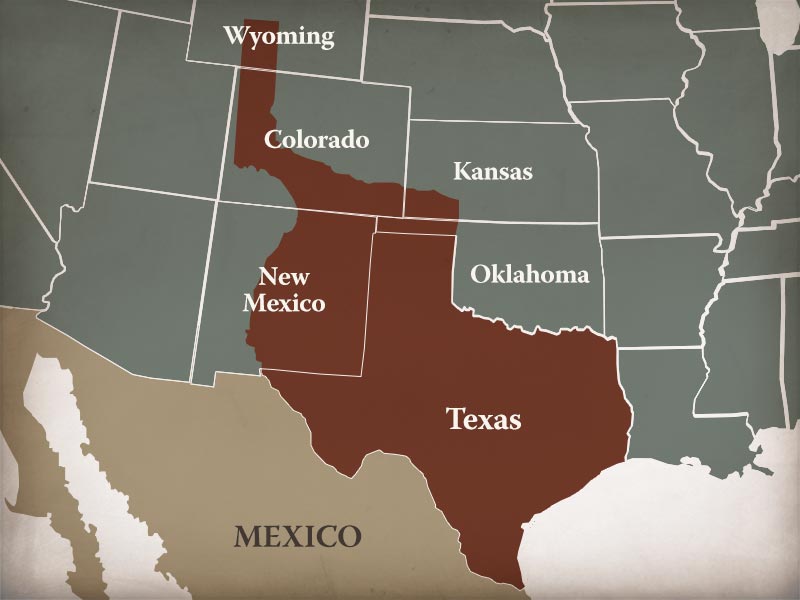
Despite the strong desire for annexation among many Texans, not all were in favor. Mirabeau B. Lamar, Houston’s successor as president, pursued a more nationalist agenda, dreaming of an independent Texas empire stretching to the Pacific. However, the economic and security realities ultimately pushed Texas back towards the idea of statehood.
American Ambitions and the Slavery Question
On the American side, the prospect of annexing Texas was equally complex. While many, especially in the Southern states, eagerly supported annexation as an extension of “Manifest Destiny” – the belief in America’s divinely ordained right to expand westward – others vehemently opposed it.
The primary obstacle was slavery. Texas would enter the Union as a slave state, upsetting the delicate balance between free and slave states established by the Missouri Compromise. Anti-slavery advocates in the North feared that annexing Texas would embolden the “slave power” and potentially lead to the expansion of slavery into new territories. This deep sectional division meant that early attempts at annexation, particularly during Andrew Jackson’s presidency, were rebuffed. Presidents Martin Van Buren and William Henry Harrison also hesitated to tackle the controversial issue.
However, the geopolitical landscape shifted. Concern grew in Washington D.C. that Great Britain, sensing an opportunity, might forge closer ties with the Republic of Texas to gain influence in North America and potentially undermine American expansion. This fear, combined with a growing popular sentiment for westward expansion, began to sway public and political opinion in favor of annexation.
The Final Steps: President Polk and Congressional Action
The turning point came with the election of James K. Polk to the presidency in 1844. Polk, a staunch expansionist, ran on a platform that explicitly endorsed the annexation of Texas and the acquisition of Oregon. His victory was widely interpreted as a mandate for expansion.
Before Polk even took office, outgoing President John Tyler, eager to secure a historical legacy, pushed for annexation through a joint resolution of Congress. This method required only a simple majority in both houses, bypassing the two-thirds Senate majority needed for a treaty. On February 28, 1845, Congress passed the joint resolution, offering Texas statehood.
Texas overwhelmingly approved the annexation offer, adopting a new state constitution. On December 29, 1845, President Polk officially signed the act, making Texas the 28th state of the United States. This momentous event, however, immediately triggered a conflict with Mexico, which still considered Texas a rebellious province and viewed annexation as an act of aggression and a violation of its territorial integrity. The ensuing Mexican-American War (1846-1848) would further expand the United States’s territory significantly, defining much of its modern-day southwestern border.
Legacy and Lasting Impact: Exploring Texas’s Annexation Today
The annexation of Texas was not just a historical footnote; it was a watershed moment that permanently altered the geopolitical map of North America. Its legacy continues to shape the Texan identity and provides countless opportunities for travelers to connect with this rich history. From majestic landmarks to vibrant cultural experiences, understanding annexation enriches any visit to the Lone Star State.
Journey Through History: Must-Visit Landmarks and Attractions
Exploring the historical sites related to annexation allows visitors to walk in the footsteps of the past and gain a deeper appreciation for the decisions and conflicts that unfolded.
- Austin, the State Capital: Begin your journey in Austin, the vibrant capital city. The grand Texas State Capitol building, a National Historic Landmark, is an architectural marvel and the seat of Texan government. Tours provide insights into the state’s legislative process and its journey from republic to statehood. Nearby, the Bullock Texas State History Museum offers comprehensive exhibits covering Texas’s entire history, including detailed sections on the revolution and annexation.
- San Antonio – Cradle of Liberty: No historical tour of Texas is complete without San Antonio. Beyond the Alamo, explore the San Antonio Missions National Historical Park, a UNESCO World Heritage Site, which provides context to the region’s Spanish colonial roots that preceded Anglo-American settlement and conflict. Stroll along the famous Riverwalk, where vibrant culture meets centuries of history. The Briscoe Western Art Museum also offers unique perspectives on the spirit of the frontier and the figures who shaped Texas.
- Houston and San Jacinto: The San Jacinto Monument and Battlefield State Historic Site is a must-see for anyone interested in the decisive battle of the Texas Revolution. The museum inside the monument recounts the events leading to independence. While in Houston, visitors can also experience modern Texan ingenuity at Space Center Houston and NASA Johnson Space Center, showcasing how the spirit of exploration continues.
- Borderlands History in Brownsville and El Paso: To understand the immediate aftermath of annexation, explore the sites related to the Mexican-American War. The Palo Alto Battlefield National Historical Park near Brownsville marks the first major battle of the war, offering interpretive trails and exhibits. In El Paso, the Wyler Aerial Tramway offers stunning views of the vast landscape that was once a disputed border.
- Galveston: This historic island city played a crucial role as a port during the Republic and early statehood. Its Strand Historic District features beautifully preserved Victorian architecture, telling tales of commerce, immigration, and maritime history.
These sites are not merely static displays; they are living testaments to the complex history of Texas. Many offer guided tours, interactive exhibits, and annual reenactments that bring the past vibrantly to life, creating enriching experiences for all ages.

Immerse Yourself: Cultural Experiences and Texan Hospitality
Beyond specific landmarks, the annexation profoundly shaped the cultural fabric of Texas. Today, this translates into a unique blend of Southern charm, Western grit, and a strong sense of independence that defines Texan hospitality and lifestyle.
- Food and Local Culture: The diverse history of Texas is deliciously evident in its cuisine. From authentic Tex-Mex that traces its roots to the intertwined Mexican and Texan cultures to legendary Texas barbecue that embodies the state’s ranching heritage, food is a gateway to understanding the past. Seek out local eateries in San Antonio, Austin, and Houston for an authentic taste of Texan identity.
- Festivals and Events: Throughout the year, various festivals celebrate Texan heritage. The Pecan Street Festival in Austin or the Fiesta San Antonio offer glimpses into the state’s vibrant culture, often with historical nods and traditional music. Check local calendars for historical reenactments, especially around Texas Independence Day (March 2) and San Jacinto Day (April 21).
- Accommodation and Travel Tips: When planning your historical journey, consider boutique hotels in renovated historic buildings in cities like San Antonio or Galveston for an immersive experience. For a longer stay, look into charming bed and breakfasts in the Texas Hill Country, offering a tranquil escape after a day of historical exploration. For budget travelers, numerous mid-range hotels and vacation rentals are available across the major cities. Don’t forget to explore Texas’s natural beauty too, from the majestic Big Bend National Park in the Chihuahuan Desert to the coastal charm of South Padre Island, as these landscapes were the backdrop to the annexation story.
The annexation of Texas was a complex, multi-faceted event driven by factors ranging from economic necessity and security concerns to the powerful currents of Manifest Destiny and the polarizing debate over slavery. Its impact reverberated through American history, leading directly to the Mexican-American War and further exacerbating sectional tensions that would culminate in the Civil War.
For travelers, this historical narrative offers an extraordinary journey through time. By visiting the hallowed grounds of the Alamo and San Jacinto, exploring the grandeur of the Texas State Capitol, and immersing oneself in the vibrant cultures of San Antonio, Austin, and Houston, one can truly connect with the spirit of the Republic of Texas and the pivotal moment it chose to join the United States. It’s an exploration not just of facts and dates, but of the very identity of the Lone Star State and its enduring contribution to the American story. So, pack your bags, and prepare to embark on a historical adventure that will leave you with a profound understanding of what the annexation of Texas truly meant.
LifeOutOfTheBox is a participant in the Amazon Services LLC Associates Program, an affiliate advertising program designed to provide a means for sites to earn advertising fees by advertising and linking to Amazon.com. Amazon, the Amazon logo, AmazonSupply, and the AmazonSupply logo are trademarks of Amazon.com, Inc. or its affiliates. As an Amazon Associate we earn affiliate commissions from qualifying purchases.