
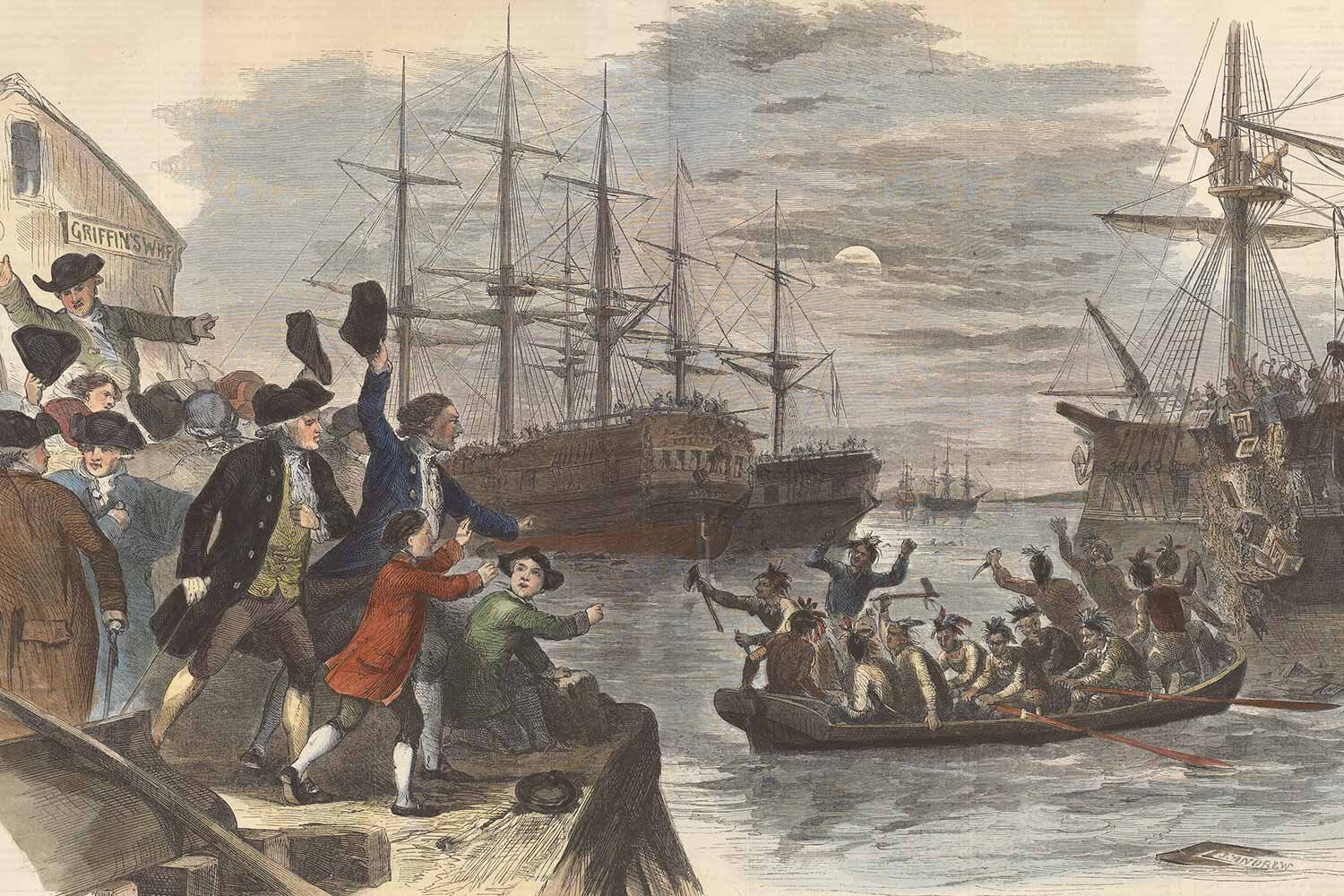
The chilly evening of December 16, 1773, witnessed an act of defiance in Boston Harbor that would forever alter the course of history for the North American colonies and resonate globally. Disguised as Mohawk Indians, a group of American colonists, fueled by a potent mix of economic grievance and political frustration, boarded three British East India Company ships – the Dartmouth, the Eleanor, and the Beaver – and systematically dumped 342 chests of tea into the frigid waters. This pivotal event, now famously known as the Boston Tea Party, was not merely an act of vandalism; it was a potent symbol of burgeoning colonial unity and a direct challenge to British authority. Its effects were far-reaching, setting in motion a chain of events that would culminate in a revolution, the birth of a new nation, and the shaping of a distinct American identity, influencing everything from political philosophy to modern-day tourism and lifestyle.

The Immediate Fallout: A Spark Ignites
The immediate reaction to the Boston Tea Party was a swift and severe crackdown from Great Britain, igniting a volatile period that pushed the colonies closer to open rebellion. For King George III and the British Parliament, the destruction of private property represented an unforgivable act of insubordination and a direct assault on imperial sovereignty. The response was designed to punish Massachusetts and serve as a stark warning to other dissenting colonies.
The Intolerable Acts and Colonial Unity
In 1774, Parliament passed a series of punitive measures collectively known in the colonies as the Intolerable Acts (and in Britain as the Coercive Acts). These acts were a deliberate attempt to isolate Massachusetts and crush the spirit of rebellion. However, their actual effect was precisely the opposite: they unified the colonies against a common oppressor.
- The Boston Port Act: This act was perhaps the most crippling for Boston. It closed the port of Boston to all shipping until the colonists paid for the destroyed tea. For a bustling port city dependent on maritime trade for its very survival, this was an economic death sentence. Merchants, traders, and laborers faced ruin. Yet, instead of submitting, other colonies rallied, sending food and supplies overland to support their beleaguered brethren, forging bonds of solidarity.
- The Massachusetts Government Act: This act stripped Massachusetts of its self-governance. It replaced the elected colonial council with an appointed one, greatly restricted town meetings, and gave the royal governor more power. This was a direct attack on colonial democratic traditions and sparked widespread alarm about the erosion of rights across all colonies.
- The Administration of Justice Act: Dubbed the “Murder Act” by colonists, this act allowed British officials accused of crimes in Massachusetts to be tried in Great Britain or other colonies, effectively ensuring they would escape justice. This inflamed fears of unchecked British military power and impunity.
- The Quartering Act: Although technically a renewal and expansion of a previous act, the 1774 Quartering Act allowed British troops to be housed in private homes and public buildings, without the consent of the homeowner. This was seen as a profound violation of privacy and an oppressive imposition of military presence.
- The Quebec Act: While not directly related to the Boston Tea Party, this act extended the boundaries of Quebec south into the Ohio Valley and granted religious freedom to French Catholics. Protestant colonists, particularly land speculators, viewed this as a threat to their western land claims and a cynical move to garner French-Canadian loyalty while undermining the American colonies.

These acts, rather than isolating Massachusetts, galvanized the colonies. The shared threat propelled them toward collective action. In September 1774, delegates from twelve of the thirteen colonies converged in Philadelphia for the First Continental Congress. This unprecedented gathering was a direct result of the Intolerable Acts, signifying a momentous step towards intercolonial cooperation and a unified stance against British overreach.
Economic Repercussions and Trade Disruptions
Beyond the immediate political fallout, the Boston Tea Party also had significant economic repercussions. The incident itself was a response to the Tea Act of 1773, which granted the struggling British East India Company a monopoly on tea sales in the colonies, allowing it to sell tea at lower prices than smuggled tea but still subject to the hated Townshend Duty. While intended to save the company, colonists viewed it as a deceptive maneuver to force them to accept Parliament’s right to tax without colonial representation.
The subsequent closure of Boston Harbor crippled the city’s economy, leading to widespread unemployment and poverty. However, the solidarity among colonies led to non-importation and non-exportation agreements, effectively boycotting British goods. These boycotts, while economically challenging for the colonists, put significant pressure on British merchants and manufacturers, who in turn lobbied Parliament for a more conciliatory approach – a plea that fell on deaf ears. The economic disruption, therefore, became another catalyst for dissent, highlighting the colonists’ ability to exert pressure through unified economic action and setting a precedent for future resistance.
Forging a Nation: Towards Independence and Identity
The ripples of the Boston Tea Party extended far beyond immediate punitive measures, ultimately paving the way for the American Revolution and the forging of a new national identity. The events of 1773-1774 fundamentally altered the relationship between Britain and its colonies, pushing them past the point of reconciliation.
The Road to Revolution
The punitive nature of the Intolerable Acts convinced many moderate colonists that Britain had no intention of respecting their rights or engaging in fair governance. The First Continental Congress, spurred by the crisis, declared the Intolerable Acts unconstitutional and called for a complete boycott of British goods. It also began to organize colonial militias for defensive purposes.
The escalation was swift. Tensions boiled over in April 1775 with the Battles of Lexington and Concord in Massachusetts, marking the official start of the American Revolution. What began as a protest against taxation without representation morphed into a full-blown war for independence. Leaders like Samuel Adams and John Hancock, prominent figures in the Sons of Liberty who had played a role in orchestrating the Boston Tea Party, became key figures in the revolutionary movement.
The Second Continental Congress soon convened, establishing the Continental Army under the leadership of George Washington. The ideals of self-governance, liberty, and resistance to tyranny, championed by the colonists since the Tea Party, found their ultimate expression in the Declaration of Independence, penned by Thomas Jefferson and adopted on July 4, 1776. This monumental document articulated the philosophical basis for severing ties with Britain, listing grievances that directly stemmed from the Crown’s response to colonial protests, including the imposition of taxes and the denial of representation.
The eight-year struggle that followed, marked by arduous campaigns like the winter at Valley Forge, eventually culminated in American victory and the signing of the Treaty of Paris (1783), formally recognizing the United States of America as an independent nation. The Boston Tea Party, therefore, stands as a critical hinge point, transforming colonial discontent into a full-fledged pursuit of national sovereignty.
Establishing a New Political Landscape
The creation of the United States ushered in an entirely new political landscape. The fledgling nation, born out of a rebellion against perceived tyranny, was determined to establish a government founded on principles of liberty, individual rights, and popular sovereignty. The experiences leading up to the revolution, particularly the infringements on colonial self-governance by the British Parliament following the Tea Party, heavily influenced the drafting of the Constitution of the United States.
The new republic prioritized checks and balances, the separation of powers, and a Bill of Rights to safeguard citizens from governmental overreach – a direct contrast to the perceived arbitrary rule of King George III and Parliament. The Boston Tea Party became a foundational myth in the American narrative, symbolizing courage in the face of injustice and the power of collective action. Its legacy shaped not only the political structures but also the very ethos of American identity, emphasizing individualism, self-reliance, and a deep-seated distrust of overly powerful government. These core values continue to resonate in contemporary American political discourse and civic life.
Legacy in the Modern Era: History, Travel, and Identity
Today, the spirit of the Boston Tea Party lives on, not just in history books but as a vibrant part of American culture and a significant draw for global travelers. The events of 1773 have transcended their historical context to become a powerful narrative woven into the fabric of national heritage, inspiring a rich tourism industry and shaping a particular lifestyle associated with patriotic pride and historical exploration.
Experiencing Revolutionary History: Boston’s Landmarks and Tourism
For those interested in delving into the origins of the United States, Boston is an unparalleled destination. The city has meticulously preserved its revolutionary past, transforming it into an immersive experience for visitors worldwide. The Freedom Trail, a 2.5-mile red-lined path, guides tourists through 16 historically significant sites, many of which are directly connected to the events surrounding the Boston Tea Party and the subsequent revolution.
- Old South Meeting House: This landmark church served as the gathering place for thousands of colonists on the evening of December 16, 1773, where Samuel Adams gave the signal to proceed to the harbor. Visitors can stand in the very hall where pivotal decisions were made, imagining the passionate speeches and fiery debates that preceded the act of defiance.
- Faneuil Hall: Known as the “Cradle of Liberty,” Faneuil Hall was another vital meeting place where colonists protested British policies, including the Tea Act. Today, it remains a bustling marketplace and a symbol of free speech and public assembly, offering a blend of history and modern commercial activity.
- Paul Revere House and Old North Church: While more directly tied to the onset of the Revolution (Paul Revere’s famous ride and the “one if by land, two if by sea” signal), these sites are integral to understanding the climate of resistance that the Tea Party intensified. They offer a glimpse into the daily lives of patriots and the clandestine communications that fueled the movement.
- Boston Tea Party Ships & Museum: This immersive museum experience allows visitors to step aboard a replica of one of the tea ships, interact with historical characters, and even participate in “dumping” tea into the harbor. It’s a prime example of how historical events are brought to life through experiential tourism, making history tangible and engaging for all ages.
These sites, along with others such as the Museum of African American History and numerous historical walking tours, make Boston a leading destination for heritage tourism. Travelers can choose from a wide range of accommodation options, from luxury hotels in the heart of the city, like a Four Seasons Hotel overlooking Boston Common, to charming boutique hotels in historic neighborhoods, or modern apartment rentals for longer stays. The demand for these experiences highlights a lifestyle choice for many: to engage directly with the past, seeking educational and enriching travel experiences that connect them to pivotal moments in history.
The Enduring Spirit: Influence on American Lifestyle and Values
The legacy of the Boston Tea Party extends beyond physical landmarks and tourist attractions. It has deeply influenced American political thought, national identity, and even aspects of lifestyle. The act of protest, of standing up against perceived injustice, remains a powerful symbol. The phrase “no taxation without representation” continues to echo in contemporary debates about governmental accountability and citizen rights.
The event is often invoked in modern political discourse, reflecting a particular American sensibility of individual liberty and resistance to overbearing authority. It embodies the spirit of self-determination and the willingness to challenge established norms for fundamental freedoms. This foundational narrative has contributed to a distinct American lifestyle that values independence, encourages civic engagement, and often romanticizes the underdog challenging powerful institutions. From budget travelers seeking authentic historical experiences to luxury travelers combining historical tours with upscale amenities, the allure of Boston’s revolutionary heritage offers a unique blend of cultural enrichment.
In essence, the Boston Tea Party was far more than a defiant act of property destruction. It was a catalyst for revolution, a foundational moment in the birth of the United States, and a continuing source of national identity. Its effects reverberate today in the historical landmarks that draw millions of visitors, the enduring principles enshrined in the nation’s governance, and the very spirit of independence that characterizes the American way of life. It reminds us that momentous changes can indeed spring from a single act of defiance, shaping not just a nation, but also the global landscape of freedom and self-determination.
LifeOutOfTheBox is a participant in the Amazon Services LLC Associates Program, an affiliate advertising program designed to provide a means for sites to earn advertising fees by advertising and linking to Amazon.com. Amazon, the Amazon logo, AmazonSupply, and the AmazonSupply logo are trademarks of Amazon.com, Inc. or its affiliates. As an Amazon Associate we earn affiliate commissions from qualifying purchases.