
The allure of the United States is multifaceted, drawing travelers and dreamers alike to its diverse landscapes and vibrant cultures. Among its many wonders, Alaska and Hawaii stand out as the youngest and arguably most unique additions to the Union, each with a captivating story of discovery, resilience, and transformation. Their journeys to statehood, though distinct, culminated in a pivotal year for the nation, dramatically reshaping the map and expanding the horizons of American identity. These two states, one a vast wilderness of icy peaks and the other a tropical paradise born of fire, not only represent geographical extremes but also embody incredible narratives of human endeavor, cultural heritage, and unparalleled natural beauty, making them premier destinations for any lifestyle of travel.

The Last Frontier: Alaska’s Journey to Statehood
Alaska, often dubbed “The Last Frontier,” is a land of superlatives: the largest state by area, home to North America’s highest peak, Denali, and a realm of breathtaking wilderness. Its path to becoming the 49th state was a long and arduous one, marked by international intrigue, economic booms, and a persistent quest for self-determination.
Early Encounters and the Alaska Purchase
The vast expanse of Alaska was originally settled by various indigenous groups whose rich cultures thrived for millennia, adapting to the challenging Arctic and sub-Arctic environments. The first Europeans to arrive were Russian explorers and fur traders in the 18th century, primarily seeking valuable sea otter pelts. They established settlements, the most prominent being Sitka, and for over a century, Alaska was known as Russian America. The Russian-American Company managed the territory, though it struggled with profitability and the sheer logistical challenge of governing such a remote land.
By the mid-19th century, Russia found its Alaskan holdings increasingly difficult and expensive to maintain, especially given its defeat in the Crimean War. Sensing an opportunity, U.S. Secretary of State William H. Seward negotiated the purchase of Alaska from Russia in 1867 for $7.2 million, a sum equivalent to about two cents per acre. This monumental transaction, known as the Alaska Purchase, was initially met with skepticism and derision by some American politicians and journalists, who famously dubbed it “Seward’s Folly” or “Seward’s Icebox.” Many believed the United States had acquired a frozen wasteland with no practical value. Today, travelers can explore Sitka, witnessing remnants of its Russian colonial past, offering a unique blend of history and breathtaking natural scenery.
Developing a Territory and the Push for Governance
After the purchase, Alaska remained largely undeveloped for decades, governed initially by military rule and later by various federal departments. Its vast resources, however, gradually began to attract attention. The late 19th century brought the transformative Klondike Gold Rush (though primarily in Canada’s Yukon Territory, it spurred growth in Alaska as a gateway) and subsequent gold discoveries in places like Nome and Fairbanks. These rushes brought a surge of population, capital, and infrastructure, laying the groundwork for more permanent communities and an economy built on mining, fishing, and fur trapping.
The influx of people and economic activity highlighted the need for more structured governance. Alaskans increasingly chafed under distant federal administration and began advocating for greater self-rule. In 1912, the U.S. Congress passed the First Organic Act, establishing Alaska as an organized territory with its own legislature. This was a crucial step, giving residents a voice in their local affairs, even as major decisions still rested with Washington D.C.. The territory continued to grow, with significant developments in transportation, like the Alaska Railroad, connecting the major cities of Anchorage and Fairbanks, which today offers incredible scenic journeys for tourists. The territory’s strategic importance became undeniable during World War II and the subsequent Cold War, emphasizing its value beyond natural resources.
The Road to Statehood: The Final Push
The formal movement for Alaskan statehood gained significant momentum after World War II. Proponents argued that Alaska had a sufficiently large population, a robust economy, and the administrative capacity to govern itself. They pointed to the unfairness of taxation without representation and the need for greater control over their own vast natural resources, especially as oil began to emerge as a significant industry. Leading figures like Governor Ernest Gruening tirelessly campaigned, articulating Alaska’s readiness and unique contribution to the United States.
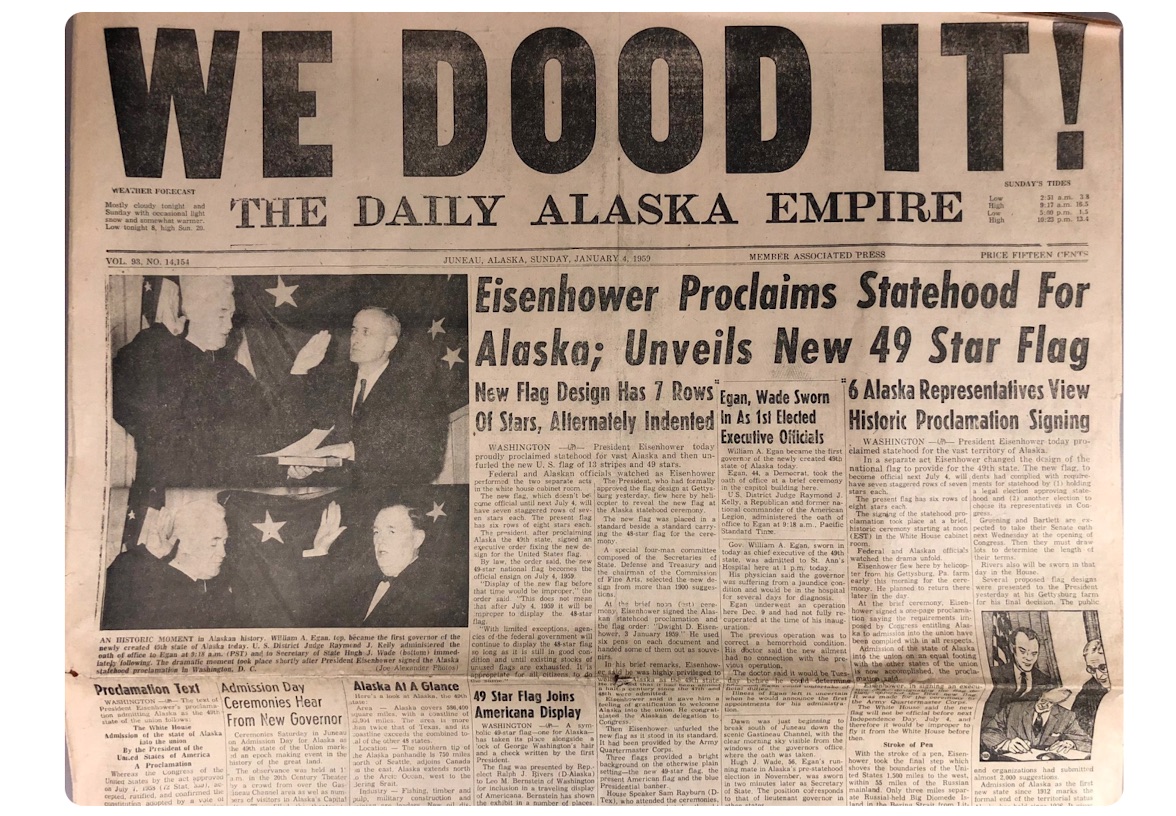
Despite strong support within Alaska, the path to statehood was not without obstacles. Concerns included the territory’s sparse population, its immense size making governance challenging, and political opposition from some Southern states wary of adding more non-contiguous, potentially Democratic-leaning states. However, the post-war strategic importance of Alaska as a bulwark against the Soviet Union during the Cold War ultimately swayed many in Congress. Finally, on July 7, 1958, the United States Congress passed the Alaska Statehood Act, which was then signed into law by President Dwight D. Eisenhower. Following a referendum in Alaska where residents overwhelmingly voted in favor of statehood, President Eisenhower issued a proclamation admitting Alaska as the 49th state on January 3, 1959. This monumental achievement not only granted Alaskans full representation but also opened up the state to further development, cementing its status as a premier destination for adventure travel, wildlife viewing in places like Glacier Bay National Park, and unforgettable Alaskan cruises.
The Aloha State: Hawaii’s Path to Union
Thousands of miles southwest, amidst the vast expanse of the Pacific Ocean, lies the archipelago of Hawaii. Known for its stunning volcanic landscapes, pristine beaches, and vibrant Polynesian culture, Hawaii’s journey to becoming the 50th state was equally complex, marked by a rich royal history, foreign intervention, and a profound shift in identity.
From Kingdom to Territory: A Royal Legacy
The Hawaiian Islands were originally settled by Polynesian navigators, establishing a thriving and complex society long before European contact. In the late 18th century, King Kamehameha I successfully united the warring islands, establishing the sovereign Kingdom of Hawaii. For nearly a century, the Hawaiian Monarchy maintained its independence, skillfully navigating increasing pressure from Western powers following Captain James Cook’s arrival in 1778. The kingdom developed a unique blend of traditional customs and Western influences, building palaces and establishing diplomatic relations. Visitors today can explore the grandeur of Iolani Palace in Honolulu, the only royal palace in the United States, a powerful symbol of this rich history.
However, towards the end of the 19th century, American and European businessmen, largely involved in sugar and pineapple plantations, gained significant economic and political influence. This culminated in the illegal overthrow of the Hawaiian Monarchy in 1893, when a group of American and European businessmen, supported by the U.S. Marines, deposed Queen Liliʻuokalani, the last reigning monarch. A Provisional Government was established, followed by the Republic of Hawaii, led by Sanford B. Dole. Despite the queen’s appeals and local resistance, the United States annexed Hawaii as a territory in 1898, spurred by expansionist sentiments during the Spanish-American War and its strategic location.
Strategic Importance and the Wartime Catalyst
As a U.S. Territory, Hawaii’s strategic importance grew immensely, particularly for military operations in the Pacific. The naval base at Pearl Harbor on Oahu became a critical asset. This strategic value was tragically underscored on December 7, 1941, when the Imperial Japanese Navy launched a surprise attack on Pearl Harbor, catapulting the United States into World War II. The attack and Hawaii’s subsequent role as a crucial staging ground for the Pacific Theater solidified its place in the American consciousness.
The war efforts saw many Hawaiian residents, including those of Japanese descent, serve valiantly, demonstrating their loyalty and commitment to the United States. This period also saw significant social and economic development, further integrating Hawaii into the national fabric. Today, Pearl Harbor remains a poignant historical landmark, where visitors can reflect on the sacrifices made at sites like the USS Arizona Memorial and the USS Missouri.
The Final Push for Statehood
Following World War II, the movement for Hawaiian statehood gained irreversible momentum. Proponents argued that Hawaii, with its diverse population, robust economy (fueled by tourism, sugar, and military spending), and a strong sense of American identity, deserved full statehood. Prominent figures like John A. Burns, a future governor, championed the cause tirelessly. The racial diversity of the islands, though initially a point of concern for some mainland politicians, became a powerful argument for Hawaii’s role as a symbol of American inclusivity and a bridge to the Pacific.
Opposition to Hawaiian statehood was also present, driven by fears of racial integration, the perceived economic burden of incorporating a non-contiguous territory, and the unique cultural differences. Some even harbored concerns about communist influence. However, the compelling arguments for economic self-determination, democratic representation, and the demonstrated loyalty of its citizens ultimately prevailed. In a parallel process to Alaska, the United States Congress passed the Hawaii Admission Act in March 1959. After a decisive plebiscite in Hawaii where residents voted overwhelmingly in favor of joining the Union, President Dwight D. Eisenhower signed the proclamation admitting Hawaii as the 50th state on August 21, 1959. This historic event completed the modern map of the United States, ushering in a new era for the “Aloha State” as a global icon of tropical beauty, a rich cultural tapestry, and an unforgettable travel destination, from the bustling resorts of Waikiki to the serene landscapes of Maui, Kauai, and the Big Island with its active volcanoes.
Two Unique Additions: A Shared Legacy
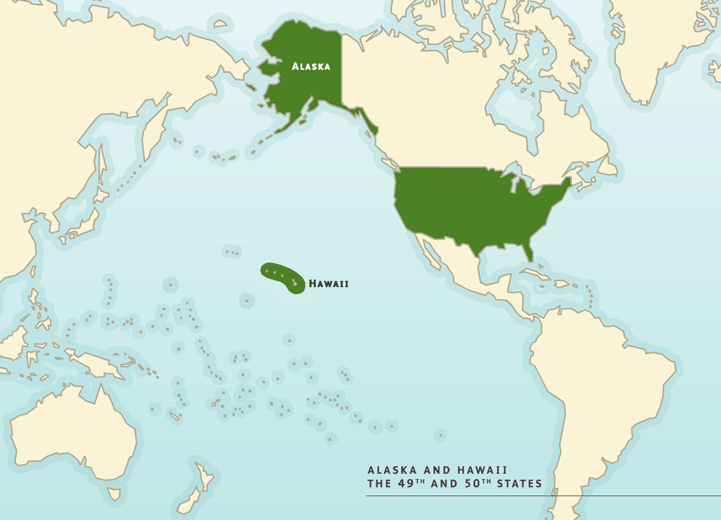
The year 1959 marked a unique chapter in American history, with the admission of both Alaska and Hawaii within months of each other. These two states, geographically disparate and culturally distinct, share a common legacy as the newest members of the United States, each profoundly enriching the nation in its own way.
Impact on the United States and the American Identity
The addition of Alaska and Hawaii completed the contiguous map of the United States, extending its borders to the Arctic and deep into the Pacific. It fundamentally changed the strategic landscape of the nation, providing unparalleled access to vital international waterways and establishing key defense outposts. Economically, both states brought immense natural resources – Alaska’s oil, minerals, and fisheries, and Hawaii’s agriculture and booming tourism industry – contributing significantly to the national economy.
Perhaps more importantly, their statehood expanded the very definition of American identity. Alaska’s rugged individualism and connection to untamed wilderness appealed to a sense of adventure and resilience. Hawaii, with its diverse ethnic makeup and vibrant Polynesian culture, became a powerful symbol of multiculturalism and a bridge between East and West, embodying the spirit of Aloha. Their admission demonstrated the United States’ capacity for growth and integration, embracing territories that were physically distant but deeply woven into the nation’s fabric.
Enduring Appeal as Premier Travel Destinations
Today, Alaska and Hawaii are not just states; they are global travel icons, offering experiences that cater to every type of traveler and lifestyle.
For those seeking adventure and raw natural beauty, Alaska provides an unparalleled frontier experience. Travelers flock to witness the majestic glaciers of Prince William Sound or Glacier Bay, embark on wildlife safaris to spot bears and whales, hike through the vast wilderness of Denali National Park, or chase the ethereal Aurora Borealis in Fairbanks. The state offers unique accommodations, from remote wilderness lodges to luxurious Alaskan cruise ships, providing comfortable bases for exploration. Local cuisine, often featuring fresh seafood, adds another layer to the authentic Alaskan experience. Cultural immersion opportunities abound, from visiting the Anchorage Museum to learning about Alaskan Native traditions.
Hawaii, on the other hand, is the quintessential tropical escape, a dream destination for relaxation, romance, and aquatic adventures. From the world-famous beaches of Waikiki on Oahu, perfect for surfing and sunbathing, to the breathtaking volcanic landscapes of Hawaii Volcanoes National Park on the Big Island, there’s an island for every preference. Luxury resorts like the Four Seasons Resort Maui at Wailea or the Hilton Hawaiian Village Waikiki Beach Resort offer world-class amenities and services, while boutique hotels and charming villas provide more intimate stays. Visitors can indulge in a traditional Luau, explore the vibrant marine life through snorkeling or diving, or simply soak in the spiritual essence of the islands. The Na Pali Coast of Kauai offers dramatic cliffs and verdant valleys, attracting hikers and nature lovers alike.
The stories of how Alaska and Hawaii became states are testaments to American expansion, the pursuit of self-governance, and the enduring appeal of these exceptional places. Beyond their historical significance, they continue to captivate the imagination of travelers worldwide, offering a wealth of experiences that blend breathtaking scenery, rich cultures, and unforgettable adventures, truly enriching the tapestry of global travel and lifestyle.
LifeOutOfTheBox is a participant in the Amazon Services LLC Associates Program, an affiliate advertising program designed to provide a means for sites to earn advertising fees by advertising and linking to Amazon.com. Amazon, the Amazon logo, AmazonSupply, and the AmazonSupply logo are trademarks of Amazon.com, Inc. or its affiliates. As an Amazon Associate we earn affiliate commissions from qualifying purchases.