
The story of California becoming a state is not merely a tale of political maneuvering; it’s a vibrant tapestry woven with exploration, conquest, discovery, and an insatiable pioneering spirit that continues to define the Golden State today. From its ancient indigenous roots to its dramatic transformation under American rule, the journey to statehood on September 9, 1850, marks a pivotal moment in both California’s history and the broader narrative of the United States. Understanding this complex past enriches any visit to its iconic landmarks, bustling cities, and serene natural wonders, allowing travelers to connect with the deep historical currents that shaped this extraordinary destination.
A Land of Diverse Heritage: From Indigenous Roots to Mexican Rule
Long before the arrival of Europeans, California was a land of remarkable diversity, home to hundreds of distinct Native American tribes, each with its own language, culture, and traditions. These communities thrived for millennia, developing sophisticated societies adapted to the varied ecosystems, from the abundant coastal regions to the arid deserts and towering mountain ranges. Their deep connection to the land laid the foundational layers of history, often overlooked but profoundly significant, influencing place names and ancient trails that adventurers still traverse.
The First Inhabitants and European Arrival
For thousands of years, the land that would become California flourished under the stewardship of its indigenous peoples. Groups like the Chumash, Miwok, Yokuts, and Tongva lived in harmony with the rich natural resources, their presence evident in archaeological sites and cultural traditions that persist today. These vibrant cultures laid the groundwork for the unique spirit of the region, which observant travelers can still feel in the rhythms of the land.
The first documented European contact came in 1542, when Portuguese explorer Juan Rodríguez Cabrillo, sailing under the Spanish flag, charted the California coast and claimed it for Spain. He entered what is now San Diego Bay, marking the beginning of European influence. However, it wasn’t until the late 18th century that Spain began a serious effort to colonize Alta California (Upper California) to protect its claims from encroaching Russian and British interests. This period, though relatively short, dramatically reshaped the landscape and culture, introducing new architectural styles, agricultural practices, and religious traditions that remain visible landmarks for today’s visitors.
Spanish Missions and Mexican Independence
The colonization effort was spearheaded by Franciscan missionaries, most notably Father Junípero Serra, who established the first of 21 missions at Mission San Diego de Alcalá in 1769. These missions, stretching from San Diego to Sonoma, served as centers for religious conversion, agricultural production, and military outposts. They fundamentally altered the lives of Native Americans and established a distinct colonial style whose architectural beauty and historical significance still draw countless tourists. Visiting these historical sites, many of which are beautifully preserved, offers a tangible link to California’s foundational past.
Accompanying the missions were presidios (forts) and pueblos (civilian towns), which eventually grew into major cities like Los Angeles, San Jose, and Santa Barbara. These early settlements are now vibrant urban centers, their historical cores offering charming glimpses into their Spanish and Mexican heritage, often celebrated through local culture, food, and festivals.
In 1821, after the Mexican War of Independence, California became a remote province of the newly formed Mexican Republic. The Mexican era saw the secularization of the missions and the rise of large ranchos, vast land grants given to prominent families, creating a distinctive rancho lifestyle centered around cattle ranching and vaquero culture. This period, characterized by a more relaxed social structure and sprawling haciendas, added another rich layer to California’s cultural mosaic, influencing everything from architecture to equestrian traditions that are still celebrated in rural communities and luxury resorts today.
The Dawn of American Influence and the Gold Rush Bonanza
The mid-19th century brought rapid, tumultuous change to California. The westward expansion of the United States was inevitable, and California’s strategic location and potential wealth soon became a focal point of American ambition. This period of transition, marked by conflict and unprecedented discovery, accelerated the region’s path to statehood and irrevocably altered its destiny.
The Bear Flag Revolt and American Conquest
As American settlers began to arrive in Alta California in increasing numbers, tensions with the Mexican authorities grew. Many American residents, encouraged by the prospect of joining the United States and driven by Manifest Destiny, harbored desires for independence. These sentiments culminated in the Bear Flag Revolt in June 1846. A small group of American settlers, led by figures like William B. Ide and supported by American explorer John C. Frémont, captured the Mexican outpost of Sonoma and proclaimed the short-lived Republic of California, hoisting a crude flag depicting a grizzly bear, a star, and a red stripe. This flag would later become the basis for the modern California state flag, a powerful symbol tourists often see in local shops and historical sites.
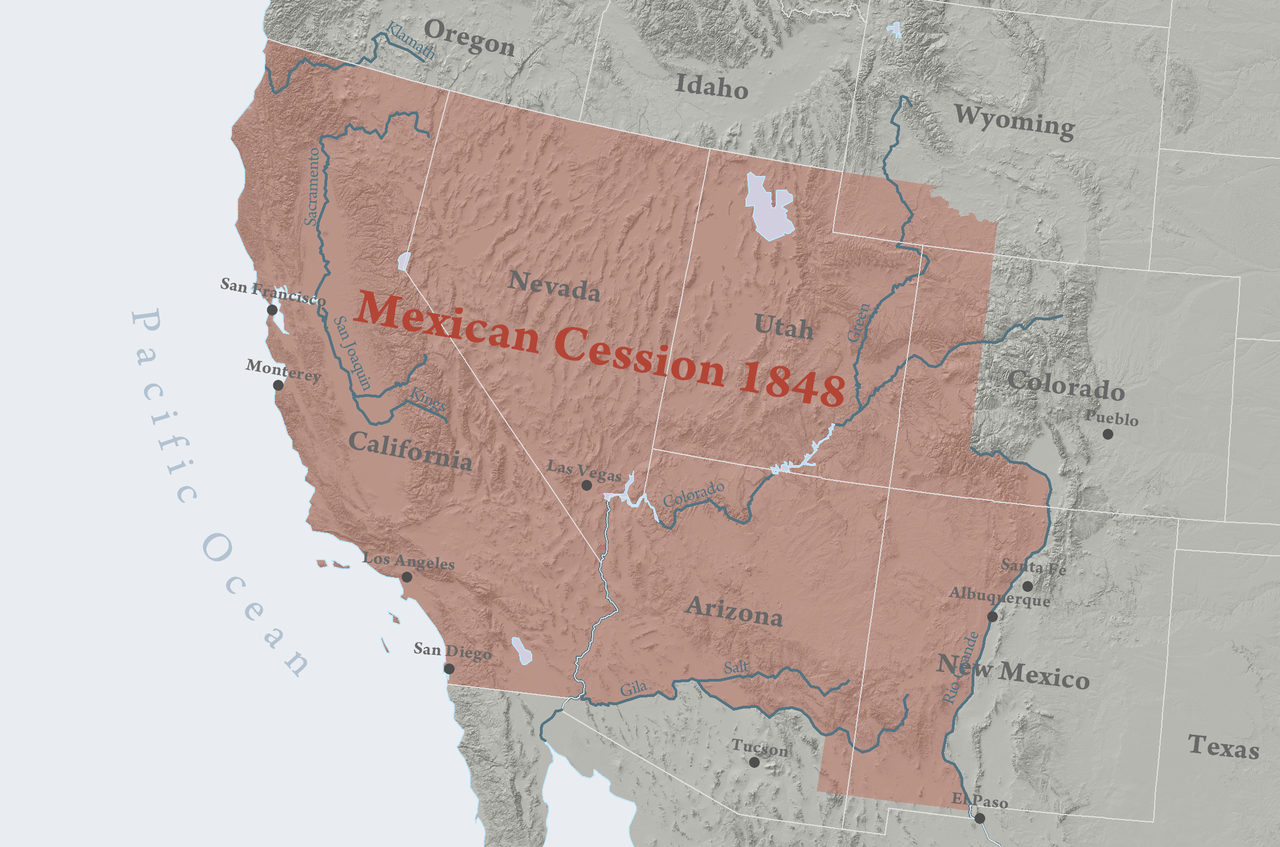
The Bear Flag Revolt coincided with the outbreak of the Mexican-American War (1846-1848). American forces, including the Navy under Commodore John D. Sloat, quickly moved to secure California. On July 7, 1846, Sloat raised the American flag over Monterey, the capital of Alta California, effectively ending Mexican rule. By January 1847, all of California was under American control. The war officially concluded with the signing of the Treaty of Guadalupe Hidalgo in February 1848, in which Mexico ceded vast territories, including California, to the United States for $15 million. This dramatic transfer of power set the stage for one of the most transformative events in American history.
The Unprecedented Lure of Gold
Just days before the signing of the Treaty of Guadalupe Hidalgo, a discovery was made that would forever alter the course of California’s development and accelerate its path to statehood. On January 24, 1848, James W. Marshall, an employee of pioneer John Sutter, discovered gold flakes in the American River near Sutter’s Mill in Coloma. What began as a local secret quickly exploded into the largest mass migration in American history: the California Gold Rush.
The news of gold spread like wildfire, reaching the East Coast and Europe by late 1848 and early 1849. Lured by the promise of instant wealth, hundreds of thousands of “Forty-Niners” flocked to California by land and sea. Ghost towns and boomtowns sprung up overnight, populated by people from all corners of the globe, creating an incredibly diverse and often chaotic society. This influx of people transformed sleepy settlements like San Francisco into bustling, cosmopolitan hubs, rapidly expanding local economies, and creating an urgent need for law, order, and formal governance. Today, the remnants of the Gold Rush era offer fascinating travel experiences, from exploring historic mining towns in the Gold Country to visiting museums that recount the epic human drama of this transformative period.
The Path to Statehood: A Rapid Transformation
The sheer scale and speed of the population boom triggered by the Gold Rush rendered existing governance structures completely inadequate. California was a territory without formal federal organization, a situation that quickly became untenable as crime rates soared and conflicts over land and resources escalated. The demand for official statehood, driven by the need for stability and representation, became an overwhelming chorus.
A Provisional Government Amidst Chaos
With no established territorial government, California was largely administered by the military, which struggled to manage the burgeoning population and rampant lawlessness. Miners formed their own informal codes, and cities like San Francisco and Sacramento often resorted to Vigilance Committees to enforce a semblance of order. The situation was chaotic and unsustainable, prompting widespread calls for a civilian government.
Responding to the urgent need, President Zachary Taylor encouraged California to skip the territorial phase entirely and draft a state constitution. In September 1849, delegates gathered in Monterey for a Constitutional Convention. Despite their diverse backgrounds, these delegates quickly hammered out a constitution that prohibited slavery, established a bicameral legislature, and defined the state’s boundaries. This rapid self-organization reflected the independent spirit of the new Californians and their determination to build a stable society. The constitution was then overwhelmingly ratified by the people of California in November 1849, setting the stage for its plea to the federal government.

The Compromise of 1850 and Admission
California’s application for statehood, particularly its proposed status as a free state, ignited a fierce debate in the United States Congress. At the time, the nation was precariously balanced between free and slave states, and the admission of a large, resource-rich free state like California threatened to upset this delicate equilibrium. The issue exacerbated sectional tensions and pushed the country closer to civil war.
To avert a national crisis, congressional leaders, most notably Senator Henry Clay of Kentucky and Senator Stephen A. Douglas of Illinois, crafted a series of legislative measures known as the Compromise of 1850. This comprehensive package addressed several contentious issues:
- California was admitted as a free state.
- Texas received $10 million in exchange for ceding land to New Mexico.
- The territories of New Mexico and Utah were organized with popular sovereignty determining the slavery question.
- The slave trade (though not slavery itself) was abolished in the District of Columbia.
- A stricter Fugitive Slave Act was enacted, a provision that deeply angered abolitionists.
On September 9, 1850, President Millard Fillmore signed the bill admitting California to the Union as the 31st state. The news reached California weeks later, sparking widespread celebrations. This landmark decision secured California’s place in the United States and temporarily diffused the national crisis, though the underlying tensions over slavery would ultimately lead to the Civil War a decade later. For travelers, exploring the historical sites of Monterey and the legislative history in Sacramento offers a profound connection to these nation-shaping events.
California’s Enduring Legacy: A Golden State for All
From its dramatic entry into the Union, California has continued to evolve, shaping national and global trends in myriad ways. The spirit of innovation, diversity, and boundless opportunity ignited during the Gold Rush and statehood era remains a defining characteristic, making it a dream destination for travelers seeking everything from historical immersion to modern luxury.
Building a New Society
Post-statehood, California continued its meteoric rise. The Gold Rush provided the initial economic impetus, but the state quickly diversified, developing a robust agricultural sector, booming industries, and a rapidly expanding infrastructure. The completion of the Transcontinental Railroad in 1869 further connected California to the rest of the United States, facilitating trade and migration. Cities like San Francisco and Los Angeles grew into major metropolitan centers, each developing its unique character and contributions to American culture and economy.
The early years of statehood were not without challenges, including ongoing conflicts with Native Americans, discrimination against Chinese immigrants who were instrumental in building the railroads, and the struggle to establish a stable and equitable society in a land of such rapid change. Yet, through it all, California’s allure as a land of opportunity persisted, attracting dreamers, entrepreneurs, and innovators from around the world. This continuous influx of diverse populations has enriched California’s culture, creating a vibrant melting pot whose influence is felt across its cuisine, arts, and traditions.
Modern Day California: A Travel Destination Par Excellence
Today, California’s legacy as a state born of daring and rapid change continues to make it one of the world’s most compelling travel destinations. Its rich history provides a captivating backdrop for exploring iconic landmarks and hidden gems. From the historic missions that dot the coastline, offering a glimpse into Spanish colonial life, to the preserved boomtowns of the Gold Country where the echoes of forty-niners still resonate, history buffs will find endless opportunities for discovery.
Beyond its historical sites, California boasts an unparalleled array of attractions that cater to every type of traveler. The stunning natural beauty, from the majestic redwoods and the peaks of Yosemite National Park to the pristine beaches of Big Sur and the serene waters of Lake Tahoe, offers endless opportunities for outdoor adventures. Culturally, the state is a powerhouse, home to the entertainment industry in Hollywood, the technological innovation of Silicon Valley, and a world-renowned culinary scene that reflects its diverse heritage and agricultural bounty.
Whether you’re seeking luxury accommodation in Beverly Hills, a boutique hotel experience in a historic San Francisco neighborhood, or a charming villa overlooking a vineyard in Napa Valley, California offers accommodation options to suit every taste and budget. The state’s vibrant tourism sector ensures that every visit is filled with unique experiences, from exploring local culture and food tours in Los Angeles to discovering hidden attractions along the scenic Pacific Coast Highway.
The story of “When California Became A State” is far more than a historical footnote; it is the origin story of a land synonymous with dreams, innovation, and an unwavering spirit of exploration. It reminds us that every landmark, every city, and every breathtaking landscape in this Golden State carries the echoes of a past shaped by courageous pioneers, profound discoveries, and pivotal decisions. As you plan your next trip, remember the journey that brought California into the Union, and let its rich history inspire your own adventures in this truly remarkable state.
LifeOutOfTheBox is a participant in the Amazon Services LLC Associates Program, an affiliate advertising program designed to provide a means for sites to earn advertising fees by advertising and linking to Amazon.com. Amazon, the Amazon logo, AmazonSupply, and the AmazonSupply logo are trademarks of Amazon.com, Inc. or its affiliates. As an Amazon Associate we earn affiliate commissions from qualifying purchases.