
Embarking on a road trip through the vast and diverse landscapes of Texas often brings up practical questions for families. One of the most common concerns for parents is the safety and legalities surrounding children in vehicles, specifically regarding their placement in the front seat. While the allure of a child being able to sit in the front seat might stem from convenience or a desire for them to have a better view, Texas has specific regulations in place to ensure the utmost safety for its youngest travelers. Understanding these rules is crucial for any family planning a Texas adventure, whether it’s a short drive to a local attraction or a longer journey exploring the state’s many landmarks.
The primary driver behind these regulations is the vulnerability of children in the event of a collision. The front seat, with its proximity to the dashboard, steering wheel, and airbags, presents a significantly higher risk for young passengers. Airbags, designed to deploy with immense force, can cause serious injury or even fatalities to children who are not adequately protected or are too small to withstand the impact. Therefore, Texas law, like many other states, prioritizes rear-seat safety for children.
Understanding Texas Child Passenger Safety Laws
The core of Texas child passenger safety laws revolves around age, weight, and height, all of which determine when a child can transition from a rear-facing car seat, to a forward-facing car seat, to a booster seat, and finally, to the front seat. These laws are not arbitrary; they are based on extensive research and recommendations from safety organizations aimed at minimizing the risk of injury to children in motor vehicles.
The Age Threshold for Front Seat Occupancy
In Texas, the general rule is that children under the age of 13 are prohibited from riding in the front seat of a vehicle. This age-based restriction is a fundamental aspect of the state’s child passenger safety laws. The reasoning behind this age limit is that by the age of 13, most children have reached a sufficient size and maturity level to sit properly in a standard seat belt without experiencing the specific dangers associated with the front passenger seat. Their bodies are generally larger and better equipped to handle the forces of a crash, and they are more likely to understand and follow instructions to remain seated correctly throughout the journey.
This age limit applies to all types of vehicles, including personal cars, taxis, and even some ride-sharing services. When planning family trips, whether it’s a visit to a theme park in Arlington or a scenic drive through the Texas Hill Country, parents must be mindful of this regulation. This means that younger children will need to occupy the rear seat, properly secured in an appropriate child restraint system.
The Role of Child Restraint Systems
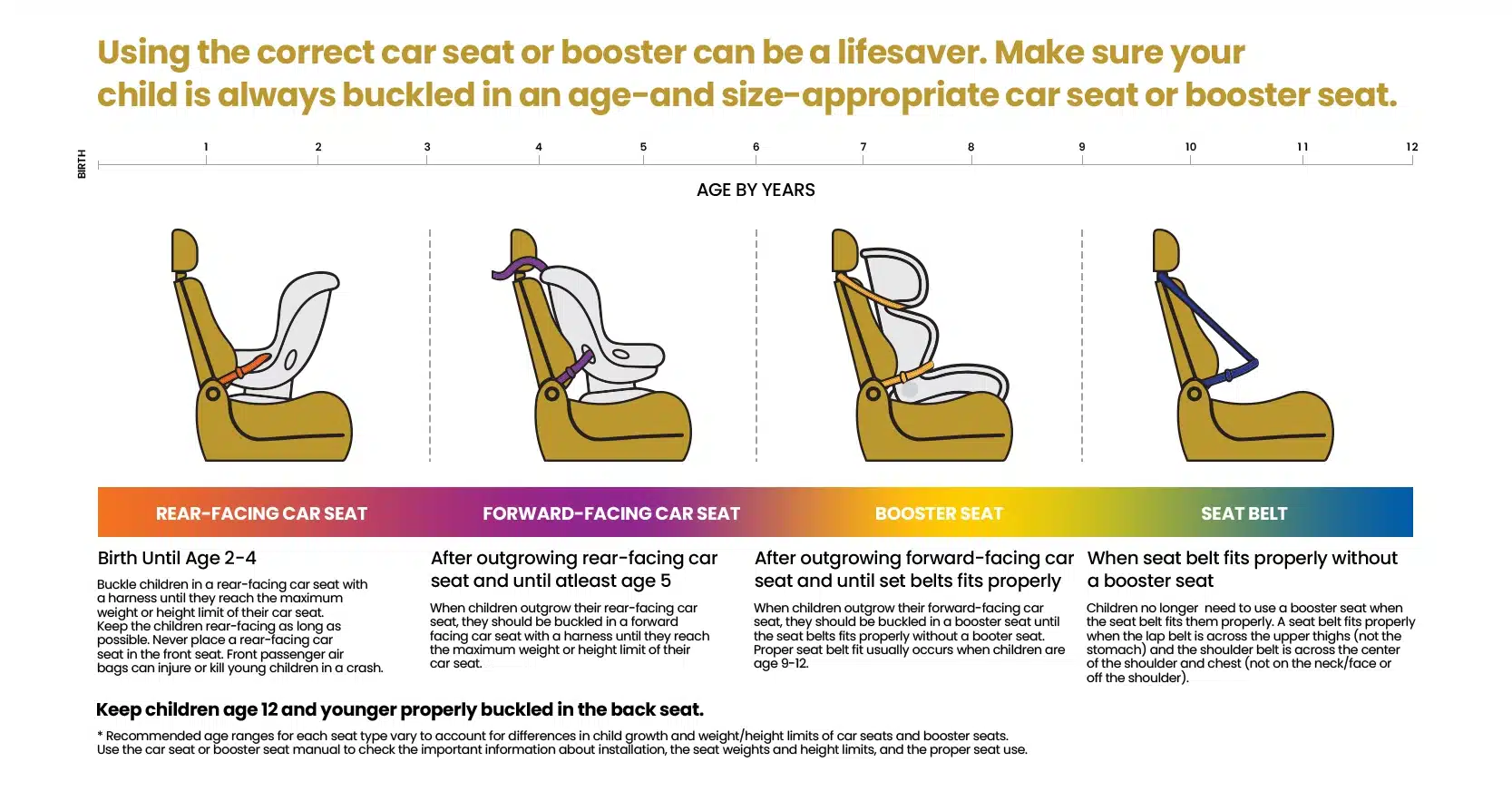
Before a child can even consider the front seat, they must have safely graduated through various child restraint systems. These systems are designed to protect children at different stages of their development:
-
Rear-Facing Car Seats: These are mandatory for infants and young toddlers. In a rear-facing position, the child’s head, neck, and spine are supported by the car seat, distributing the force of a crash evenly. Texas law requires children to remain in a rear-facing car seat until they reach the manufacturer’s specified weight or height limit, which is typically around 20-40 pounds and up to 30-35 inches in height. The American Academy of Pediatrics (AAP) strongly recommends keeping children rear-facing for as long as possible, ideally until they are at least two years old, or until they outgrow their rear-facing car seat’s limits.
-
Forward-Facing Car Seats: Once a child outgrows their rear-facing seat, they transition to a forward-facing car seat with a harness. This is usually when they are between 20 and 40 pounds and at least two years old. The harness system keeps the child securely in place, providing protection for their torso and head. Children typically remain in a forward-facing car seat until they are around 40-65 pounds and meet the height requirements, often around 45-49 inches.
-
Booster Seats: After outgrowing a forward-facing car seat, children move to a booster seat. Booster seats, as the name suggests, “boost” the child up so that the adult seat belt fits them properly. A properly fitting seat belt is crucial, with the lap belt low across the upper thighs and the shoulder belt across the chest and shoulder, avoiding contact with the neck or face. Children in Texas must use a booster seat until they are at least 8 years old or 4 feet 9 inches tall, whichever comes first. This ensures that the vehicle’s seat belt system can adequately protect them.
It is important to note that these are minimum requirements. Many safety experts recommend keeping children in booster seats for as long as they fit properly, even beyond the age of 8, as their bodies continue to develop. This gradual progression through restraint systems is designed to provide optimal protection at each stage of a child’s growth and development.
Exceptions to the Front Seat Rule

While the age 13 rule is the primary guideline in Texas, there are very limited circumstances where a child under 13 might be permitted to sit in the front seat. These exceptions are rare and are typically allowed only when the rear seating positions are already occupied by younger children who require child restraints.
When All Rear Seats Are Occupied by Younger Children
The most common exception cited in Texas law pertains to situations where all available rear seating positions are already occupied by children who are younger than 13 and are properly secured in their respective child restraint systems (car seats or booster seats). In such a scenario, if there is no other safe alternative, a child who is 13 or older would typically be the one to move to the front. However, if the child who could move to the front is also under 13, and all rear seats are filled with other children under 13 requiring restraints, the law allows for one child to sit in the front.
This exception is intended to be a practical solution for larger families or carpools with multiple young children. However, it comes with a critical caveat: the child in the front seat must be at least 5 years old and properly secured in a seat belt. Even in this exception, the youngest and smallest children should always be prioritized for the safest seating positions.
Crucially, even when this exception applies, it is still strongly recommended that children remain in the rear seat as long as possible. The front seat, with its active airbag system, poses the greatest risk to young occupants. If a child must sit in the front due to this exception, it is imperative to ensure the airbag is either deactivated (if the vehicle is equipped with this option) or that the seat is moved as far back as possible. However, deactivating airbags is often not an option in modern vehicles. Therefore, this exception should be viewed as a last resort, and careful consideration should be given to the safety of all children involved.
It is also important to consider the types of vehicles. In a two-seater vehicle, for instance, there is no rear seat, so a child would have to sit in the front, provided they meet the age and restraint requirements for that situation. However, the general rule of under 13s being in the rear still holds true for any vehicle with a functional rear seat.
Practical Considerations for Family Travel in Texas
Navigating Texas with children requires more than just understanding the laws; it involves practical planning to ensure a safe and enjoyable experience for everyone. From planning your itinerary to choosing your accommodation, safety should be a paramount consideration.
Planning Family Road Trips
When planning a family road trip across Texas, whether it’s a journey to the historical sites of San Antonio or a family vacation to Galveston Island, consider the duration of your travel and the needs of your children. Longer drives require more frequent stops for breaks, meals, and to allow children to move around. Packing essentials like snacks, drinks, entertainment, and comfort items can make the journey more pleasant.
Ensure that all car seats and booster seats are correctly installed and that your child is properly buckled in for every trip, no matter how short. Familiarize yourself with the specific weight and height limits of your child’s car seat and when it’s time to transition to the next stage. Many local fire departments and police stations in Texas offer free car seat inspections by certified technicians, which can provide invaluable peace of mind.
Choosing Family-Friendly Accommodations
When you’re not on the road, selecting family-friendly accommodations is key to a successful trip. Many hotels and resorts in Texas cater specifically to families. Look for amenities like swimming pools, on-site restaurants with children’s menus, and spacious rooms or suites. For example, a stay at a resort like the Hyatt Regency Lost Pines Resort and Spa might offer activities and facilities designed to entertain younger guests. Similarly, apartment or villa rentals can provide more space and the convenience of a kitchen, which is especially helpful for preparing meals for picky eaters. Always check reviews and inquire about specific family-focused services when booking.

Balancing Safety and Convenience
The regulations regarding front seat placement are designed with child safety as the absolute priority. While it might seem more convenient for a child to sit in the front, especially for conversation or to see the scenery better, the risks associated with an undeployed airbag or improper seat belt fit far outweigh any perceived benefit. Prioritizing rear-seat safety until children are old enough and large enough to use the adult seat belt safely in the front is a fundamental aspect of responsible parenting on the road.
Ultimately, the question of when a child can sit in the front seat in Texas has a clear answer: generally, not until they are 13 years old. The exceptions are rare and come with strict conditions. By understanding and adhering to these laws, families can ensure their travels through the great state of Texas are not only memorable but also safe and secure for their most precious passengers. Remember, the goal is to create lasting memories, and a safe journey is the first step to achieving that.
LifeOutOfTheBox is a participant in the Amazon Services LLC Associates Program, an affiliate advertising program designed to provide a means for sites to earn advertising fees by advertising and linking to Amazon.com. Amazon, the Amazon logo, AmazonSupply, and the AmazonSupply logo are trademarks of Amazon.com, Inc. or its affiliates. As an Amazon Associate we earn affiliate commissions from qualifying purchases.