
The question of “When did Alaska become a state?” delves into a fascinating chapter of American history, revealing a land shaped by geological marvels, diverse cultures, and a tenacious spirit. On January 3, 1959, the vast, resource-rich territory officially joined the United States as its 49th state. This pivotal moment transformed the geopolitical landscape of North America and set Alaska on a path to becoming one of the world’s most breathtaking and unique travel destinations.
For travelers and enthusiasts of history, nature, and adventure, understanding Alaska’s journey to statehood provides a deeper appreciation for its current status as a premier global destination. From its icy origins as Russian America to its present-day allure of majestic glaciers, abundant wildlife, and vibrant cultural experiences, Alaska’s story is as grand and expansive as its landscapes. This article will explore the historical timeline that led to statehood, and then segue into what makes the “Last Frontier” an unforgettable experience for visitors seeking unparalleled travel, unique accommodations, and transformative lifestyle adventures.
A Journey Through Time: Alaska’s Path to Statehood
The path to Alaska’s statehood was long and complex, spanning nearly a century from its acquisition by the United States. It involved periods of neglect, resource booms, strategic military importance, and a determined local populace advocating for self-governance.
From Russian America to American Territory
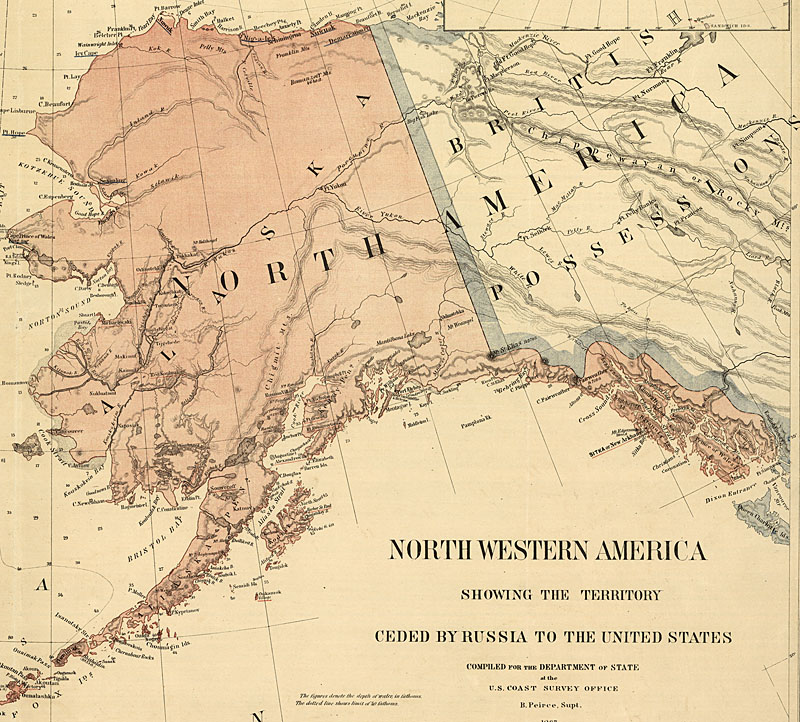
Before it was a part of the United States, Alaska was known as Russian America, a territory claimed by the Russian Empire in the 18th century. Russian explorers and traders, primarily seeking valuable furs, established settlements along the coast, most notably in Sitka, which served as the capital. However, by the mid-19th century, the Russian Empire found its remote and sparsely populated Alaskan colony difficult and expensive to maintain, especially given its geopolitical rivalries with Great Britain.
This set the stage for one of history’s most significant land transactions. On March 30, 1867, U.S. Secretary of State William H. Seward negotiated the purchase of Alaska from Russia for $7.2 million, roughly two cents an acre. At the time, many Americans viewed this acquisition as a foolish venture, derisively calling it “Seward’s Folly” or “Seward’s Icebox.” They questioned the value of such a vast, frozen wilderness. Yet, President Andrew Johnson and Seward saw the strategic potential and resource wealth, even if it wasn’t immediately apparent to everyone in Washington, D.C..

For decades after the purchase, Alaska remained largely unmanaged by the federal government, often referred to as a “district” or “department” rather than a fully organized territory. It wasn’t until the late 19th and early 20th centuries that its true value began to emerge. The discovery of gold, particularly the famous Klondike Gold Rush of 1896 (though primarily in Canada’s Yukon Territory, it spurred tremendous development in Alaska as a gateway), brought an influx of prospectors and settlers. This period of rapid growth highlighted the need for more structured governance, leading to the establishment of a civil government and a territorial legislature.
The Road to the 49th State
The early 20th century saw Alaska steadily developing its infrastructure and economy, primarily driven by mining, fishing, and trapping industries. However, residents felt disenfranchised, lacking the full political rights and representation enjoyed by citizens in organized states. The demand for statehood grew, fueled by a desire for greater local control over resources and political destiny.
World War II played a crucial role in accelerating the push for statehood. Alaska’s strategic location, particularly its Aleutian Islands, became critical to national defense when Japan launched attacks and occupied some islands. The war brought massive military investment, construction of roads and airfields, and a significant increase in population. This wartime importance underscored Alaska’s geopolitical significance and bolstered arguments that it deserved full statehood status.
After the war, during the nascent years of the Cold War, Alaska’s proximity to the Soviet Union further solidified its strategic value. With ongoing advocacy from influential figures and a strong grassroots movement within the territory, the statehood bill gained momentum in Congress. Despite initial opposition from some lawmakers concerned about the territory’s small population and vast distances, the undeniable economic potential and strategic importance eventually won over enough support.
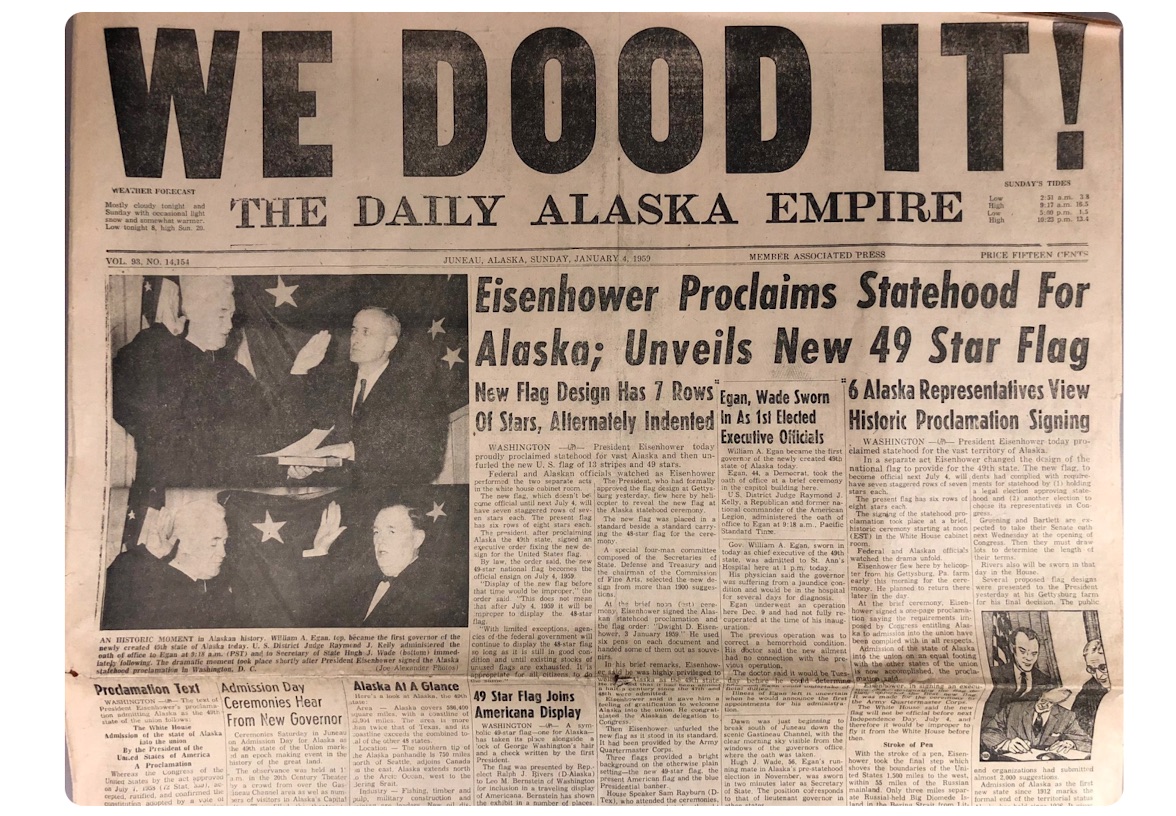
On July 7, 1958, President Dwight D. Eisenhower signed the Alaska Statehood Act into law. Following a plebiscite in Alaska where residents overwhelmingly voted in favor of statehood, the official proclamation was issued by President Eisenhower on January 3, 1959. Thus, Alaska joined the union as the 49th state, followed shortly by Hawaii as the 50th later that same year. This momentous occasion marked the culmination of a century-long transformation from a distant Russian outpost to an integral part of the United States.
Alaska Today: A Land of Unrivaled Beauty and Adventure
The story of Alaska’s statehood is more than just a historical footnote; it laid the groundwork for the modern state, celebrated for its raw, untamed beauty and unparalleled opportunities for travel and exploration. Today, the 49th state stands as a beacon for those seeking epic adventures, serene wilderness, and a profound connection with nature.
Iconic Natural Landmarks and Wildlife Encounters
Alaska is a realm of superlatives, home to the tallest peak in North America, the largest national parks, and some of the most spectacular wildlife viewing opportunities on Earth.
At the heart of Alaskan wilderness lies Denali National Park and Preserve, a six-million-acre expanse centered around Mount Denali (formerly Mount McKinley). Reaching 20,310 feet, Denali is a majestic presence, often shrouded in clouds but breathtaking when visible. The park is a haven for wildlife photographers and enthusiasts, offering glimpses of grizzly bears, caribou, moose, Dall sheep, and wolves in their natural habitats. Exploring Denali is a quintessential Alaskan experience, whether through guided bus tours, backcountry hiking, or flightseeing excursions that offer panoramic views of the colossal peak and surrounding glaciers.
Further south, the coastal regions boast some of the world’s most accessible and active glaciers. Glacier Bay National Park and Preserve, a UNESCO World Heritage Site, is a prime example, where massive tidewater glaciers calve thunderously into the sea, creating dramatic ice sculptures and an awe-inspiring spectacle. Cruising through Glacier Bay offers opportunities to witness humpback whales breaching, sea otters playing, and harbor seals resting on ice floes. Similarly, Kenai Fjords National Park, near Seward, presents a dramatic landscape of glaciers flowing from the Harding Icefield into the Pacific Ocean, carved into stunning fjords. Here, boat tours provide close encounters with puffins, orcas, and sea lions against a backdrop of towering cliffs and icy formations.
The famed Inside Passage, a network of protected waterways winding through lush islands and coastal rainforests, is another iconic Alaskan landmark. This region, home to charming towns like Ketchikan, Juneau, and Skagway, is best explored by cruise ship or ferry, offering continuous views of verdant mountains, cascading waterfalls, and potential wildlife sightings of eagles, bears, and whales.
Beyond the summer months, Alaska transforms into a winter wonderland, offering a different set of attractions. Fairbanks, located in the interior, is one of the best places on Earth to witness the ethereal dance of the Northern Lights (Aurora Borealis). The long, dark winter nights and clear skies create ideal conditions for this celestial phenomenon, drawing visitors from around the globe.
Exploring Alaskan Cities and Culture
While Alaska’s wilderness is its most famous draw, its cities and towns offer unique cultural insights, historical depth, and vibrant local experiences.
Anchorage, the largest city, serves as a primary gateway for most travelers. It blends urban amenities with easy access to wilderness. Visitors can explore the Alaska Native Heritage Center to learn about the rich indigenous cultures, hike on scenic trails just outside the city, or enjoy world-class dining. For a unique experience, a ride on the Alaska Railroad from Anchorage to Seward or Fairbanks offers panoramic views of glaciers, rivers, and wildlife.
Juneau, the state capital, is accessible only by air or sea, adding to its mystique. Nestled between mountains and the Gastineau Channel, Juneau offers activities like whale watching, exploring the magnificent Mendenhall Glacier, and hiking to scenic overlooks. The city’s history as a gold mining hub is still visible in its charming downtown architecture.
Fairbanks, the “Golden Heart City,” is the hub of interior Alaska. Beyond the Northern Lights, it offers attractions like the Museum of the North at the University of Alaska Fairbanks, riverboat tours on the Chenal River, and access to hot springs. It’s also a starting point for more remote adventures into the Arctic Circle.
Other notable towns include Homer, the “Halibut Fishing Capital of the World,” with its famous Homer Spit and vibrant arts scene; Skagway, a well-preserved Gold Rush town offering historical tours and scenic railway rides; and Sitka, rich in Russian American and Tlingit history, home to the Sitka National Historical Park.
Planning Your Alaskan Adventure: Travel, Accommodation, and Lifestyle
An Alaskan vacation is often a once-in-a-lifetime journey, requiring careful planning to maximize its potential. The state offers diverse travel styles, from luxury cruises to rugged backcountry expeditions, and an array of accommodation options to suit every preference and budget.
Choosing Your Stay: From Wilderness Lodges to Urban Retreats
Accommodation in Alaska is as varied as its landscape. For those seeking an immersive wilderness experience, many boutique wilderness lodges are nestled in remote areas, accessible only by floatplane. These lodges, such as those near Lake Clark National Park or on the Kenai Peninsula, often offer all-inclusive packages that combine lodging with guided activities like bear viewing, fishing, and kayaking. They provide an authentic “disconnect to reconnect” lifestyle experience, albeit often at a premium.
In larger cities like Anchorage and Fairbanks, travelers will find a range of hotels, from internationally recognized brands to local establishments. The Hotel Captain Cook in Anchorage offers luxury amenities and stunning views of the Cook Inlet, while Chena Hot Springs Resort near Fairbanks provides a unique experience combining thermal springs with aurora viewing opportunities. For those exploring the ski slopes and hiking trails near Girdwood, the Alyeska Resort offers upscale accommodations and year-round activities.
Budget travelers can find comfortable stays in hostels, guesthouses, and independent motels, particularly in smaller towns or outside peak season. Vacation rentals, including apartments and villas, are also popular options, especially for families or longer stays, providing a taste of local life and convenience for self-catering. Booking in advance is crucial, particularly for popular summer months, as many unique Alaskan accommodations fill up quickly.
Experiencing Alaskan Hospitality and Cuisine
Alaskan culture is a fascinating blend of indigenous traditions, pioneer spirit, and a deep respect for nature. This translates into genuine hospitality and a distinctive culinary scene. Local food often revolves around the state’s abundant natural resources. Fresh seafood is a highlight, with Alaskan King Crab, sockeye salmon, halibut, and cod being staples on menus across the state. Many restaurants pride themselves on serving “boat-to-table” freshness. Beyond seafood, visitors can try game meats like caribou or reindeer sausage, and forage for wild berries that thrive in the summer.
Beyond the plate, engaging with local culture might involve attending a Native Alaskans cultural performance, learning about the art of totem pole carving in Ketchikan, or witnessing the exhilarating Iditarod Trail Sled Dog Race, a legendary testament to Alaskan fortitude and the tradition of mushing.
Whether you envision a luxury cruise navigating the Inside Passage, a rugged backpacking trip through Gates of the Arctic National Park, or a family-friendly adventure exploring national parks and charming towns, Alaska promises a journey unlike any other. Its journey to statehood paved the way for it to become not just a land of immense beauty and resources, but a welcoming destination where history and natural wonder converge to create unforgettable memories. The 49th state, established on January 3, 1959, continues to captivate and inspire, embodying the spirit of the “Last Frontier” for all who venture to its shores.