
Florida, often celebrated for its sun-drenched beaches, world-class theme parks, and vibrant cultural scenes, holds a unique and captivating place in the narrative of the United States. Millions flock to its shores annually, drawn by the promise of unforgettable travel experiences, luxurious resorts, and diverse attractions. Yet, beneath the veneer of modern tourism and contemporary lifestyle, lies a profound history that predates the nation itself. Understanding “When Did Florida Become A State?” is not merely a question of dates, but an exploration of the intricate geopolitical dance, cultural clashes, and relentless pursuit of identity that shaped this extraordinary destination. It’s a journey that reveals why Florida is not just a place to visit, but a living museum for history buffs and curious travelers alike.
Florida’s Early Chapters: A Tapestry of Empires
The story of Florida’s statehood is long and complex, interwoven with the ambitions of several global powers and the resilience of its indigenous peoples. Its strategic location, jutting into the Caribbean and guarding the mouth of the Gulf of Mexico, made it a coveted prize for centuries.
Ancient Roots and European Arrival
Long before European ships dotted its coastlines, Florida was home to thriving indigenous civilizations. Tribes like the Calusa, known for their complex shell mounds and formidable presence in the southwest, the Timucua inhabiting the northeast, and the Tocobaga near modern-day Tampa Bay, had established sophisticated societies with rich local cultures and intricate trade networks. Their understanding of the land and its resources shaped the earliest chapters of Florida’s human story.
The European chapter officially began in 1513 when Spanish explorer Juan Ponce de León made landfall near what is now St. Augustine. He named the land “La Florida” in honor of the Easter Sunday feast, Pascua Florida, which was being celebrated at the time of his discovery. This moment marked the beginning of more than three centuries of Spanish Empire influence, characterized by exploration, evangelization, and the establishment of fragile colonial outposts. The allure of new lands and potential riches propelled further Spanish expeditions, laying the groundwork for what would become one of the longest-held European territories in North America.
Centuries of Shifting Control
The strategic importance of La Florida quickly became apparent, drawing the attention of other European powers. In 1565, Pedro Menéndez de Avilés established St. Augustine, making it the oldest continuously inhabited European-established settlement in the United States. This fortified city served as a vital bulwark against encroaching French and later British interests, becoming a focal point for military and missionary activities.
However, Spain’s grip on Florida was often tenuous. The complex interplay of colonial ambition, native resistance, and international conflicts led to frequent shifts in sovereignty. Following the Seven Years’ War, Spain, facing defeat, ceded Florida to Great Britain in 1763 as part of the Treaty of Paris (1763), in exchange for Havana, Cuba. The British era, lasting just two decades (1763-1783), saw Florida divided into two administrative entities: East Florida, with St. Augustine as its capital, and West Florida, governed from Pensacola. The British encouraged settlement and agricultural development, particularly through land grants, fostering a period of growth and relative stability, albeit short-lived.
The sands of imperial power shifted once more after the American Revolutionary War. In the Treaty of Paris (1783), Great Britain returned Florida to Spain. This “Second Spanish Period” (1783-1821) was marked by growing instability. Spain, weakened by European wars and colonial revolts, struggled to maintain control over the vast territory. Its borders became porous, attracting American adventurers, runaway slaves, and disaffected native populations, all contributing to a volatile frontier environment that would soon draw the attention of the burgeoning United States. This era of competing claims and shifting allegiances laid the groundwork for Florida’s eventual integration into the American sphere.
From Territory to Statehood: The American Era Begins
The early 19th century saw the United States eyeing Florida with increasing strategic and economic interest. The territory represented a haven for fugitive slaves, a staging ground for Seminole raids into American settlements, and a vital piece of the nation’s burgeoning westward expansion.
The Acquisition of Florida
American ambitions toward Florida intensified in the early 1800s. General Andrew Jackson’s incursions into Spanish Florida, particularly during the First Seminole War, demonstrated Spain’s inability to effectively govern or defend its distant province. These military actions, though controversial, put significant pressure on Spain to negotiate.
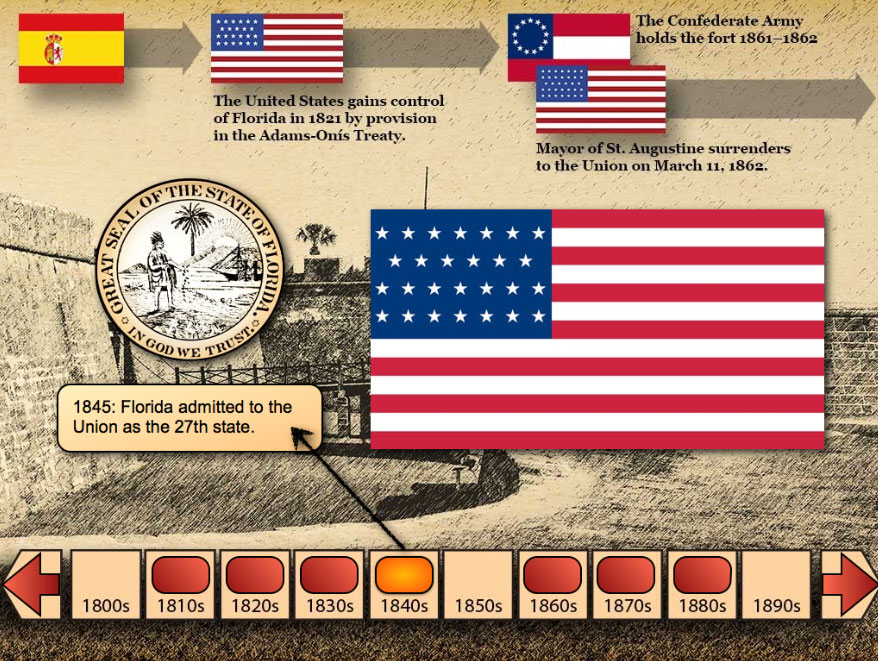
The diplomatic solution came in the form of the Adams-Onís Treaty (1819), also known as the Transcontinental Treaty. Under this agreement, Spain officially ceded Florida to the United States in exchange for $5 million in claims and American renunciation of any claims to Texas. The formal transfer of authority occurred in two stages: on July 17, 1821, in St. Augustine for East Florida, and on July 21, 1821, in Pensacola for West Florida. This historic moment marked the true beginning of Florida’s journey as an American entity, profoundly altering its destiny and paving the way for its future statehood. This acquisition not only solidified American control over its southeastern flank but also set the stage for rapid development and demographic changes.
Shaping the Florida Territory
Upon its acquisition, Florida was formally organized as the Florida Territory in 1822. William P. Duval was appointed as its first territorial governor, tasked with the immense challenge of establishing American law and order in a diverse and still largely untamed land. One of his first priorities was selecting a permanent capital, a decision crucial for unifying the disparate regions of East and West Florida. After much debate, a compromise was reached, and Tallahassee was chosen in 1824 due to its central location between St. Augustine and Pensacola. This decision sparked the rapid growth of Tallahassee from a nascent settlement into the political heart of the territory.
The territorial period witnessed a significant influx of American settlers, drawn by promises of fertile land for cotton and sugarcane cultivation. This agricultural expansion, however, came at a heavy cost, exacerbating tensions with the native Seminole populations. The ensuing conflicts, particularly the devastating and costly Second Seminole War (1835-1842), resulted in the forced removal of many Seminoles to Indian Territory in the west, fundamentally reshaping the demographic and cultural landscape of Florida. Despite these challenges, the territory continued to grow, laying down the infrastructure for future economic development and political organization.
The Drive for Statehood
As the population swelled and the territorial government matured, the desire for statehood grew stronger among Florida’s residents. Admission to the Union would grant Floridians greater self-governance, full representation in the Senate and House of Representatives, and a stronger voice in national affairs.
However, the path to statehood was complicated by the contentious issue of slavery, which dominated American politics in the mid-19th century. Florida sought admission as a slave state, a position that immediately ignited sectional debates in Washington, D.C. To maintain the delicate balance between free and slave states in the Senate, Florida’s admission was often linked to that of a free state, such as Iowa. This political maneuvering, a common practice of the era, delayed Florida’s entry into the Union.
Recognizing the inevitable, territorial leaders convened a constitutional convention in St. Joseph (now Port St. Joe) in 1838-1839. Delegates drafted Florida’s first state constitution, a document that reflected the agrarian, pro-slavery sentiments of the time, yet also laid the foundational framework for its future governance. This diligent preparation ensured that when the political stars aligned, Florida would be ready to take its place among the sister states.
March 3, 1845: Florida Joins the Union
The culmination of centuries of exploration, conflict, and political maneuvering arrived on a pivotal day in American history. Florida’s destiny as a full-fledged member of the United States was finally realized.
The Moment of Admission
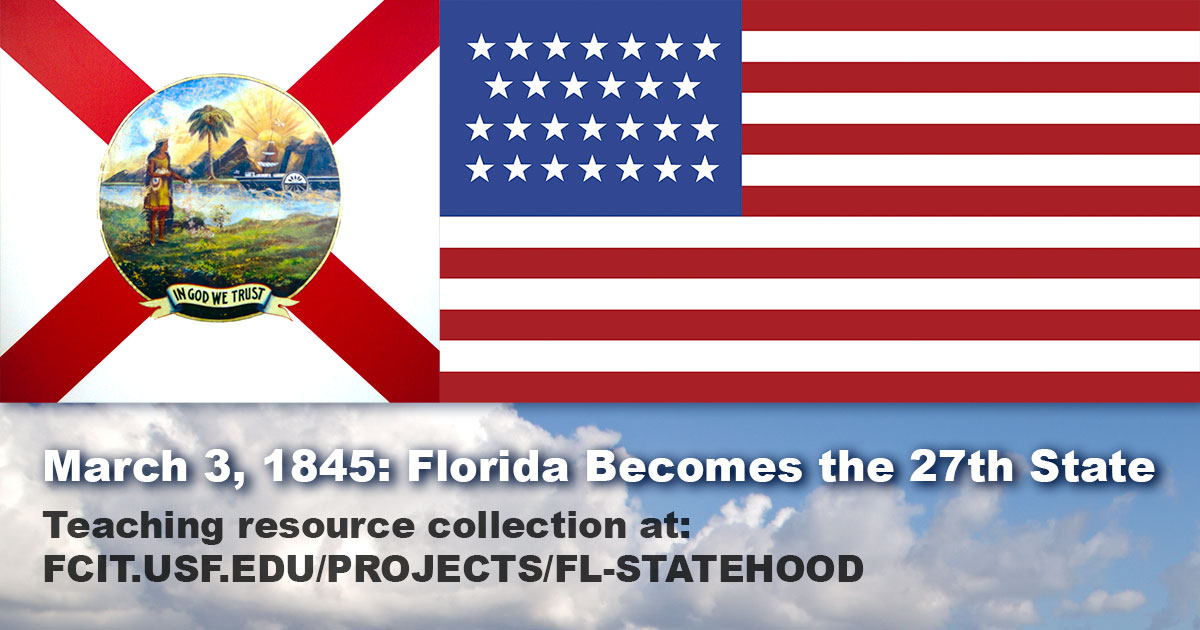
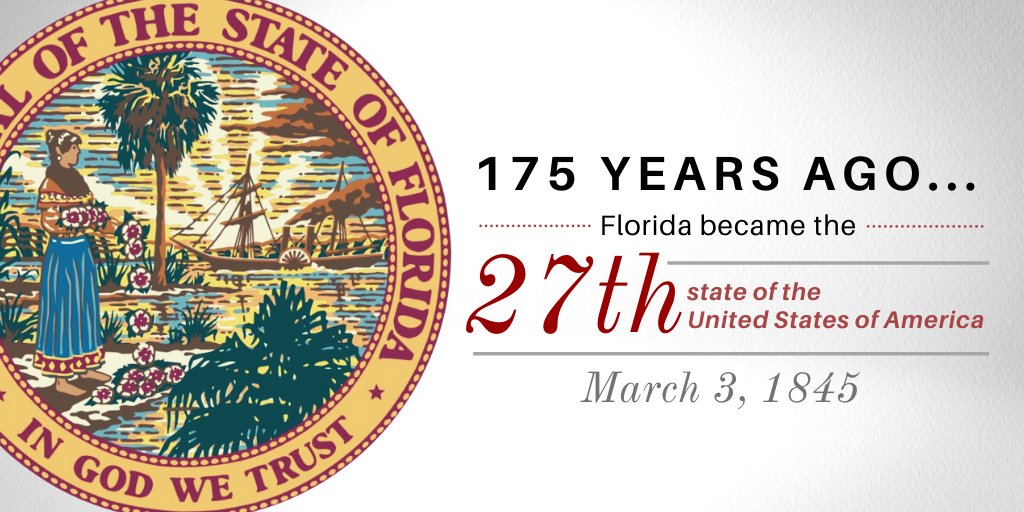
On March 3, 1845, President John Tyler signed the bill admitting Florida into the Union. With this stroke of the pen, Florida officially became the 27th state of the United States. The news was met with celebrations across the new state, from the bustling port of Key West to the plantations of the panhandle. It was a momentous occasion, signaling the end of a long territorial period and the dawn of a new era of self-determination.
Florida entered the Union as a slave state, a fact that underscored the deep sectional divisions brewing within the nation. Its admission, alongside that of Iowa as a free state the following year, temporarily preserved the fragile balance in the Senate, albeit one that would soon shatter with the approach of the American Civil War. Despite these underlying tensions, March 3, 1845, remains a seminal date, marking Florida’s definitive integration into the fabric of American democracy.
Immediate and Long-Term Impacts
Statehood immediately granted Florida greater political autonomy, allowing its citizens to elect their own governor and state legislature, and to have direct representation in the federal government. Economically, the new state continued its reliance on plantation agriculture, particularly cotton, which thrived in the fertile northern regions. However, the newfound political power also meant Florida was directly embroiled in the national debates leading up to the Civil War. True to its pre-war alignment, Florida seceded from the Union in 1861, joining the Confederate States of America.
The aftermath of the Civil War brought profound changes. Reconstruction reshaped Florida’s social and political landscape, leading to the gradual emancipation of slaves and the establishment of new civil rights, though these were often challenged. The late 19th and early 20th centuries saw the emergence of a new economic driver: tourism. Visionaries like Henry Flagler, with his Florida East Coast Railway, transformed Florida’s coastline into a winter playground for the wealthy, laying the foundation for the state’s modern identity as a premier travel destination. This shift from an agrarian economy to one fueled by leisure and hospitality marked a significant long-term impact of its post-statehood development.
Florida Today: A Legacy Shaped by History and Awaits Your Visit
Today, Florida stands as a testament to its vibrant past, a place where ancient roots, colonial empires, and American determination have converged to create a truly unique destination. For travelers and history enthusiasts, the state offers an unparalleled opportunity to explore its journey from territory to statehood, blending historical discovery with modern luxury and natural beauty.
Historical Gems and Cultural Experiences
Exploring Florida’s history is an immersive experience. A visit to Castillo de San Marcos in St. Augustine allows you to walk within the walls of America’s oldest masonry fort, touching centuries of Spanish colonial history. In Pensacola, the Pensacola Historic Village offers a glimpse into British and early American life, with beautifully preserved buildings and engaging exhibits. Tallahassee’s Historic District and the iconic Old Florida State Capitol Museum provide insights into the state’s political evolution, from its territorial days to the present.
Beyond fixed landmarks, Florida’s local culture is a living mosaic reflecting its diverse past. From indigenous Seminole crafts and traditions found at tribal reservations to the vibrant Cuban influences evident in the cuisine, music, and architecture of Miami’s Little Havana, the state offers a rich tapestry of cultural experiences. Festivals celebrating Spanish heritage, jazz festivals echoing southern traditions, and seafood festivals showcasing coastal life all invite visitors to delve deeper into the layers of Florida’s identity, making it a compelling destination for cultural tourism.
Modern Marvels and Lifestyle Adventures
While its history is profound, Florida is also a beacon of modern attractions and diverse lifestyle adventures. For many, Florida is synonymous with world-renowned theme parks like Walt Disney World Resort in Orlando and Universal Studios Florida, offering unparalleled family entertainment. The Kennedy Space Center Visitor Complex provides a fascinating look into space exploration, bridging past scientific achievements with future endeavors.
Beyond the man-made marvels, Florida boasts some of the world’s most beautiful beaches. From the Art Deco charm of South Beach in Miami to the pristine sands of Clearwater Beach and the Gulf Coast’s tranquil Siesta Key Beach, there’s a stretch of sand for every preference. Nature enthusiasts can explore the unique ecosystems of Everglades National Park or dive and fish among the coral reefs of the Florida Keys. For those seeking luxury, resorts like The Breakers Palm Beach offer exquisite accommodation and amenities, while countless hotels and apartments cater to budget-friendly travel and long-term stays, ensuring a suitable option for every type of traveler.
Planning Your Florida Exploration
Integrating Florida’s rich history with its modern appeal creates a truly unforgettable travel itinerary. Consider starting your journey in St. Augustine, immersing yourself in the colonial past, before heading south to the vibrant cultural melting pot of Miami, or west to the family-friendly attractions of Orlando. A history-focused trip might involve exploring the Florida Heritage Trail, while a family adventure could seamlessly blend educational visits to historic sites with thrilling days at theme parks.
When planning your trip, remember to book accommodation in advance, especially during peak seasons, whether you prefer a boutique hotel, an expansive resort, or a cozy apartment. Dive into the local cuisine, sampling everything from fresh seafood to authentic Cuban sandwiches. Florida’s diverse offerings mean that every visit can be tailored to individual interests, providing not just a vacation, but an enriching journey through time and culture.
In conclusion, the question “When Did Florida Become A State?” unlocks a much broader narrative. On March 3, 1845, Florida officially joined the United States, but this date represents merely a chapter in a much longer, more complex story. From its ancient inhabitants and centuries under European rule to its territorial growth and eventual statehood, Florida’s unique character has been forged by a dynamic past. Today, this legacy makes Florida an irresistible destination, where historical landmarks stand proudly alongside world-class attractions, inviting travelers to explore its depths and create their own unforgettable experiences. It is more than just a sunny escape; it is a living history book, waiting to be read.
LifeOutOfTheBox is a participant in the Amazon Services LLC Associates Program, an affiliate advertising program designed to provide a means for sites to earn advertising fees by advertising and linking to Amazon.com. Amazon, the Amazon logo, AmazonSupply, and the AmazonSupply logo are trademarks of Amazon.com, Inc. or its affiliates. As an Amazon Associate we earn affiliate commissions from qualifying purchases.