
The story of how the Hawaiian Islands transitioned from an independent kingdom to a United States territory is a complex tapestry woven with threads of political maneuvering, economic interests, and evolving global dynamics. While many associate Hawaii solely with its breathtaking beaches, lush landscapes, and vibrant culture as a beloved travel destination, understanding its historical journey is crucial to appreciating its present. This article delves into the pivotal moments that led to Hawaii‘s territorial status, exploring the underlying factors and the significant events that shaped its destiny.
The Path to Annexation: From Kingdom to Republic
For centuries, the Hawaiian Islands existed as a sovereign nation, ruled by a succession of monarchs who navigated the increasing presence of foreign powers. The Kingdom of Hawaii was established by King Kamehameha I in 1795, uniting the islands under a single rule. This independent nation, with its unique Polynesian heritage, developed diplomatic ties with various countries, including the United States.
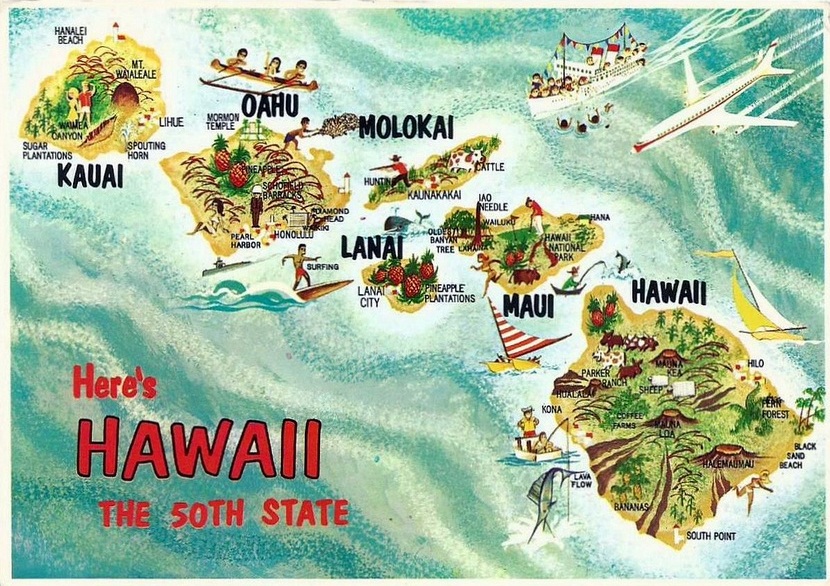
However, as the 19th century progressed, the economic landscape of Hawaii began to shift dramatically. American businessmen, primarily involved in the sugar industry, gained significant influence. The fertile volcanic soil and favorable climate made Hawaii an ideal location for large-scale sugar plantations, and these American entrepreneurs, along with their counterparts from other nations, came to wield considerable economic power. This economic leverage soon translated into political aspirations.
By the late 1800s, a segment of these American businessmen, often referred to as the “haole” (foreign) elite, began to advocate for closer ties with the United States, with annexation being their ultimate goal. They believed that becoming a part of the United States would provide greater economic stability, secure their investments, and offer protection from potential foreign rivals. This desire for annexation was not universally shared by the Native Hawaiian population, many of whom cherished their independence and sovereign traditions.
The Overthrow of the Monarchy
The most significant turning point in Hawaii‘s quest for statehood, and a highly contentious event in its history, was the overthrow of the monarchy. In 1893, Queen Liliuokalani, the last reigning monarch, attempted to enact a new constitution that would restore power to the Native Hawaiian people and reduce the influence of foreign interests. Her efforts were met with fierce opposition from the pro-annexation faction.
With the alleged support of John L. Stevens, the U.S. Minister to Hawaii, and a contingent of U.S. Marines stationed in Honolulu, the Committee of Safety, a group of American and European businessmen, launched a coup. On January 17, 1893, they declared the Kingdom of Hawaii abolished and established a provisional government, effectively stripping Queen Liliuokalani of her throne. The Queen, to avoid further bloodshed, yielded her authority under protest, appealing to the United States government to restore justice.
The provisional government was led by Sanford B. Dole, a prominent American lawyer and businessman, who would later become the first governor of the Territory of Hawaii. Initially, the U.S. administration under President Grover Cleveland condemned the overthrow and launched an investigation, which concluded that the U.S. had acted improperly. Cleveland supported the restoration of the monarchy. However, subsequent administrations, particularly that of President William McKinley, were more receptive to the idea of annexation, driven by strategic and economic considerations, especially with the looming Spanish-American War.
The Road to Territory: The Newlands Resolution and Organic Act
The overthrow of the monarchy was the first step, but formal annexation took several more years. The provisional government, and later the Republic of Hawaii which was declared in 1894 under Sanford B. Dole, actively lobbied the United States Congress for annexation.
Initially, annexation efforts faced significant opposition in the United States Senate. Treaties of annexation were proposed but failed to gain the necessary two-thirds majority. This political stalemate persisted for several years.
The geopolitical climate, however, continued to evolve. The outbreak of the Spanish-American War in 1898 significantly altered the strategic calculus. Hawaii‘s strategic location in the Pacific made it an invaluable coaling station and naval base for the United States as it projected power towards the Philippines. The perceived military necessity of Hawaii as a Pacific outpost became a powerful argument for its acquisition.

The Newlands Resolution
In this heightened strategic environment, annexation proponents in Congress bypassed the treaty process, which required a two-thirds majority, and instead pursued a joint resolution. On July 7, 1898, Congress passed the Newlands Resolution, which annexed Hawaii to the United States. This resolution, passed by a simple majority in both the House and the Senate, effectively incorporated Hawaii into the United States without the consent of the Native Hawaiian people.
The passage of the Newlands Resolution marked the end of Hawaii‘s independence and its transformation into a U.S. territory. The islands were now officially under the sovereignty of the United States.
Establishing Territorial Government
Following the annexation, the U.S. Congress moved to establish a formal governmental structure for the new territory. This was achieved through the passage of the Hawaii Organic Act in 1900. The Organic Act established the framework for the territorial government, outlining the powers of the governor, legislature, and judiciary, all of which were appointed or confirmed by the President of the United States.
Under the Organic Act, Hawaii was organized as an unincorporated territory, meaning that the full provisions of the U.S. Constitution did not automatically apply. Residents were U.S. nationals but not full U.S. citizens with voting rights in presidential elections. Sanford B. Dole was appointed as the first governor of the Territory of Hawaii.
The establishment of the territory brought about significant changes in governance, law, and infrastructure. While it offered a period of stability and economic development, it also meant the continued subjugation of Native Hawaiian self-governance and cultural practices under a colonial administration. The territorial period lasted for over six decades, during which Hawaii played a crucial role in military operations, particularly during World War II with the attack on Pearl Harbor.
The Legacy of Territoriality and the Road to Statehood
The period of Hawaii as a U.S. territory was marked by both progress and persistent challenges. Economically, the sugar and pineapple industries continued to flourish, attracting further immigration and contributing to the islands’ diverse cultural makeup. The strategic importance of Hawaii was solidified, especially after the attack on Pearl Harbor in 1941, which propelled Hawaii into the forefront of military operations in the Pacific.
Politically, the territory experienced growing calls for greater self-governance and eventually, statehood. Native Hawaiians and other residents increasingly advocated for full political equality and the right to elect their own representatives in Congress. The territorial government, while functioning under U.S. law, was largely controlled by appointed officials and lacked the autonomy of a fully integrated state.
The Fight for Statehood
The movement for statehood gained significant momentum after World War II. The contributions of Hawaii‘s residents, both civilian and military, during the war demonstrated their loyalty and readiness for full citizenship. Furthermore, the demographic shifts, with a growing local population, created a stronger political base for statehood.
However, the path to statehood was not without its obstacles. Political debates in the United States Congress often revolved around racial undertones, concerns about Hawaii‘s distance from the mainland, and its predominantly non-white population. Despite these hurdles, persistent advocacy and growing national support eventually paved the way.
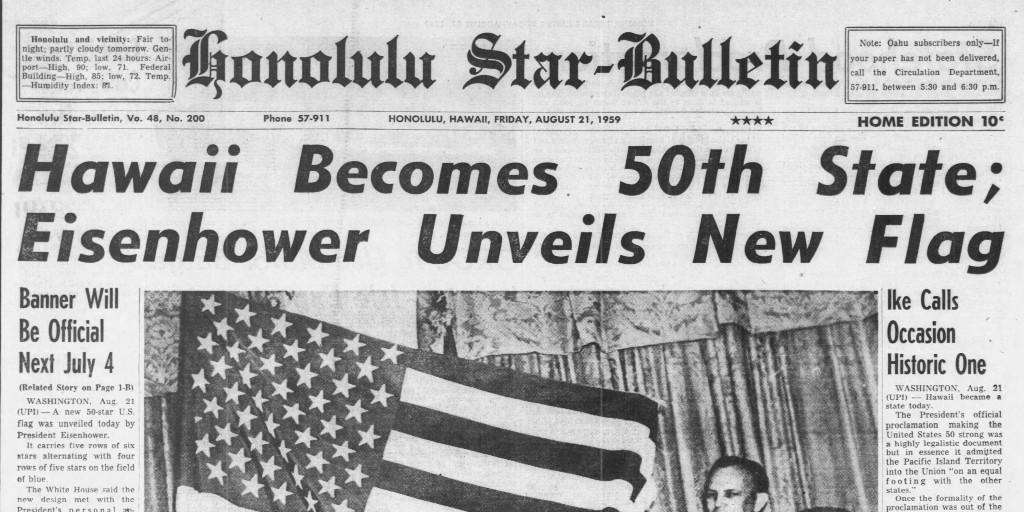
On March 18, 1959, Hawaii officially became the 50th state of the United States after Congress passed the Hawaii Admission Act, which was signed into law by President Dwight D. Eisenhower. A referendum was held in Hawaii where the residents overwhelmingly voted in favor of statehood.
The transition from a U.S. territory to a state marked a new chapter in Hawaii‘s history, signifying a move towards greater self-determination and full participation in the American political system. The legacy of its territorial past, however, continues to be a subject of historical reflection and discourse, particularly concerning issues of sovereignty and the rights of the Native Hawaiian people. Today, Hawaii stands as a vibrant state, a crossroads of cultures, and a premier global destination, but its journey to this point is indelibly shaped by the complex and often controversial history of its territorial status.