
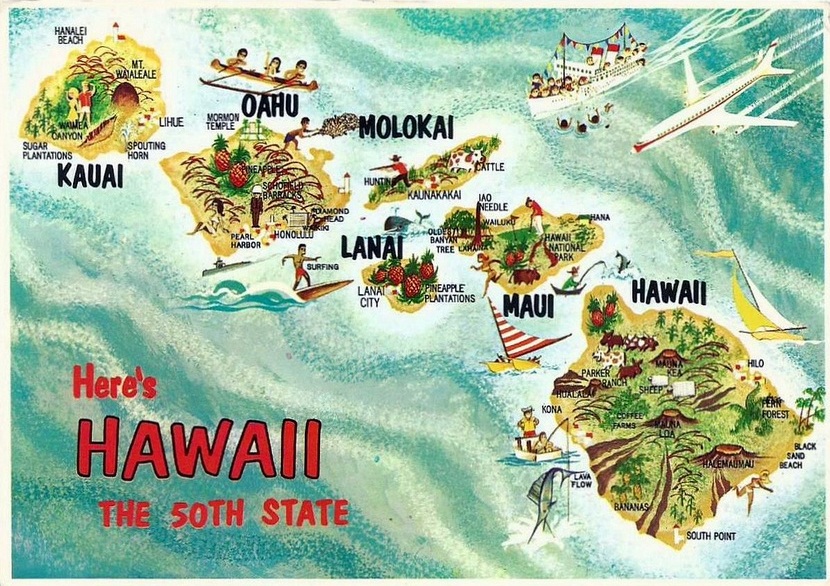
The question of “When did Hawaii become a state?” might seem straightforward, but the answer unlocks a rich tapestry of history, culture, and transformation that shaped this island paradise into the premier global destination it is today. On August 21, 1959, Hawaii officially joined the United States as its 50th state. This pivotal moment culminated decades of political maneuvering, cultural evolution, and strategic importance, profoundly impacting its trajectory as a vibrant hub for travel, tourism, and a unique lifestyle. For anyone planning a visit or simply curious about this remarkable archipelago, understanding its path to statehood offers invaluable context to its distinct identity, from its ancient Polynesian roots to its modern status as a multicultural American gem offering unparalleled travel experiences.
From Ancient Kingdoms to American Annexation: The Pre-Statehood Era
The journey to statehood for Hawaii is a saga far more complex than a single date. It begins millennia ago with the arrival of Polynesian voyagers who settled the islands, establishing a sophisticated society ruled by chieftains and later, a unified monarchy. These early inhabitants developed a unique culture, language, and spiritual connection to the land, elements that remain foundational to Hawaiian identity and draw countless tourists seeking authentic cultural experiences.
The late 18th century marked a dramatic shift with the arrival of European explorers, most notably Captain James Cook in 1778. This encounter opened Hawaii to the outside world, bringing new technologies, religions, and unfortunately, diseases that decimated the native population. The subsequent centuries saw a complex interplay of foreign influence, missionary work, and economic interests, primarily from the United States. American missionaries arrived in 1820, establishing churches and schools, while American businessmen began to dominate the burgeoning sugar and pineapple industries. These industries, driven by plantation owners, created a demand for labor that led to waves of immigration from China, Japan, the Philippines, and Portugal, forging Hawaii‘s distinctive multicultural fabric, a key attraction for today’s travelers interested in diverse food and local culture.
The Hawaiian Kingdom, once a sovereign nation recognized by major world powers, faced increasing pressure. In 1893, a group of American and European businessmen, supported by the United States Minister to Hawaii and U.S. Marines, orchestrated the overthrow of Queen Liliʻuokalani, the last reigning monarch. This controversial act marked the end of an independent Hawaii and ushered in a provisional government led by Sanford B. Dole. Five years later, in 1898, the United States formally annexed Hawaii during the Spanish-American War, recognizing its immense strategic value as a naval base in the Pacific Ocean. This move transformed Hawaii into a U.S. territory in 1900, setting the stage for decades of debate about its ultimate political status.
The Territorial Period: A Melting Pot in the Pacific
As a territory, Hawaii became an integral part of the United States defense strategy, especially after the attack on Pearl Harbor in 1941, which thrust the islands onto the global stage during World War II. The war underscored Hawaii‘s strategic significance and further intertwined its fate with the mainland. Economically, the territorial period saw the continued dominance of the “Big Five” corporations, which controlled much of the sugar, pineapple, and shipping industries. While these industries brought prosperity, they also created a largely plantation-based society with significant social stratification.
Despite being a territory, residents of Hawaii were American citizens, yet they lacked full political representation in Washington, D.C.. This disparity fueled the movement for statehood. The unique demographic makeup of Hawaii, with its large populations of Japanese-Americans, Chinese-Americans, and other ethnic groups, also played a crucial role. Their loyalty and contributions during World War II, particularly by the famed 442nd Regimental Combat Team, helped to dismantle racial prejudices and solidify arguments for their full inclusion in the American Union. This period also saw the gradual rise of tourism, with early resorts and hotels beginning to cater to visitors attracted to the islands’ natural beauty and exotic appeal, foreshadowing Hawaii‘s future as a global travel hotspot.
The Road to Statehood: Debates, Delays, and Determination
The push for Hawaiian statehood was a long and arduous journey, fraught with political debates, economic concerns, and lingering prejudices. For over 60 years, residents campaigned for the same rights and representation enjoyed by mainland citizens.
The arguments for statehood were compelling. Proponents emphasized Hawaii‘s strategic importance, its economic contributions, and the loyalty of its diverse population. They argued that denying statehood was a form of colonial rule, inconsistent with American democratic ideals. The islands also boasted a thriving economy and a population that demonstrated its commitment to American values, particularly through military service. Granting statehood would provide full federal funding, increased political power through senators and representatives in Congress, and a greater sense of self-determination for the people of Hawaii. This promised not only political stability but also the infrastructure and resources necessary for future development, including the expansion of tourism and associated accommodation options.
However, significant opposition existed. Some on the mainland harbored racial prejudices, questioning whether a state with such a large non-white population could truly be “American.” Others worried about Hawaii‘s distance from the mainland and the potential for Asian political dominance. Economic interests, particularly those of the sugar and pineapple barons, feared that statehood would bring higher taxes, increased labor costs, and a loss of their established power structure. These concerns, coupled with Cold War anxieties about communism in the Pacific, led to repeated delays in Congress.
The tide began to turn in the 1950s. The post-war economic boom, coupled with growing civil rights movements across the United States, created a more favorable environment. Political leaders from both major parties recognized the moral and strategic imperative of granting statehood. President Dwight D. Eisenhower, a strong proponent, signed the Hawaii Admission Act into law on March 18, 1959. This act stipulated that the people of Hawaii must vote on whether to accept statehood. A resounding 94% of voters chose to join the Union in June 1959, paving the way for the formal proclamation.

August 21, 1959: A New Era Begins
Finally, on August 21, 1959, President Eisenhower signed Proclamation 3309, officially admitting Hawaii as the 50th state of the United States. The islands erupted in celebration, marking the culmination of decades of effort and the beginning of a new chapter. This date is now celebrated as Admission Day, a public holiday in Hawaii, commemorating the triumph of democracy and self-determination. The transition brought immediate changes, granting Hawaiian citizens full voting rights, representation in Congress, and access to federal programs and funding. It also solidified Hawaii‘s unique position in the American tapestry, a bridge between East and West, and a testament to the nation’s diversity. This shift fueled an explosion in tourism, transforming the islands into a destination synonymous with paradise, leading to the development of world-class resorts and diverse accommodation options to cater to a global influx of visitors.
The Impact of Statehood: Tourism, Development, and Cultural Preservation
Statehood profoundly transformed Hawaii, particularly in terms of its economy, infrastructure, and role in the global travel market. The most significant impact was the explosion of tourism. With its new status, Hawaii became more accessible and appealing to mainland Americans, no longer seen as a distant, exotic territory but as a part of the nation, offering domestic travel experiences in an exotic setting.
The 1960s and beyond saw unprecedented development. Luxury hotels and resorts sprang up along the pristine beaches of Waikiki on Oahu, along the stunning coastline of Maui, and in other picturesque locations across the islands. Iconic properties like the Moana Surfrider and the Royal Hawaiian Hotel on Oahu, which had been pioneers in early tourism, expanded and modernized, catering to a growing demand for high-end accommodation. Developers built new airports, roads, and infrastructure to support the influx of visitors, making travel to and around the islands more convenient. Today, Hawaii offers a vast array of accommodation options, from lavish villas and all-inclusive resorts to charming boutique hotels and budget-friendly apartments, reviewed extensively by travelers globally.
Beyond tourism, statehood brought significant economic diversification. While agriculture remained important, industries such as defense, research, and technology grew. Federal funding supported education, healthcare, and scientific endeavors, transforming Hawaii into a more modern and prosperous state. This growth, in turn, created a dynamic lifestyle for residents, blending traditional Hawaiian values with contemporary American opportunities.

One of the ongoing challenges and successes since statehood has been the delicate balance between development and cultural preservation. The rise of tourism brought both economic prosperity and concerns about the commercialization of Hawaiian culture and environmental impact. In response, there has been a significant movement to revitalize native Hawaiian language, traditions, and land management practices. Today, visitors can experience authentic Hawaiian culture through hula performances, ancient landmarks like Pearl Harbor or the Iolani Palace (the only royal palace on U.S. soil), and initiatives promoting sustainable tourism and responsible travel. Many resorts and attractions actively incorporate elements of local history and environmental stewardship into their offerings, enriching the experiences for tourists.
Hawaii Today: A Premier Destination with a Rich Legacy
Today, Hawaii stands as a testament to its incredible journey. It is a state celebrated for its breathtaking natural beauty, from the volcanic landscapes of Hawaii Volcanoes National Park on the Big Island to the lush valleys of Kauai and the iconic shores of Waikiki Beach. It’s a place where ancient traditions coexist with modern amenities, offering a diverse range of lifestyle and travel experiences for every type of visitor.
For the adventurous traveler, Hawaii provides endless opportunities for activities such as surfing, snorkeling, hiking, and exploring pristine rainforests. For those seeking relaxation, the islands boast some of the world’s most luxurious resorts and spas, offering unparalleled comfort and amenities. Culinary enthusiasts can indulge in a fusion of Polynesian, Asian, and American flavors, from traditional luʻaus to world-class fine dining.
Understanding “When did Hawaii become a state?” is not just about a date; it’s about appreciating the complex historical forces that forged this unique destination. It’s about recognizing the resilience of the Hawaiian people, the strategic importance of the islands, and the ongoing efforts to balance progress with the preservation of a sacred heritage. Whether you’re planning a family trip to Maui, a romantic getaway to Kauai, or an adventure on the Big Island, knowing this history enriches every aspect of your visit, allowing you to connect more deeply with the spirit of aloha that permeates this extraordinary 50th state. From booking a stay in a Grand Hyatt Hotel in Poipu to exploring the historical sites of Honolulu, every traveler contributes to the vibrant tapestry of Hawaii‘s ongoing story. The islands continue to evolve, blending their past as an independent kingdom and a U.S. territory with their present as a beacon of tourism and a home to a truly unique American lifestyle.
LifeOutOfTheBox is a participant in the Amazon Services LLC Associates Program, an affiliate advertising program designed to provide a means for sites to earn advertising fees by advertising and linking to Amazon.com. Amazon, the Amazon logo, AmazonSupply, and the AmazonSupply logo are trademarks of Amazon.com, Inc. or its affiliates. As an Amazon Associate we earn affiliate commissions from qualifying purchases.