
The question “When did Hawaii become?” is not a simple one, for it beckons a multifaceted answer that traverses millennia of indigenous heritage, centuries of international intrigue, and decades of transformative growth into one of the world’s most enchanting and sought-after travel destinations. More than just a date on a calendar, it encapsulates the journey of a remote archipelago from ancient Polynesian settlement to a sovereign kingdom, a United States territory, a pivotal state, and ultimately, a global icon of natural beauty, unique culture, and unparalleled hospitality. For those dreaming of a Hawaiian getaway, understanding this rich history enriches every aspect of the travel experience, from exploring its famed Waikiki Beach to savoring local delicacies in Honolulu, or hiking the majestic trails of Kauai.
Ancient Roots and First Encounters: The Genesis of a Paradise
The story of Hawaii begins not with a Western explorer, but with the incredible voyaging prowess of ancient Polynesians. Around 300 to 800 AD, skilled navigators, guided by stars and ocean currents, embarked on epic journeys across the vast Pacific Ocean in double-hulled canoes. They settled these isolated volcanic islands, bringing with them plants, animals, and a complex social structure. They developed a sophisticated system of land management, a rich oral tradition, and a deep spiritual connection to the aina (land) and kai (sea). Each island, from the lush valleys of Maui to the dramatic cliffs of the Big Island, fostered distinct communities, yet all shared a common heritage.
For centuries, the Hawaiian Islands remained untouched by outside influence. This changed dramatically in 1778 when British explorer Captain James Cook stumbled upon the archipelago during his third voyage across the Pacific. Landing first on Kauai, he named them the “Sandwich Islands” in honor of his patron, the Earl of Sandwich. Cook’s arrival marked a pivotal moment, opening Hawaii to the wider world and inadvertently introducing new diseases, technologies, and cultural exchanges that would forever alter the course of Hawaiian history.
The Unification and Monarchy
Following Cook’s visit, a period of immense change swept through the islands. Various chiefs vied for dominance, but it was Kamehameha I, a formidable warrior from the Big Island, who, through strategic alliances and fierce battles, eventually united all the Hawaiian Islands under a single rule by 1810. This marked the official birth of the Kingdom of Hawaii. For nearly a century, the monarchy navigated the complex waters of international politics, fending off colonial ambitions from major powers like Great Britain, France, and the United States.
During this period, Western missionaries and traders arrived, bringing new religions, ideas, and economic systems. The Hawaiian monarchy, while striving to maintain its sovereignty and traditional culture, also embraced modernization. They adopted a written language, established schools, and developed constitutional governance. Historic landmarks like Iolani Palace, the only official residence of royalty in the United States, stand as a testament to this vibrant era of Hawaiian self-governance, offering visitors a poignant glimpse into the lives of Hawaii’s last reigning monarchs.
From Kingdom to Territory: A Tumultuous Transition
The late 19th century brought increasing pressure on the Hawaiian monarchy. American business interests, particularly in the lucrative sugar industry, grew powerful, advocating for closer ties, and eventually, annexation to the United States. This period was fraught with political tension and internal conflict.
The last reigning monarch, Queen Liliʻuokalani, ascended to the throne in 1891 and sought to restore power to the Hawaiian people through a new constitution. However, her efforts were met with resistance from American and European businessmen and residents who, with the backing of U.S. Marines, orchestrated an overthrow of the monarchy in 1893. Despite Liliʻuokalani’s appeals to the U.S. government for reinstatement, her pleas went unanswered.
Hawaii was declared a republic in 1894, and then, in 1898, it was annexed by the United States as a territory. This transition, a controversial chapter in both Hawaiian and American history, fundamentally reshaped the islands’ political and economic landscape. The territorial period saw significant development of infrastructure, military bases (most notably Pearl Harbor on Oahu), and an influx of diverse immigrant labor from Japan, the Philippines, China, and Portugal, contributing to Hawaii’s unique multicultural tapestry that travelers experience today.
The Path to Statehood: A Defining Moment
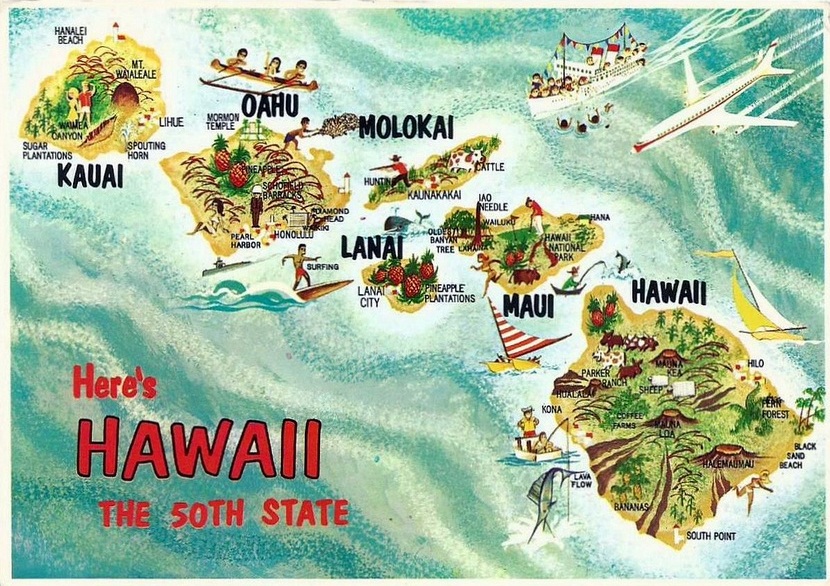
The journey from territory to statehood was a long and arduous one, spanning over half a century. Following World War II, during which Hawaii played a crucial strategic role, the desire for statehood intensified among residents. They argued for full representation in the U.S. government and the democratic right to elect their own leaders. Years of political lobbying, petitions, and congressional debates finally culminated on August 21, 1959, when Hawaii officially became the 50th state of the United States.
This date irrevocably answered the question, “When did Hawaii become a state?” It was a moment of immense celebration and a turning point that propelled Hawaii onto the global stage, not just as a strategic outpost but as a vibrant and integral part of the American fabric, while retaining its distinct cultural identity. Statehood opened new avenues for economic development, dramatically increasing tourism and making the islands more accessible to visitors from the mainland and beyond.
The Dawn of Tourism: Hawaii’s Global Appeal
While Hawaii’s natural beauty had always been appreciated, statehood truly catalyzed its transformation into a premier global tourist destination. Before 1959, travel to Hawaii was often reserved for the wealthy and adventurous. The advent of commercial jet travel, coupled with Hawaii’s new status as an American state, made the islands more accessible and affordable for a broader demographic.
Suddenly, images of pristine beaches, lush rainforests, and vibrant coral reefs began to captivate the imagination of travelers worldwide. Destinations like Waikiki Beach on Oahu, already a favored spot for royalty and early tourists, blossomed into a bustling hub of resorts, shops, and entertainment. Iconic landmarks such as Diamond Head became instantly recognizable symbols of Hawaiian allure.
Hotels and resorts rapidly expanded to accommodate the growing influx of visitors. From luxury accommodations like the historic Moana Surfrider, A Westin Resort & Spa to family-friendly giants like the Hilton Hawaiian Village Waikiki Beach Resort, the hospitality industry flourished. These establishments not only provide lodging but often serve as gateways to experiences, offering everything from authentic luaus and hula lessons to water sports and guided tours. The rise of tourism also led to the development of diverse accommodation options, ranging from opulent suites at the Grand Hyatt Kauai Resort & Spa to charming boutique hotels and cozy vacation rentals for those seeking a more local feel.
Embracing the Aloha Spirit: Culture, Food, and Activities
Tourism in Hawaii is not just about beautiful scenery; it’s about immersing oneself in the unique Aloha Spirit – a philosophy of kindness, harmony, humility, and patience. Visitors are encouraged to explore the local culture, which is a vibrant blend of indigenous Hawaiian traditions and influences from the many immigrant groups who have made the islands their home.
Food plays a central role in this experience. From traditional Hawaiian plate lunches featuring kalua pig and poi, to fresh poke bowls and innovative farm-to-table cuisine, Hawaiian gastronomy is a delightful adventure. Local markets, food trucks, and renowned restaurants offer a diverse culinary landscape that reflects the islands’ multicultural heritage. Engaging in activities like surfing the legendary waves of North Shore Oahu, snorkeling in the crystal-clear waters of Maui, or hiking through the volcanic landscapes of Hawaii Volcanoes National Park on the Big Island allows travelers to connect deeply with the natural wonders and adventurous lifestyle that define the islands. Guided tours exploring historical sites, nature preserves, and cultural centers further enhance this understanding, ensuring that a trip to Hawaii is as educational as it is relaxing.

Modern Hawaii: A Diverse Travel Lifestyle
Today, Hawaii continues to evolve as a travel destination, catering to a diverse range of lifestyles and preferences. “When did Hawaii become the ultimate destination?” is a question answered continuously by the millions who flock to its shores each year, drawn by its consistent allure. The islands offer everything from opulent luxury travel experiences to budget-friendly adventures, family trips, and romantic getaways.
Luxury travelers might opt for exclusive villas on Lanai, indulgent spa treatments at world-class resorts, or private yacht charters around the stunning coastline. Families, on the other hand, can enjoy kid-friendly resorts like Aulani, A Disney Resort & Spa in Ko Olina, Oahu, with dedicated programs and activities for all ages. Budget-conscious travelers can find value in apartment rentals, hostels, and exploring local eateries, proving that the Hawaiian dream is accessible to many.

There’s also a growing emphasis on sustainable tourism and ecotourism, with visitors seeking to minimize their environmental impact and contribute positively to local communities. Many tours now focus on conservation, cultural preservation, and responsible interaction with Hawaii’s delicate ecosystems. Whether it’s a long-term stay in a charming local town or a short, action-packed excursion, Hawaii provides an array of choices that promise unforgettable memories. Reviews and comparison tools for accommodations have become invaluable for travelers planning their perfect Hawaiian adventure, ensuring they find the ideal suite, resort, or apartment to match their needs and desires. The emphasis on unique experiences, from learning about traditional hula to exploring hidden waterfalls, ensures that the spirit of exploration and connection remains at the heart of Hawaiian tourism.
Conclusion: Hawaii’s Enduring Legacy
So, “When did Hawaii become?” The answer is a mosaic of moments, each contributing to the vibrant identity it holds today. It became a home with the arrival of the first Polynesians. It became a kingdom under Kamehameha I. It became a U.S. territory through complex political maneuvering, and a state in 1959, solidifying its place in the American union. Simultaneously, it incrementally became a global travel phenomenon, evolving from a remote paradise to an accessible destination celebrated for its stunning natural beauty, rich cultural heritage, and warm Aloha Spirit.
From its ancient spiritual connection to the land to its modern status as a beacon of hospitality, Hawaii’s journey is a testament to resilience, adaptation, and enduring allure. Every visit to these islands is not just a vacation, but an opportunity to connect with a history that spans centuries, to experience a culture that is both vibrant and profound, and to witness a natural landscape that continues to inspire awe. For those seeking adventure, relaxation, or cultural immersion, Hawaii offers an experience unlike any other, forever beckoning travelers to discover its unique magic.