
Mention Florida, and images of sun-drenched beaches, swaying palm trees, and crystal-clear waters immediately spring to mind. It’s the quintessential tropical paradise, a haven for those seeking warmth and escape from colder climes. Known globally as the Sunshine State, its reputation is built on year-round warmth, drawing millions of tourists to its vibrant cities, thrilling theme parks, and pristine natural landscapes. Yet, beneath this perpetually sunny facade lies a fascinating, albeit rare, meteorological phenomenon that has, on occasion, turned this tropical dreamscape into a momentary winter wonderland: snow.
The very idea of snow falling in Florida often elicits a chuckle or a look of disbelief. After all, this is a state where temperatures rarely dip below freezing for extended periods, even in the depths of winter. Its climate is overwhelmingly subtropical, characterized by hot, humid summers and mild, drier winters. So, how could snowflakes, those delicate harbingers of cold, ever grace its sandy shores? The answer lies in a complex interplay of specific atmospheric conditions, powerful cold fronts, and a touch of historical meteorological luck. These events, though few and far between, are etched into the state’s memory, offering unique anecdotes for locals and a curious point of interest for travelers exploring the vast and varied tapestry of the United States.
Understanding when it snowed in Florida isn’t just a delve into historical weather patterns; it’s an exploration of the state’s surprising climatic versatility, its resilience, and the sheer wonder that such an unexpected event can inspire. For a region whose tourism and lifestyle are so intrinsically linked to its climate, even a fleeting snowfall becomes a significant talking point, a reminder that nature always holds a few surprises up its sleeve. This article will journey through the annals of Florida’s frosty past, explore the science behind these rare occurrences, and consider the broader implications for travel, tourism, and the unique lifestyle of this beloved state.
The Unlikely History of Snow in the Sunshine State
The history of snow in Florida is a sparse but captivating chapter in its meteorological record. Far from being a common winter occurrence, each instance of snow has been a headline-grabbing event, often met with a mix of awe, excitement, and sometimes, a degree of disruption. These rare moments serve as powerful reminders of the unpredictable forces of nature, even in the most consistently warm climates on the North American continent.
Tracing the Earliest Accounts of Florida Snow
The earliest documented snowfall in Florida dates back surprisingly far, reaching into the 18th century. Historical records indicate that a significant snow event occurred on February 13, 1774, primarily affecting the northern parts of the state. Eyewitness accounts from that period describe snow accumulating in and around Jacksonville, creating a scene utterly alien to the early settlers. While the exact depth and duration of this snowfall are difficult to ascertain with modern precision, its mention in colonial documents underscores its extraordinary nature at the time. This event wasn’t merely a fleeting flurry; it was substantial enough to be recorded, suggesting a widespread and memorable impact on the nascent communities in the region.
Throughout the 19th century, other scattered reports of snow emerged, primarily concentrated in the Florida Panhandle and the far northern stretches of the state. These typically involved light dustings or brief snow showers, often melting quickly upon contact with the relatively warmer ground. One of the most historically significant and widespread snow events of this era, often referred to as the “Great Snow of 1899,” brought unprecedented winter conditions to vast portions of the United States, extending deep into the South. On February 13, 1899, exactly 125 years after the first recorded snowfall, a powerful Arctic air mass delivered snow as far south as Fort Myers, an extraordinary reach that stands as a benchmark for severe winter weather in the state. Tampa also experienced measurable snow during this event, further cementing its place in the annals of unusual Florida weather. This particular snowfall was remarkable not just for its southern extent but also for its measurable accumulation in areas that rarely, if ever, see frozen precipitation.
Defining Moments: Major Snow Events Through the Decades
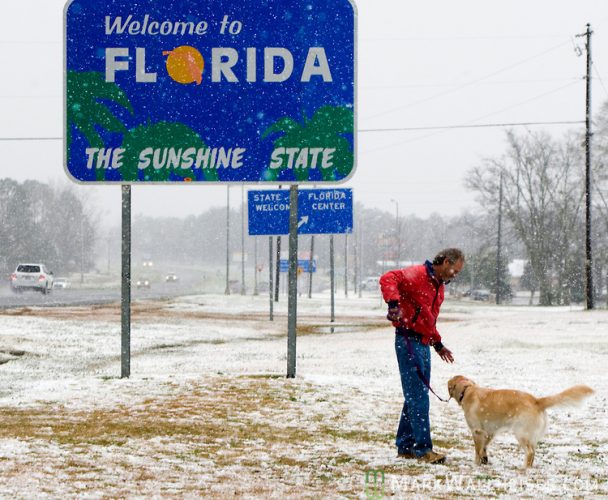
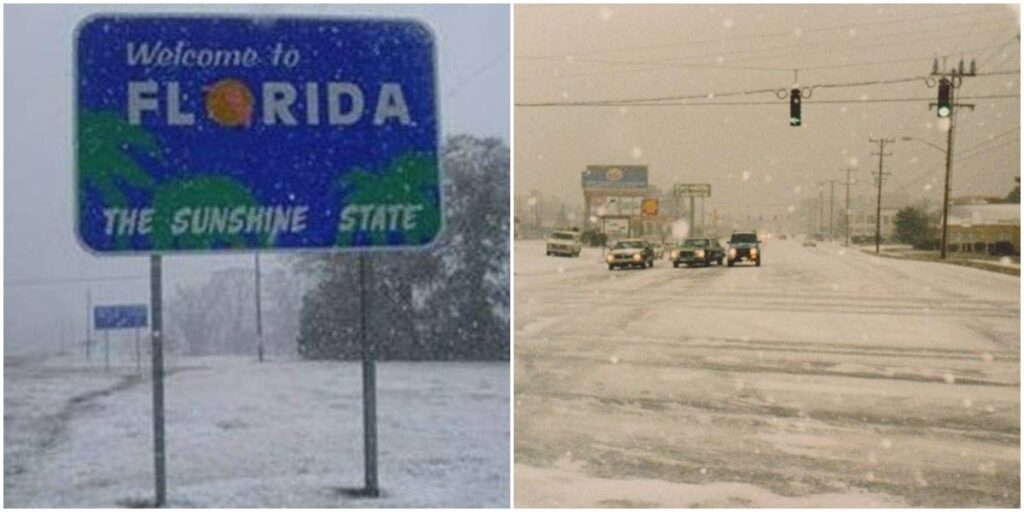
The 20th century, while largely characterized by Florida’s burgeoning reputation as a warm-weather destination, still witnessed several notable snow events. Perhaps the most famous and widespread in modern memory occurred on January 19, 1977. This particular cold snap brought snow to almost the entire state, with flakes falling as far south as Homestead and even parts of Miami Beach. For many Floridians alive today, the “Great Snow of 1977” remains a vivid and often recounted memory. Schools closed, traffic slowed to a crawl, and children (and adults) rushed outside to witness the bizarre spectacle, some seeing snow for the very first time. While accumulations were generally light, often just a dusting on cars and grassy surfaces, the sheer geographical breadth of this snowfall made it an unparalleled event. Orlando, the heart of Central Florida‘s theme park industry, also saw flurries, creating surreal scenes at attractions like Walt Disney World.
Following 1977, other snow events have been more localized but still remarkable. December 1989 brought another significant cold wave, delivering measurable snow to Jacksonville and other parts of northern Florida, with some areas seeing several inches of accumulation. This cold snap also caused extensive damage to the state’s citrus crops, highlighting the economic vulnerability of a subtropical agriculture to unexpected freezes. More recently, January 2010 saw snow fall in Gainesville and Tallahassee, with light flurries observed as far south as Ocala. Even in January 2018, parts of the Panhandle, including Tallahassee, experienced a rare snow day, with schools and government offices closing as a result of several inches of accumulation, a truly exceptional occurrence for the state capital. These events, though distinct, collectively paint a picture of a state that occasionally defies its tropical stereotype, offering moments of unexpected winter charm.
Unraveling the Meteorology Behind Florida’s Flurries
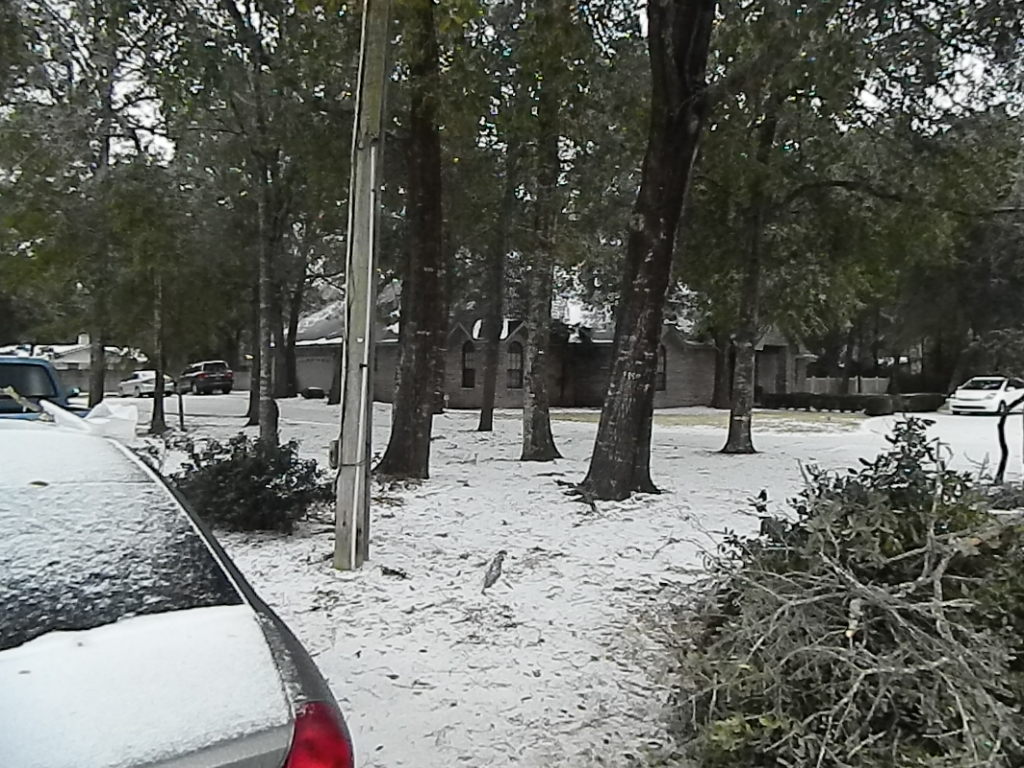
The meteorological conditions required for snow to fall in Florida are a precise alignment of several rare factors. It’s not enough for the air to be cold; there must also be sufficient moisture and a specific atmospheric profile for snowflakes to form and reach the ground before melting. This intricate dance of weather elements makes each Florida snowfall a fascinating case study for meteorologists and a wonder for those who experience it.
The Perfect Storm: Arctic Blasts and Atmospheric Conditions
The primary ingredient for snow in Florida is an extremely potent and expansive cold air mass originating from the Arctic regions of Canada or the central United States. For this air to reach Florida, it typically follows a specific trajectory, often sweeping down through the Great Plains and then dipping deeply into the southeastern United States. This pathway is crucial because it allows the cold air to remain relatively unmodified by warmer land or ocean temperatures as it progresses southward. For snow to form and persist, temperatures throughout the entire column of the atmosphere, from the clouds to the ground, must be at or very near freezing (0°C or 32°F).
However, cold air alone is insufficient. Florida is typically a dry state during its winter months, which is why even severe cold snaps often result in clear, crisp, but snow-free skies. For snow to materialize, this deep freeze must coincide with a source of moisture. This moisture usually comes from the Gulf of Mexico or the Atlantic Ocean. As the frigid air flows over these relatively warmer waters, it can pick up enough moisture to create precipitation. If the atmospheric temperatures remain cold enough throughout the cloud layer and down to the surface, this precipitation will fall as snow rather than rain or sleet. The “dry punch” of cold air often scours out moisture, so the delicate balance of cold air and moisture is what makes these events so uncommon. In instances like the 1977 snowfall, a low-pressure system developed and tracked just offshore, drawing moisture into the extremely cold air mass, thereby creating the perfect conditions for widespread snow.
Geographic Vulnerability: Why Some Regions See More Snow
While a statewide snowfall is an exceptionally rare event, certain geographical regions within Florida are more susceptible to experiencing snow than others. The northernmost parts of the state, particularly the Florida Panhandle and Northeast Florida (regions like Pensacola, Tallahassee, and Jacksonville), are the most likely candidates. These areas are geographically closer to the typical tracks of cold fronts descending from the North American continent. They are less buffered by the warm waters of the Gulf of Mexico and the Atlantic Ocean compared to the peninsula’s southern tip.
As one moves further south into Central Florida (around Orlando and Tampa) and especially into South Florida (like Miami or Key West), the probability of snow drastically decreases. The sheer amount of warmer land and ocean to the north and east of these regions modifies incoming cold air, raising temperatures above the freezing point before precipitation can reach the ground as snow. The proximity of the warm Gulf Stream current also plays a significant role in keeping South Florida’s coastal areas exceptionally mild. Therefore, while a “freeze line” might sometimes extend to Miami, the “snow line” typically terminates much further north, making snow in the deep south of Florida an almost mythical event, reserved only for the most extreme and far-reaching Arctic intrusions.
The Cultural and Economic Impact of a Snowy Florida
When snow does fall in Florida, it ceases to be just a weather phenomenon and transforms into a cultural event, a disruption, and a curious anomaly that sparks both joy and logistical challenges. For a state so deeply intertwined with its warm weather reputation, such an occurrence has ripple effects across its communities and industries.
A Novelty for Locals and a Curious Anomaly for Tourists
For Floridians, especially those who have spent their entire lives in the Sunshine State, a snowfall is a moment of pure novelty and wonder. Children, many seeing snow for the first time, rush outside with makeshift sleds or simply to catch flakes on their tongues. Adults pull out cameras, eager to document the surreal scene of palm trees dusted with white, a sight that fundamentally contradicts everything they know about their home. There’s a collective sense of shared experience, a unique bonding over witnessing such a rare spectacle. Communities come alive with conversation, photographs, and reminiscing about past snow events. It’s a reminder that even in the most predictable environments, extraordinary moments can still unfold.
For tourists who happen to be visiting during a Florida snowfall, the experience is even more surreal. Imagine traveling from colder regions, specifically seeking the warmth of Miami or the magic of Walt Disney World in Orlando, only to find snowflakes gently falling. It’s a travel story for the ages, an unexpected bonus (or perhaps a mild disappointment, depending on expectations). While it might briefly alter outdoor plans, the sheer unlikeliness of it often overshadows any minor inconvenience. It becomes an unforgettable highlight, a chance to see iconic Florida landmarks through an entirely new, frosty lens.
Travel and Lifestyle Implications During Rare Winter Events
Despite the wonder, a Florida snowfall, particularly one with accumulation, can present significant logistical challenges for a state ill-equipped for winter conditions. Roads are not salted or plowed, and drivers are inexperienced in icy conditions, leading to dangerous commutes and increased accidents. Schools and businesses may close, not due to heavy snow, but due to the hazards of ice and the lack of infrastructure to handle it safely. This highlights the unique vulnerability of a region that thrives on consistent, mild weather.
From a travel and tourism perspective, the impact is multi-faceted. While a light dusting of snow might add a charming, albeit fleeting, novelty, a deep freeze poses more serious concerns. The agricultural industry, particularly citrus growers, faces immense threats from prolonged freezing temperatures, as seen in 1989. For those in the hotel and accommodation sector, winter preparedness is usually minimal. Pipes can freeze and burst, and heating systems, often designed for mild winters, may struggle to cope. Theme parks like Universal Studios Florida or Busch Gardens Tampa Bay might have to close certain rides or modify operations if temperatures drop too low, especially for attractions involving water or high speeds.
However, such rare events also underscore Florida’s adaptability and the robust nature of its tourism infrastructure. While the immediate impact can be disruptive, the state quickly recovers. These events also subtly reinforce the value of Florida’s usual climate, making its consistent warmth even more appreciated. For travelers considering a winter trip, it serves as a humorous reminder to always check forecasts, even for the Sunshine State, though the chances of needing a heavy winter coat are infinitesimally small.
Planning Your Florida Trip: Beyond the Expected Weather
While the possibility of snow in Florida remains an intriguing historical footnote rather than a practical consideration for most travel plans, its occurrence highlights the diverse and often surprising nature of the state. Florida is a destination that truly offers something for everyone, regardless of the season, and its occasional flirtation with winter weather only adds to its unique charm.
Embracing Florida’s Diverse Climate and Activities
Florida’s appeal stretches far beyond its famous beaches. From the vibrant culture of Miami to the historic streets of St. Augustine, the thrilling rides of Orlando, and the natural wonders of Everglades National Park, the state presents an astonishing array of experiences. Its generally mild winters are ideal for outdoor activities such as golfing, fishing, hiking in state parks, or exploring wildlife refuges. The cooler temperatures make visits to attractions like the Kennedy Space Center or wandering through cities like Key West even more comfortable.
Even during the summer, when temperatures and humidity soar, there are myriad ways to enjoy Florida. Water parks like SeaWorld Orlando’s Aquatica offer refreshing escapes, and the state’s numerous springs provide naturally cool waters for swimming and snorkeling. Luxury travel experiences, from upscale resorts in Naples to fine dining in Fort Lauderdale, remain unaffected by minor weather shifts. Whether you’re planning a family trip, a budget travel adventure, or a romantic getaway, Florida’s extensive offerings ensure a memorable experience, whatever the weather may bring.
Expert Tips for All-Season Florida Exploration
When planning your Florida adventure, a few general travel tips can enhance your experience, regardless of the (unlikely) chance of snow. Always book your accommodation in advance, especially during peak seasons or around major holidays, as popular resorts and vacation villas can fill up quickly. Utilizing booking platforms to read reviews and perform comparison shopping can help secure the best deals on everything from suites to apartments.
While packing, remember that “winter” in Florida rarely means heavy coats. Layers are key, as mornings can be cool, but afternoons often warm up considerably. A light jacket or sweater is usually sufficient, even in January. Sun protection, including hats, sunscreen, and sunglasses, is essential year-round. It’s also wise to check the local forecast for your specific destination a few days before your trip, not for snow alerts, but for any unexpected cold fronts that might warrant an extra layer, or heavy rainfall that could temporarily impact outdoor plans. Most importantly, approach your trip with an open mind, ready to embrace all the wonders Florida has to offer – whether it’s the expected sunshine or the extremely rare, magical dusting of snow.
In conclusion, while the image of snow-covered palm trees remains a surreal and rare sight, it is undeniably a part of Florida’s rich and unexpected history. These fleeting moments of winter wonder underscore the state’s unique position at the intersection of subtropical warmth and powerful North American cold fronts. For travelers, these historical anecdotes serve as a charming reminder of nature’s unpredictability and the incredible diversity found within the Sunshine State. So, as you plan your next trip to Florida, revel in the guaranteed warmth, but also appreciate the fascinating history of a state that, every once in a blue moon, has indeed turned white.
LifeOutOfTheBox is a participant in the Amazon Services LLC Associates Program, an affiliate advertising program designed to provide a means for sites to earn advertising fees by advertising and linking to Amazon.com. Amazon, the Amazon logo, AmazonSupply, and the AmazonSupply logo are trademarks of Amazon.com, Inc. or its affiliates. As an Amazon Associate we earn affiliate commissions from qualifying purchases.