
For travelers, history buffs, and those seeking an authentic glimpse into the United States’ rich past, understanding the pivotal moments in a state’s formation is key to unlocking its true character. Mississippi, a state renowned for its deep cultural roots, Southern charm, and impactful history, officially joined the Union on December 10, 1817. This momentous occasion, marking its admission as the 20th state, was the culmination of centuries of exploration, territorial disputes, and the unwavering determination of its early settlers.
Beyond just a date on a calendar, Mississippi’s journey to statehood laid the foundation for the vibrant culture, significant landmarks, and unique lifestyle experiences that draw visitors today. From the ancient paths trodden by Native American tribes to the grand ante-bellum homes and the soulful birthplaces of the blues, every corner of Mississippi tells a story intertwined with its origin. For those planning a trip, exploring the context of its statehood offers a profound appreciation for its historical attractions, local cuisine, and the resilient spirit of its people.

The Journey to Statehood: A Glimpse into Early Mississippi
The path to becoming a state was a long and complex one for Mississippi, influenced by the ambitions of European powers, the indigenous inhabitants, and the expansionist drive of the young United States. Understanding these early chapters is crucial for appreciating the historical depth that defines modern Mississippi as a premier travel destination.
European Encounters and Colonial Rivalries
Long before any talks of statehood, the land that would become Mississippi was home to various Native American nations, including the Choctaw, Chickasaw, and Natchez tribes. The first European to extensively explore the region was the Spanish conquistador Hernando de Soto, who traversed the area in 1540-1541, famously encountering the Mississippi River. However, Spain did not establish a permanent presence at that time.
It was the French, under the leadership of Pierre Le Moyne d’Iberville, who established the first European settlement in the future Mississippi in 1699 at Fort Maurepas, near present-day Ocean Springs. The French later founded Fort Rosalie in 1716, which developed into the city of Natchez, a historically significant location visitors can explore today. Control of the region shifted multiple times between France, Great Britain, and Spain throughout the 18th century, a testament to its strategic importance, particularly due to its access to the Mississippi River and fertile lands. These colonial struggles left an indelible mark on the architecture, legal systems, and cultural heritage, particularly evident in cities like Natchez, making them fascinating destinations for travelers interested in diverse historical influences.
The Mississippi Territory and American Expansion
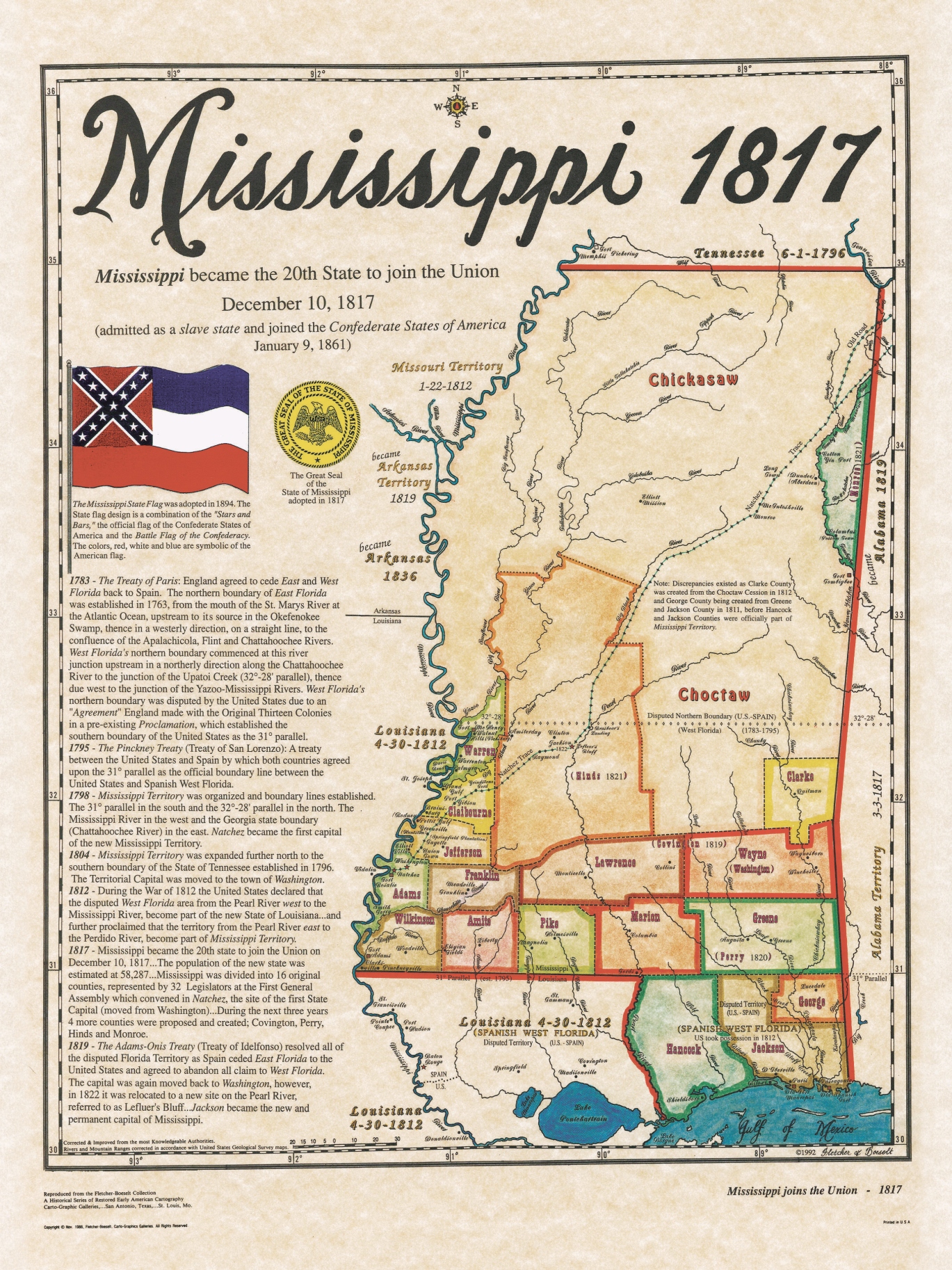
Following the American Revolutionary War and the signing of the Treaty of Paris in 1783, the United States asserted its claim over the region. However, Spain maintained control of parts of the territory until 1798. That year, after significant diplomatic efforts, the United States officially organized the Mississippi Territory. This territory initially encompassed a strip of land extending westward from Georgia to the Mississippi River, between 31° and 32°28′ north latitude.
The territory grew rapidly in size and population. The acquisition of the Louisiana Purchase in 1803 and subsequent land cessions from Native American tribes significantly expanded its boundaries. The prospect of vast, fertile lands, particularly suited for cotton cultivation, attracted a surge of settlers, many arriving via the Mississippi River and the Natchez Trace. The port of New Orleans played a crucial role in the economic development of the territory, serving as an outlet for its agricultural products.
By 1810, the population of the Mississippi Territory had swelled to over 40,000, triggering calls for statehood. The desire for greater self-governance, coupled with the need for better defense (especially evident during the War of 1812 and conflicts with Native American tribes, like the Creek War where Andrew Jackson rose to prominence), fueled the movement. In 1817, with its population nearing 75,000, the Mississippi Territory was divided, with the eastern portion becoming the Alabama Territory (which later became the state of Alabama), and the western portion preparing for statehood.
December 10, 1817: A New Star on the Flag
After years of territorial growth and political maneuvering, the final steps were taken. A state constitution was drafted and approved, laying the groundwork for the new state’s governance. On December 10, 1817, President James Monroe signed the resolution admitting Mississippi into the Union as the 20th state. Natchez, the oldest permanent settlement and a bustling river port, initially served as the state capital, underscoring its historical and economic importance. Later, the capital moved to Jackson in 1822, named after General Andrew Jackson, a hero of the War of 1812 and future United States President.
This date officially marked the birth of Mississippi as an independent entity within the United States, paving the way for its unique development, contributions to American culture, and its eventual role in pivotal national events, including the Civil War and the Civil Rights Movement. For visitors today, this history is not merely confined to textbooks; it lives on in the state’s preserved architecture, its museums, and the very landscape.
Mississippi’s Enduring Legacy: Culture, Landmarks, and Lifestyle
The act of statehood in 1817 was just the beginning of Mississippi’s story. It set the stage for the evolution of a distinctive Southern culture, the creation of iconic landmarks, and a lifestyle that continues to captivate travelers from around the globe.
A Rich Tapestry of Culture and Heritage

Mississippi’s cultural legacy is profoundly shaped by its complex history, including its early colonial influences, the antebellum era, the Civil War, and the struggles and triumphs of the Civil Rights Movement. This tapestry has given birth to world-renowned contributions in music, literature, and cuisine.
The state is arguably best known as the “Birthplace of American Music,” particularly the Blues. The fertile Mississippi Delta gave rise to this soulful genre, which in turn influenced jazz, rock and roll, and countless other forms of music. Travelers can embark on the Mississippi Blues Trail, a network of historical markers commemorating the lives and music of legendary artists like B.B. King, Muddy Waters, and Robert Johnson. Must-visit stops include the Delta Blues Museum in Clarksdale and the B.B. King Museum and Delta Interpretive Center in Indianola.
In literature, Mississippi has produced some of America’s most celebrated authors, including Nobel laureate William Faulkner, Eudora Welty, and Tennessee Williams. Their works often delve into the intricacies of Southern life, reflecting the state’s historical depth and unique social fabric. Visitors can explore Faulkner’s home, Rowan Oak, in Oxford, offering a glimpse into the life of one of the 20th century’s greatest literary minds.
Southern hospitality and a distinctive culinary scene further define the Mississippi experience. From savory catfish and fried chicken to pecan pie and bread pudding, the state’s food scene is a delicious blend of comfort and tradition, reflecting influences from African, European, and Native American cuisines. Exploring local eateries and food festivals is an essential part of any Mississippi travel itinerary.
Historical Landmarks and Tourist Attractions
Mississippi’s history is preserved in a remarkable collection of landmarks and attractions that invite visitors to step back in time.
- Vicksburg National Military Park: This sprawling park commemorates the 1863 Siege of Vicksburg, a pivotal Civil War battle. Visitors can drive through the battlefield, explore monuments, and visit the USS Cairo Gunboat Museum. It’s an immersive experience for anyone interested in American military history.
- Natchez Antebellum Homes: Natchez boasts one of the largest and best-preserved collections of antebellum mansions in the United States. Homes like Longwood and Stanton Hall offer tours that transport visitors to the opulent pre-Civil War South, providing insights into the lifestyle, architecture, and complex social structures of the era.
- Old Capitol Museum in Jackson: Housed in the state’s former capitol building (1839-1903), this museum showcases Mississippi’s political history and pivotal moments, including its secession from the Union.
- Mississippi Civil Rights Museum and Museum of Mississippi History in Jackson: These side-by-side museums offer a comprehensive and deeply moving exploration of Mississippi’s past, from prehistoric times to the powerful story of the Civil Rights Movement, including the life and legacy of figures like Medgar Evers. The Medgar Evers Home Museum is also a significant site to visit.
- Coastal Mississippi: Beyond historical sites, Mississippi’s Gulf Coast offers beautiful beaches, fresh seafood, and vibrant casinos in cities like Biloxi and [Gulfport](https://lifeoutofthebox.com/ gulfport), balancing relaxation with cultural discovery, such as the Ohr-O’Keefe Museum of Art in Biloxi.
These sites collectively provide a rich, multi-layered experience, allowing travelers to connect with the significant events and individuals that shaped Mississippi after its statehood.
Planning Your Historic Mississippi Getaway: Accommodation and Experiences
A trip to Mississippi is an invitation to immerse oneself in a past that profoundly influences the present. The state offers a diverse range of accommodations and travel experiences designed to enhance this historical journey.
Where to Stay: Hotels and Unique Accommodations
Mississippi’s commitment to preserving its heritage extends to its accommodation options, providing travelers with choices that range from luxurious historic inns to modern resorts and charming boutique hotels.
- Historic Bed and Breakfasts: Especially prevalent in cities like Natchez and Vicksburg, these B&Bs often occupy beautifully restored antebellum homes, offering an authentic taste of Southern elegance. Imagine waking up in a room with period furniture, enjoying a gourmet breakfast, and strolling through manicured gardens. Examples include the Monmouth Historic Inn & Gardens in Natchez, which provides a luxurious step back in time, or the Fairview Inn Bed and Breakfast in Jackson, offering historic charm with modern amenities.
- Boutique Hotels: In cities like Jackson and Oxford, boutique hotels often reflect the local culture and history while providing contemporary comfort. The Graduate Oxford, for instance, perfectly captures the spirit of the university town.
- Modern Resorts and Casino Hotels: For those seeking entertainment and beachfront relaxation, the Mississippi Gulf Coast offers world-class resorts with extensive amenities. Hotels like the Beau Rivage Resort & Casino and Golden Nugget Biloxi in Biloxi provide luxury suites, diverse dining, spas, and vibrant gaming experiences.
- Standard Hotel Chains and Suites: Across the state, travelers will also find reliable options from major hotel brands, offering comfortable and convenient stays. The Natchez Grand Hotel & Suites provides modern comfort with easy access to Natchez’s historic district. Whether it’s a short-term visit or a long-term stay, there are accommodations to suit every budget and preference, from luxurious villas to family-friendly apartments.
Crafting Your Itinerary: Travel and Tourism Tips
To truly experience Mississippi’s post-statehood evolution, consider structuring your travel plans around thematic explorations.
- The History Buff’s Route: Start in Natchez to explore its antebellum mansions and early settlement history. Proceed to Vicksburg for the Civil War battlefield. Conclude in Jackson to delve into political and Civil Rights history at the Old Capitol Museum and the Mississippi Civil Rights Museum.
- The Music Lover’s Journey: Follow the Mississippi Blues Trail through the Delta, visiting Clarksdale, Indianola, and other towns crucial to the blues’ development. Combine this with a visit to Tupelo, the birthplace of Elvis Presley.
- The Southern Charm & Lifestyle Experience: Enjoy the literary heritage of Oxford (home to William Faulkner’s Rowan Oak and the University of Mississippi), savor local cuisine, and then unwind on the Mississippi Gulf Coast with its seafood, beaches, and vibrant entertainment.
Engaging with local culture, trying regional delicacies, attending community events, and utilizing local guides can significantly enrich your travel experience. Mississippi’s history is a living, breathing part of its identity, and every visit offers a new layer of understanding and appreciation.
In conclusion, Mississippi’s statehood on December 10, 1817, was a monumental event that shaped its destiny and continues to define its allure as a destination. From its deep historical roots to its vibrant cultural contributions and diverse travel opportunities, the state invites exploration. Whether you’re drawn by the echoes of the past, the soulful melodies of the blues, or the warm embrace of Southern hospitality, Mississippi promises an unforgettable journey through time and tradition.
LifeOutOfTheBox is a participant in the Amazon Services LLC Associates Program, an affiliate advertising program designed to provide a means for sites to earn advertising fees by advertising and linking to Amazon.com. Amazon, the Amazon logo, AmazonSupply, and the AmazonSupply logo are trademarks of Amazon.com, Inc. or its affiliates. As an Amazon Associate we earn affiliate commissions from qualifying purchases.