
On November 16, 1907, a new star was officially added to the flag of the [United States], as [Oklahoma] proudly entered the Union as the 46th state. This pivotal moment, a culmination of decades of tumultuous history, diverse cultures, and relentless ambition, marked the birth of what would become a vibrant and unique destination for travelers, history buffs, and adventure seekers alike. Understanding “When Did [Oklahoma] Become A State?” is not merely a question of a date, but an invitation to explore the dramatic narrative of a land shaped by indigenous resilience, pioneering spirit, and the relentless march toward progress. From its deep [Native American] roots to the frenzied land runs and the strategic political maneuvers, [Oklahoma]’s journey to statehood offers a compelling story that continues to resonate through its landmarks, its culture, and the very fabric of its modern tourism landscape.
For those planning to travel to this often-underestimated corner of America, delving into its history provides an invaluable context for experiencing its rich heritage. Whether you’re drawn to the historical significance of its early capitals, the cultural depth of its [Indigenous peoples], or the vibrant pulse of its contemporary cities, the story of [Oklahoma]’s statehood is intricately woven into every attraction and experience. This article will guide you through the dramatic chapters that led to November 16, 1907, and illustrate how this profound history informs the unparalleled travel, tourism, and lifestyle opportunities that await visitors today.

A Territory Forged in Fire and Promise: The Pre-Statehood Era
The land that would become [Oklahoma] was once a sprawling, unorganized territory with a destiny far more complex than that of many other states. Its path to statehood was uniquely marked by a powerful blend of displacement, promise, and profound cultural integration, making it a truly distinct chapter in American history.
The Landscape Before Settlement: Indigenous Roots and the Trail of Tears
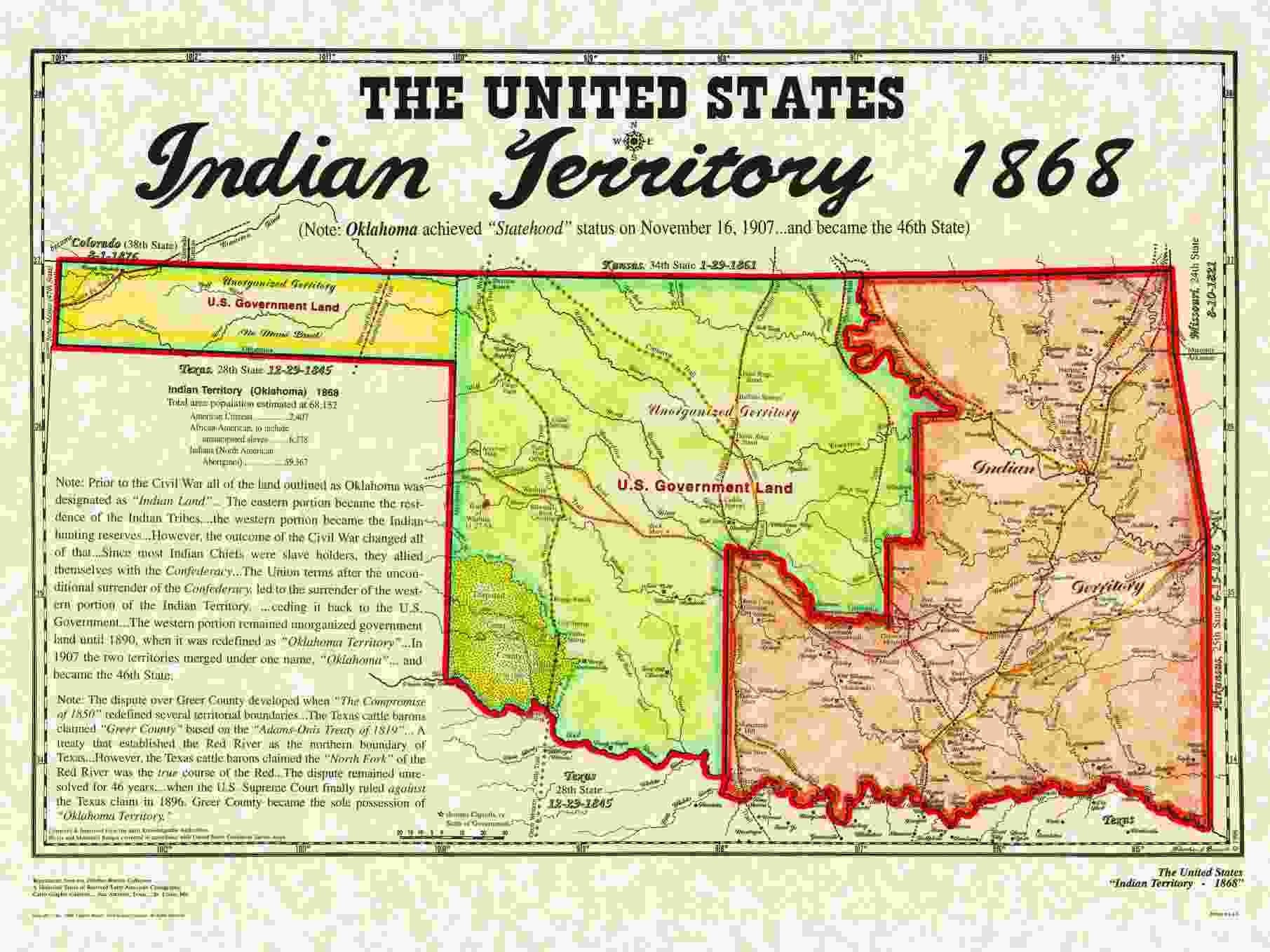
Before the concept of “statehood” ever touched this land, it was home to a multitude of [Indigenous peoples], who had lived, hunted, and thrived across its diverse landscapes for millennia. However, the 19th century brought a brutal turning point. Under the Indian Removal Act, countless [Native Americans] from the southeastern [United States] were forcibly relocated to this western territory, which was then designated as [Indian Territory]. This tragic migration, infamously known as the [Trail of Tears], saw the forced removal of the [Cherokee], [Choctaw], [Chickasaw], [Creek], and [Seminole] nations – collectively known as the [Five Civilized Tribes] due to their adoption of many Euro-American customs – along with dozens of other tribes.
These nations, despite immense suffering, established sophisticated governments, built towns, and created thriving societies within [Indian Territory]. They developed written constitutions, established schools, and maintained their cultural identities, transforming the territory into a patchwork of self-governing nations. This rich history is not just confined to textbooks; it lives on in the cultural centers and historical sites across the state today. Travelers interested in local culture and history can explore places like the [Cherokee Heritage Center] in [Park Hill], which offers an immersive journey into the history and culture of the [Cherokee Nation], or the [Chickasaw Cultural Center] in [Sulphur], providing deep insights into the [Chickasaw] people’s heritage. Understanding this foundational era is crucial for anyone seeking to appreciate the depth and resilience embedded in [Oklahoma]’s identity.
The Great Land Runs: A Rush for Opportunity
By the late 19th century, pressures mounted to open portions of [Indian Territory] for non-[Native American] settlement. Despite treaties and prior agreements, vast tracts of land, particularly the “Unassigned Lands” in the central part of the territory, were deemed surplus. This led to a series of dramatic events known as the [Oklahoma Land Runs]. The first, and most famous, occurred on April 22, 1889, when over 50,000 people surged into the [Unassigned Lands] at the sound of a pistol shot, eager to stake their claim to a piece of the American dream.
These land runs were chaotic, thrilling, and transformative. Towns like [Oklahoma City] and [Guthrie] sprang up almost overnight, built by settlers who had literally raced to claim their plots. The term “[Sooners]” originated from those who snuck onto the land “sooner” than legally allowed, hiding to claim the best plots before the official start. This era of frenzied settlement cemented a pioneering spirit that remains a proud part of [Oklahoma]’s identity. For visitors today, this history can be experienced at the [Oklahoma Land Run Monument] in [Oklahoma City], a powerful bronze sculpture depicting the dynamic energy of the 1889 run. Exploring these early cities, particularly [Guthrie]’s preserved Victorian architecture, offers a glimpse into this unique period of rapid expansion and frontier life, showcasing how quickly destinations were created and shaped.
The Road to Statehood: Merging Two Worlds
The path to statehood was not simple but a complex negotiation involving two distinct territories, political maneuvering, and a presidential decree. This period laid the groundwork for the unified state we see today.
The Twin Territories: Indian and Oklahoma
By the turn of the 20th century, the landscape that would become [Oklahoma] was effectively divided into two distinct administrative entities: [Indian Territory] to the east, still largely controlled by the [Five Civilized Tribes] and other [Native American] nations, and [Oklahoma Territory] to the west, established after the land runs and populated primarily by non-[Native American] settlers. Each territory had its own government, laws, and social structures, creating a challenge for those advocating for a single state.
Initially, leaders of the [Five Civilized Tribes], wary of losing their autonomy and control over their lands, proposed forming their own state, to be named [Sequoyah], after the inventor of the [Cherokee] syllabary. In 1905, they held the [Sequoyah Convention] in [Muskogee], drafted a constitution, and submitted it to [Congress]. While this bold move demonstrated the organizational capacity and political savvy of the [Native American] nations, it was ultimately rejected by a [Congress] more inclined toward a single, larger state.
The idea of combining the two territories gained momentum, driven by economic interests and the federal government’s desire for simplified administration. The push for “single statehood” was strong, promising greater political power and economic development for the region. This merging of two fundamentally different societies – one steeped in ancient tribal traditions and federal treaties, the other a rapidly developing frontier economy – presented a unique political and cultural challenge that ultimately defined the new state.
President Roosevelt’s Signature: A New Star on the Flag
The decisive moment arrived with the passage of the [Oklahoma Enabling Act] by [Congress] in June 1906. This act provided for the joint admission of [Oklahoma Territory] and [Indian Territory] as a single state. Following this, delegates from both territories convened for the [Oklahoma Constitutional Convention] in [Guthrie] from November 1906 to July 1907. Under the leadership of President [William H. Murray], they drafted a progressive constitution that included provisions for direct legislation, compulsory education, and a strong corporation commission, reflecting the populist and progressive ideals of the era.
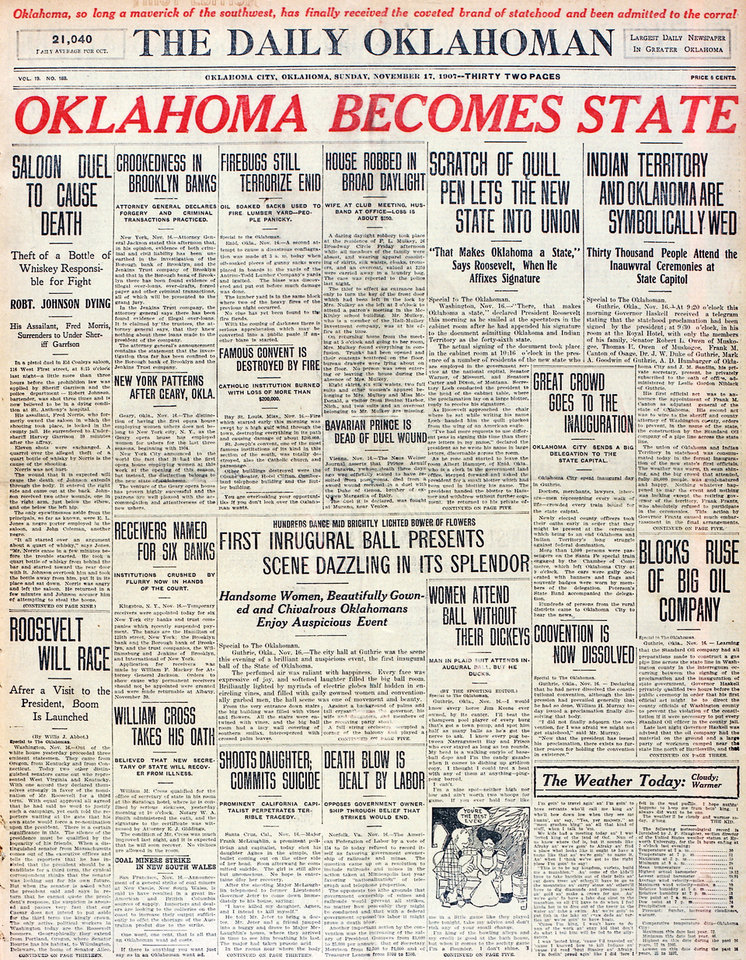
After ratification by the people of the territories, the constitution was sent to [Washington D.C.] for presidential approval. On November 16, 1907, [President Theodore Roosevelt] officially signed the proclamation admitting [Oklahoma] into the Union, declaring it the 46th state. The moment was met with widespread celebration across the new state, marking the culmination of decades of effort, conflict, and negotiation. [Guthrie] served as the first state capital until 1910, when the capital was famously moved to [Oklahoma City]. This event not only established a new political entity but also forged a distinctive identity for [Oklahoma], blending its [Native American] heritage with its pioneering spirit into a unique American narrative. The legacy of [President Theodore Roosevelt]’s decision and the progressive constitution continue to shape the political and social landscape of [Oklahoma] to this day.
Oklahoma Today: A Legacy of History, Culture, and Modern Exploration
The historical journey to statehood has profoundly shaped the modern face of [Oklahoma], transforming it into a compelling destination that blends a rich past with vibrant contemporary experiences. For travelers, this means a diverse array of attractions that cater to every interest, from historical landmarks to bustling urban centers and breathtaking natural beauty.
Exploring Oklahoma’s Historical Landmarks and Museums
Visiting [Oklahoma] today offers an immersive experience into its foundational stories. The [Oklahoma Historical Society], through its numerous museums and sites, serves as the primary custodian of this rich past. A must-see is the [Oklahoma State Capitol] in [Oklahoma City], an impressive neoclassical structure notable for being the only state capitol grounds with active oil wells. Adjacent to it is the [Oklahoma Historical Society]’s flagship institution, the [Oklahoma History Center], which provides comprehensive exhibits detailing the state’s journey from prehistoric times through statehood and beyond, making it an essential stop for anyone wanting to understand the full scope of [Oklahoma]’s heritage.
For a deeper dive into specific facets of [Oklahoma]’s identity, the [National Cowboy & Western Heritage Museum] offers an expansive collection celebrating the American West, from iconic cowboys to [Native American] art. The [Will Rogers Memorial Museum] in [Claremore] honors one of [Oklahoma]’s most beloved sons, showcasing the life and humor of the legendary entertainer. And for those fascinated by the unique cultures that thrived before statehood, the aforementioned [Cherokee Heritage Center] and [Chickasaw Cultural Center] are unparalleled resources, offering living history exhibits, traditional arts, and profound insights into [Indigenous peoples]’ enduring legacies. Even iconic hotels, like the historic [Skirvin Hilton Oklahoma City], whisper tales of the past, offering a blend of modern amenities within a landmark structure.
Experience Oklahoma: From Urban Adventures to Natural Wonders
Beyond its historical sites, [Oklahoma] presents a dynamic array of travel experiences. [Oklahoma City] has undergone a remarkable revitalization, transforming its downtown into a vibrant hub. [Bricktown], a former warehouse district, now buzzes with restaurants, entertainment venues, and a charming canal that offers boat tours. The [Myriad Botanical Gardens] provides a lush urban oasis, while the [Oklahoma City National Memorial & Museum] stands as a poignant tribute and a powerful reminder of resilience.
In the eastern part of the state, [Tulsa] enchants visitors with its stunning [Art Deco] architecture, particularly evident in its historic downtown. The city is also home to the world-class [Philbrook Museum of Art] and the [Gathering Place], an extraordinary park recognized nationally for its innovative design and community impact. [Route 66], the “Mother Road,” cuts through [Oklahoma], offering nostalgic roadside attractions and classic diners for an iconic American road trip experience.
Nature enthusiasts will find [Oklahoma]’s landscapes surprisingly diverse. The [Wichita Mountains Wildlife Refuge] offers opportunities to spot bison and elk in their natural habitat, alongside stunning granite mountains. [Turner Falls Park] in [Davis] boasts [Oklahoma]’s largest waterfall and natural swimming areas. The rolling hills of the [Ozark Mountains] in the northeast and the unique geological formations of [Black Mesa] in the panhandle provide even more outdoor adventures, from hiking and fishing to birdwatching. These natural landmarks, many of which were present long before statehood, offer a tranquil escape and a different perspective on the state’s enduring beauty.
Planning Your Oklahoma Adventure: Travel, Accommodation, and Lifestyle
Whether you’re embarking on a historical pilgrimage, an urban exploration, or a nature retreat, planning your visit to [Oklahoma] is an exciting endeavor. The state’s diverse offerings mean there’s something for every type of traveler and every budget, making it an ideal destination for various lifestyles.
Where to Stay: Hotels, Resorts, and Unique Accommodations
[Oklahoma] provides a wide spectrum of accommodation options, ensuring that every traveler finds their perfect home away from home. In the major cities like [Oklahoma City] and [Tulsa], you’ll find a range of modern hotels, from luxurious resorts to budget-friendly chains. For a taste of historic elegance, consider boutique hotels such as the [Ambassador Hotel Oklahoma City] or [The Mayo Hotel] in [Tulsa], both beautifully restored landmarks that offer upscale amenities and a touch of local charm. The [Hyatt Regency Tulsa] provides a comfortable and convenient base for exploring downtown [Tulsa]’s attractions.Outside the urban centers, you can discover unique lodging experiences. Cozy cabins are available near natural attractions like [Turner Falls Park] or within the scenic [Ouachita National Forest]. For those seeking a deeper connection to the state’s [Native American] heritage, some tribal nations operate their own resorts and casinos, offering a blend of entertainment, dining, and comfortable stays. From family-friendly suites with amenities like pools and complimentary breakfasts to secluded villas for a romantic getaway, [Oklahoma]’s hospitality sector is well-equipped to cater to diverse needs and preferences, promising a memorable stay regardless of your travel style or budget.
Savoring Oklahoma’s Culture: Food, Festivals, and Local Experiences
No visit to [Oklahoma] is complete without indulging in its distinctive culinary scene and immersing yourself in its vibrant local culture. [Oklahoma] cuisine is a delicious blend of Southern comfort, Western heartiness, and [Native American] influences. You must try classic dishes like chicken fried steak, mouth-watering barbecue, and the iconic onion burger, especially in places renowned for their historical diners. Traditional [Native American] foods, such as fry bread, grape dumplings, and corn soup, offer a taste of the state’s original inhabitants’ heritage and are often available at cultural events and specialized restaurants.
The state’s calendar is dotted with numerous festivals and events that celebrate its diverse heritage. From the [Oklahoma City] Festival of the Arts to the [Red Earth Festival], a premier [Native American] cultural event, there are countless opportunities to experience local music, art, and traditions. Small towns across the state host rodeos, county fairs, and folk festivals, providing authentic glimpses into Oklahoman life. For those interested in a unique lifestyle experience, exploring the numerous wineries and craft breweries that have popped up across the state offers a different kind of cultural immersion. Whether you’re planning a family trip, a business stay, or a solo adventure, these cultural encounters add layers of enjoyment and understanding to your travel itinerary.
[Oklahoma]’s journey to statehood on November 16, 1907, is a testament to the resilience of its people and the compelling forces that shaped the American West. From the ancient lands of [Indigenous peoples] to the frenetic pace of the land runs and the complex political negotiations, every step of its history has contributed to the unique character of the state today. By exploring its historical landmarks, vibrant cities, and stunning natural landscapes, travelers can not only connect with this powerful past but also discover a dynamic and welcoming destination. So, when you plan your next adventure, consider [Oklahoma] – a state where history truly comes alive, offering a rich tapestry of experiences for every curious soul. LifeOutOfTheBox is a participant in the Amazon Services LLC Associates Program, an affiliate advertising program designed to provide a means for sites to earn advertising fees by advertising and linking to Amazon.com. Amazon, the Amazon logo, AmazonSupply, and the AmazonSupply logo are trademarks of Amazon.com, Inc. or its affiliates. As an Amazon Associate we earn affiliate commissions from qualifying purchases.