
The question “When did Oklahoma become a state?” delves into a fascinating chapter of American history, revealing a story of forced migrations, land rushes, and the determined spirit of pioneers and indigenous peoples alike. This journey culminated on November 16, 1907, when the territory officially joined the United States as the 46th state, earning its evocative nickname, the “Sooner State”. For travelers, understanding this rich historical backdrop is key to appreciating the unique culture, diverse landscapes, and remarkable attractions that make [Oklahoma] a compelling destination today. From its deep Native American roots and Western heritage to its burgeoning urban centers like Oklahoma City and Tulsa, [Oklahoma]’s past is intricately woven into its present, offering a tapestry of experiences for every visitor.
A Journey to Statehood: From Indian Territory to the Sooner State
The path to [Oklahoma]’s statehood is unlike any other in the nation. It’s a narrative shaped by federal policy, the resilience of displaced communities, and an unprecedented land grab that redefined the American frontier.
The Landscape Before Statehood: Indian Territory’s Complex Legacy
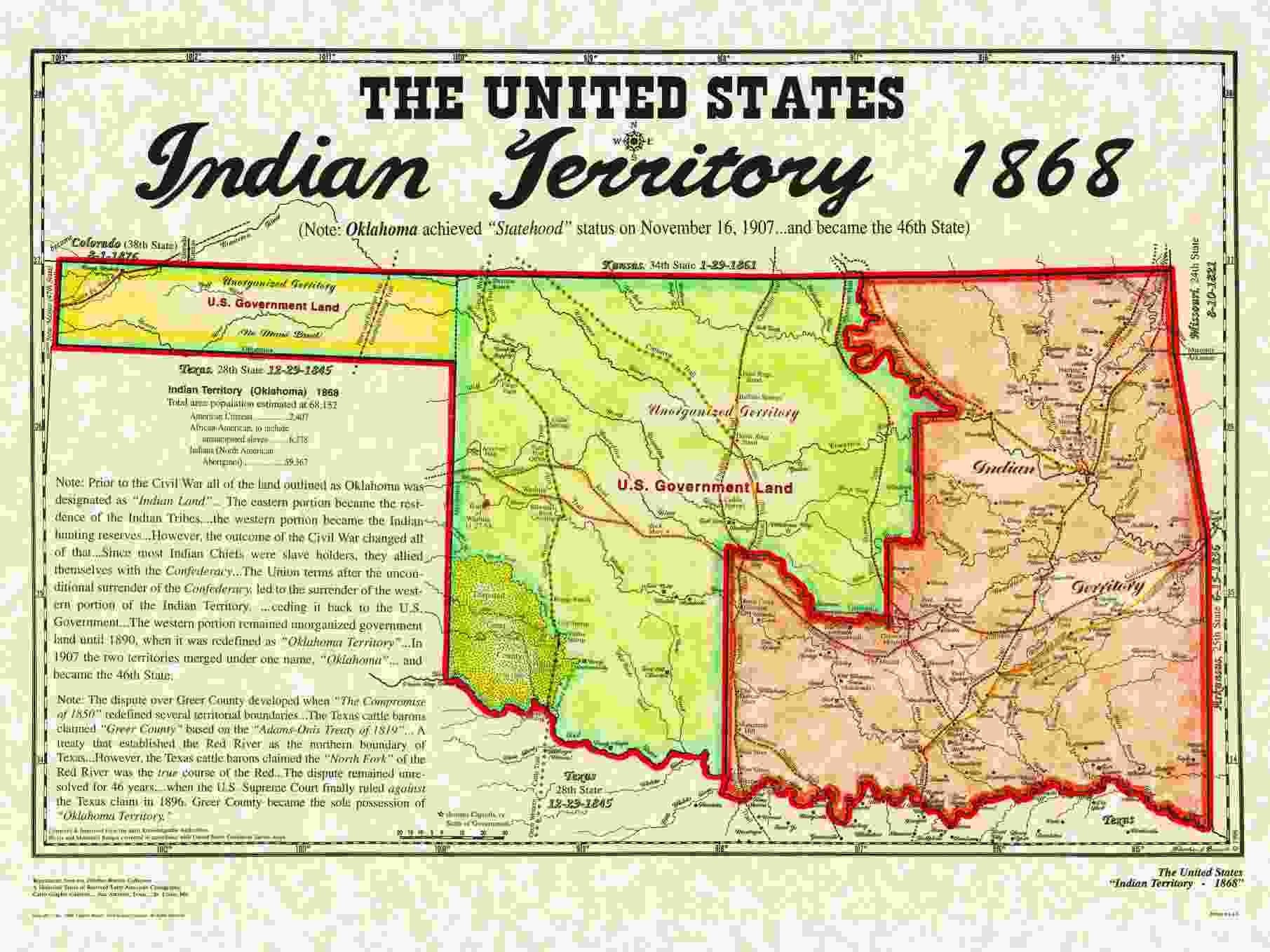
Long before it was known as [Oklahoma], much of the land we recognize today was designated as Indian Territory. This vast expanse was set aside by the U.S. government as a destination for the forced removal of numerous [Native American] tribes from their ancestral lands in the southeastern [United States]. This tragic period, infamously known as the “Trail of Tears” in the 1830s, saw the relocation of the “Five Civilized Tribes” – the Cherokee, Chickasaw, Choctaw, Creek, and Seminole nations – to the region.
These tribes established complex, self-governing nations within [Indian Territory], developing their own written constitutions, judicial systems, and educational institutions. Cities like Tahlequah (capital of the [Cherokee] Nation) and Muskogee emerged as important cultural and economic centers. This era saw a vibrant, independent spirit flourish, but it was continually challenged by the encroaching pressures of westward expansion and the desires of non-Native settlers for access to the territory’s fertile lands. The presence of these sovereign nations created a unique political and social landscape, distinct from other developing territories in the [United States].
The Land Runs and the Birth of Oklahoma Territory
The relative autonomy of [Indian Territory] began to erode in the late 19th century. Large tracts of land within the territory, particularly the “Unassigned Lands” in the central part, were not assigned to any specific tribe. These lands became the target of intense lobbying from land-hungry settlers and railroad companies. The federal government eventually succumbed to this pressure, leading to a series of historic land runs.
The most famous of these was the “Oklahoma Land Run of 1889,” which opened approximately two million acres to non-Native settlement. Thousands of eager participants, lining up at the border, raced to stake their claims at the sound of a pistol shot. The term “[Sooner State]” originates from those who illegally entered the territory “sooner” than allowed, to claim the best land. This event, and subsequent land runs, transformed the landscape almost overnight, leading to the rapid establishment of towns and the creation of Oklahoma Territory in 1890. For a time, the area was divided into two distinct entities: the self-governing [Indian Territory] and the federally organized [Oklahoma Territory], setting the stage for the eventual unification and statehood.

The Road to Unification and Statehood
The existence of two separate territories within roughly the same geographic area presented administrative challenges and fueled calls for their unification into a single state.
Efforts Towards Combining Territories
The idea of statehood was complex and fraught with political tension. Many [Native American] leaders in [Indian Territory] initially sought to establish their own separate, all-[Indian State], proposing the name “Sequoyah State” (named after the inventor of the [Cherokee] syllabary). They even drafted a constitution in [1905], showcasing their capacity for self-governance and their desire to maintain their cultural identity. However, their efforts were ultimately rejected by the U.S. Congress, which favored a single state solution to consolidate control and simplify administration.
The federal government pushed for the merger of the two territories, citing economic development and the desire for political uniformity. Key legislative actions paved the way for this union. The “Enabling Act of 1906” was particularly crucial, providing the framework for the two territories to draft a single constitution and apply for admission as one state. This act effectively dissolved the separate governments of the [Five Civilized Tribes] and forced the integration of [Indian Territory] into the larger [Oklahoma] political entity, a decision that had profound and lasting impacts on the [Native American] communities.
Constitutional Convention and Final Steps
Following the [Enabling Act of 1906], a constitutional convention was convened in Guthrie, the territorial capital. This convention was a pivotal moment, bringing together delegates from both [Oklahoma Territory] and [Indian Territory] to forge the foundational document for the new state. The delegates, including influential figures like William H. Murray (who would later become [Oklahoma]’s governor) and Charles N. Haskell, drafted what was considered at the time to be one of the most progressive state constitutions in the nation. It included provisions for initiatives, referendums, and protections for labor, reflecting a populist and progressive political sentiment prevalent in the early 20th century.
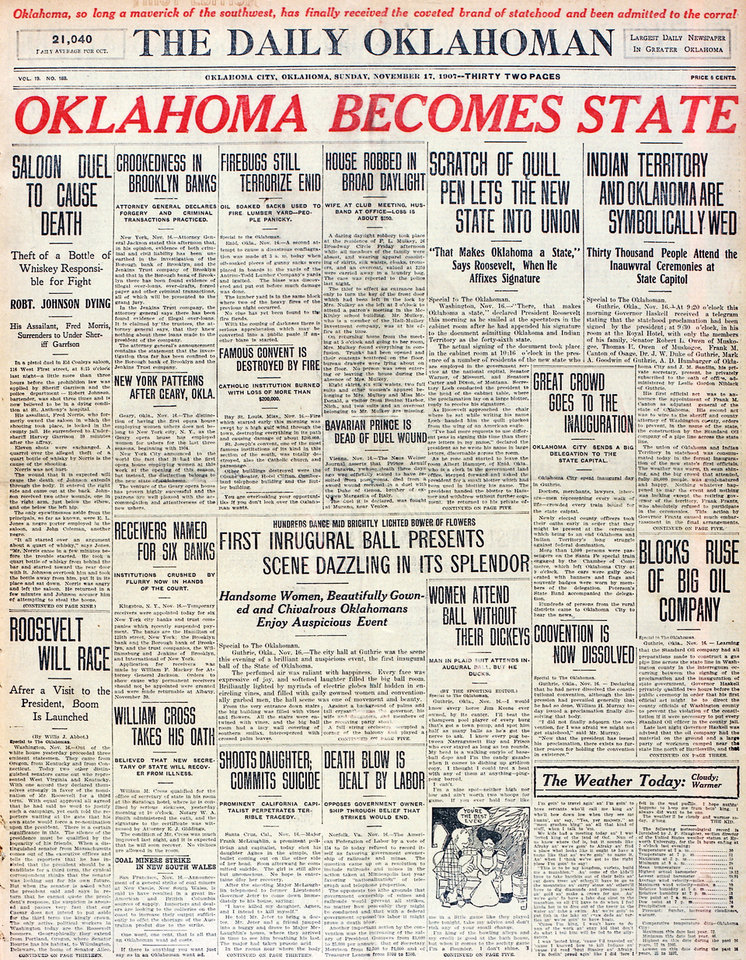
After months of rigorous debate and compromise, the constitution was approved by the people of both territories. It was then sent to Washington D.C. for final approval. President Theodore Roosevelt signed the proclamation admitting [Oklahoma] into the [Union] on [November 16, 1907], officially making it the 46th state. Celebrations erupted across the new state, marking the culmination of decades of transformative change and the dawn of a new era. The unification of these two distinct territories into one state, with its unique blend of Western frontier spirit and deep [Native American] heritage, established [Oklahoma]’s enduring identity.
Experiencing Oklahoma’s Rich Heritage Today: A Traveler’s Perspective
For modern travelers, [Oklahoma]’s complex history is not merely confined to textbooks; it is alive and accessible through its diverse landmarks, cultural attractions, and vibrant tourism scene. The state’s journey to statehood has shaped its unique character, making it a compelling destination for those seeking both adventure and historical insight.
Historic Landmarks and Cultural Attractions
To truly grasp [Oklahoma]’s past, visitors can explore a myriad of sites that tell its story. In [Oklahoma City], the Oklahoma History Center offers comprehensive exhibits detailing everything from [Native American] cultures to the [land runs] and the development of the oil industry. Nearby, the National Cowboy & Western Heritage Museum provides an immersive look into the iconic figures and lifestyles of the American West, a period directly influenced by the opening of [Oklahoma Territory].
Journeying east, the Cherokee Heritage Center in Park Hill, near [Tahlequah], offers a powerful insight into [Cherokee] history, culture, and resilience, including a recreated 1710 [Cherokee] village. The Chickasaw Cultural Center in [Sulphur] provides an equally enriching experience, celebrating the history, art, and traditions of the [Chickasaw] Nation through interactive exhibits and beautifully preserved artifacts. Don’t miss Sequoyah’s Cabin State Park near Sallisaw, where visitors can see the log cabin home of [Sequoyah], a testament to [Native American] ingenuity.
Beyond tribal history, the echoes of westward expansion and early statehood can be found along historic “Route 66.” This iconic highway, which slices through the heart of [Oklahoma], is dotted with retro diners, vintage gas stations, and charming small towns, offering a nostalgic road trip experience. Each stop provides a glimpse into the growth of the state after 1907, connecting its past to the broader American narrative. From the Blue Whale of Catoosa to the Lucille’s Service Station in Hydro, these quirky [landmarks] serve as testaments to [Oklahoma]’s vibrant post-statehood development.
Modern Oklahoma: A Hub for Travel, Tourism, and Accommodation
Today, [Oklahoma] is a dynamic state, blending its historical roots with modern amenities and attractions, making it a diverse travel destination. [Oklahoma City] and [Tulsa] stand as vibrant urban centers, each offering unique experiences. [Oklahoma City] boasts a revitalized downtown with the entertainment district of Bricktown, the serene Myriad Botanical Gardens, and the poignant Oklahoma City National Memorial & Museum. [Tulsa], with its art deco architecture and thriving arts scene in the Tulsa Arts District, is home to world-class institutions like the Philbrook Museum of Art and the expansive Gathering Place park.
For those planning their [Oklahoma] adventure, the range of accommodation options is extensive. From luxurious resorts and boutique hotels in the major cities, such as The Skirvin Hilton Oklahoma City, to charming bed & breakfasts in historic towns, and family-friendly hotels near popular attractions, there’s a stay for every lifestyle and budget. Whether you’re seeking a luxury travel experience or a budget-friendly trip, [Oklahoma] delivers.
The state’s culinary scene is equally diverse, featuring everything from authentic Oklahoma BBQ joints and hearty Southern comfort food to innovative modern dining experiences. Many restaurants incorporate local ingredients and Native influences, offering a taste of [Oklahoma]’s unique cultural fusion. Beyond food, the state offers abundant outdoor activities, including hiking in the rugged Wichita Mountains Wildlife Refuge, fishing in its many lakes, and exploring the scenic beauty of its six distinct tourism regions.
Planning Your Oklahoma Adventure
With its rich history and diverse attractions, [Oklahoma] offers a rewarding experience for any traveler. Planning your visit can enhance your appreciation for this remarkable state.
Best Times to Visit and Key Events
The best time to visit [Oklahoma] largely depends on your interests. Spring (April-May) and Fall (September-October) generally offer the most pleasant weather for exploring, with mild temperatures perfect for outdoor [activities] and enjoying the state’s natural beauty, from blossoming wildflowers to vibrant fall foliage. Summers can be hot, particularly in July and August, but are ideal for enjoying [Oklahoma]’s numerous lakes and water parks. Winters are generally mild, but occasional cold snaps and snow can occur, making it a quieter time for city breaks and indoor attractions.
[Oklahoma]’s calendar is packed with events that celebrate its unique heritage. The Red Earth Festival in [Oklahoma City] each June is one of the nation’s most prestigious [Native American] cultural festivals, featuring traditional dances, art markets, and cultural presentations. The Paseo Arts Festival, also in [Oklahoma City], highlights the local arts scene. Numerous rodeos, county fairs, and music festivals take place throughout the year, especially in the warmer months, offering a glimpse into the state’s vibrant local culture and traditions. Aligning your visit with one of these events can provide a deeper, more immersive experience.Travel Tips and Accommodation Choices
When planning your trip, consider the distinct regions of [Oklahoma], each with its own character. “Green Country” in the northeast is known for its rolling hills and lakes; “Red Carpet Country” in the northwest features vast plains and canyons; “Lake & Trail Country” to the east offers scenic beauty and outdoor recreation; “Frontier Country” encompasses [Oklahoma City] and its historical sites; “Great Plains Country” in the southwest is home to rugged landscapes and wildlife; and “Kiamichi Country” in the southeast boasts the Ouachita Mountains and lush forests.
For [accommodation], booking in advance is always recommended, especially during peak seasons or major events. Websites dedicated to hotel booking offer comparison tools to help you find the best deals on everything from luxury suites to comfortable apartments and villas. Pay attention to reviews to ensure your chosen stay meets your expectations for amenities and location. For longer trips, consider long-term stay options which often provide more space and home-like conveniences. Whether you’re traveling solo, on a family trip, or for a business stay, [Oklahoma]’s hospitality sector is well-equipped to make your visit comfortable and memorable. Exploring [Oklahoma]’s past and present is made effortless by its well-developed travel infrastructure and welcoming spirit.
Conclusion
The answer to “When did [Oklahoma] become a state?” is [November 16, 1907], but the significance of that date extends far beyond a simple calendar entry. It marks the culmination of an extraordinary journey from [Indian Territory] and [Oklahoma Territory] to a unified state, a narrative rich with indigenous history, frontier adventure, and a resilient spirit. This unique heritage is what makes [Oklahoma] such a captivating place to visit today.
From exploring the solemn beauty of [Native American] cultural centers to tracing the legendary path of [Route 66], and from experiencing the vibrant urban pulse of [Oklahoma City] and [Tulsa] to finding serenity in its diverse natural landscapes, [Oklahoma] offers a travel experience unlike any other. So, as you plan your next adventure, consider the “[Sooner State]” – a place where history comes alive and every corner tells a story of perseverance, transformation, and a welcoming invitation to discover its profound depth.
LifeOutOfTheBox is a participant in the Amazon Services LLC Associates Program, an affiliate advertising program designed to provide a means for sites to earn advertising fees by advertising and linking to Amazon.com. Amazon, the Amazon logo, AmazonSupply, and the AmazonSupply logo are trademarks of Amazon.com, Inc. or its affiliates. As an Amazon Associate we earn affiliate commissions from qualifying purchases.