
The question of Puerto Rico’s independence is a complex one, deeply intertwined with its history, political status, and the aspirations of its people. Unlike many nations that celebrate a definitive “independence day,” Puerto Rico’s journey has been marked by shifts in sovereignty and ongoing debates about its ultimate political future. To understand when Puerto Rico gained independence, we must delve into its historical context and the evolution of its relationship with the United States.
For centuries, Puerto Rico was a colony. It was first claimed by Christopher Columbus in 1493 during his second voyage to the Americas, marking the beginning of Spanish colonization. Under Spanish rule, the island, known then as Borikén by its indigenous Taíno inhabitants, experienced profound transformations. Spanish governance, culture, and language were imposed, and the indigenous population was decimated. Puerto Rico remained a Spanish possession for over 400 years, a period characterized by economic development, often tied to agriculture like sugar cane, and social changes, including the eventual abolition of slavery in 1873.
The Spanish-American War and the Dawn of American Rule
The late 19th century witnessed a pivotal shift in Puerto Rico’s history. In 1898, the United States declared war on Spain. The Spanish-American War was a brief but consequential conflict, and Puerto Rico, along with Cuba and Guam, became a prize of war for the victorious United States. Following the war, the Treaty of Paris was signed in December 1898, officially ceding Puerto Rico from Spain to the United States. This marked the end of Spanish colonial rule but did not usher in independence. Instead, it initiated a new era of American governance and political association.
Upon its acquisition, Puerto Rico was placed under military rule by the United States. In 1900, the Foraker Act (also known as the Organic Act of 1900) was passed, establishing a civilian government on the island but firmly under American control. This act made Puerto Rico an unincorporated territory of the United States, a designation that has significant implications for its political and legal status. It meant that while the Constitution of the United States applied to Puerto Rico, it was not fully incorporated into the nation in the same way as a state.
The Path to Commonwealth Status
The early to mid-20th century saw Puerto Rico grappling with its territorial status and seeking greater self-governance. The Jones-Shafroth Act of 1917 further defined the relationship, granting Puerto Ricans U.S. citizenship, a crucial development that tied the island’s inhabitants more closely to the United States. However, this citizenship did not come with full political representation or the right to vote in U.S. presidential elections. Puerto Ricans could serve in the U.S. military, and their economic ties with the mainland grew, but the question of ultimate political destiny remained unresolved.
A significant milestone in Puerto Rico’s quest for autonomy occurred in 1950 with the passage of Public Law 600 by the U.S. Congress. This law authorized Puerto Rico to draft its own constitution. In 1952, after a constituent assembly drafted and ratified the document, Puerto Rico officially adopted its constitution, establishing the Commonwealth of Puerto Rico. This designation, often referred to as “Estado Libre Asociado” in Spanish, signifies a “free associated state.”

Understanding the Commonwealth Status
The establishment of the Commonwealth was a pivotal moment, often interpreted differently by various factions on the island. For many, it represented a significant step towards self-governance, granting Puerto Rico a degree of autonomy in its internal affairs. The Commonwealth structure allows Puerto Rico to elect its own governor and legislature, manage its local affairs, and have a degree of control over its economy. However, it is crucial to understand that this autonomy exists within the framework of U.S. federal law.
The Commonwealth status is not independence. Puerto Rico remains a territory of the United States. U.S. federal laws generally apply to Puerto Rico, though some are modified or not applicable. Puerto Ricans are U.S. citizens, serve in the U.S. military, and their currency is the U.S. dollar. However, they do not have voting representation in the U.S. Congress (though they do have a Resident Commissioner who can speak and vote in committees) and cannot vote in U.S. presidential elections, even though they are subject to federal laws. This unique arrangement has led to ongoing debate and a desire for change.

The Ongoing Debate: Statehood, Independence, or Enhanced Commonwealth
The question of Puerto Rico’s political future has been a subject of continuous discussion and periodic referendums. The primary options debated are statehood, independence, or an enhanced Commonwealth status.
-
Statehood: Proponents of statehood argue that it would provide Puerto Rico with full political equality and representation within the United States. As a state, Puerto Rico would have voting representation in Congress and the right to vote in presidential elections. This would also likely mean full application of U.S. federal benefits and funding. However, critics raise concerns about potential impacts on Puerto Rican culture, language, and the economic implications of increased taxation.
-
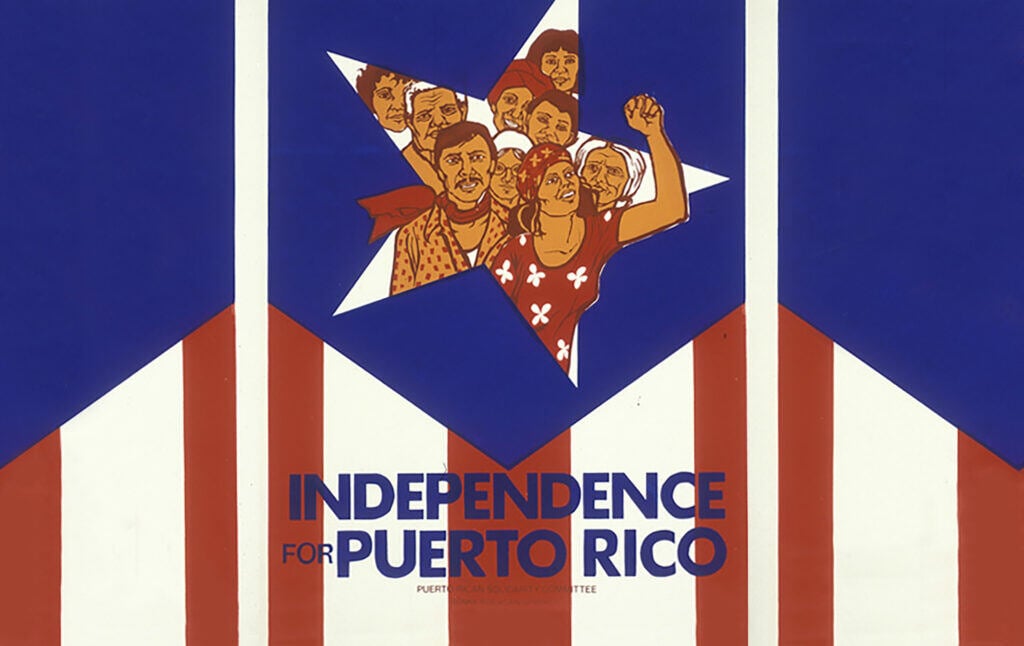
Independence: Advocates for independence envision Puerto Rico as a sovereign nation, free from U.S. political control. This would grant Puerto Rico full control over its foreign policy, trade agreements, and national identity. However, independence would also entail significant economic adjustments, the establishment of new international relationships, and a complete severance of ties with the United States. Many worry about the economic viability of an independent Puerto Rico without the existing framework of U.S. support and market access.
-
Enhanced Commonwealth: This option seeks to redefine the existing Commonwealth status, granting Puerto Rico greater autonomy and sovereignty while maintaining a voluntary association with the United States. Proposals often include more control over economic policies, international trade, and a clearer definition of the rights and responsibilities of both parties. This approach aims to strike a balance between self-determination and the benefits of the U.S. association.
Referendums on Puerto Rico’s political status have been held periodically, with varying results and levels of participation. These votes reflect the deep divisions and differing aspirations within the Puerto Rican population. Despite these votes, the U.S. Congress ultimately holds the authority to enact any change in Puerto Rico’s political status, as demonstrated by the Federal Relations Act which underpins the current territorial structure.
In conclusion, the answer to “When Did Puerto Rico Gain Independence?” is that it has not. Puerto Rico transitioned from Spanish colonial rule to U.S. territorial status following the Spanish-American War in 1898. The establishment of the Commonwealth of Puerto Rico in 1952 marked a significant step towards self-governance but did not equate to independence. The island’s political status remains a dynamic and debated issue, with the future of Puerto Rico resting on the ongoing dialogue between its people and the United States government. Whether through statehood, independence, or an evolved form of association, the journey of Puerto Rico continues to be one of self-discovery and the pursuit of its ultimate political destiny.