
The story of [Texas] becoming a state is a captivating tale woven with threads of revolution, independence, political maneuvering, and a pioneering spirit that continues to define its identity. More than just a date on a calendar, the annexation of [Texas] by the [United States] was a pivotal moment in American history, shaping the nation’s westward expansion, igniting debates over slavery, and ultimately leading to the Mexican-American War. For travelers and history enthusiasts alike, understanding this complex journey offers a deeper appreciation for the unique culture, resilient people, and iconic [landmarks] that make the Lone Star State such a compelling destination.
The official date for [Texas]’s admission into the [Union] is December 29, 1845. However, to truly grasp the significance of this event, we must journey back through the dramatic years that preceded it, exploring the fervent desire for freedom, the challenges of nation-building, and the strategic decisions that ultimately cemented [Texas]’s place as the 28th state.
The Road to Statehood: From Republic to Annexation
The path to statehood for [Texas] was anything but straightforward. It was a tumultuous period marked by a fight for independence from [Mexico], a decade as an independent republic, and a prolonged debate over its future with the [United States].
From Spanish Colony to Mexican Territory
Before its struggle for independence, [Texas] was a sparsely populated frontier region, first under Spanish colonial rule and then, after 1821, a part of independent [Mexico]. To bolster settlement and development, the Mexican government encouraged immigration from the [United States], offering vast land grants to empresarios like [Stephen F. Austin]. These American settlers, primarily from the Southern states, brought with them their own cultural norms, legal traditions, and, crucially, the practice of slavery, which was at odds with Mexican law.
Cultural differences, linguistic barriers, and political instability in [Mexico City] led to growing tensions between the Anglo-American settlers and the Mexican government. Laws restricting immigration, tariffs on American goods, and attempts to enforce Mexican federal laws, particularly regarding slavery, fueled resentment among the Texians, as they were then known. This simmering discontent would eventually boil over into armed conflict.
The [Texas Revolution] and the Birth of a Republic
The spark that ignited the [Texas Revolution] came in 1835. A series of escalating confrontations, including the Battle of [Gonzales] (where the “Come and Take It” flag famously flew), culminated in open rebellion. The Texians, though often outnumbered and outgunned, fought with fierce determination. Iconic battles like the Siege of [The Alamo] in [San Antonio], where a small band of defenders made a heroic last stand against Santa Anna’s vastly superior army, became legendary rallying cries. Though a military defeat, [The Alamo] galvanized the Texian forces.
On March 2, 1836, delegates gathered at [Washington-on-the-Brazos State Historic Site] and formally declared [Texas] an independent republic. Just weeks later, on April 21, 1836, General [Sam Houston]’s Texian army achieved a decisive victory over Santa Anna’s forces at the Battle of [San Jacinto Battleground State Historic Site] near present-day [Houston]. This victory secured [Texas]’s independence and paved the way for the formation of the [Republic of Texas].
The [Republic of Texas] existed for nearly ten years, from 1836 to 1845. During this decade, the young republic faced immense challenges, including financial instability, ongoing threats from [Mexico], and strained relations with Native American tribes. Its leaders, including two-term President [Sam Houston] and his successor [Mirabeau B. Lamar], grappled with establishing a functioning government, fostering economic growth, and, critically, deciding the republic’s long-term future. From the outset, many Texians desired annexation by the [United States], but political complexities on both sides of the border delayed this dream.
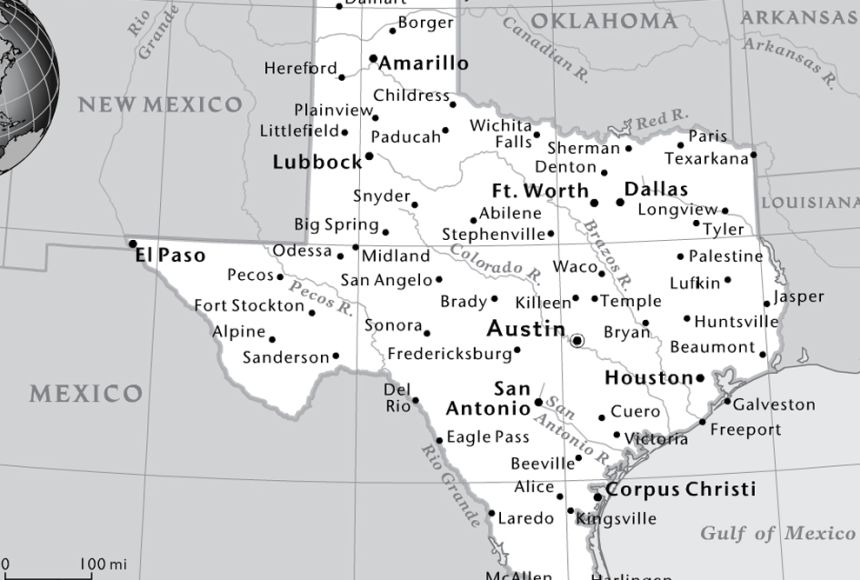
The Annexation Debate: A Decade of Deliberation
While the majority of Texians favored joining the [United States], the question of [Texas] annexation was a highly controversial issue within the American political landscape, primarily due to the contentious issue of slavery.
The Slavery Question and Sectional Divides
[Texas], being a slaveholding republic, would enter the [Union] as a slave state, upsetting the delicate balance between free and slave states in the [United States] Congress. Northern abolitionists and Whig politicians vehemently opposed annexation, fearing it would expand the institution of slavery and increase the political power of the Southern states. They also worried about the potential for war with [Mexico], which still considered [Texas] a rebellious province and vowed to reclaim it.Conversely, Southern states and proponents of manifest destiny eagerly supported annexation. They saw [Texas] as a vast new territory for agricultural expansion, a strategic buffer against European influence in North America, and a boost to their political strength. Presidents [Andrew Jackson] and Martin Van Buren initially hesitated to pursue annexation, wary of the political fallout and the international implications.
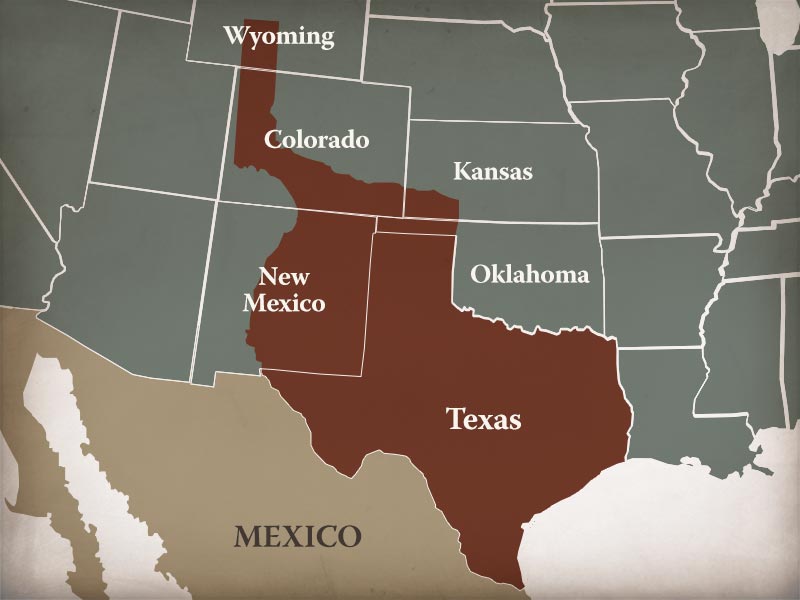
Key Political Players and Shifting Tides
The debate over [Texas] annexation simmered for years, becoming a recurring theme in American presidential elections. The issue gained significant momentum with the election of [James K. Polk] in 1844. [Polk], a staunch expansionist, ran on a platform that explicitly included the annexation of [Texas] and the Oregon Territory. His victory was interpreted as a mandate from the American people for westward expansion.
Outgoing President John Tyler, a strong advocate for annexation, seized the opportunity presented by [Polk]’s election. Recognizing that a treaty might not garner the necessary two-thirds vote in the Senate, Tyler proposed a joint resolution of Congress, which required only a simple majority in both the House and Senate. This legislative maneuver proved successful.
On December 29, 1845, President [James K. Polk] signed the resolution officially admitting [Texas] as the 28th state of the [United States]. The journey from a fledgling republic struggling for survival to an integral part of the American [Union] was complete. This act, however, was not without immediate consequences. [Mexico] viewed the annexation as an act of war, leading directly to the Mexican-American War (1846-1848), which ultimately resulted in the [United States] acquiring vast new territories, including California and much of the American Southwest.

The Enduring Legacy of [Texas] Statehood
The annexation of [Texas] had profound and lasting effects on both the state and the nation. It solidified the borders of the [United States], propelled the nation towards its “manifest destiny,” and etched the unique spirit of [Texas] into the American psyche.
A Distinct Identity Within the [Union]
Even after joining the [United States], [Texas] maintained a distinct identity, shaped by its revolutionary past and its decade as an independent republic. Texans are famously proud of their heritage, their history, and their state’s unique place in the national narrative. This pride is evident in their culture, their traditions, and even their approach to state governance. The state’s flag, with its single star, serves as a constant reminder of its days as the Lone Star Republic.
The vastness of [Texas], its diverse landscapes ranging from arid deserts to lush pine forests, and its rich blend of Anglo-American, Mexican, and Native American influences, all contribute to a vibrant and multifaceted culture. This cultural tapestry is a direct legacy of the various forces that shaped its journey to statehood.
Influence on American Expansion and Politics
[Texas]’s annexation was a critical step in the [United States]’s territorial expansion across the continent. It directly contributed to the Mexican-American War, which resulted in the [United States] acquiring over 500,000 square miles of territory. This massive land acquisition profoundly altered the course of American history, accelerating westward migration, fueling economic growth, and intensifying the debate over slavery, a conflict that would ultimately erupt into the Civil War.For [Texas], statehood brought stability, access to federal resources, and greater integration into the American economy. It allowed for continued growth and development, transforming it from a frontier region into one of the most populous and economically powerful states in the [Union].
Experiencing [Texas]’s Rich History Today: Travel and Tourism
For travelers keen to immerse themselves in the story of [Texas] statehood, the state offers an abundance of [historical landmarks], [museums], and cultural experiences. A journey through [Texas] is not just a trip; it’s an educational adventure that connects visitors to the very fabric of American history.
Iconic [Historical Landmarks]
- [The Alamo] (San Antonio): No visit to [Texas] history is complete without seeing [The Alamo]. This former mission, now a revered shrine, stands as a testament to the bravery of its defenders during the [Texas Revolution]. Exploring its grounds and museum offers a poignant glimpse into one of the most famous last stands in history. While in [San Antonio], visitors can also explore the historic [San Antonio Riverwalk], a vibrant hub of culture, dining, and [accommodation] options.
- [San Jacinto Battleground State Historic Site] (La Porte, near Houston): This significant site marks the spot where [Sam Houston]’s army secured [Texas]’s independence. Visitors can ascend the [San Jacinto Monument], the world’s tallest masonry column, for panoramic views and explore the adjacent [San Jacinto Museum of History], which details the revolution and early Texas. [Houston] itself offers a wide array of [attractions], from the [NASA Johnson Space Center] to world-class [museums] like the [Museum of Fine Arts, Houston].
- [Washington-on-the-Brazos State Historic Site] (Washington, Texas): Known as the “Birthplace of [Texas],” this site is where the Declaration of [Texas] Independence was signed in 1836. The park features a replica of the building where delegates met, a museum dedicated to the republic, and Barrington Living History Farm, offering insights into 19th-century frontier life.
- Texas State Capitol: As the seat of state government, the majestic [Texas State Capitol] building in [Austin] is a National Historic Landmark. Guided tours offer insights into [Texas] politics and history, housed within its stunning architecture. [Austin], the state capital, is also known for its live music scene, vibrant [lifestyle], and excellent dining.
- Goliad State Park & Historic Site: This site commemorates another tragic yet pivotal event of the revolution, the [Goliad] Massacre. Visitors can explore the beautifully restored Mission Espíritu Santo, a Spanish colonial mission, and the Presidio La Bahía, a well-preserved fort.
[Museums] and [Cultural Sites]
Beyond specific battlegrounds, [Texas] boasts numerous [museums] that delve deeper into its history, culture, and journey to statehood:
- Bullock Texas State History Museum: A premier institution telling the “Story of [Texas],” from prehistory to the present, with engaging exhibits, artifacts, and a large-format theater.
- Sixth Floor Museum at Dealey Plaza: While focused on the assassination of President [John F. Kennedy], this [museum] also touches upon [Dallas]’s urban development and its place in mid-20th-century [Texas] and American history. [Dallas] itself is a bustling metropolitan center with a rich history and modern [attractions] like [Southfork Ranch].
- Lyndon B. Johnson Presidential Library and Museum: Offers insight into one of [Texas]’s most famous sons and his presidency, providing context for the state’s political impact on the nation.
Planning Your Historical [Texas] Adventure
For those planning a historical immersion in [Texas], consider staying in cities like [San Antonio], [Austin], or [Houston], which offer a wealth of [accommodation] options, from [luxury hotels] to [boutique accommodations] and [family-friendly resorts].
- In [San Antonio], you might choose a stay along the [Riverwalk], perhaps at the [Grand Hyatt San Antonio], to be close to the action and [The Alamo]. For a more indulgent experience, the [Hotel Emma] in the Pearl District offers a blend of historic charm and modern [luxury]. For a [resort] experience, the [JW Marriott San Antonio Hill Country Resort & Spa] provides a luxurious retreat with extensive amenities.
- [Austin] provides numerous stylish hotels, often reflecting its unique “Keep [Austin] Weird” ethos, while [Houston] offers a wide range of [hotels] catering to both business and leisure travelers.
Many regions offer curated historical tours, and local guides can provide invaluable insights. Don’t forget to sample authentic [Texas] cuisine – from [Tex-Mex] to barbecue – which is itself a delicious reflection of the state’s multicultural heritage. Experiencing the vibrant music scene, particularly in [Austin] and [Gruene], also connects visitors to the deep cultural roots of the state.
Understanding “When Did [Texas] Become A State?” is much more than knowing a date. It’s about appreciating the incredible resilience, the passionate struggles, and the enduring spirit that forged this remarkable state. For travelers, it’s an invitation to explore a land rich in history, where every city, every landmark, and every local tradition tells a piece of the story of how the Lone Star State proudly joined the [Union].
LifeOutOfTheBox is a participant in the Amazon Services LLC Associates Program, an affiliate advertising program designed to provide a means for sites to earn advertising fees by advertising and linking to Amazon.com. Amazon, the Amazon logo, AmazonSupply, and the AmazonSupply logo are trademarks of Amazon.com, Inc. or its affiliates. As an Amazon Associate we earn affiliate commissions from qualifying purchases.