
The Lone Star State, a vast expanse of diverse landscapes and rich history, holds a pivotal place in the narrative of North America. Its journey to statehood, marked by a fervent struggle for self-determination, is a story of courage, conflict, and the enduring spirit of its people. At the heart of this narrative lies a single, monumental question: When did Texas declare independence from Mexico? The answer is not merely a date, but a gateway to understanding the complex events that shaped a nation and its identity.
The Texas Revolution, a tumultuous period spanning from 1835 to 1836, culminated in the declaration of independence on March 2, 1836. This declaration was the culmination of growing tensions between the Texian settlers and the Mexican government, tensions fueled by a confluence of political, cultural, and economic factors. Understanding the origins of these grievances is crucial to appreciating the significance of that momentous day.

The Seeds of Revolution: Growing Discontent in Texas
The early 19th century saw a significant influx of settlers into Texas, then a sparsely populated region of Mexico. Attracted by promises of land and opportunity, these immigrants, many from the United States, brought with them different customs, languages, and political ideals. Initially, Mexico encouraged this settlement, seeing it as a way to develop the territory and establish a buffer against potential U.S. expansion. However, as the Texian population grew, so did the cultural and political divide with the Mexican government.
Cultural and Political Divergences
One of the primary sources of friction was the fundamental difference in governance. Mexico, having recently achieved its own independence from Spain in 1821, was establishing its identity as a republic. However, by the 1830s, the nation was experiencing considerable political instability, with frequent changes in leadership and a move towards a more centralized government. This contrasted sharply with the settlers’ preference for greater autonomy and a system more akin to the United States’ federal republic.
The Mexican government’s efforts to assimilate the Texians also met with resistance. Attempts to impose Spanish as the official language and to enforce Catholicism as the state religion were met with disinterest and, in some cases, outright defiance. The settlers, largely Protestant and English-speaking, felt their cultural identity was under threat.
The Issue of Slavery
Another significant point of contention was the issue of slavery. While Mexico had abolished slavery, many of the Texian settlers, particularly those from the southern United States, relied heavily on enslaved labor for their agricultural enterprises, especially cotton cultivation. The Mexican government’s attempts to enforce its anti-slavery laws were viewed by the settlers as a direct attack on their economic interests and way of life. This divergence on a fundamental social and economic issue created a deep chasm between the two groups.
Centralization and Loss of Autonomy
As Mexico grappled with internal strife, its leaders increasingly favored a more centralized form of government. In 1835, President Antonio López de Santa Anna consolidated power, moving Mexico towards a more authoritarian rule. This shift was particularly alarming to the settlers in Texas, who feared that their rights and liberties would be further curtailed. The dissolution of the Mexican Constitution of 1824, which had granted considerable state autonomy, was a critical turning point, signaling to many Texians that their hopes for self-governance within Mexico were rapidly fading.
The Road to Independence: Key Events and Milestones
The growing discontent did not erupt into open rebellion overnight. It was a gradual escalation of tensions, punctuated by key events that galvanized the Texian population and pushed them towards the brink of secession. The declaration of independence was the final act in a series of confrontations and political maneuvering.
Early Uprisings and Skirmishes
While the formal declaration came in 1836, the Texas Revolution can be seen as having begun with earlier uprisings. In 1832, Texian settlers revolted against the Mexican government in response to new regulations and the presence of Mexican troops. These early disturbances, though localized, demonstrated the simmering resentment and the willingness of some Texians to challenge Mexican authority.
A significant precursor to the declaration of independence was the Anahuac Disturbances in 1832 and 1835. These events, sparked by disputes over customs duties and the arrest of Texian leaders, further inflamed sentiments and led to increased calls for action. The Battle of Gonzales in October 1835, where Texian militia famously fired upon Mexican troops and raised a “Come and Take It” flag, is widely considered the opening engagement of the Texas Revolution.
The Consultation and the Declaration of Rights
In response to the escalating crisis, Texian leaders convened a Consultation in San Felipe de Austin in October 1835. This gathering aimed to address the grievances and determine a course of action. While not yet a declaration of independence, it represented a significant step towards organized resistance. The Consultation drafted a declaration of rights, asserting their commitment to the Mexican Constitution of 1824 and demanding the restoration of constitutional governance. However, it also began to lay the groundwork for potential separation, with some delegates advocating for full independence.
The Siege of Béxar and the Fall of the Alamo
The conflict intensified throughout late 1835 and early 1836. The Texians achieved a significant victory in the Siege of Béxar (modern-day San Antonio), forcing the surrender of Mexican forces. This victory boosted Texian morale and instilled a sense of confidence in their ability to challenge Mexican authority.
However, this success was soon overshadowed by the tragic events at the Alamo. In February and March 1836, a small force of Texians and Tejanos (Texans of Mexican descent) defended the Alamo mission against a much larger Mexican army led by Santa Anna. The Alamo fell on March 6, 1836, with virtually all defenders killed. While a devastating defeat, the Battle of the Alamo became a powerful symbol of Texian sacrifice and resolve, galvanizing support for the independence cause. The cry “Remember the Alamo!” became a rallying slogan that fueled the ongoing revolution.
March 2, 1836: The Birth of a Republic
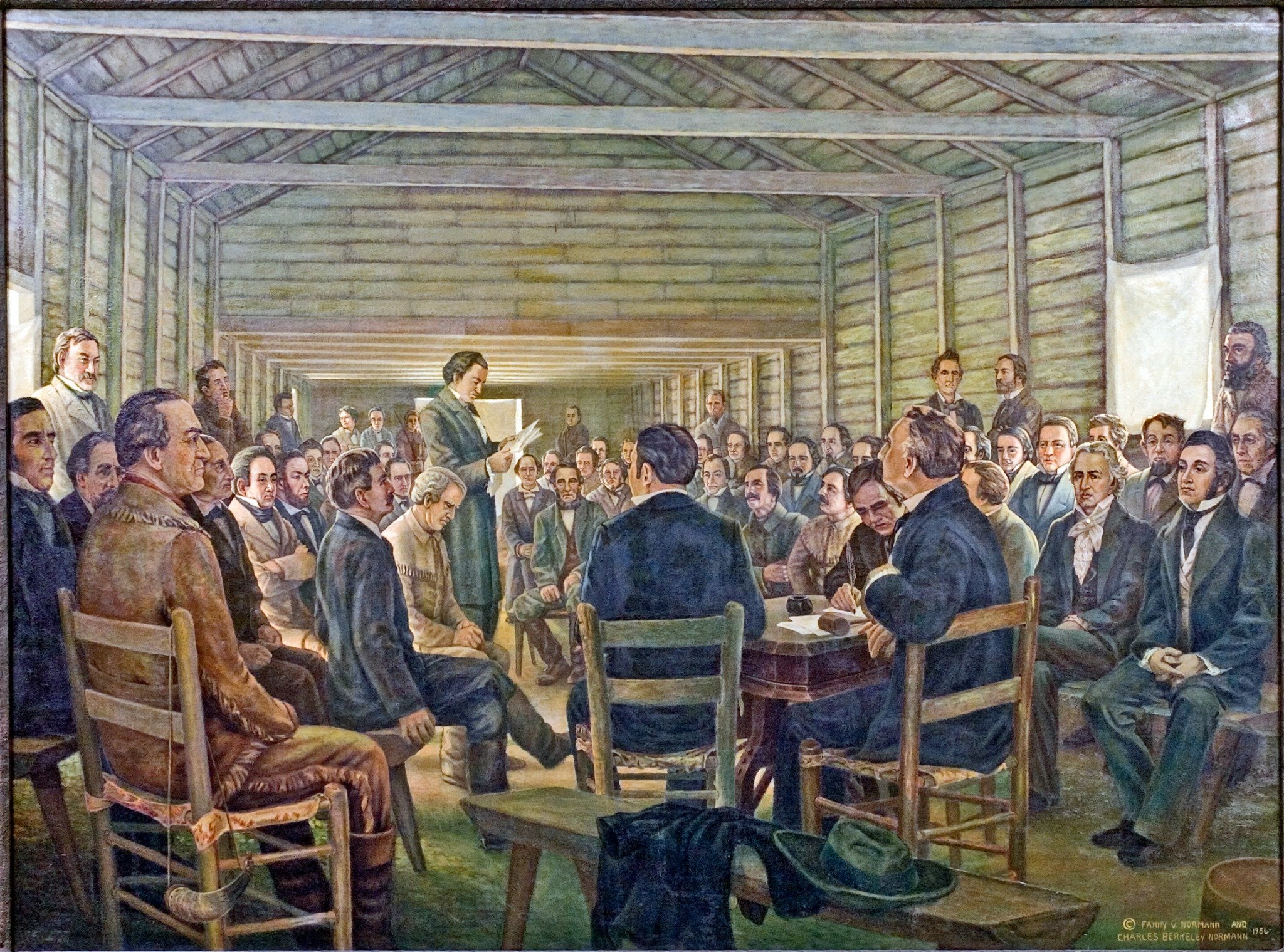
Fueled by the events of the revolution and the spirit of defiance, delegates from across Texas convened in Washington-on-the-Brazos for a second Consultation. It was at this pivotal gathering that the decision for independence was formally made.
The Convention and the Declaration of Independence
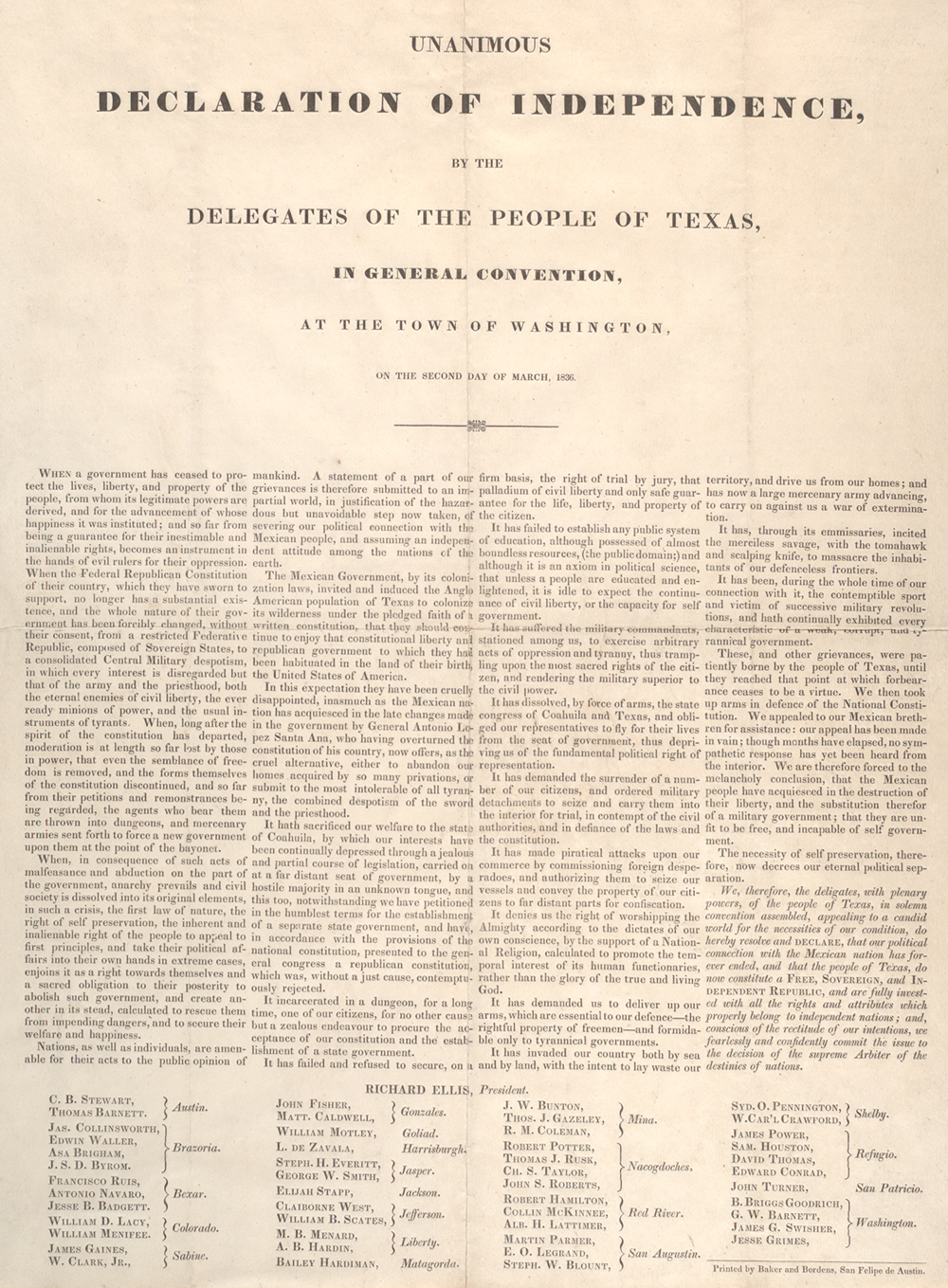
On March 2, 1836, fifty-nine delegates signed the Texas Declaration of Independence. This document, penned by George Childress, articulated the reasons for separation from Mexico, citing the failure of the Mexican government to uphold the Mexican Constitution of 1824, the denial of basic rights, and the establishment of a tyrannical government by Santa Anna. It declared Texas a free and independent republic, severing all political ties with Mexico.
The declaration was more than just a statement of intent; it was a bold assertion of sovereignty. The delegates, knowing the risks involved, pledged their lives, fortunes, and sacred honor to the cause of independence. This act of defiance marked the official birth of the Republic of Texas.
The New Republic Faces Its Challenges
The declaration of independence, however, did not immediately bring peace. The Texas Revolution was still raging. Shortly after the declaration, Texian forces, under the command of General Sam Houston, engaged Santa Anna’s army at the Battle of San Jacinto on April 21, 1836. In a swift and decisive victory, Houston’s army routed the Mexican forces, capturing Santa Anna himself and effectively securing Texas independence.
The establishment of the Republic of Texas was a monumental achievement, born out of a struggle for liberty and self-determination. The date of March 2, 1836, therefore, stands as a cornerstone of Texian identity, a reminder of the courage and sacrifice that led to the birth of a new nation. The legacy of this declaration continues to resonate, shaping the unique culture and spirit of Texas to this day, a state that proudly carries the emblem of its hard-won independence.