
The question “When Florida Was Founded?” delves into a rich tapestry of history, exploration, and cultural shifts that shaped one of the most vibrant states in the United States. More than just a date on a calendar, the founding of Florida is a narrative of ambition, empire, and enduring human spirit, beginning long before it became the sunshine destination we know today. To truly understand its origins is to embark on a journey through centuries of colonial rivalries, indigenous civilizations, and the persistent allure of a land teeming with natural beauty and strategic importance. From its earliest discovery by Europeans to its eventual integration into the American fabric, Florida’s foundation is a cornerstone of both American and Spanish history, offering a compelling backdrop for any traveler seeking to connect with the past.
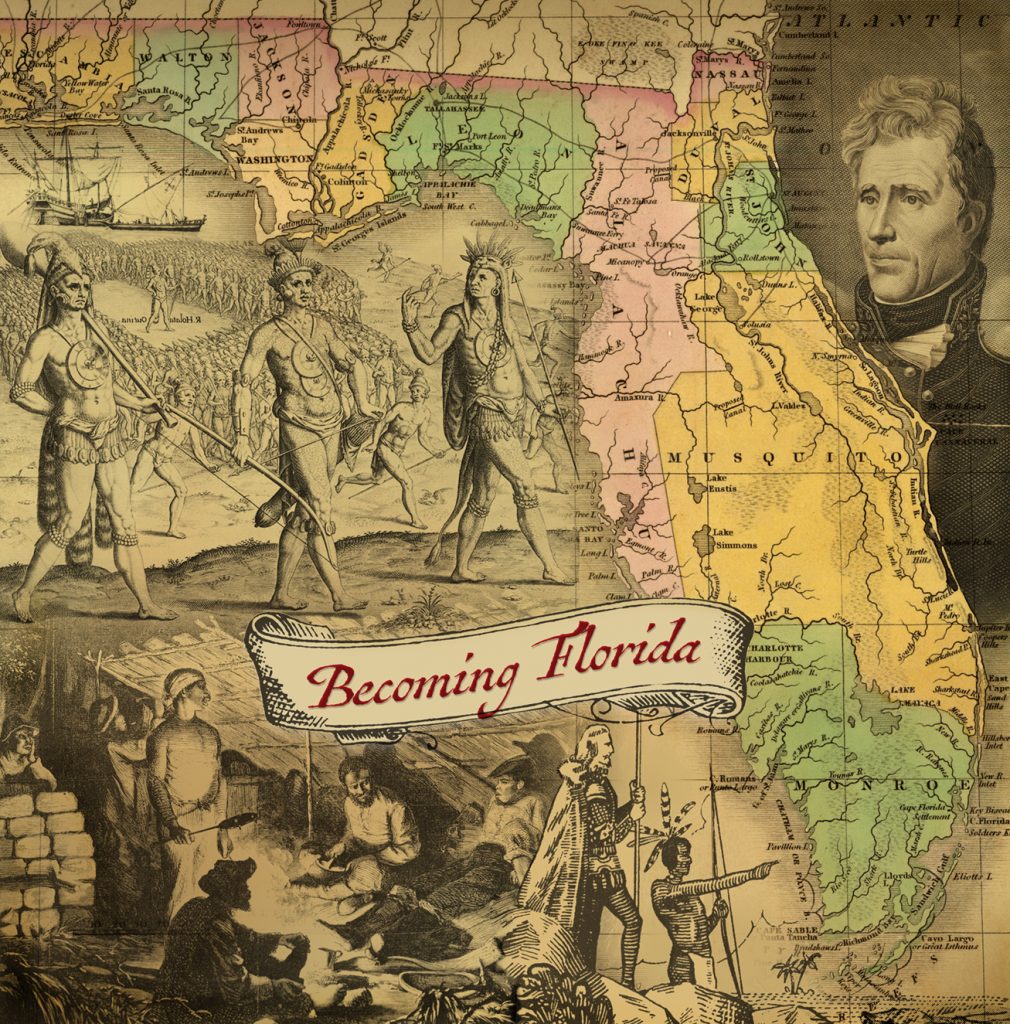
Today, Florida is synonymous with world-class travel destinations, luxurious resorts, thrilling attractions, and diverse cultural experiences. Yet, every modern convenience and bustling city stands on ground steeped in the stories of explorers, conquistadors, and pioneers. Understanding “when Florida was founded” is not just an academic exercise; it enriches the travel experience, transforming a simple vacation into a profound encounter with history. It helps travelers appreciate the layers of local culture, the significance of its landmarks, and the unique lifestyle forged over centuries.
The Dawn of European Discovery: Juan Ponce de León and La Florida
The official narrative of Florida’s founding begins with the arrival of Spanish explorer Juan Ponce de León. His expedition marked the first documented European contact with what is now the continental United States, forever altering the course of the region’s history. This pivotal moment set in motion centuries of colonial competition, indigenous displacement, and the slow, complex process of nation-building.
The Quest for New Worlds and Eternal Youth
In the early 16th century, the era of exploration was in full swing, fueled by the ambitions of European monarchies like those of Spain. Following Christopher Columbus’s voyages, the Caribbean had become a hub for Spanish colonization, with islands like Hispaniola and Puerto Rico serving as staging points for further expeditions. Juan Ponce de León, a veteran of these early colonial efforts and the former governor of Puerto Rico, heard tales of a vast land to the northwest. These stories, often interwoven with legends, spoke of incredible riches and a mythical “Fountain of Youth”—a spring capable of reversing aging. While the Fountain of Youth was almost certainly a romanticized embellishment, the prospect of new lands, potential gold, and strategic advantages was very real and compelling.
Driven by a royal commission from King Ferdinand II of Spain to discover and settle new territories, Ponce de León outfitted three ships, embarking from Puerto Rico in March 1513. His motivations were a blend of personal ambition, imperial directive, and perhaps a touch of the fantastical, characteristic of the age. This expedition was not merely about mapping new coastlines but about claiming new dominion for the Spanish Crown, expanding its burgeoning empire into uncharted waters and lands.
Landing on La Florida’s Shores
The historic moment occurred on April 2, 1513, when Ponce de León’s fleet sighted a vast stretch of land. It was during the Easter season, which the Spanish called Pascua Florida, or “Flowery Easter.” In honor of the season and perhaps the verdant landscape he encountered, Ponce de León christened the land “La Florida.” This date marks the symbolic founding of Florida by Europeans, establishing its name and its initial claim under the Spanish flag.
The precise landing spot is debated by historians, but many believe it was near what is now St. Augustine or farther south along the Atlantic Coast near present-day Melbourne. After claiming the territory for Spain, Ponce de León spent several weeks exploring the coastline, charting significant portions of both Florida’s Atlantic and Gulf Coasts, including the Florida Keys. This initial exploration, though not leading to immediate settlement, laid the groundwork for future Spanish endeavors and unequivocally established Florida as a target for European colonization. The legacy of this discovery is palpable in modern Florida, where historical markers and attractions commemorate this foundational voyage, inviting visitors to step back into the shoes of the first Europeans to set foot on this remarkable peninsula.
A Legacy of Conquest and Colonial Powers
The claim of Ponce de León was just the beginning. Over the next centuries, Florida would become a coveted prize, a strategic outpost in the geopolitical struggles of European empires. Its shores would witness a succession of colonial powers vying for control, each leaving an indelible mark on its landscape, culture, and ultimately, its identity. This era of shifting flags and fierce competition profoundly shaped Florida’s development, setting the stage for its unique blend of influences.
Spanish Dominance and Early Settlements
Despite Ponce de León’s initial discovery, permanent Spanish settlement in Florida proved challenging. Attempts in the 1520s and 1550s by explorers like Lucas Vázquez de Ayllón and Tristán de Luna y Arellano met with failure due to disease, hostile indigenous populations, and logistical difficulties. However, the strategic importance of Florida became acutely clear when France began to express interest in the territory. In 1564, French Huguenots established Fort Caroline near present-day Jacksonville, threatening Spanish control over the valuable shipping lanes of the Gulf Stream.
This French encroachment spurred King Philip II of Spain to act decisively. He commissioned Pedro Menéndez de Avilés, a skilled admiral, to expel the French and establish a permanent Spanish presence. In 1565, Menéndez successfully destroyed Fort Caroline and, crucially, founded St. Augustine. This was not just another attempt at colonization; it was a resounding success, making St. Augustine the oldest continuously inhabited European-established settlement in the continental United States.
St. Augustine served as the capital of Spanish Florida for over two centuries, a testament to its strategic location and the resilience of its inhabitants. Another significant Spanish settlement was Pensacola, founded in 1698 on the Gulf Coast. These two outposts became critical defensive points, protecting Spanish trade routes and acting as buffers against encroachments from British colonies to the north and French expansion in the west. The architecture of St. Augustine, particularly the formidable Castillo de San Marcos, stands as a powerful reminder of this era of Spanish dominance and military might, drawing millions of tourists annually to explore its ancient stones and historical narratives.
Shifting Flags: British Rule and Spanish Resurgence
The geopolitical landscape of North America was far from static. The mid-18th century saw increasing tensions and conflicts among the European powers. The French and Indian War (1754–1763), part of the larger Seven Years’ War in Europe, had profound implications for Florida. Though Spain was allied with France in this conflict, they ultimately lost. In the ensuing Treaty of Paris (1763), Spain ceded Florida to Great Britain in exchange for Havana, Cuba, which the British had captured.
Under British rule (1763–1783), Florida was divided into two distinct provinces: East Florida, with its capital at St. Augustine, and West Florida, governed from Pensacola. The British encouraged settlement and development, offering land grants and promoting agricultural enterprises. Many loyalists who fled the burgeoning American Revolution found refuge in Florida, further diversifying its population.
However, British control was relatively short-lived. During the American Revolutionary War, Spain, allied with France against Great Britain, saw an opportunity to reclaim its lost territories. Spanish forces, led by Bernardo de Gálvez, successfully captured Pensacola in 1781. When the war concluded with the Treaty of Paris (1783), Florida was returned to Spain. This period of Second Spanish Rule would last for nearly four decades, characterized by ongoing border disputes with the expanding United States and internal conflicts with indigenous tribes. The rich history of these shifting allegiances provides unique narratives for historical tours, allowing visitors to experience the diverse cultural influences that shaped Florida and its people.
Florida Becomes a United States Territory
As the United States expanded westward and southward in the late 18th and early 19th centuries, the presence of Spanish Florida became increasingly problematic. Border disputes, raids by indigenous groups and runaway slaves, and the perceived weakness of Spanish governance fueled American desires to acquire the territory. This period marks the final transformation of Florida from a colonial outpost into a component of the nascent American nation.
The Adams-Onís Treaty and American Annexation
The early 19th century was rife with tensions along the Florida-United States border. The First Seminole War (1817–1818) saw American forces, led by General Andrew Jackson, invade Spanish Florida to pursue Seminole warriors and runaway slaves. Jackson’s aggressive actions, which included seizing Pensacola and executing two British subjects accused of inciting the Seminoles, caused an international incident.
Despite the controversy, Jackson’s actions demonstrated Spain’s inability to control its Florida territory effectively. Faced with declining colonial power, internal struggles in Latin America, and pressure from the United States, Spain entered negotiations to cede Florida. These discussions culminated in the Adams-Onís Treaty, also known as the Transcontinental Treaty, signed in 1819 between U.S. Secretary of State John Quincy Adams and Spanish Minister Don Luis de Onís.
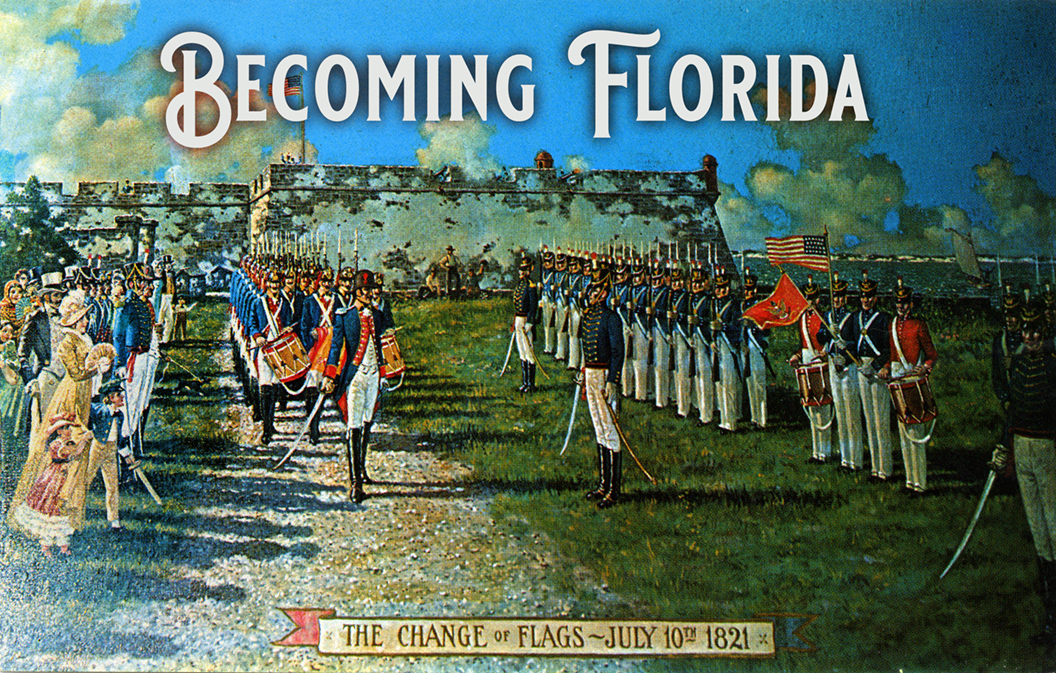
Under the terms of the treaty, Spain officially ceded all of Florida to the United States in exchange for the United States assuming claims of American citizens against Spain (up to $5 million) and renouncing its claims to Texas. The treaty was ratified in 1821, formally transferring sovereignty of Florida to the United States. This date is arguably the definitive “founding” of Florida as an American territory, setting it on a path toward statehood and integration into the union.
Territorial Growth and Statehood
Upon acquiring Florida, the United States established it as the Florida Territory. General Andrew Jackson was appointed as its first military governor, albeit for a brief period. The territorial capital was eventually established at Tallahassee in 1824, strategically chosen for its central location between the former capitals of St. Augustine and Pensacola.
The territorial period was marked by significant challenges, most notably the protracted and brutal Second Seminole War (1835–1842), which resulted in the forced removal of most Seminole and Miccosukee people to Indian Territory (present-day Oklahoma). Despite these conflicts, the territory experienced growth, attracting settlers from other southern states eager for new land to cultivate. Agriculture, particularly cotton and sugar, became key economic drivers.
After years of territorial development and a growing population, Florida formally applied for statehood. On March 3, 1845, Florida was admitted to the Union as the 27th state, entering as a slave state alongside Iowa (a free state) to maintain the delicate balance in Congress. This date signifies Florida’s full integration into the United States, completing its long journey from a land discovered by Europeans to a sovereign American state. The path to statehood was complex, reflecting the diverse forces and often conflicting interests that shaped early American expansion.
Florida’s Historical Echoes in Modern Travel and Tourism
The journey of “when Florida was founded” is not just a historical timeline; it’s a living narrative that continues to shape the state’s identity and its appeal as a premier global destination. From the ancient cobblestones of St. Augustine to the vibrant multi-cultural cities of Miami and Orlando, the echoes of its founding resonate, offering travelers a unique blend of historical discovery and modern indulgence.
Iconic Historical Landmarks and Attractions
Florida’s rich history provides a treasure trove of landmarks that offer compelling attractions for every type of traveler.
-
St. Augustine: The undisputed jewel of historical Florida, St. Augustine offers an immersive journey back in time. The mighty Castillo de San Marcos, a formidable stone fortress built by the Spanish to defend their settlement, stands as a testament to colonial military engineering. Visitors can explore its ramparts, enjoy cannon firings, and learn about centuries of conflict. Nearby, the Fountain of Youth Archaeological Park commemorates Ponce de León’s legendary quest and offers insights into early colonial life and indigenous cultures. The Historic St. Augustine Colonial Quarter provides living history demonstrations, showcasing the daily lives of 18th-century residents. St. Augustine Lighthouse & Maritime Museum offers breathtaking views and maritime history. For those seeking accommodation, St. Augustine boasts charming historic inns, boutique hotels, and modern resorts catering to every budget and style, from luxury travel to family trips.
-
Pensacola: On the Gulf Coast, Pensacola echoes its past as a key Spanish and later American outpost. The Historic Pensacola Village features a collection of beautifully preserved buildings reflecting its diverse heritage, including Spanish and Victorian architecture. Fort Pickens, a 19th-century brick fort, offers stunning views and a glimpse into coastal defense. The city’s proximity to pristine beaches makes it an ideal destination for combining historical exploration with relaxation.
-
Key West: While its founding narrative differs, Key West’s unique history as a fishing village, military outpost, and literary haven adds another layer to Florida’s past. Its colorful architecture, charming guesthouses, and vibrant atmosphere tell stories of pirates, wreckers, and artists. Travelers seeking a blend of laid-back lifestyle and historical charm will find Key West endlessly captivating, with a range of accommodation options from historic bed and breakfasts to luxury resorts.
-
Natural Landmarks: Beyond man-made structures, Florida’s natural landmarks also bear historical significance. The Everglades National Park, a vast wetland ecosystem, was historically home to indigenous tribes like the Seminole and Miccosukee, whose resilience and culture are deeply intertwined with the landscape. Similarly, the remote Dry Tortugas National Park, featuring the impressive Fort Jefferson, served as a strategic military outpost in the 19th century, protecting vital shipping lanes.
Experiencing Florida’s Past: From Colonial Charm to Modern Resorts
The historical journey of Florida enriches every facet of modern travel and tourism. For those interested in local culture and immersive experiences, historical reenactments, walking tours, and museum visits offer deep insights. Food tourism in Florida also reflects its diverse past, from Spanish-influenced cuisine in St. Augustine to the Cuban flavors of Miami and Key West.
Accommodation options across the state cater to this historical appreciation. In older cities, travelers can choose to stay in beautifully restored historic hotels that offer a glimpse into bygone eras, often featuring unique amenities and personalized service. For family trips, many resorts strategically blend historical themes with modern comforts and attractions. Even budget travel can be enhanced by exploring free historical sites or opting for charming guesthouses with character. Luxury travelers can find boutique hotels and villas that offer an elegant retreat, often within walking distance of historical districts.
Guides are readily available for booking, offering tailored experiences from ghost tours in St. Augustine to guided nature walks in areas with indigenous historical significance. Online reviews and comparison sites make it easy to find the perfect stay, whether it’s a short break or a long-term stay for deeper historical exploration. Florida’s history not only provides fascinating landmarks but also infuses its modern lifestyle, from its vibrant festivals to its laid-back coastal towns.
In conclusion, “When Florida Was Founded?” is a question with multiple answers, each layer adding depth to the state’s captivating story. From Ponce de León’s 1513 discovery to the enduring establishment of St. Augustine in 1565, the subsequent shifts between Spanish and British rule, and finally its acquisition by the United States in 1821 and statehood in 1845, Florida’s foundation is a saga of enduring significance. This rich historical tapestry is not confined to textbooks; it is alive in the destinations, attractions, and cultural experiences that draw millions to its shores each year, making Florida a truly unique blend of past and present.
LifeOutOfTheBox is a participant in the Amazon Services LLC Associates Program, an affiliate advertising program designed to provide a means for sites to earn advertising fees by advertising and linking to Amazon.com. Amazon, the Amazon logo, AmazonSupply, and the AmazonSupply logo are trademarks of Amazon.com, Inc. or its affiliates. As an Amazon Associate we earn affiliate commissions from qualifying purchases.