
The allure of Hawaii is undeniable. A captivating archipelago of volcanic islands nestled in the heart of the Pacific Ocean, it is renowned for its breathtaking natural beauty, vibrant cultural heritage, and the warm embrace of the Aloha Spirit. For millions, it represents the quintessential tropical paradise, a dream destination where turquoise waters meet pristine sands, and ancient traditions blend seamlessly with modern luxuries. Yet, beyond the postcard-perfect imagery lies a rich and complex history, one that profoundly shaped its identity and its eventual status as the 50th state of the United States. Understanding when and how Hawaii became a state offers more than just a historical fact; it provides a deeper appreciation for the unique cultural tapestry, the resilient spirit of its people, and the distinctive travel experiences it offers today. From its regal past as an independent kingdom to its pivotal role in global events, Hawaii’s journey to statehood is a fascinating narrative that continues to resonate with every visitor exploring its shores.
A Journey Through Time: Hawaii’s Path to Statehood
The path to statehood for Hawaii was not a straight or simple one. It was a centuries-long saga marked by exploration, unification, foreign influence, political upheaval, and eventually, a democratic vote. This intricate history is deeply woven into the fabric of the islands, evident in its landmarks, its people, and its enduring culture.
From Ancient Kingdoms to a Sovereign Nation
Before the arrival of Europeans, the Hawaiian Islands were home to a thriving Polynesian society, organized into distinct chiefdoms. Each island possessed its own governing structure, often engaged in inter-island conflicts. This changed dramatically with the arrival of Captain James Cook in 1778, marking Hawaii’s introduction to the Western world. While this encounter brought new technologies and trade, it also introduced foreign diseases that devastated the indigenous population.
In the late 18th and early 19th centuries, a formidable leader named Kamehameha rose to power. Through strategic alliances, military prowess, and diplomacy, King Kamehameha I successfully unified all the islands under a single rule by 1810, establishing the Kingdom of Hawaii. This sovereign nation thrived for nearly a century, developing its own constitution, legal system, and engaging in international relations with major world powers. The capital, Honolulu, became a bustling port, attracting whalers, traders, and missionaries. The majestic Iolani Palace in Honolulu stands today as a poignant reminder of this regal era, the only official state residence of royalty in the United States, offering visitors a tangible connection to Hawaii’s royal past.

The Overthrow and the Republic
As the 19th century progressed, foreign influence in Hawaii grew, particularly from American business interests in sugar plantations. This economic sway increasingly translated into political leverage. In 1887, a group of foreign businessmen and residents, supported by armed militias, forced King Kalākaua to sign the “Bayonet Constitution,” significantly limiting the monarch’s power and disenfranchising many native Hawaiians. This event foreshadowed the ultimate demise of the monarchy.
The situation came to a head in 1893 when Queen Liliuokalani, the last reigning monarch, sought to promulgate a new constitution that would restore power to the Hawaiian monarchy and its people. In response, a group of American and European businessmen, with the covert support of the U.S. Minister to Hawaii and U.S. Marines, staged an overthrow of the kingdom. A Provisional Government of Hawaii was established, led by Sanford B. Dole. Despite strong objections from Queen Liliuokalani and attempts to restore her to the throne, the Republic of Hawaii was declared in 1894, with Dole as its president. This period is a somber chapter in Hawaiian history, marked by the loss of sovereignty and a complex legacy that is still discussed and felt today.
The Territorial Years and the Quest for Statehood
The ultimate goal of the Provisional Government and the subsequent Republic of Hawaii was annexation by the United States. Initially, President Grover Cleveland opposed annexation, viewing the overthrow as an illegal act. However, political tides shifted, and with the outbreak of the Spanish-American War in 1898, the strategic importance of Hawaii in the Pacific became undeniable. Under President William McKinley, the U.S. Congress passed the Newlands Resolution, also known as the Annexation Resolution, formally annexing Hawaii to the United States on July 7, 1898.
On August 12, 1898, the Hawaiian flag was lowered at Iolani Palace, and the American flag was raised, officially marking the end of Hawaii’s independence. Hawaii then became the Territory of Hawaii in 1900. For the next six decades, Hawaii functioned as a U.S. territory, with its residents holding U.S. citizenship but lacking full voting representation in Congress and unable to vote for president. The movement for statehood gained momentum over these years, driven by the desire for equal rights and representation.
A pivotal moment that strengthened the case for statehood was the attack on Pearl Harbor on Oahu on December 7, 1941. This devastating event, which thrust the United States into World War II, demonstrated Hawaii’s undeniable strategic importance and the loyalty of its diverse population. Hawaiian citizens, including those of Japanese descent, served bravely in the war, further bolstering the argument that they deserved full equality within the union. Following the war, the call for statehood intensified, with numerous petitions and bills introduced in Congress.
August 21, 1959: A Pivotal Day
After years of lobbying, debate, and several failed attempts, the stars finally aligned for Hawaii in the late 1950s. The long wait for equal status was coming to an end.
The Referendum and the Proclamation
On March 11, 1959, the United States Congress passed the Hawaii Admission Act, which was then signed into law by President Dwight D. Eisenhower. This act laid out the terms under which Hawaii could become a state, contingent upon a referendum vote by its residents.
On June 27, 1959, the people of Hawaii went to the polls to vote on the proposition of statehood. The result was an overwhelming endorsement: 94.3% of the voters chose to accept statehood, a resounding declaration of their desire to become a full and equal part of the United States. Following this decisive vote, all that remained was the official proclamation.
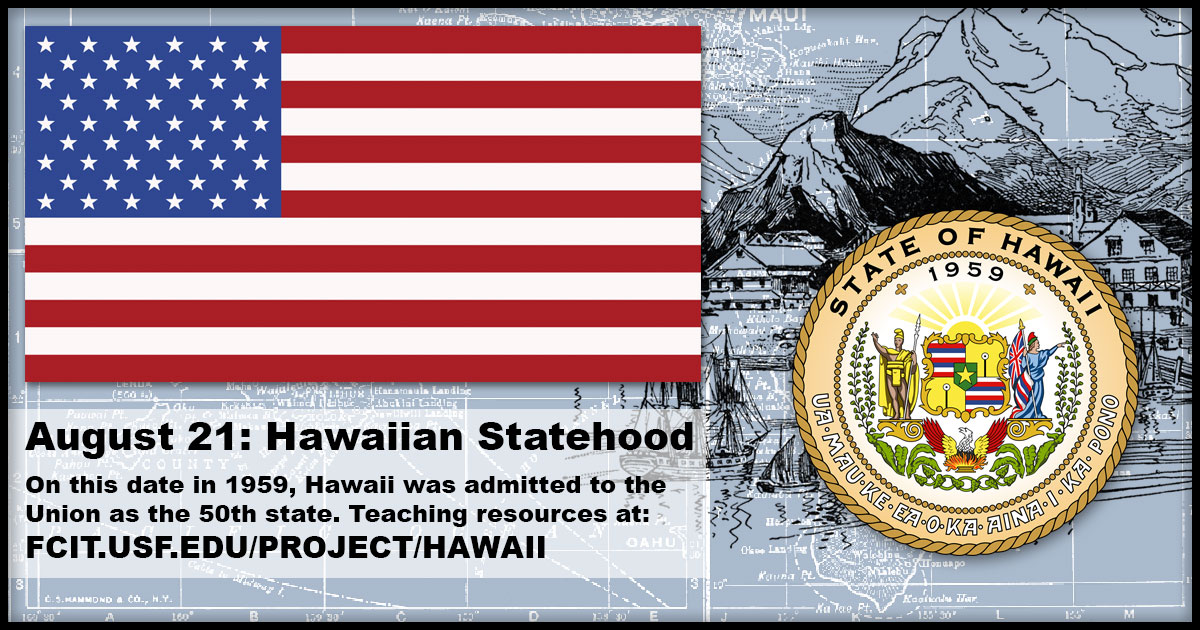
On August 21, 1959, President Dwight D. Eisenhower issued Proclamation 3309, officially admitting Hawaii into the Union as the 50th state. This historic event was met with widespread celebration across the islands and throughout the nation. The new 50-star flag of the United States was unveiled, solidifying Hawaii’s place as the newest and most geographically distinct member of the federal family.
The 50th Star and its Global Impact
The admission of Hawaii as the 50th state was more than just a political milestone; it had significant cultural and geopolitical implications. It demonstrated the diversity and inclusive nature of the American experiment, welcoming a state with a unique blend of Polynesian, Asian, and Western heritage. Hawaii’s strategic location in the Pacific further solidified America’s presence and influence in the region, particularly important during the Cold War era.
For the people of Hawaii, statehood brought full political representation, increased federal funding for infrastructure and development, and greater economic opportunities. It also meant a formal recognition of their status as equal citizens, ending decades of territorial limitations. While the historical debate surrounding the overthrow of the monarchy and the annexation remains a sensitive topic for some native Hawaiians, statehood undeniably ushered in a new era of growth and integration for the islands within the larger American framework.
Hawaii Today: A Legacy of Statehood and Culture
Today, the legacy of Hawaii’s journey to statehood is intrinsically linked to its identity as a world-class travel destination. Its unique history informs every aspect of the visitor experience, from its preserved historical sites to its vibrant cultural festivals and the warmth of its hospitality.
Exploring the Islands: A Blend of Past and Present
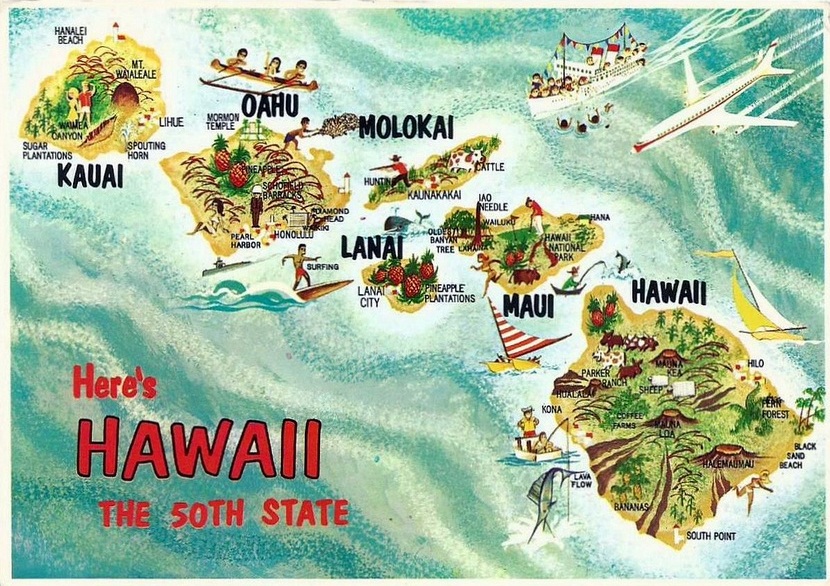
Modern Hawaii offers a captivating blend of its storied past and a dynamic present. On Oahu, the bustling capital island, visitors can explore the solemn memorial at Pearl Harbor, a poignant reminder of World War II and Hawaii’s connection to global events. Just a short drive away lies the majestic Iolani Palace, where the echoes of Hawaiian royalty still resonate. The iconic Waikiki Beach and the majestic Diamond Head volcanic crater serve as popular landmarks, offering both relaxation and adventure.
Beyond Oahu, each island offers its own distinct charm and historical narrative. Maui, known for its luxurious resorts and the scenic Road to Hana, was once a seat of Hawaiian chiefs. Kauai, the “Garden Isle,” boasts the dramatic Na Pali Coast and lush landscapes, remnants of untouched ancient beauty. The Big Island (officially Hawaii Island) is home to the active volcanoes of Hawaii Volcanoes National Park, a powerful testament to the islands’ geological origins and ongoing evolution. These islands, once separate kingdoms, now form a unified state, each contributing to the rich tapestry of modern Hawaii.
Tourism and Economic Growth
Statehood significantly accelerated Hawaii’s integration into the national economy, with tourism emerging as the dominant industry. Improved infrastructure, direct air travel from the mainland United States, and marketing campaigns positioned Hawaii as an accessible exotic destination. Today, tourism supports hundreds of thousands of jobs and generates billions of dollars annually, funding public services and infrastructure that benefit both residents and visitors.
The influx of tourism has led to the development of world-class accommodations, from sprawling luxury resorts like the Four Seasons Resort Maui at Wailea and The Ritz-Carlton, Kapalua on Maui, to family-friendly options such as Aulani, A Disney Resort & Spa on Oahu, and iconic hotels like the Hilton Hawaiian Village Waikiki Beach Resort in Honolulu. These establishments cater to diverse preferences, ensuring that every traveler finds their ideal retreat, whether seeking a romantic getaway or an adventurous family vacation.
Cultural Preservation and Modern Identity
Despite the significant influence of American culture and the growth of tourism, Hawaii has fiercely maintained its unique indigenous identity and traditions. The Aloha Spirit – a philosophy of kindness, harmony, and mutual respect – remains the cornerstone of local life. Efforts to preserve the Hawaiian language, hula (traditional dance), chant, and traditional arts are strong, often supported by cultural centers like the Polynesian Cultural Center on Oahu and the Maui Arts & Cultural Center.
Visitors are encouraged to engage with this rich heritage, whether through attending a traditional luau, learning a few Hawaiian words, or respecting sacred sites. The blending of cultures — indigenous Hawaiian, Asian, European, and American — has created a vibrant modern society that celebrates its diversity. This cultural richness is what truly sets Hawaii apart, offering an authentic experience that goes far beyond its stunning beaches.
Planning Your Hawaiian Escape: Experiencing the Aloha Spirit
For anyone planning a trip to this magnificent archipelago, understanding Hawaii’s history provides a crucial context for appreciating its contemporary charm. The islands offer an unparalleled travel experience, appealing to every kind of adventurer, relaxer, and culture seeker.
Top Destinations and Iconic Landmarks
Your Hawaiian adventure might begin on Oahu, home to Honolulu, Waikiki Beach, and historical treasures like Pearl Harbor and Iolani Palace. Hike up Diamond Head for panoramic views, or explore the North Shore’s legendary surf breaks along Kamehameha Highway.
If tranquility and romance are your priorities, Maui beckons with its beautiful beaches, world-class golf courses, and the breathtaking sunrise from Haleakalā. Drive the scenic Road to Hana for waterfalls and lush rainforests. For rugged natural beauty, Kauai offers the dramatic cliffs of the Na Pali Coast and the vast Waimea Canyon. Adventurous souls will find endless hiking, kayaking, and zip-lining opportunities. The Big Island provides a unique landscape where you can witness active volcanoes, black sand beaches, and stargaze from Mauna Kea. Each island, including the smaller, more secluded Molokai and Lanai, promises a distinct adventure, steeped in the natural beauty and historical significance that define the 50th state.
Where to Stay: Hotels, Resorts, and Unique Accommodations
Hawaii’s accommodation scene caters to every budget and style. For those seeking luxury and indulgence, five-star resorts abound. On Oahu, consider The Kahala Hotel & Resort for its secluded elegance or the Hilton Hawaiian Village Waikiki Beach Resort for a vibrant, amenity-rich experience. Maui boasts the aforementioned Four Seasons Resort Maui at Wailea and The Ritz-Carlton, Kapalua, renowned for their service and stunning oceanfront locations. On Kauai, the Grand Hyatt Kauai Resort & Spa offers a luxurious retreat amidst tropical gardens.
Beyond the grand resorts, Hawaii offers a wide array of options including charming boutique hotels, family-friendly condos, and unique vacation rentals that provide a more localized experience. Whether you prefer the bustling energy of Waikiki or the serene quiet of a remote villa, booking your ideal accommodation is made easy through various platforms, often including detailed reviews and comparison tools to ensure a perfect match for your travel style and budget.
Embracing Local Culture and Sustainable Tourism
To truly experience Hawaii is to immerse yourself in its culture and history. Visit the Polynesian Cultural Center for an educational and entertaining journey through various Polynesian island cultures, including Hawaii’s. Explore local markets, sample traditional Hawaiian cuisine at a luau, and engage with local artists and musicians. Respecting local customs, such as removing shoes before entering a home and understanding the significance of sacred sites, enhances your experience and honors the Hawaiian people.
Sustainable tourism practices are also crucial. Support local businesses, minimize your environmental footprint by adhering to “Leave No Trace” principles, and learn about the delicate ecosystems you’re visiting. By being a responsible traveler, you contribute to the preservation of Hawaii’s natural beauty and cultural integrity for future generations. Engaging with the Aloha Spirit means more than just enjoying a vacation; it means connecting with the spirit of the land and its people in a respectful and meaningful way.
In conclusion, Hawaii’s statehood on August 21, 1959, was the culmination of a long and intricate journey, transforming it from an independent kingdom to a U.S. territory, and finally, to the 50th star in the American flag. This historical trajectory has profoundly shaped the Hawaii we know and love today – a vibrant destination that expertly balances its rich indigenous heritage with modern comforts and unparalleled natural wonders. For travelers seeking an experience that combines breathtaking landscapes with a deep dive into history and culture, Hawaii stands ready to welcome you with its enduring Aloha Spirit.