
The ethereal glow of the Aurora Borealis, often referred to as the Northern Lights, is one of nature’s most spectacular displays, a vibrant celestial dance that captivates all who witness it. For many intrepid travelers, experiencing this phenomenon in the vast, untamed wilderness of Alaska is a bucket-list dream. But the key to unlocking this dream lies in timing: knowing precisely when to embark on your Alaskan adventure to maximize your chances of witnessing the lights in all their glory. From the logistical considerations of travel and accommodation to understanding the science behind the spectacle, a well-planned trip is essential for an unforgettable encounter with the aurora. This guide will delve into the optimal seasons, prime locations, and crucial preparations needed to chase the aurora in the Last Frontier.

The Best Time to Witness the Northern Lights in Alaska
Successfully spotting the Aurora Borealis in Alaska hinges on a combination of factors, primarily darkness and clear skies. While the aurora is a year-round phenomenon driven by solar activity, its visibility to the human eye is entirely dependent on the absence of sunlight. This makes Alaska’s extended periods of darkness during the colder months the definitive window for aurora chasing.
Understanding Alaska’s Aurora Season
The aurora season in Alaska generally spans from mid-August to mid-April. During these months, the nights are long enough to provide the necessary darkness for the lights to become visible. However, within this broad window, there are specific periods that offer enhanced viewing opportunities.
- Early Season (Mid-August to September): While nights are just starting to lengthen, late August and September can be surprisingly good for aurora viewing. The weather is often milder, making outdoor excursions more comfortable, and the autumn colors can provide a stunning backdrop for aurora photography. However, the period of true darkness is shorter compared to peak winter months, meaning you might have to stay up later or wait until closer to midnight for the best displays. This time of year also allows for easier access to certain areas before heavy snow sets in, and you can combine aurora viewing with wildlife watching or hiking.
- Peak Season (October to March): This is widely considered the prime time for aurora hunting. The nights are at their longest and darkest, especially around the winter solstice in December. This period offers the highest probability of strong, prolonged aurora displays. However, travelers must be prepared for extreme cold, heavy snowfall, and potentially challenging travel conditions. The depth of winter also means fewer daylight hours for other activities, so planning becomes crucial.
- Late Season (April): As spring approaches, the nights begin to shorten again. Early April can still offer excellent viewing, particularly in the first half of the month, but by late April, the increasing daylight starts to diminish visibility. This is a transition period, often bringing slightly milder temperatures while still providing sufficient darkness.
Beyond the seasonal calendar, the strength of the aurora itself is influenced by the solar cycle. The sun goes through an approximately 11-year cycle of activity, from solar minimum to solar maximum. During solar maximum, the sun emits more solar flares and coronal mass ejections, which are the energetic particles that interact with Earth’s magnetic field to create the aurora. The next solar maximum is predicted around 2025, suggesting that the years leading up to and immediately following 2025 could offer particularly intense and frequent aurora displays. While aurora can be seen at any point in the solar cycle, activity tends to be heightened during the maximum.
Factors Influencing Your Aurora Hunt
Even within the ideal seasons, several other factors play a crucial role in whether you’ll witness the aurora.
- Darkness and Light Pollution: The darker the sky, the better. Escape city lights as much as possible. Even a small town can significantly diminish the visibility of a faint aurora. Seek out remote locations or designated aurora viewing spots well away from artificial light sources.
- Clear Skies: This is perhaps the most critical factor after darkness. Even if the solar activity is off the charts, thick cloud cover will completely obscure the aurora. Weather forecasts become your best friend. Look for nights predicted to be clear or partly cloudy. Websites and apps dedicated to aurora forecasting often include cloud cover predictions specifically for aurora chasers.
- Moon Phase: While a full moon won’t completely eliminate the aurora, its bright light can wash out fainter displays, similar to light pollution. The darkest nights, around the new moon phase, offer the best contrast for vibrant aurora viewing. However, a partial moon can also illuminate the landscape beautifully, adding a dramatic element to your aurora photography.
- Kp-Index: The Kp-index is a scale used to measure geomagnetic activity, ranging from 0 to 9. A higher Kp-index indicates stronger geomagnetic storms, which generally translate to brighter and more widespread aurora displays. While a Kp of 1 or 2 might be visible in very dark skies far north, a Kp of 3 or higher significantly increases your chances, and anything above Kp 5 is considered a geomagnetic storm, potentially producing spectacular, dancing lights visible even further south. Many aurora forecasting apps and websites provide real-time Kp-index predictions.
Top Destinations for Aurora Viewing in Alaska
While the Aurora Borealis can theoretically be seen from anywhere in Alaska under the right conditions, certain locations offer distinct advantages due to their geographic position, infrastructure, and dedication to aurora tourism. These places have earned their reputation as prime aurora-chasing hubs.
Fairbanks: The Aurora Capital
Often hailed as the “Aurora Capital of Alaska,” Fairbanks is undoubtedly the most popular and reliable destination for aurora viewing. Its location beneath the “Auroral Oval” – a band around the magnetic poles where auroral activity is concentrated – means it experiences consistent and frequent displays. Additionally, Fairbanks often benefits from clear, dry interior Alaska weather, which minimizes cloud cover.
-
Why Fairbanks Stands Out:
- Location: Directly under the Auroral Oval, maximizing visibility.
- Climate: Its interior location often means colder, drier air, leading to clearer skies compared to coastal regions.
- Infrastructure: A robust tourism industry caters specifically to aurora chasers, with numerous tour operators, specialized lodges, and viewing spots.
- Accessibility: Fairbanks has an international airport, making it relatively easy to reach.
-
Prime Viewing Spots Around Fairbanks:
- Chena Hot Springs Resort: Located about an hour northeast of Fairbanks, Chena Hot Springs Resort is a popular choice. Guests can soak in the natural hot springs while waiting for the lights or embark on specialized aurora tours to nearby hilltops. The resort also offers “aurora ice hotel” tours and other winter activities.
- Murphy Dome: A local favorite for its elevation and lack of light pollution, Murphy Dome offers panoramic views of the northern sky, just a short drive from Fairbanks.
- Ester Dome: Similar to Murphy Dome, Ester Dome provides elevated, unobstructed views away from city lights.
- University of Alaska Museum of the North: While not a viewing spot itself, the University of Alaska Museum of the North in Fairbanks offers valuable insights into Alaska’s natural and cultural history, a great daytime activity.
-
Accommodation in Fairbanks: Fairbanks offers a wide range of accommodation options. From comfortable hotels like Pike’s Waterfront Lodge overlooking the Chena River to smaller guesthouses and cabins, you can find something to suit your budget and style. Many hotels offer aurora wake-up calls, ensuring you don’t miss a display.
Beyond Fairbanks: Other Prime Locations
While Fairbanks is the undisputed leader, other Alaskan destinations also provide excellent opportunities for aurora viewing, often with different scenic backdrops or unique experiences.
- Anchorage: Alaska’s largest city, Anchorage, is further south and experiences more light pollution and often cloudier coastal weather. While possible to see faint aurora from within the city, serious aurora chasers will need to drive at least 30-60 minutes out of town to darker spots like Eagle River Nature Center or along the scenic Glenn Highway for better chances.
- Denali National Park: Imagine the aurora dancing over the majestic peak of Denali (Mount McKinley). Denali National Park offers an incredibly dark and stunning environment for aurora viewing. However, winter access to the park road is extremely limited, typically only to the first few miles. Some lodges near the park entrance, like those in the nearby town of Healy, offer winter accommodations and aurora tours.
- Utqiagvik (formerly Barrow): The northernmost city in the United States, Utqiagvik (or Barrow) experiences months of continuous darkness during winter. This extreme north location offers exceptional aurora viewing opportunities, but it comes with extreme cold, high travel costs, and limited infrastructure. This is for the most adventurous travelers.
- Talkeetna: A charming small town south of Denali, Talkeetna offers a picturesque setting with views of the Alaska Range. It’s more accessible than the deep wilderness but still offers sufficiently dark skies away from the small town lights. It serves as a popular base for mountaineering expeditions to Denali and offers a quaint, authentic Alaskan experience.
- North Pole: Just a short drive southeast of Fairbanks is the small city of North Pole, famous for its year-round Christmas decorations and Santa Claus House. While it has some light pollution, getting just outside the main town offers dark skies and can be a charming base for aurora adventures, especially if traveling with children.
Planning Your Alaskan Aurora Adventure
A successful aurora trip to Alaska requires careful planning, especially considering the remote nature and challenging winter conditions of the region. From packing the right gear to choosing how you’ll chase the lights, preparation is paramount.
Essential Preparation and Packing
The most critical aspect of an Alaskan winter trip is being prepared for the cold. Temperatures can plummet to -20°F (-29°C) or even colder, especially at night when aurora viewing.
- Layering is Key:
- Base Layers: Moisture-wicking thermal underwear (wool or synthetic, never cotton).
- Mid-Layers: Fleece jackets, down vests, wool sweaters for insulation.
- Outer Layers: A heavy, insulated, waterproof/windproof parka that can withstand extreme cold. Snow pants or insulated bibs are also essential.
- Extremities: A warm hat that covers your ears, a neck gaiter or balaclava, insulated gloves or mittens (mittens are warmer), and thick, wool socks.
- Footwear: Insulated, waterproof winter boots rated for extremely low temperatures (e.g., -40°F/-40°C). Consider bringing hand and foot warmers.
- Camera Gear: If you plan to photograph the aurora (and you absolutely should!), bring a sturdy tripod, a DSLR or mirrorless camera with manual settings, a wide-angle lens (f/2.8 or faster is ideal), and extra batteries (cold drains batteries quickly). A remote shutter release can also be very useful.
- Other Essentials: A headlamp with a red-light setting (to preserve night vision), a thermos for hot beverages, snacks, and plenty of water (even in the cold, hydration is important).
Guided Tours vs. Self-Guided Exploration
Deciding whether to join an organized tour or venture out on your own depends on your comfort level with winter driving, your knowledge of the area, and your budget.
- Guided Tours:
- Advantages: Local experts know the best viewing spots and monitor weather and aurora forecasts. Tours often include warm shelters, hot drinks, and transportation, alleviating the stress of winter driving on icy roads. Many operators provide heated yurts or cabins, allowing you to wait in comfort. Some even offer photography assistance.
- Disadvantages: Less flexibility in schedule and location, potentially higher cost, and you’re with a group.
- Options: Many operators in Fairbanks offer multi-night aurora packages, some including other winter activities like dog sledding or ice fishing.
- Self-Guided Exploration:
- Advantages: Complete flexibility to choose your own timing, locations, and pace. Potentially more cost-effective if you’re traveling with a group and splitting costs.
- Disadvantages: Requires confident winter driving skills, a reliable rental car suitable for snowy/icy conditions (often 4×4 or AWD with winter tires), and the responsibility of monitoring forecasts yourself. Getting stuck in remote areas in extreme cold can be dangerous.
- Tips: Rent a car with good ground clearance and four-wheel drive. Always have a full tank of gas, an emergency kit, and let someone know your plans. Research safe, well-known viewing spots and stick to main roads.
Accommodation Choices for Aurora Chasers
Your choice of accommodation can significantly impact your aurora experience.
- Hotels and Resorts: In cities like Fairbanks, hotels offer comfort and amenities. Many, like Pike’s Waterfront Lodge, even offer aurora wake-up calls, so you can sleep soundly until the lights appear. Resorts such as Chena Hot Springs Resort combine aurora viewing with other unique experiences.
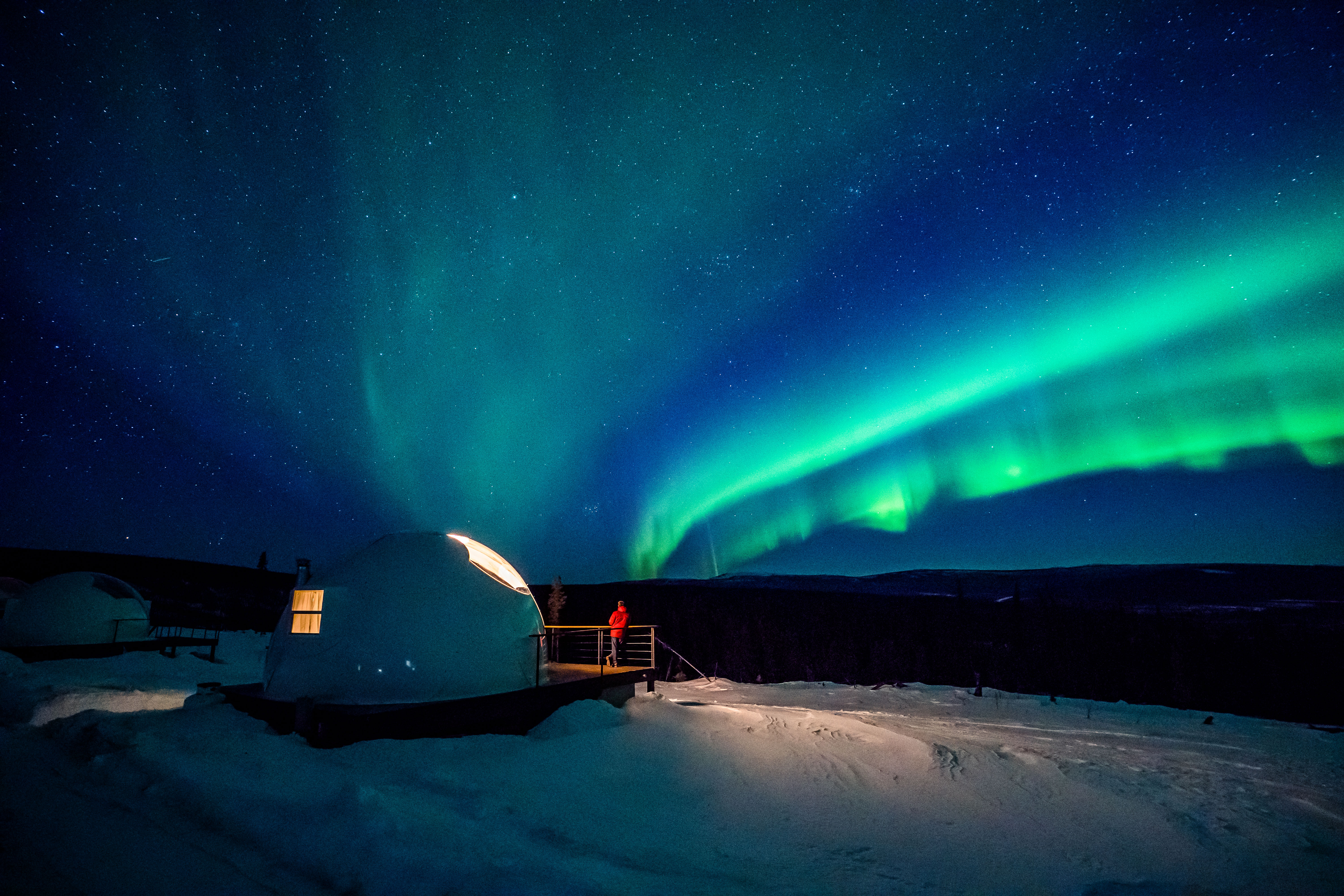
- Remote Cabins and Lodges: For a more immersive experience, consider staying in a remote cabin or specialized aurora lodge. These often offer dark-sky locations right outside your door, minimizing the need for travel. They range from rustic, cozy cabins to luxurious, purpose-built aurora viewing lodges with glass ceilings or dedicated viewing platforms.
- Unique Stays: Some operators offer unique accommodations like heated yurts, glamping tents, or even ice hotels with aurora viewing in mind, providing a memorable blend of comfort and wilderness experience.
Maximizing Your Alaskan Experience: Day-Time Activities and Local Culture
While the Aurora Borealis is the star attraction, Alaska’s winter wonderland offers a wealth of daytime activities and cultural experiences that can enrich your trip and make the wait for nightfall enjoyable.
Winter Wonderland Activities
Embrace the snow and ice with classic Alaskan winter pastimes:
- Dog Sledding: Experience the thrill of being pulled through pristine snowy landscapes by a team of enthusiastic huskies. Many operators offer rides or even multi-day expeditions.
- Snowmobiling (Snowmachining): Rent a snowmobile and explore miles of groomed trails or vast open terrains, offering an exhilarating way to see the Alaskan wilderness.
- Ice Fishing: Join a guided ice fishing tour on a frozen lake, complete with heated huts for comfort.
- Cross-Country Skiing and Snowshoeing: Enjoy the tranquil beauty of winter by gliding or trekking through snow-covered forests. Many trails are accessible from major towns.
- Ice Sculpting and Festivals: Depending on the time of year, you might catch an ice sculpting competition or a winter festival, especially in Fairbanks.
- Hot Springs: Relax in natural hot springs, such as those at Chena Hot Springs Resort, an incredibly soothing experience, especially after a cold night of aurora chasing.
Immersing in Alaskan Culture
Beyond outdoor adventures, delve into the unique history and culture of Alaska:
- Museums: Visit the University of Alaska Museum of the North in Fairbanks to learn about Alaska’s natural history, indigenous cultures, and the aurora itself.
- Local Eateries: Sample Alaskan cuisine, including fresh seafood, game meats, and local brews.
- Indigenous Heritage: Learn about the rich heritage of Alaska’s Native peoples through cultural centers, art galleries, and storytelling events.
- Alaska Railroad: Consider a scenic journey on the Alaska Railroad, especially the winter “Aurora Express” service between Fairbanks and Anchorage, offering unique perspectives of the winter landscape.

Health and Safety Tips
Alaska’s winter environment demands respect and caution.
- Extreme Cold Precautions: Dress in layers, stay hydrated, and be aware of signs of frostbite and hypothermia. Limit exposed skin.
- Travel Insurance: Given the remote nature and potential for weather-related delays or medical emergencies, comprehensive travel insurance is highly recommended.
- Road Conditions: Winter roads can be treacherous. Check road conditions before traveling, drive slowly, and ensure your vehicle is winter-ready. Always carry an emergency kit.
- Wildlife: While less active in winter, be aware of large animals like moose on or near roads.
In conclusion, planning your aurora chase in Alaska is an exercise in preparedness and timing. While the window from mid-August to mid-April offers opportunities, the peak viewing period from October to March, particularly in the dark, clear skies around Fairbanks, provides the highest probability of witnessing the Aurora Borealis. By understanding the environmental factors, choosing the right destination, and meticulously preparing for the cold, you can transform a dream into a breathtaking reality, creating memories that will glow as brightly as the northern lights themselves. Embrace the adventure, stay warm, and prepare to be mesmerized by one of Earth’s most magnificent natural spectacles.
LifeOutOfTheBox is a participant in the Amazon Services LLC Associates Program, an affiliate advertising program designed to provide a means for sites to earn advertising fees by advertising and linking to Amazon.com. Amazon, the Amazon logo, AmazonSupply, and the AmazonSupply logo are trademarks of Amazon.com, Inc. or its affiliates. As an Amazon Associate we earn affiliate commissions from qualifying purchases.