
The vast, wild, and incredibly beautiful expanse of Alaska stands today as the largest state in the United States, a beacon for adventurers, nature lovers, and those seeking unparalleled experiences. Yet, its journey to becoming the 49th state was a long and arduous path, deeply intertwined with geopolitical shifts, economic aspirations, and the persistent efforts of its resilient population. For anyone planning to explore its majestic landscapes and vibrant culture, understanding this historical foundation enriches the appreciation of Alaska’s unique character and its pivotal role in the American story.
The Long Road to Statehood: A Historical Perspective
Alaska’s path to statehood began long before official petitions were drafted. It was a journey shaped by centuries of indigenous inhabitation, followed by colonial ambitions, a significant territorial purchase, and decades of advocacy for self-governance. This rich history set the stage for the modern Alaska we know, where towering mountains and vast wilderness blend with a surprisingly sophisticated infrastructure built to support both residents and the millions of tourists who visit annually.
Early Encounters and the Russian Legacy
The story of Alaska truly begins with its indigenous peoples, whose intricate cultures thrived for millennia across its diverse regions. However, from a Western perspective, the first significant European contact came in the 18th century with Russian explorers. By the mid-1700s, Russia had established a colonial presence, primarily focused on the lucrative fur trade, giving rise to what was known as Russian America. This period saw the establishment of outposts and missions, with the capital eventually settling in Sitka on Baranof Island, then called New Archangel. The legacy of this era is still visible today in the architecture, place names, and Russian Orthodox churches scattered throughout the region, offering unique historical landmarks for curious travelers.
By the mid-19th century, Russia’s interest in Alaska waned. The fur trade had declined, the territory was distant and difficult to defend, especially after the Crimean War. Seeing an opportunity, the United States, under Secretary of State William H. Seward, negotiated the purchase of Alaska in 1867 for a sum of $7.2 million. Initially mocked as “Seward’s Folly” or “Seward’s Icebox,” this acquisition was a geopolitical masterstroke, adding an enormous swathe of strategic land and untold natural resources to the American domain. This historical event is a compelling aspect of any trip to Sitka, where visitors can explore the sites associated with the transfer ceremony.
A Territory in Transition: The Path to Self-Governance
Following the purchase, Alaska spent decades in a state of administrative limbo, governed first by the military, then as a district, and finally achieving territorial status in 1912. The early years of American control were characterized by minimal federal investment and a slow pace of development. However, several transformative events began to change its trajectory.
The discovery of gold in the late 19th and early 20th centuries, particularly the Klondike Gold Rush in the neighboring Yukon Territory and subsequent discoveries within Alaska itself, sparked massive migrations of prospectors and entrepreneurs. Boomtowns like Juneau, Anchorage, and Fairbanks sprang up, laying the groundwork for the major urban centers travelers visit today. This influx of population brought with it a demand for better infrastructure, clearer laws, and greater self-determination. The gold rushes not only reshaped Alaska’s demographics but also highlighted its incredible potential, shifting public perception from an icy wasteland to a land of opportunity.
The early 20th century also saw the establishment of crucial transportation networks, such as the Alaska Railroad, which connected Seward to Fairbanks via Anchorage, facilitating resource extraction and settlement. These developments were vital for opening up the interior and remain popular travel experiences today, offering scenic journeys through the heart of the state.
The Pivotal Moment: Alaska’s Admission to the Union
The drive for statehood gained significant momentum in the mid-20th century, propelled by strategic importance, economic growth, and the tireless advocacy of Alaskan residents. It was a testament to the pioneering spirit of its people and a recognition of the territory’s mature political and economic landscape. This period represents the climax of Alaska’s journey, culminating in the formal recognition of its sovereignty and potential.
Overcoming Obstacles: Political Battles and Economic Drivers
Despite the growing population and economic contributions, Alaska’s statehood bid faced considerable opposition. Concerns ranged from the territory’s small population and vast size to its economic viability and perceived dependence on federal aid. Political hurdles in Washington D.C. were significant, with some fearing that adding such a large and remote state would complicate governance and dilute political power.
However, several factors began to swing the tide in Alaska’s favor. Its strategic importance became undeniable during World War II. The Japanese occupation of parts of the Aleutian Islands, including Attu, and the construction of bases in Adak and Dutch Harbor, underscored Alaska’s critical role in national defense. The construction of the Alaska Highway during this period further linked the territory to the contiguous United States, both physically and psychologically. This military build-up brought infrastructure and people, further strengthening the argument for statehood.

Post-war economic growth, particularly in industries like fishing, timber, and nascent oil exploration, showcased Alaska’s potential for self-sufficiency. The prospect of managing its own vast natural resources, rather than having them dictated by distant federal authorities, was a powerful incentive for residents. Organizations like the Alaska Statehood Committee worked tirelessly to educate the public and lobby Congress, demonstrating the territory’s readiness for full integration into the Union.
January 3, 1959: A New Era Begins
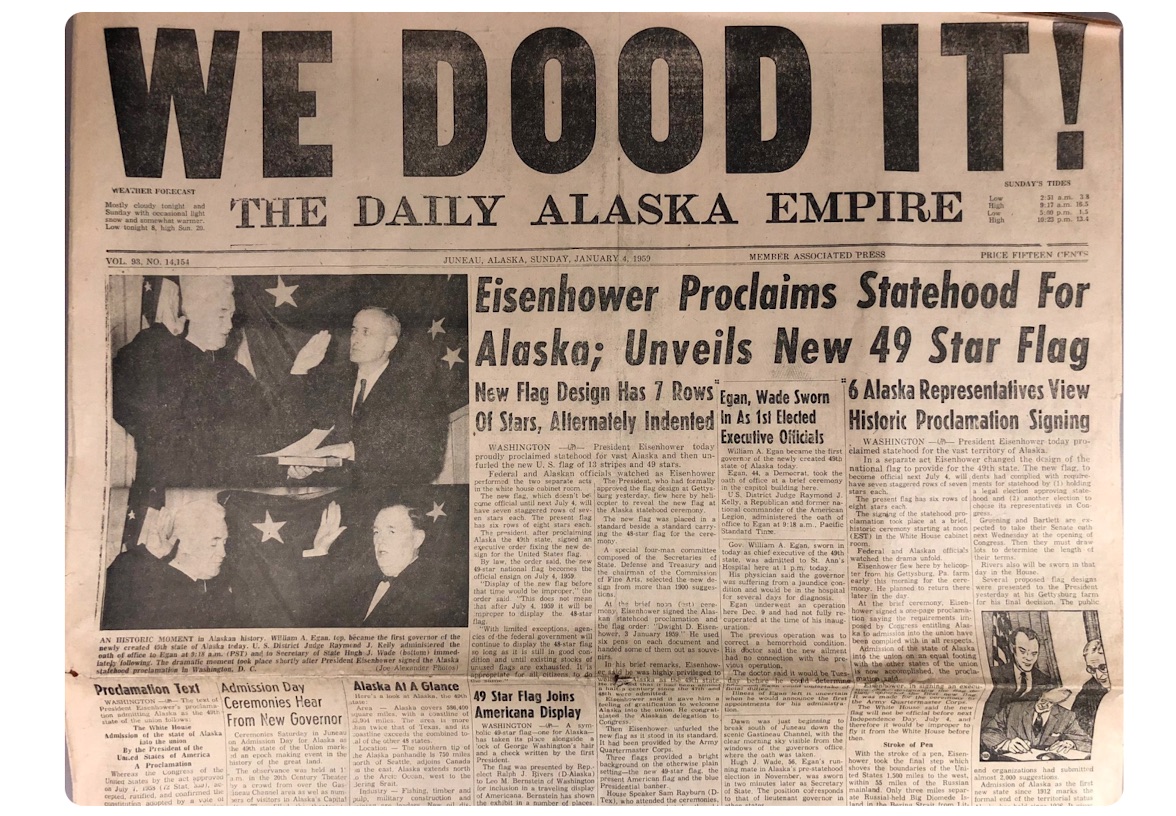
After years of political maneuvering, congressional debates, and a resolute campaign by Alaskans, the tide finally turned. On June 30, 1958, the United States Congress passed the Alaska Statehood Act. This act was then signed into law by President Dwight D. Eisenhower on July 7, 1958. However, the final step required a vote by the people of Alaska to ratify the act, which they did overwhelmingly in August 1958.
Finally, the moment arrived. On January 3, 1959, President Eisenhower officially proclaimed Alaska the 49th state of the United States. This date marked a profound turning point, not just for Alaskans, but for the entire nation. It signified the expansion of the American dream to the vast northern frontier, granting its citizens full representation and the power to shape their own destiny. For travelers today, this historical date is celebrated across the state, and many local museums and cultural centers, such as the Anchorage Museum or the University of Alaska Fairbanks Museum of the North, offer insightful exhibits detailing the statehood movement and its legacy.
Alaska Transformed: Statehood’s Impact on Travel and Lifestyle
Statehood opened up an incredible new chapter for Alaska, unleashing its potential for growth, development, and the burgeoning tourism industry. The transition from territory to state empowered Alaskans to better manage their immense resources and strategically plan for the future, directly impacting how visitors experience this remarkable destination today.
The Birth of a Tourist Mecca: Natural Wonders and Modern Infrastructure
With statehood came increased federal attention and, critically, greater control for the state over its vast land and resources. This autonomy allowed Alaska to attract more investment, develop modern infrastructure, and crucially, establish and manage its world-renowned national parks and protected areas. The landmark discovery of oil at Prudhoe Bay in 1968, and the subsequent construction of the Trans-Alaska Pipeline System, further bolstered the state’s economy, enabling further development of transportation networks, airports, and public services that benefit tourism.
Today, modern amenities, diverse accommodation options, and efficient transportation make visiting Alaska more accessible than ever before. Major cities like Anchorage boast a wide range of hotels, from luxury resorts to cozy boutique hotels, while smaller towns offer charming lodges and bed and breakfasts close to prime attractions. Anchorage International Airport serves as a key gateway, connecting Alaska to the world, while the extensive Alaska Marine Highway System (the state ferry system) and the Alaska Railroad provide unique ways to explore coastal communities and the interior.
Iconic Destinations and Experiences for Every Traveler
Statehood brought the recognition and resources needed to transform Alaska’s natural grandeur into world-class destinations for every type of traveler. Whether you seek thrilling adventure, serene nature excursions, or immersive cultural experiences, Alaska delivers.
For hikers and wildlife enthusiasts, Denali National Park and Preserve, home to Mount Denali (North America’s highest peak), offers unparalleled opportunities to see grizzly bears, moose, caribou, and wolves in their natural habitat. Coastal fjords and glaciers, such as those found in Kenai Fjords National Park and Glacier Bay National Park and Preserve, are best explored via boat tours or cruises through the breathtaking Inside Passage, offering dramatic views of ice calving and abundant marine life.
Popular Alaskan Destinations for Tourists:

- Anchorage: The largest city, serving as a hub for flights, car rentals, and excursions to nearby Chugach National Forest and the Kenai Peninsula. It offers diverse dining, museums, and easy access to hiking and biking trails.
- Juneau: The state capital, nestled between mountains and the sea, accessible only by air or sea. Visitors flock to see the magnificent Mendenhall Glacier and explore the historic downtown.
- Fairbanks: The “Golden Heart City” and gateway to the Arctic, renowned for its incredible displays of the Northern Lights in winter and its Midnight Sun during summer. It’s a great base for exploring interior Alaska.
- Talkeetna: A charming small town famous as a base for Mount Denali climbers and flightseeing tours.
- Homer: Known as the “Halibut Fishing Capital of the World,” offering stunning views of Kachemak Bay and a vibrant arts scene on its famous “Spit.”
- Seward: A historic port town and gateway to Kenai Fjords National Park, perfect for glacier cruises and wildlife viewing.
- Ketchikan: The “Salmon Capital of the World,” known for its rich indigenous culture, totem poles, and rainforest landscape.
- Skagway: A relic of the Klondike Gold Rush, offering a journey back in time with its historic district and the scenic White Pass and Yukon Route Railroad.
For those seeking unique experiences, Alaska offers dog sledding, ice fishing, glacier hiking, river rafting, and opportunities to spot incredible wildlife like whales, puffins, and eagles. Luxury travel options abound, from high-end wilderness lodges to bespoke small-ship cruises. Budget travelers can find hostels, campgrounds, and more affordable tours that still deliver the quintessential Alaskan adventure. The cultural fabric is rich with Native Alaskan heritage, visible in art, dance, and traditions celebrated in communities throughout the state.
Planning Your Alaskan Adventure: Tips for a Memorable Journey
Embarking on an Alaskan adventure is a dream for many, and with statehood’s legacy of development, it’s more accessible than ever. Thoughtful planning can transform a good trip into an unforgettable journey, whether you’re seeking rugged wilderness or refined urban explorations.
Choosing Your Alaskan Experience
Alaska is immense and diverse, meaning your trip planning should start with deciding what kind of experience you desire.
- Cruise vs. Land Tour: Many travelers opt for an Alaska cruise, particularly through the Inside Passage or Gulf of Alaska, which offers stunning views of glaciers like Hubbard Glacier and coastal towns. Land tours provide deeper access to interior attractions such as Denali National Park and Preserve and Fairbanks. A popular option is a “Cruisetour,” combining both.
- Seasonality: Summer (June-August) is peak tourism season, with long daylight hours, warmer temperatures, and most attractions fully operational. This is ideal for hiking, fishing, and wildlife viewing. Winter (November-March) offers unique experiences like viewing the Northern Lights, dog sledding (including the famous Iditarod Trail Sled Dog Race), and skiing, though many services operate on reduced schedules. Spring and Fall offer fewer crowds and unique transitional beauty.
- Adventure Level: From strenuous mountaineering expeditions to leisurely wildlife cruises and scenic drives, Alaska caters to all fitness and adventure levels. Consider guided tours for specialized activities or for exploring remote areas like the Arctic National Wildlife Refuge.
Accommodation and Logistics
With a robust tourism infrastructure, finding suitable accommodation in Alaska is straightforward, but early booking is essential, especially for peak season or popular lodges near national parks.
- Types of Accommodation: You’ll find everything from luxury resorts and full-service hotels in cities like Anchorage and Fairbanks, to charming bed and breakfasts in smaller towns like Talkeetna or Homer. Wilderness lodges offer immersive experiences, often including meals and guided activities. For budget-conscious travelers, campgrounds and hostels are available.
- Transportation: Renting a car offers flexibility for exploring the road system, particularly the scenic routes like the Seward Highway or Parks Highway. For areas not accessible by road, consider flights with local air taxis, the Alaska Railroad, or the Alaska Marine Highway System ferries.
- Packing Essentials: Regardless of the season, layering is key. Bring waterproof outerwear, sturdy hiking boots, insect repellent, sun protection (due to long daylight hours), and a good camera to capture the breathtaking scenery.
From its indigenous roots and Russian colonial past to its celebrated statehood and thriving tourism industry, Alaska’s history is as compelling as its natural beauty. Understanding “When Was Alaska Becoming A State?” is not just about a date; it’s about appreciating the journey that shaped this magnificent land into a premier travel destination, ready to offer unforgettable experiences to all who venture north.