
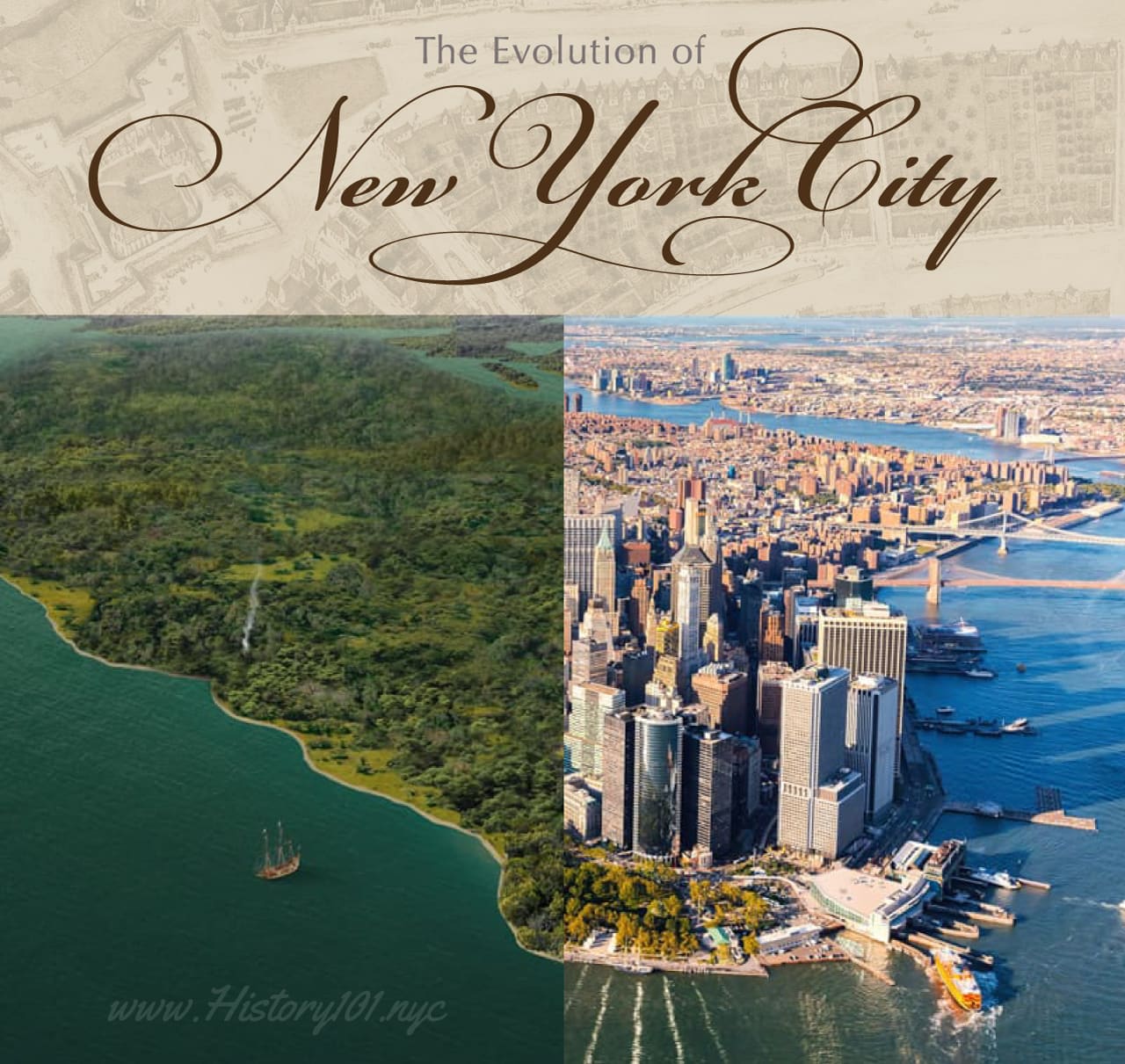
New York, a name synonymous with ambition, diversity, and relentless energy, stands today as a global beacon of culture, finance, and innovation. From its towering skyscrapers to its vibrant neighborhoods, the city pulsates with a unique rhythm that draws millions of visitors annually. Yet, beneath the modern marvels lies a rich tapestry of history, dating back centuries before it became the iconic metropolis we know. To truly appreciate the essence of New York, one must delve into its origins, tracing its establishment from indigenous lands to a bustling colonial outpost, and ultimately, to the beating heart of a nascent nation. Understanding “when New York was established” is not merely about a single date, but rather a fascinating journey through pivotal moments that shaped its identity.
The Dawn of a Metropolis: Early Explorations and Indigenous Roots
The story of New York begins long before European ships graced its shores, in a pristine landscape teeming with natural beauty and indigenous life.
Lenape Land: Before European Arrival
Centuries before European contact, the land that would become New York was home to the Lenape people, an Algonquian-speaking nation. They thrived across a vast territory known as Lenapehoking, encompassing parts of modern-day New York, New Jersey, Pennsylvania, and Delaware. The Lenape lived in harmony with the environment, employing sophisticated agricultural practices, hunting, and fishing. The island of Manhattan, which they called “Manna-hatta” (often translated as “island of many hills” or “place where we gather wood for bows”), was particularly rich in resources, serving as a vital hunting ground, fishing area, and meeting place. Their deep understanding of the land’s seasonal rhythms and their sustainable practices allowed them to flourish for generations, establishing trails and settlements that often predated and, in some cases, even influenced later European pathways. Their legacy remains in various place names and archaeological sites, reminding us of the profound history that existed before recorded European history.

European Discovery: Henry Hudson and the Dutch
The first documented European exploration of the area came in 1524, when Italian explorer Giovanni da Verrazzano, sailing for France, explored the harbor, naming it “New Angoulême.” However, it was not until 1609 that a truly significant expedition laid the groundwork for permanent settlement. In that year, Henry Hudson, an English navigator employed by the Dutch East India Company (VOC), sailed his ship, the Halve Maen (Half Moon), into what is now New York Harbor.
Hudson was searching for a Northwest Passage to Asia, but instead, he discovered the magnificent river that now bears his name—the Hudson River. He journeyed upstream as far as present-day Albany, encountering various indigenous groups and noting the abundant beaver and otter populations, which were highly valued for their furs in Europe. This discovery immediately piqued the interest of the Netherlands, which saw immense potential for a lucrative fur trade. Hudson’s voyage marked the true beginning of European interest and subsequent claims on the region, setting the stage for the establishment of a powerful Dutch presence.

The Birth of New Amsterdam: Dutch Settlement and Governance
The findings of Henry Hudson’s expedition quickly led to Dutch commercial ventures and, eventually, the establishment of a permanent colony. This period is crucial for understanding the foundational elements of what would become New York.
The Founding of a Trading Post
Following Hudson’s report, Dutch traders began frequenting the Hudson River area, establishing temporary trading posts to exchange European goods for furs with the Lenape and other indigenous peoples. In 1614, a permanent trading post, Fort Nassau, was established near present-day Albany. However, the strategic importance of the harbor at the mouth of the Hudson River soon became clear.
Recognizing the need for a more formal colonial presence to secure their claims against other European powers, the Dutch West India Company (WIC) was chartered in 1621. This company was granted a monopoly on trade in the Americas and West Africa, and its primary objective was to establish and govern settlements. The official establishment of a permanent settlement on Manhattan Island occurred in 1624, when 30 families, mostly Walloon (French-speaking Protestants from what is now Belgium), arrived to establish New Amsterdam. While these first settlers initially dispersed to various locations, including Fort Orange (near Albany), the core of the new colony was soon consolidated on the southern tip of Manhattan.
A pivotal moment often cited in the history of New York is the legendary “purchase” of Manhattan Island in 1626. Peter Minuit, the Director-General of New Netherland (the larger Dutch colony that included New Amsterdam), reportedly acquired the island from the Lenape for goods valued at 60 Dutch guilders (roughly $24). While historical interpretation varies on the true nature of this transaction – the Lenape likely understood it as an agreement for shared use rather than outright sale of land – it cemented the Dutch claim and allowed for the formal construction of Fort Amsterdam on the island’s southern tip, solidifying New Amsterdam as the colonial capital.
Growth and Challenges under Dutch Rule
Under Dutch rule, New Amsterdam rapidly grew, albeit not without its challenges. The colony quickly became a bustling trading hub, attracting a diverse population from across Europe – not just Dutch, but also French, German, Scandinavian, and even African (both enslaved and free). This early diversity laid the groundwork for New York’s enduring multicultural character. By the mid-17th century, the settlement boasted taverns, churches, and houses, with a bustling marketplace and a defensive wall (giving rise to the name Wall Street) constructed to protect against potential English or indigenous attacks.
However, the colony faced numerous difficulties, including strained relations with indigenous populations, internal disputes, and inefficient governance by the Dutch West India Company. One of the most influential figures during this period was Peter Stuyvesant, who served as Director-General from 1647 to 1664. Known for his autocratic style and wooden leg, Stuyvesant brought a measure of order and growth to the struggling colony, building public works, establishing the city’s first public school, and improving defenses. His tenure saw the population grow substantially, transforming New Amsterdam into a significant port town in the New World.
From Dutch to English: The Takeover and Renaming
The presence of the Dutch colony, nestled between English settlements in New England and the southern colonies, was a constant source of tension and a strategic inconvenience for England. This rivalry eventually led to a dramatic shift in control.
The English Arrival and Bloodless Conquest
In the mid-17th century, the political landscape of Europe was dominated by Anglo-Dutch competition for trade and colonial dominance. England, under King Charles II, viewed New Netherland as a threat to its colonial ambitions and its lucrative trade routes. In 1664, sensing an opportunity, King Charles II granted his younger brother, James, the Duke of York and Albany, all the lands held by the Dutch in North America.
A powerful English fleet, commanded by Colonel Richard Nicolls, arrived in New York Harbor in August 1664, demanding the surrender of New Amsterdam. Despite Peter Stuyvesant’s initial defiance and desire to resist, the citizens of New Amsterdam, weary of company rule and facing overwhelming English naval power, refused to support a defense. On September 8, 1664, Stuyvesant was compelled to surrender the colony without a shot being fired, a relatively bloodless conquest that fundamentally altered the course of its history.
New York City Takes Shape
Upon the surrender, New Amsterdam was immediately renamed New York in honor of the Duke of York. The larger colony of New Netherland also became known as the Province of New York. Fort Orange was renamed Fort Albany, establishing the two key population centers of the new English colony.
Under English rule, New York continued to thrive as a trading port. The English largely maintained the Dutch property laws and many local customs, which facilitated a relatively smooth transition and encouraged continued immigration. While English became the official language of government, the city retained its cosmopolitan flair and diverse population. For a brief period in 1673-1674, during the Third Anglo-Dutch War, the Dutch recaptured New York and renamed it “New Orange,” but it was permanently restored to the English by the Treaty of Westminster in 1674. From that point on, the city’s identity as New York was solidified, laying the groundwork for its exponential growth over the next two centuries.
New York’s Role in the American Revolution and Beyond
The establishment of New York was far from complete with the English takeover. Its strategic location and growing prominence would thrust it into the forefront of another defining historical period: the American Revolution.
A Strategic Hub in the Fight for Independence
As tensions escalated between the American colonies and Great Britain in the mid-18th century, New York’s strategic importance as a major port and a gateway to the continent became paramount. The city was a hotbed of revolutionary sentiment, hosting significant events like the repeal of the Stamp Act in 1765 and the formation of the Sons of Liberty.
During the Revolutionary War (1775-1783), New York played a crucial, albeit often tragic, role. Following the Battle of Long Island in August 1776, the city fell into British hands and remained under British occupation for the duration of the war. It served as the primary British military and naval base in North America, a sanctuary for Loyalists, and a prison for thousands of American patriots. The infamous prison ships in Wallabout Bay claimed more American lives than all the battles combined. General George Washington’s successful evacuation of his troops from Brooklyn was a pivotal moment, though the loss of New York was a significant blow to the Patriot cause. It was not until Evacuation Day, November 25, 1783, that the last British troops departed, allowing Washington to triumphantly re-enter the city.
Post-Revolutionary Growth and Enduring Legacy
After the Revolutionary War, New York quickly re-established itself, demonstrating its resilience. Its strategic location and deep harbor were undeniable assets for trade and commerce. From 1785 to 1790, New York City served as the first capital of the newly formed United States under the Constitution. It was at Federal Hall on Wall Street that George Washington took the oath of office as the first President of the United States on April 30, 1789. This period firmly cemented New York’s place in American history, not just as a colonial settlement, but as a crucible for the nation’s democratic ideals.
Throughout the 19th century, New York experienced an explosion of growth, fueled by the completion of the Erie Canal in 1825, which connected the Great Lakes to the Atlantic via the Hudson River, making it the unrivaled economic powerhouse of the United States. Waves of immigrants from around the world flowed through its ports, shaping its cultural mosaic and contributing to its relentless expansion. From the initial Dutch establishment to its critical role in the birth of a nation, the story of New York is one of continuous transformation, embodying the very spirit of American ambition and opportunity.
Experiencing New York Today: A Living Tapestry of History and Modernity
For travelers and history enthusiasts, understanding “when New York was established” enriches every visit to this dynamic city. New York is not just a collection of modern marvels; it’s a living museum where layers of history are visible in its architecture, street names, and diverse communities.
Must-Visit Historical Landmarks
Exploring New York through its historical lens offers a profound experience. Many sites stand as tangible links to its past:
- Federal Hall National Memorial: Located on Wall Street, this site marks the spot where George Washington was inaugurated and where the Bill of Rights was proposed. The current building, a Greek Revival structure, replaced the original colonial building but stands as a powerful reminder of New York’s role as the nation’s first capital.
- Fraunces Tavern Museum: This historic landmark in the Financial District served as a meeting place for the Sons of Liberty and was where George Washington famously bade farewell to his officers at the end of the Revolutionary War. Today, it functions as both a museum and a working restaurant, offering a palpable connection to the city’s revolutionary past.
- Trinity Church & St. Paul’s Chapel: These historic churches, both near Wall Street, offer a glimpse into colonial life and architecture. St. Paul’s Chapel, consecrated in 1766, is Manhattan’s oldest surviving church building and was frequented by George Washington during his presidency.
- Bowling Green: New York City’s oldest public park, dating back to 1733, was once a colonial gathering spot and the site of a famous anti-monarchical protest where colonists pulled down a statue of King George III during the Revolutionary War.
- Museum of the City of New York & New-York Historical Society: These institutions provide comprehensive insights into the city’s entire history, from the Lenape era to the modern day, through extensive collections and engaging exhibitions.
- Statue of Liberty and Ellis Island: While more directly related to the 19th and 20th century, these iconic landmarks symbolize the continuous waves of immigration that have shaped New York’s identity since its earliest days as a diverse Dutch trading post.
Planning Your Historical New York Adventure
For those planning to explore New York’s deep historical roots, a focused approach can greatly enhance the experience. Consider staying in hotels or apartments in Lower Manhattan or the Financial District, placing you within walking distance of many colonial and revolutionary sites. Many boutique hotels in these areas offer a blend of modern comfort with a nod to historical charm, perfect for an immersive travel experience. Research local walking tours that specialize in the Dutch and colonial periods, offering expert insights into the city’s foundational narrative.
Beyond specific landmarks, simply walking through the narrow, winding streets of Lower Manhattan can evoke a sense of the past. Imagine the bustling port of New Amsterdam, the fortified settlement, and the transformative events that unfolded on these very grounds. Engage with the local culture and cuisine, much of which has been influenced by centuries of immigration and adaptation, a direct legacy of the city’s early diverse population.
In conclusion, the establishment of New York is not a singular event tied to one date, but a multifaceted process spanning centuries. From the ancient lands of the Lenape, through the industrious Dutch colony of New Amsterdam, to its transformation into English New York and its pivotal role in the birth of the United States, the city has been continuously established and re-established by the successive waves of people who called it home. Today, this rich history makes New York an unparalleled destination for travelers seeking to connect with the past while experiencing the vibrant pulse of modern life.
LifeOutOfTheBox is a participant in the Amazon Services LLC Associates Program, an affiliate advertising program designed to provide a means for sites to earn advertising fees by advertising and linking to Amazon.com. Amazon, the Amazon logo, AmazonSupply, and the AmazonSupply logo are trademarks of Amazon.com, Inc. or its affiliates. As an Amazon Associate we earn affiliate commissions from qualifying purchases.