
The question of “When was Texas annexation?” might seem like a simple historical query, pointing to a single date on a calendar. However, the true answer is far more intricate, unfolding across a tumultuous period of revolution, diplomatic maneuvering, and national expansion that profoundly reshaped the North American continent. For travelers and history enthusiasts exploring the diverse landscapes and rich culture of the United States today, understanding the annexation of Texas is key to appreciating many of its most iconic landmarks and the vibrant spirit of the Lone Star State. It’s a story woven into the very fabric of American identity, influencing everything from political ideologies to the geographical boundaries we recognize today.
The annexation wasn’t merely a bureaucratic transaction; it was a pivotal event that triggered the Mexican-American War, solidified the concept of Manifest Destiny, and ignited fierce debates over slavery that would eventually lead to the Civil War. Its legacy can be seen in the architectural styles of San Antonio, the historical markers dotting the Texas countryside, and the proud, independent spirit of its residents. For those planning a trip to this expansive state, delving into this history offers a deeper connection to the destinations and experiences that await.
The Tumultuous Path to Independence: From Mexican Territory to Lone Star Republic
To understand the annexation, we must first journey back to the early 19th century, a period when Texas was not yet part of the United States, nor even an independent nation. It was a sparsely populated frontier region of Mexico, itself a newly independent country grappling with its own internal struggles after centuries of Spanish colonial rule.
Early American Settlement and Growing Tensions
Following Mexico’s independence from Spain in 1821, its government sought to develop and secure its northern territories. Recognizing the need for settlers, Mexico continued a policy initiated by Spain, inviting Anglo-American immigrants to settle in Texas under the empresario system. The most famous of these empresarios was Stephen F. Austin, who led the first large wave of settlers in 1821. These immigrants were offered vast tracts of land under the condition that they become Mexican citizens, convert to Catholicism, and obey Mexican law.
Initially, the arrangement was mutually beneficial. American settlers brought economic development and a buffer against raiding Native American tribes. However, cultural differences, language barriers, and differing legal traditions soon created friction. Most significantly, the American settlers, many of whom came from the southern United States, brought with them the institution of slavery, which was at odds with Mexican law and evolving sentiments against it in Mexico City. As the Anglo-American population swelled, outnumbering Mexican residents, the Mexican government grew increasingly concerned about losing control over Texas. Restrictions on immigration and attempts to enforce Mexican laws, including those against slavery, only heightened tensions, leading to a series of skirmishes and political protests.
The Texas Revolution and the Birth of a Republic
The simmering discontent finally erupted into open rebellion in 1835. The conflict, known as the Texas Revolution, pitted the Texian settlers, aided by volunteers from the United States, against the Mexican government led by General Antonio López de Santa Anna. Key moments of the revolution, now iconic landmarks and historical sites, include:
- The Battle of the Alamo (February-March 1836): A 13-day siege of the Alamo mission in San Antonio, where a small force of Texian defenders, including Davy Crockett and James Bowie, fought to the last man. While a devastating defeat, it became a rallying cry: “Remember the Alamo!” Today, the Alamo is one of the most visited historical sites in Texas, a poignant reminder of the fierce struggle for independence.
- The Goliad Massacre (March 1836): A few weeks after the Alamo, nearly 400 Texian prisoners of war, under the command of James Fannin, were executed by Mexican forces near Goliad. This brutal act further inflamed Texian resolve.
- The Battle of San Jacinto (April 21, 1836): Led by General Sam Houston, the Texian army surprised Santa Anna’s forces near present-day Houston, achieving a decisive victory in less than 20 minutes. Santa Anna was captured, and under duress, signed the Treaties of Velasco, recognizing Texas independence.
On March 2, 1836, even before the victory at San Jacinto, delegates at Washington-on-the-Brazos declared Texas an independent republic. The newly formed Republic of Texas was born, with Sam Houston as its first president. However, Mexico never formally recognized its independence, setting the stage for future conflicts. The site of Washington-on-the-Brazos State Historic Site is another key destination for travelers seeking to immerse themselves in Texas history.
The Decade of the Republic of Texas and the Quest for Union
For nearly a decade, from 1836 to 1845, Texas existed as an independent nation, often referred to as the Lone Star Republic. This period was marked by significant challenges and an ongoing debate about its future.
Political and Economic Motivations for Annexation
The young Republic of Texas faced immense hurdles. Economically, it was precarious, burdened by debt from the revolution and struggling to establish a stable currency. Its population was small, and its borders were insecure, constantly threatened by Mexican incursions and Native American raids. Diplomatically, its independence was only recognized by a handful of nations, including the United States, France, and Great Britain.
For many Texans, joining the United States offered a solution to these problems: economic stability, military protection, and the fulfillment of a shared cultural heritage with their American brethren. The desire for annexation was strong among the Texian population, many of whom had only recently emigrated from the United States.
The American Perspective: A Divided Nation
From the American perspective, the question of Texas annexation was far more complicated, primarily due to the explosive issue of slavery. The prospect of admitting Texas as a slave state, which would upset the delicate balance of power between free and slave states in Congress, generated fierce opposition in the North. Presidents Andrew Jackson and Martin Van Buren, while sympathetic to Texan independence, hesitated to annex the republic, fearing both a war with Mexico and an intensification of sectional strife over slavery.
However, the idea of Manifest Destiny – the belief that the United States was divinely ordained to expand westward across the continent – was gaining powerful traction. Southern politicians, eager to expand slave territory and enhance their political influence, championed annexation. Furthermore, there was growing concern that Great Britain might exert its influence over an independent Texas, potentially blocking American expansion and challenging its regional dominance.
The Defining Moment: Texas Becomes the 28th State
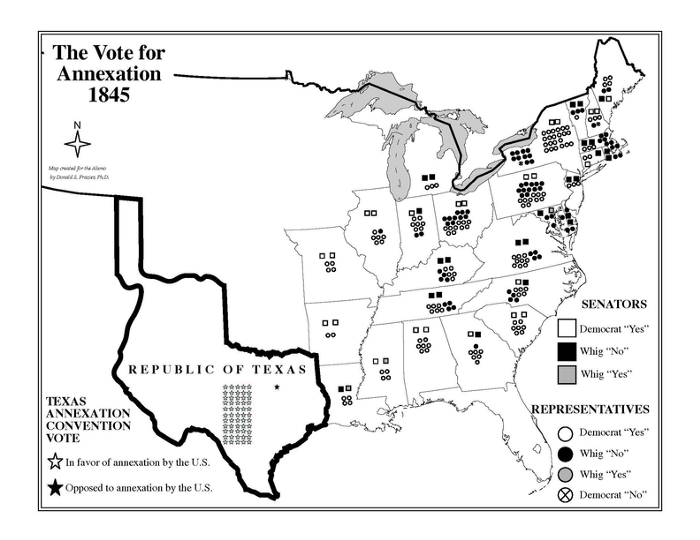
The political winds finally shifted in favor of annexation during the administration of President John Tyler, a Virginian who sought to achieve annexation as a means to bolster his legacy. He initiated a treaty of annexation in 1844, but it failed to pass the Senate due to Whig opposition and concerns about war with Mexico.
The Joint Resolution and the Act of Admission
The turning point came with the election of 1844. James K. Polk, a staunch expansionist and Democrat, ran on a platform that explicitly included the annexation of Texas and the acquisition of Oregon. His victory was interpreted as a mandate for expansion. Before Polk could take office, President Tyler, seizing the moment, pushed for annexation through a joint resolution of Congress, which required only a simple majority in both houses, rather than the two-thirds Senate majority needed for a treaty.
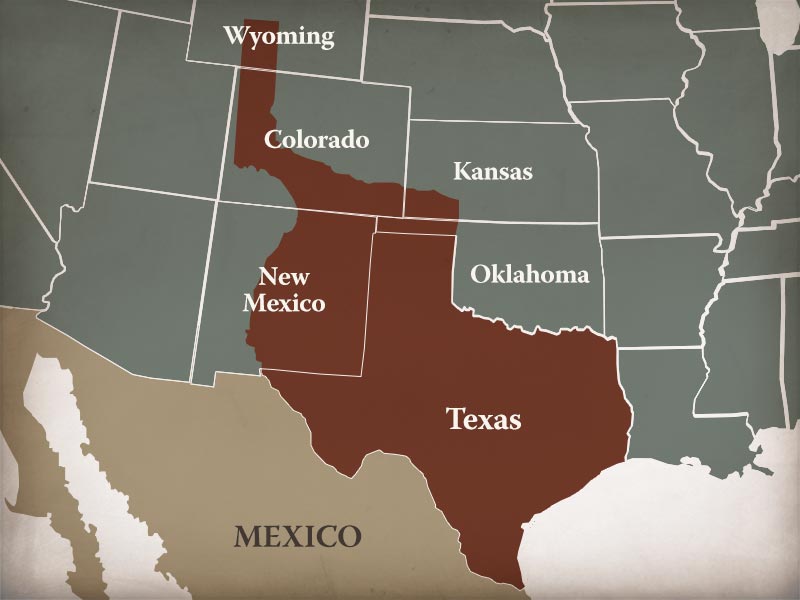
On March 1, 1845, the U.S. Congress passed the joint resolution offering annexation to Texas. This resolution outlined the terms under which Texas could join the Union, including the retention of its public lands and the ability to divide into up to four additional states in the future.

The citizens of the Republic of Texas overwhelmingly approved the annexation in a convention held on July 4, 1845. The Texas Congress also ratified the decision. Finally, on December 29, 1845, President James K. Polk signed the act officially admitting Texas into the United States as the 28th state.
Therefore, the precise answer to “When was Texas annexation?” is December 29, 1845, the date when President Polk formally signed the act of admission. However, the process began much earlier with the joint resolution on March 1, 1845, and the journey to this date was a long and arduous one.
Immediate Aftermath and the Mexican-American War
The annexation of Texas did not bring immediate peace. Mexico had consistently warned that it would consider annexation an act of war. A major point of contention was the disputed border: Texas, and subsequently the United States, claimed the Rio Grande as its southern and western boundary, while Mexico insisted the border was the Nueces River, further north.
President Polk, pursuing his expansionist agenda, sent troops into the disputed territory between the Nueces and Rio Grande. When Mexican forces attacked American troops in this area in April 1846, Polk famously declared that Mexico had “shed American blood upon American soil,” initiating the Mexican-American War. The war lasted for two years, ending with American victory and the signing of the Treaty of Guadalupe Hidalgo in 1848. This treaty not only solidified the Rio Grande as the U.S.-Mexico border but also saw Mexico cede vast territories, including present-day California, Nevada, Utah, Arizona, and parts of Colorado, New Mexico, and Wyoming, to the United States.
Exploring the Legacy: Texas History Through a Traveler’s Lens
The story of Texas annexation is not just a chapter in history books; it’s an immersive experience waiting to be discovered by modern travelers. For those interested in historical tourism, Texas offers a wealth of landmarks, museums, and sites that bring this dramatic period to life.
Iconic Landmarks and Historical Sites
A trip through Texas can easily become a journey through its revolutionary and annexation history. Many sites are beautifully preserved, offering insights into the struggles and triumphs of its past:
- The Alamo (San Antonio): As mentioned, this former mission turned fortress is an essential stop. Visitors can walk the hallowed grounds where defenders made their last stand, explore the exhibits, and reflect on the sacrifices made for Texian independence. San Antonio itself is a city steeped in history, offering a blend of Spanish colonial heritage and vibrant Texan culture, with numerous hotels and resorts catering to every travel style.
- San Jacinto Battleground State Historic Site (near Houston): This expansive park commemorates the decisive victory that secured Texas independence. Ascend the towering San Jacinto Monument for panoramic views and explore the San Jacinto Museum of History. The nearby city of Houston provides ample accommodation options, from luxury hotels to budget-friendly stays, making it a convenient base for exploring this important landmark.
- Washington-on-the-Brazos State Historic Site: Often called the “Birthplace of Texas,” this site is where the Declaration of Independence was signed. Visitors can explore a replica of the Independence Hall, the Anson Jones Home (the last president of the Republic of Texas), and the Star of the Republic Museum.
- Texas Capitol Building (Austin): While built after annexation, the magnificent Capitol Building in Austin stands as a symbol of Texas’ statehood and its enduring legacy. Guided tours offer insights into state government and the architectural grandeur, making it a key destination for understanding the modern political landscape shaped by its past.
Experiencing Texas’ Rich Cultural Tapestry Today
The annexation of Texas profoundly influenced the state’s cultural identity, creating a unique blend of Southern, Western, and Mexican influences that travelers can savor today. From the distinct Tex-Mex cuisine found in restaurants across the state to the vibrant music scenes of Austin and Houston, the historical journey of Texas is reflected everywhere.
When planning your visit, consider staying in historic hotels that echo the grandeur of past eras, or modern resorts that offer luxurious comfort after a day of exploration. Many cities offer specialized tours that delve into the specific historical nuances of the annexation, providing deeper context than a casual visit. Whether you’re interested in the rugged lifestyle of early settlers, the political intrigues of the republic, or the ongoing impact of this pivotal moment, Texas delivers a compelling narrative.
Understanding “When was Texas annexation?” goes beyond memorizing a date. It’s about grasping the complex interplay of human ambition, political will, and the shaping of a nation. It’s an invitation to explore the landmarks, experience the culture, and connect with a story that continues to resonate across the vast and fascinating landscape of the Lone Star State. From the solemn grounds of the Alamo to the majestic halls of the Capitol Building, Texas stands as a living testament to its extraordinary journey into the United States.
LifeOutOfTheBox is a participant in the Amazon Services LLC Associates Program, an affiliate advertising program designed to provide a means for sites to earn advertising fees by advertising and linking to Amazon.com. Amazon, the Amazon logo, AmazonSupply, and the AmazonSupply logo are trademarks of Amazon.com, Inc. or its affiliates. As an Amazon Associate we earn affiliate commissions from qualifying purchases.