
The story of Texas joining the United States is a captivating saga of revolution, independence, political maneuvering, and cultural fusion. More than just a date on a calendar, the establishment of Texas as a state on December 29, 1845, marks a pivotal moment in both Texan and American history, shaping the geopolitical landscape of North America and embedding a distinctive independent spirit within the state’s identity. Understanding this process requires delving into its complex origins, from its early colonial days to its decade as an independent republic, and finally, its contentious annexation.
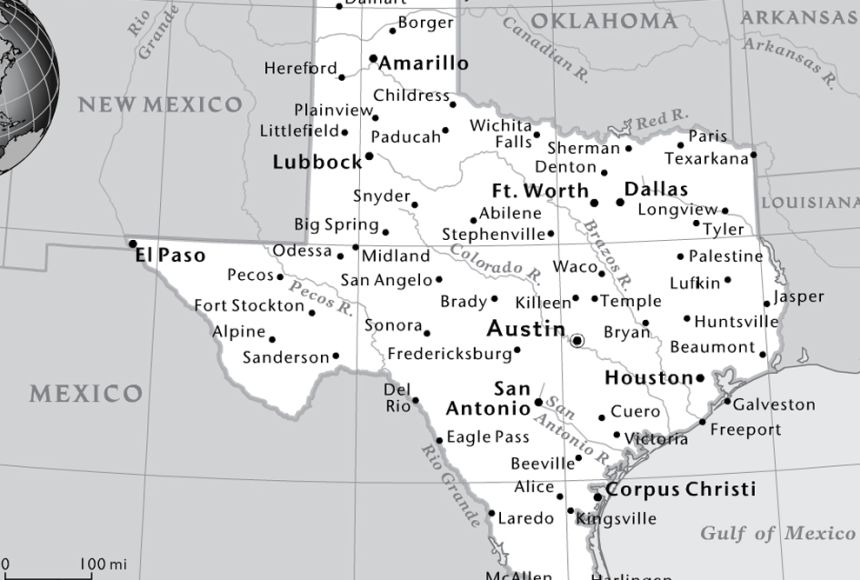
For travelers and history enthusiasts exploring the vast landscapes and vibrant cities of Texas today, grasping this historical context enriches every visit. From the hallowed grounds of the Alamo in San Antonio to the impressive Texas State Capitol in Austin, the echoes of the past resonate deeply, offering insights into the remarkable resilience and unique character that define the Lone Star State. This article will unravel the intricate journey that led to Texas’s statehood, highlighting key events, influential figures, and the lasting legacy that continues to draw visitors from around the globe.
A Legacy Forged in Revolution: From Spanish Colony to Lone Star Republic
The journey to statehood for Texas was not a straightforward path but a winding road carved by various empires, migrations, and revolutionary fervor. Before it ever contemplated joining the United States, Texas existed under vastly different flags, each leaving an indelible mark on its culture and destiny.
Early Encounters: Spanish and Mexican Texas
For centuries, the vast territory that would become Texas was largely inhabited by diverse indigenous tribes. European influence began significantly with the Spanish explorers in the 16th century. Claiming the land as part of New Spain, the Spanish established missions, presidios, and settlements, primarily to defend against French incursions and to convert Native Americans. Cities like San Antonio, established in 1718, trace their origins directly back to this period, with iconic landmarks such as the Alamo originally serving as a Spanish mission.
When Mexico achieved independence from Spain in 1821, Texas became part of the new Mexican Empire, and later, the Mexican Republic. The fledgling Mexican government, facing sparse populations in its northern territories, adopted a policy of encouraging immigration from the United States to populate and develop the region. Stephen F. Austin, often hailed as the “Father of Texas,” led the first successful colonization effort, bringing the Old Three Hundred settlers to his colony along the Brazos River. These Anglo-American colonists, drawn by cheap land and new opportunities, quickly outnumbered the existing Tejano population.
However, cultural differences, disputes over slavery (which Mexico had abolished), and increasing centralization of power in Mexico City under General Antonio López de Santa Anna led to growing tensions. The colonists, accustomed to American legal traditions and self-governance, found themselves increasingly at odds with the Mexican government.
The Cry for Independence: The Texas Revolution
The boiling point was reached in the mid-1830s. What began as skirmishes over local grievances quickly escalated into a full-blown revolution. The first shots of the Texas Revolution were fired in October 1835 in Gonzales, where Texan settlers famously resisted Mexican attempts to reclaim a cannon, flying a flag emblazoned with “Come and Take It.” This Battle of Gonzales ignited the spirit of resistance.
Following this, a provisional government was established, and delegates gathered at Washington-on-the-Brazos in March 1836. There, on March 2, 1836, they formally adopted the Texas Declaration of Independence, proclaiming their separation from Mexico. While this declaration was being drafted, one of the most iconic and tragic events in Texas history unfolded: the Siege of the Alamo. For 13 days, a small band of Texan defenders, including legendary figures like Davy Crockett and Jim Bowie, held out against Santa Anna’s much larger Mexican army. Their ultimate defeat and the subsequent Goliad Massacre, where hundreds of Texan prisoners were executed, fueled a powerful desire for vengeance and freedom.
Under the leadership of General Sam Houston, the Texan army, rallying with the cry “Remember the Alamo! Remember Goliad!”, launched a surprise attack on Santa Anna’s forces at the Battle of San Jacinto on April 21, 1836. This decisive victory, lasting only 18 minutes, resulted in the capture of Santa Anna and secured Texas’s independence.
The Republic of Texas: A Decade of Sovereignty
With independence secured, Texas embarked on a decade as an independent nation, the Republic of Texas. From 1836 to 1845, this vast new country navigated complex challenges, including ongoing threats from Mexico, economic instability, and diplomatic recognition struggles. Sam Houston was elected as its first president, establishing a government and seeking alliances. The capital moved several times, from Columbia to Houston, and finally to Austin, reflecting the growing aspirations and westward expansion of the young republic.
During this period, the idea of annexation to the United States was a constant undercurrent. Many Texans, particularly the Anglo-American settlers, had always envisioned their future as part of the United States. However, their independent status also fostered a deep sense of unique identity and self-reliance that continues to characterize the state today. The challenges of maintaining an independent nation, combined with the dream of American union, set the stage for the next crucial chapter.
The Path to Statehood: Debates, Diplomacy, and Annexation
The question of whether Texas should join the United States was one of the most significant and divisive political issues of the 1830s and 1840s, both within the republic itself and across the American political landscape.
The Lure of Union: Arguments For and Against Annexation
From the moment Texas won its independence, many of its citizens, including Sam Houston, favored annexation by the United States. The primary reasons were compelling:
- Security: Joining the United States would provide protection from Mexican attempts to reclaim its former territory.
- Economic Stability: Texas faced considerable debt and economic challenges as an independent nation; becoming a state would integrate it into a larger, more stable economy.
- Cultural Affinity: Many Texans identified culturally with the United States, having emigrated from there.
However, the question of Texas’s annexation was highly controversial within the United States, primarily due to the issue of slavery. Texas was a slaveholding territory, and its admission as a state would upset the delicate balance between free and slave states in the U.S. Congress. Northern abolitionists fiercely opposed annexation, fearing the expansion of slavery’s political power. Additionally, there were concerns about provoking a war with Mexico, which still considered Texas a rebellious province.
Presidents like Andrew Jackson and Martin Van Buren initially hesitated to push for annexation, wary of the domestic political strife and international complications. Mirabeau B. Lamar, Houston’s successor as President of Texas, even pursued a more independent nationalist policy, aiming to expand Texas’s influence and establish it as a formidable republic, rather than seek immediate annexation.

The Annexation Resolution: A Turning Point
The tide began to turn in the early 1840s. European powers, particularly Great Britain and France, began showing interest in the Republic of Texas, viewing it as a potential strategic ally and trading partner, possibly as a buffer against American expansion. This prospect alarmed some in the United States, who saw it as a threat to the Monroe Doctrine and a missed opportunity for westward expansion.
The election of James K. Polk to the U.S. presidency in 1844, on a platform that explicitly supported territorial expansion and the annexation of Texas and Oregon, signaled a decisive shift. The outgoing President, John Tyler, seeing the changing political winds and eager to secure his legacy, pushed for annexation through a joint resolution of Congress, which required only a simple majority vote in both chambers, rather than a two-thirds majority required for a treaty. This circumvented the Senate’s strong anti-annexation bloc.
On February 28, 1845, the U.S. Congress passed the joint resolution for the annexation of Texas. This resolution offered Texas statehood under certain conditions, notably that it could retain its public lands and, if it chose, divide itself into up to four additional states in the future (a provision never exercised). The Republic of Texas Congress and its last president, Anson Jones, accepted the offer.
The Official Date: December 29, 1845
With the formalities completed, Texas officially joined the United States on December 29, 1845, becoming the 28th state. President Polk signed the act, marking the culmination of a decade-long struggle for the Texan people to fulfill their aspirations of union.
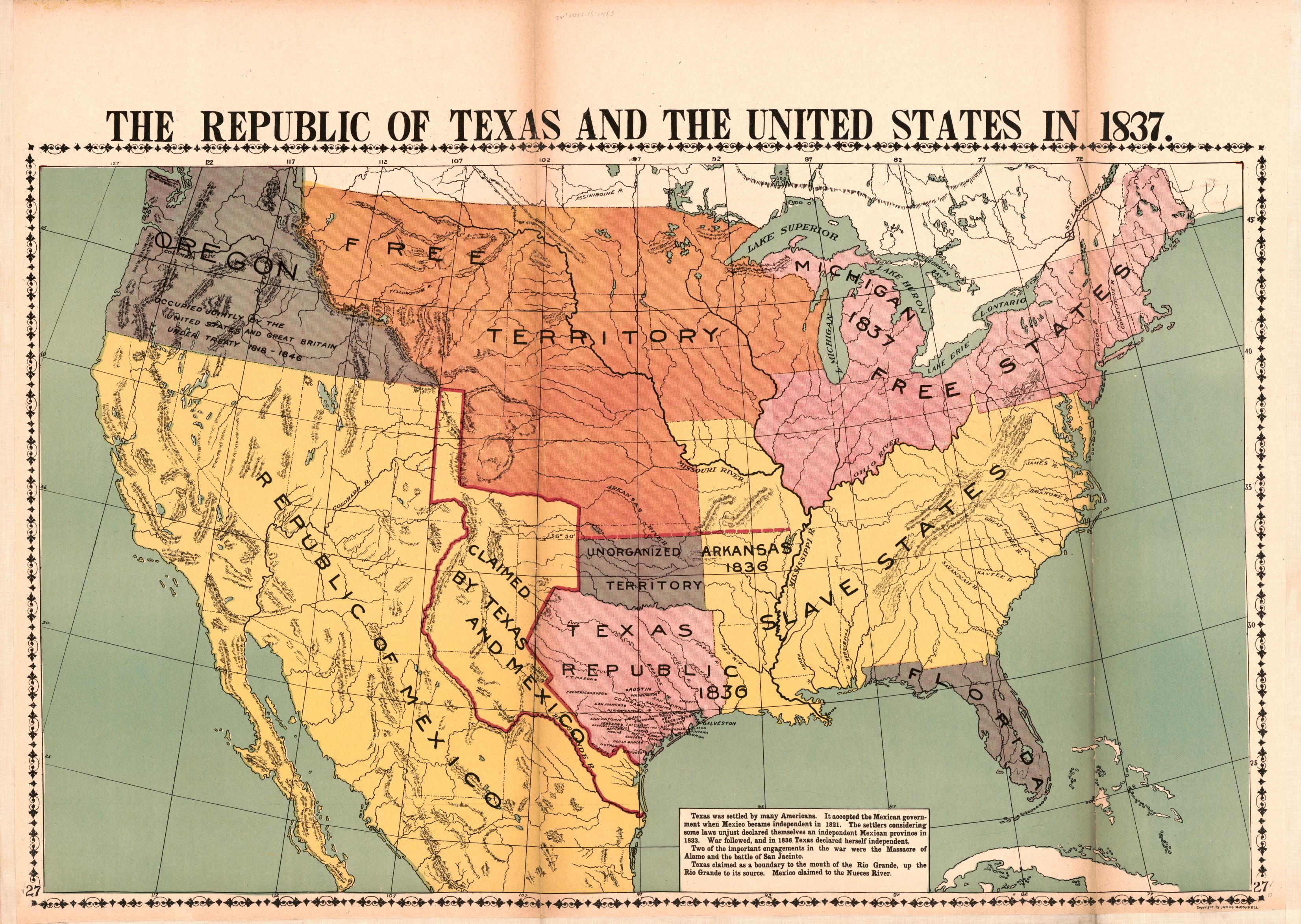
This act of annexation, while celebrated by many in both Texas and the United States, also had immediate and profound consequences. As predicted, it directly led to the Mexican-American War (1846-1848), as Mexico viewed the annexation as an act of war and disputed the boundary of Texas at the Nueces River, while the United States claimed the Rio Grande. The war ultimately resulted in a massive territorial expansion for the United States, acquiring vast lands from Mexico in what is now the American Southwest.
The Enduring Spirit of Texas: Post-Statehood and Modern Identity
The formal act of statehood on December 29, 1845, was not an end but a new beginning for Texas. It integrated the former republic into the fabric of the United States, but it did not erase its distinctive history or its fierce sense of self.
Texas’s Role in the United States
As a state, Texas continued to play a crucial, often tumultuous, role in American history. Just 16 years after joining the Union, Texas seceded from it, joining the Confederacy during the American Civil War. This decision was largely driven by its strong ties to the institution of slavery and its agrarian economy. Following the Civil War and the Reconstruction Era, Texas rejoined the Union, embarking on a new phase of development.
The late 19th and 20th centuries saw Texas transform from a predominantly agricultural state to an economic powerhouse, fueled by the cattle industry, vast oil discoveries (like the Spindletop oilfield near Beaumont), and later, the rise of technology and aerospace industries, particularly in cities like Houston and Dallas. Its strategic location, natural resources, and growing population cemented its status as one of the most influential states in the nation.
Today, Texas stands as a testament to its multifaceted history—a blend of Spanish, Mexican, Anglo-American, and diverse immigrant cultures. Its unique identity is deeply rooted in its period as a republic, fostering a spirit of independence, resilience, and often, an amiable defiance that distinguishes it within the United States. This vibrant blend creates a rich tapestry for any visitor to explore.
Experiencing Texas History Today: Landmarks and Culture
For those keen to connect with the past, Texas offers an abundance of historical sites and cultural experiences that vividly bring its journey to statehood to life. A trip through Texas is more than just sightseeing; it’s an immersive dive into the spirit of the state.
- San Antonio: No historical tour of Texas is complete without visiting the Alamo. This iconic mission-turned-fortress stands as a powerful symbol of the Texas Revolution. Beyond the Alamo, the city boasts four other historic Spanish missions, forming the San Antonio Missions National Historical Park, a UNESCO World Heritage Site. The River Walk offers a charming way to explore the city’s historical heart.
- Houston and La Porte: Just outside Houston, the San Jacinto Battleground State Historic Site commemorates the decisive victory that secured Texas’s independence. Visitors can climb the San Jacinto Monument, the tallest stone column monument in the world, and explore the Battleship Texas, a veteran of both World Wars.
- Washington-on-the-Brazos State Historic Site: This preserved site allows visitors to step back in time to where the Texas Declaration of Independence was signed, offering insights into the birth of the republic.
- Austin: The capital city is home to the majestic Texas State Capitol, an architectural marvel and the seat of Texas government. Tours provide a glimpse into the state’s political history and current legislative process.
Beyond specific sites, the cultural fabric of Texas tells its story. The state’s cuisine, for instance, reflects its diverse heritage, from world-renowned Tex-Mex dishes that fuse Mexican and American flavors, to legendary BBQ styles unique to central and east Texas. The music scene, especially country and blues, echoes the state’s deep roots and independent spirit. The blend of German and Czech influences in towns like Fredericksburg and Luckenbach in the Hill Country showcases another layer of immigration and cultural development, adding to the state’s vibrant tapestry.
Planning Your Historical Texas Journey
For travelers seeking to immerse themselves in Texas’s rich history, the opportunities are endless. Whether you are interested in exploring specific landmarks, understanding cultural evolution, or simply soaking in the unique Texan atmosphere, planning your trip can be an exciting endeavor.
When considering a historical tour, factor in the vast distances between cities and sites. Major hubs like Dallas, Houston, San Antonio, and Austin serve as excellent bases, offering a wide range of accommodation options, from luxury resorts to boutique hotels and budget-friendly stays. For instance, San Antonio offers numerous hotels along its famous River Walk, providing easy access to historical sites. In Austin, visitors can find modern hotels close to the Capitol and bustling downtown areas.
Consider self-driving tours to appreciate the diverse landscapes, from the rugged beauty of Big Bend National Park in West Texas to the coastal charm of Padre Island National Seashore. Many historical sites are well-preserved and offer interpretive centers, guided tours, and interactive exhibits, making the past accessible and engaging for all ages.
The story of “When was Texas established as a state?” is more than a simple answer of December 29, 1845. It is an invitation to explore the profound historical forces that shaped this remarkable state, to walk in the footsteps of heroes and pioneers, and to experience firsthand the enduring legacy of a place that truly defines “Lone Star” spirit. From its revolutionary birth to its present-day dynamism, Texas offers a journey through history that is as grand and unforgettable as the state itself.
LifeOutOfTheBox is a participant in the Amazon Services LLC Associates Program, an affiliate advertising program designed to provide a means for sites to earn advertising fees by advertising and linking to Amazon.com. Amazon, the Amazon logo, AmazonSupply, and the AmazonSupply logo are trademarks of Amazon.com, Inc. or its affiliates. As an Amazon Associate we earn affiliate commissions from qualifying purchases.