
The crisp, cold air of March 5, 1770, hung heavy over the streets of Boston, a city already simmering with discontent. On that fateful evening, a confrontation between British soldiers and a crowd of American colonists escalated into a violent clash, forever etched into the annals of history as the Boston Massacre. This pivotal event, occurring over five years before the formal outbreak of the American Revolution, served as a powerful catalyst, galvanizing colonial sentiment against British rule and illuminating the deep-seated tensions that would ultimately lead to independence. For anyone keen to delve into the origins of a nation, understanding the context, events, and aftermath of this tragedy is paramount, offering a profound connection to the historical pulse of the United States. Today, Boston stands as a vibrant testament to its revolutionary past, inviting travelers from across the globe to walk the very same cobblestone streets where history was made, transforming abstract historical dates into tangible, immersive experiences.
A City on Edge: The Precursors to Conflict
To fully grasp the significance of March 5, 1770, one must first understand the volatile atmosphere that had gripped Boston for years prior. The city, a bustling port and intellectual hub, found itself at the forefront of colonial resistance against what many perceived as oppressive policies enacted by the British Parliament and King George III. This period was marked by a series of contentious acts and escalating tensions that made a violent confrontation almost inevitable.
British Troops in Boston: A Tense Occupation
By 1768, the presence of British troops in Boston had become a constant, irritating reminder of imperial control. Two regiments of the British Army, the 14th and 29th, were dispatched to Massachusetts to enforce the widely unpopular Townshend Acts and to quell the growing unrest among the colonists. These acts imposed duties on various goods imported into the colonies, including glass, lead, paints, paper, and tea, igniting fierce opposition from merchants and citizens who argued against taxation without representation.
The soldiers, often poorly paid and competing with colonists for scarce jobs, were frequently seen as an occupying force rather than protectors. Their presence led to numerous altercations, brawls, and a general sense of unease. Taverns, public squares, and even daily interactions were fraught with potential conflict. The sight of red-coated soldiers patrolling the streets, particularly around key governmental buildings and commercial areas like the Custom House, was a daily grievance for many Boston residents. This simmering resentment created an explosive environment where a minor incident could rapidly spiral out of control. The city was a powder keg, and on that chilly evening in March, a spark would finally ignite it.
Economic Grievances and Political Unrest
The Townshend Acts were not the first, nor the only, source of colonial dissatisfaction. Earlier legislation, such as the Stamp Act of 1765, which imposed a tax on all paper documents in the colonies, had already ignited widespread protests and boycotts. Organizations like the Sons of Liberty, led by figures such as Samuel Adams, actively organized resistance, using pamphlets, public demonstrations, and boycotts to challenge British authority. The economic burden of these taxes, coupled with the philosophical argument against British parliamentary supremacy over colonial legislatures, fueled a powerful political movement towards greater autonomy. Boston was the epicenter of this radical political thought, making it a natural flashpoint for imperial-colonial tensions. The constant push and pull between British attempts to assert control and colonial efforts to resist it created a deeply polarized society, setting the stage for the tragic events of the Boston Massacre.
That Fateful Evening: March 5, 1770
The day began like any other, but as dusk settled over Boston, a series of minor incidents quickly escalated into a full-blown crisis. The evening of March 5, 1770, remains a stark reminder of how quickly political tensions can erupt into violence, and its details have been scrutinized by historians for centuries.
The Spark at the Custom House
The initial confrontation began innocuously enough. A young wigmaker’s apprentice named Edward Garrick reportedly insulted Private Hugh White, a British soldier standing guard outside the Custom House on King Street (modern-day State Street). The insult, possibly related to an unpaid bill or a comment about an officer, quickly led to a physical altercation. Private White reportedly struck the boy with his musket.
Word of the incident spread rapidly through the narrow, lamp-lit streets of Boston. A crowd of colonists, already agitated by the presence of British soldiers and fueled by earlier minor scuffles throughout the day, began to gather. They converged on King Street, armed with snowballs, stones, and sticks, taunting Private White and shouting “Fire!” and “Kill them!” The scene quickly devolved into a chaotic and dangerous mob, with the isolated sentry facing an increasingly hostile crowd. The ringing of church bells, usually a sign of fire, further amplified the panic and drew more people into the fray, creating a crescendo of noise and fear.
The Shots Fired: A Tragic Outcome
As the mob swelled, Private White, feeling overwhelmed and threatened, called for reinforcements. Captain Thomas Preston, the officer of the day, responded, leading a small detachment of seven or eight soldiers to the scene. They advanced with fixed bayonets, forming a defensive semicircle around Private White and the Custom House.
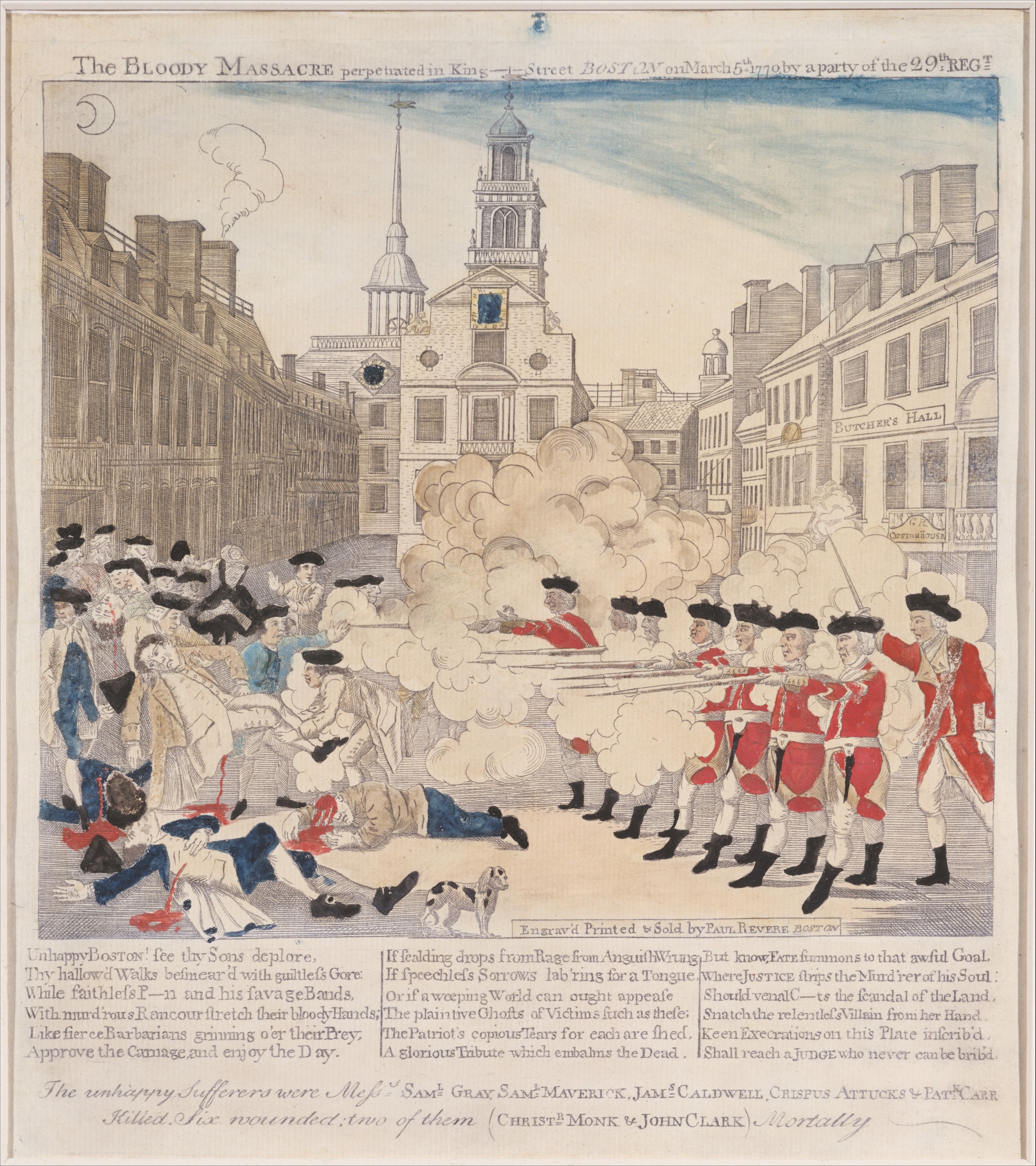
The crowd continued to press forward, pelting the soldiers with snowballs, ice chunks, and oyster shells, shouting insults and challenging them to fire. Amidst the confusion and cacophony, a soldier was reportedly struck, causing him to discharge his musket. This single shot, whether accidental or intentional, triggered a volley of fire from the other soldiers. In the smoke and chaos, five colonists fell dead or mortally wounded. The victims were Crispus Attucks, a sailor of African and Native American descent, often cited as the first casualty of the American Revolution; James Caldwell, a mariner; Patrick Carr, an Irish immigrant and leather worker; Samuel Gray, a rope maker; and a young apprentice named Samuel Maverick. The streets of Boston were stained with colonial blood, and the incident irrevocably altered the course of Anglo-American relations. The gunfire silenced the crowd momentarily, but the echoes of those shots would reverberate for years to come, profoundly shaping the narrative of colonial grievance.
The Aftermath and Its Enduring Legacy
The immediate aftermath of the Boston Massacre was a mix of shock, outrage, and calculated political maneuvering. The tragedy ignited a propaganda war and solidified colonial unity against British oppression, establishing itself as a crucial turning point on the road to independence.
The Trials and Propaganda War
In the wake of the massacre, Captain Thomas Preston and the eight soldiers involved were arrested and charged with murder. Fearful of further unrest, acting governor Thomas Hutchinson ordered the British troops to withdraw from Boston to Castle William in the harbor. The subsequent trials, held in late 1770, became a critical test of justice and an arena for political drama. Surprisingly, two prominent Patriot leaders, John Adams and Josiah Quincy II, agreed to defend the British soldiers. Adams, despite his strong colonial sympathies, believed that every person deserved a fair trial and that upholding the rule of law was essential for the legitimacy of the colonial cause. His courageous defense led to the acquittal of Captain Thomas Preston and six of the soldiers, while two others were found guilty of manslaughter. Their punishment was branding on the thumb.
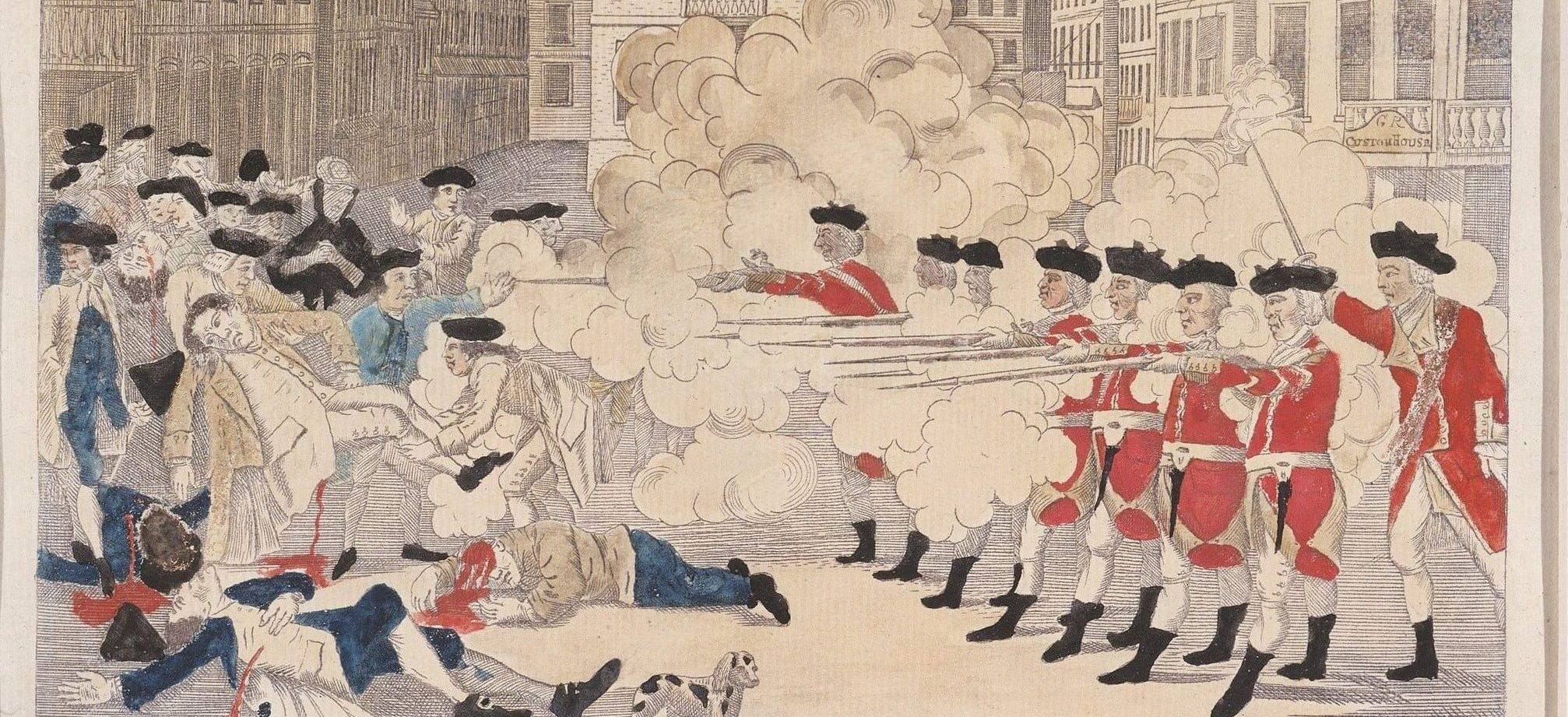
While the legal proceedings ran their course, Patriot leaders quickly seized upon the massacre as a powerful tool for propaganda. Samuel Adams, Paul Revere, and other Sons of Liberty members worked diligently to portray the event as a cold-blooded slaughter of innocent colonists by tyrannical British soldiers. Paul Revere’s famous engraving, “The Bloody Massacre in King-Street,” though historically inaccurate in many details (depicting the soldiers firing on an orderly crowd under the command of an officer), became an iconic image. It was widely circulated throughout the colonies, inflaming anti-British sentiment and hardening the resolve of many colonists to resist imperial policies. This deliberate shaping of public opinion demonstrated the nascent power of media and public relations in revolutionary struggles.

Catalyst for Revolution
The Boston Massacre was not the start of the American Revolution, but it was undeniably a critical catalyst. It transformed abstract political grievances into a tangible, emotional narrative of British brutality. For the first time, colonial blood had been shed directly by British regulars in a confrontation born of political tensions. This event fueled the fires of rebellion, uniting disparate colonial factions and solidifying the image of a common enemy.
While a period of relative calm followed, the memory of the massacre lingered, re-emerging with renewed intensity during subsequent conflicts, such as the Boston Tea Party in 1773 and the Battles of Lexington and Concord in 1775. The narrative of the “innocent martyrs” of the Boston Massacre became a rallying cry, deepening the colonists’ commitment to self-governance and ultimately, to complete independence from Great Britain. It served as a potent symbol of the stakes involved, cementing the conviction that liberty might indeed require bloodshed.
Experiencing History: Visiting Boston Today
For travelers and history enthusiasts, Boston offers an unparalleled opportunity to step back in time and immerse oneself in the very places where these momentous events unfolded. The city has meticulously preserved its revolutionary past, making it a living museum that seamlessly blends historic landmarks with modern urban life, offering a unique travel experience that resonates with the core themes of history and tourism.
Following the Freedom Trail
One of the most engaging ways to experience Boston’s revolutionary history is by walking the Freedom Trail. This 2.5-mile-long red-lined path connects 16 historically significant sites, leading visitors directly to the heart of the Boston Massacre site and beyond. Beginning at Boston Common, America’s oldest park, the trail guides you through a narrative of defiance and determination.
At the very spot where the massacre occurred, now marked by a commemorative circle on State Street, stands the iconic Old State House. This magnificent Georgian brick building, once the seat of British colonial government, served as the backdrop to the tragedy, with royal governors and assembly members observing the escalating tensions from its windows. Inside, visitors can explore exhibits detailing the massacre, the trials, and the broader colonial struggle. Just a short walk away, you can visit Faneuil Hall, known as the “Cradle of Liberty,” where Samuel Adams and other Patriots rallied colonists to the cause of independence. Further along the trail, the Paul Revere House, the oldest building in downtown Boston, provides insight into the life of the famous silversmith and propagandist. The Granary Burying Ground, another stop, is the final resting place of massacre victims Crispus Attucks, Samuel Gray, and James Caldwell, alongside other revolutionary figures like John Hancock and Samuel Adams. This walking tour transforms dry historical facts into a vibrant, multi-sensory journey, making the past feel intimately present.
Staying in Historic Boston: Hotels and Accommodation
For travelers planning a historical deep-dive into Boston, choosing the right accommodation can significantly enhance the experience. The city offers a wide range of hotels, from luxurious boutique properties nestled in historic neighborhoods to modern resorts with breathtaking views, catering to diverse preferences and budgets. Many establishments seamlessly blend contemporary comfort with a sense of the city’s rich heritage.
For those seeking an immersive stay, consider hotels located within walking distance of the Freedom Trail and other key landmarks. Imagine waking up just steps from the Old State House or enjoying breakfast with views of the bustling Quincy Market. Options range from elegant, historic hotels that evoke the charm of bygone eras to sleek, contemporary establishments that provide all modern amenities. You might find a cozy room at The Liberty Inn, a charming boutique hotel renowned for its personalized service, or perhaps opt for the spacious comfort of Revolutionary Suites, ideal for families or longer stays. For a more opulent experience, the Colonial Grand Hotel offers luxury accommodations with period-inspired decor and top-tier amenities, ensuring a lavish retreat after a day of historical exploration. Boston’s hotel scene is as diverse as its history, promising a perfect base for every kind of traveler.
Immersing in Boston’s Lifestyle and Culture
Beyond the specific historical sites, visiting Boston offers a chance to experience a city that lives and breathes its heritage while embracing a vibrant modern lifestyle. The blend of old and new is evident everywhere, from its architecture to its culinary scene. After tracing the steps of revolutionaries, visitors can explore the city’s diverse neighborhoods, each with its unique character. Enjoy authentic New England clam chowder or fresh seafood at a historic restaurant, or delve into the contemporary culinary landscape.
Boston’s local culture is deeply intertwined with its past. You can attend a baseball game at Fenway Park, visit world-class museums, or explore charming streets like those in Beacon Hill. The city offers a dynamic array of activities, whether it’s taking a whale-watching tour from the harbor, exploring the USS Constitution at Charlestown Navy Yard, or climbing the Bunker Hill Monument for panoramic views. This seamless integration of history with contemporary life allows travelers to not only learn about the past but also to experience the enduring spirit of innovation and resilience that defines Boston to this day. It’s a destination where history isn’t just displayed; it’s actively lived and celebrated, offering a rich tapestry of experiences for every visitor.
The Boston Massacre, though a tragic incident, stands as a testament to the complex forces that shaped the birth of a nation. On March 5, 1770, a city on edge erupted, forever altering the trajectory of colonial America. For those drawn to stories of courage, conflict, and the forging of identity, Boston remains an indispensable destination. By walking its historic streets, exploring its legendary landmarks, and immersing oneself in its unique culture, travelers can gain a profound appreciation for the sacrifices made and the ideals fought for, bringing the pivotal events of the American Revolution to vivid, unforgettable life.