
California, a land synonymous with sun-drenched beaches, iconic [Hollywood] glamour, breathtaking national parks, and vibrant cities, beckons millions of travelers each year. From the majestic redwoods of the north to the desert landscapes of the south, the Golden State offers an unparalleled array of experiences. Yet, beneath its picturesque surface lies a dynamic geological reality: [California] is an active seismic zone. This often leads prospective visitors, and even residents, to ponder the frequency and impact of earthquakes, particularly the pressing question: “When was the last earthquake in [California]?” For those planning their next adventure, understanding this natural phenomenon is key to a confident and enjoyable trip. While tremors are a regular occurrence, the state’s advanced infrastructure and robust safety protocols mean that seismic activity rarely disrupts the everyday traveler’s experience.
Understanding California’s Seismic Landscape
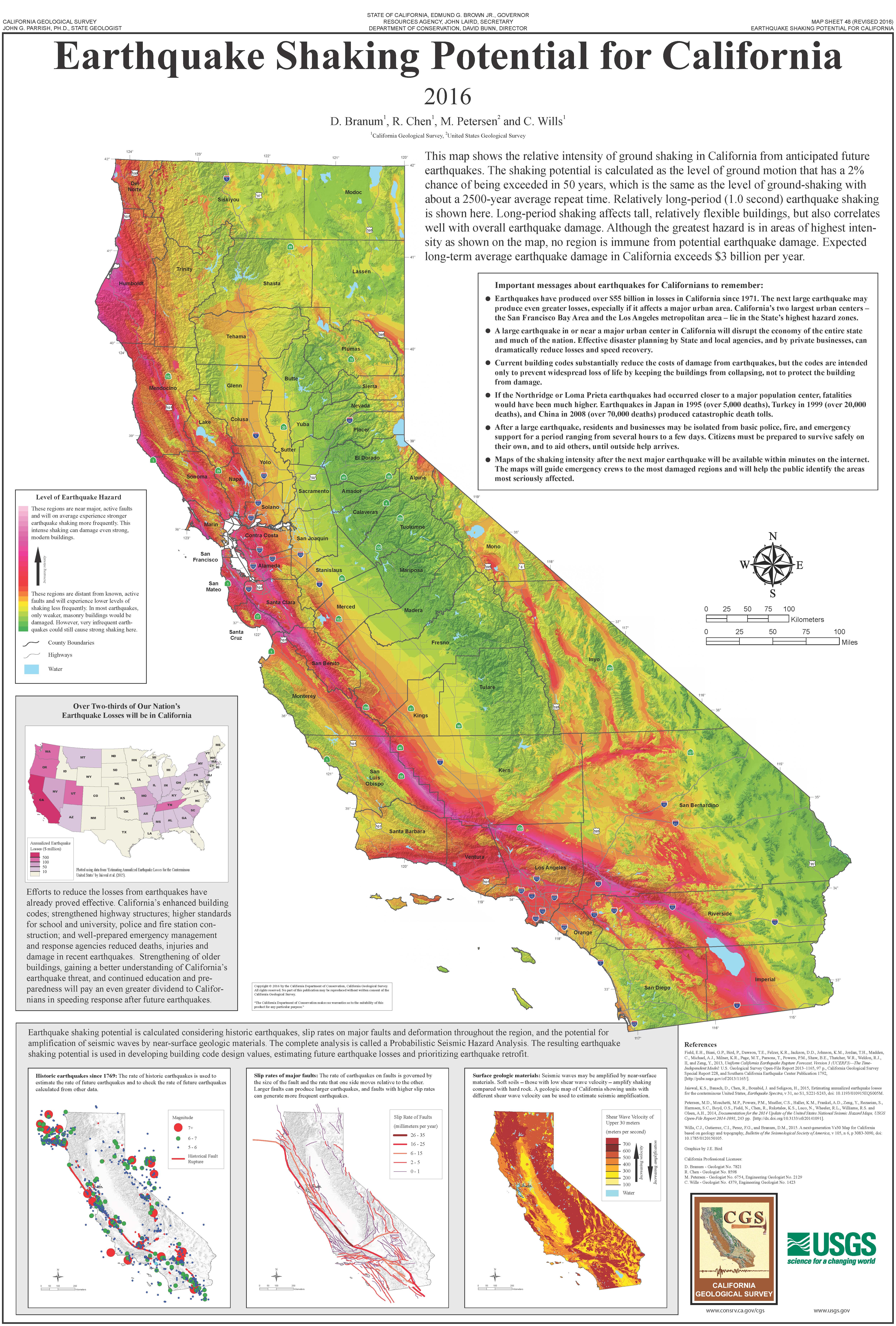
To truly appreciate the answer to “when was the last earthquake,” it’s essential to grasp the fundamental geological forces at play. [California]’s position on the western edge of the [North American Plate], bordering the vast [Pacific Plate], places it squarely in one of the most seismically active regions on Earth. This boundary is part of the infamous [Pacific Ring of Fire], a horseshoe-shaped belt spanning approximately 40,000 kilometers, where a majority of the world’s earthquakes and volcanic eruptions occur, stretching from the coasts of [Chile] to [Alaska], across [Japan], and down to [New Zealand].
The Ring of Fire and Tectonic Plates
The immense pressure generated by the grinding movement of these colossal tectonic plates along their fault lines is the primary cause of earthquakes in [California]. The most renowned of these fault lines is the [San Andreas Fault], a continental right-lateral strike-slip fault that runs for approximately 1,200 kilometers through [California]. It essentially marks the boundary where the [Pacific Plate] is sliding northwest past the [North American Plate]. While the [San Andreas Fault] is the most famous, [California] is crisscrossed by hundreds of other active faults, both major and minor, all contributing to the state’s seismic character. These include the [Hayward Fault] in the [San Francisco Bay Area], the [Newport-Inglewood Fault] stretching through [Los Angeles] and [Orange County], and numerous faults throughout the [Mojave Desert] and [Sierra Nevada] mountain range. Understanding this network of faults helps explain why seismic activity is so widespread across the state.
A History of Seismic Activity
Earthquakes are not an anomaly in [California]; they are a fundamental aspect of its geological identity. The state experiences thousands of earthquakes annually, though the vast majority are minor, often imperceptible tremors detected only by sophisticated scientific instruments. These constant, small movements are a natural release of the tectonic stress accumulating beneath the surface. Historically, [California] has been shaped by these powerful geological events, leading to its unique mountain ranges, valleys, and coastlines. For residents and frequent visitors, seismic activity is a part of life, and the infrastructure, building codes, and public preparedness measures have evolved significantly over decades to ensure safety and resilience. This continuous, low-level activity actually helps to alleviate pressure that might otherwise build up for a single, much larger event. Therefore, when people ask about “the last earthquake,” they are typically referring to one significant enough to be widely felt or cause noticeable effects, rather than the constant background hum of micro-tremors.
Pinpointing the Latest Significant Seismic Events
While seismographs detect minor rumblings in [California] almost constantly, the query “When was the last earthquake in [California]?” usually refers to a seismic event that was widely felt and reported, impacting residents and potentially travelers. For the purpose of providing relevant context for tourism and lifestyle, we focus on events that garnered significant public attention and discussion.
Details of the Last Significant Event: The Ridgecrest Earthquakes
The most recent widely felt and impactful seismic sequence in [California] occurred in the [Mojave Desert] near the town of [Ridgecrest] in July 2019. This sequence began with a magnitude 6.4 foreshock on July 4th, followed by a much larger magnitude 7.1 mainshock on July 5th. Both earthquakes originated in the [Searles Valley] area, approximately 200 kilometers northeast of [Los Angeles].
- Magnitude: The mainshock registered a magnitude of 7.1, making it the strongest earthquake in [Southern California] in nearly two decades.
- Location: Centered near [Ridgecrest], in a remote part of the [Mojave Desert].
- Impact: While powerful, due to its remote location, the direct damage was relatively localized. It primarily affected [Ridgecrest] and communities in [Kern County], resulting in some structural damage to older buildings, road fissures, power outages, and isolated fires.
- Widespread Tremors: The magnitude 7.1 earthquake was felt across a vast area, from [Sacramento] in the north to [Mexico] in the south, and even as far east as [Las Vegas], [Nevada]. Many residents in [Los Angeles] and [San Diego] reported feeling prolonged shaking.
- Aftershocks: The mainshock was followed by thousands of aftershocks, some of which were significant enough (e.g., a magnitude 5.4 aftershock) to be felt on their own.
Despite the intensity of the [Ridgecrest] earthquakes, major infrastructure across [California] held up remarkably well, a testament to the state’s stringent building codes and preparedness efforts. For travelers, the key takeaway was that even a significant earthquake in a remote area caused minimal disruption to the major tourist destinations and urban centers. Life and tourism continued largely uninterrupted in cities like [San Francisco], [Los Angeles], and [San Diego], which are accustomed to such events.
Contrast with Micro-Earthquakes
It’s crucial to distinguish between significant seismic events like the [Ridgecrest] quakes and the thousands of micro-earthquakes that occur daily in [California]. Seismologists record hundreds of tremors daily, often below a magnitude of 2.5. These are generally imperceptible to humans and pose no threat. They are a constant reminder of the active geology but have no bearing on travel plans or safety for the average visitor. The “last earthquake” in the technical sense might have been just minutes ago, but it would have been a tiny, unfelt tremor. The focus here is on events that travelers might actually notice or be concerned about, and the [Ridgecrest] quakes serve as the most recent example of a large, widely felt event that showcases the state’s resilience.
Travel and Tourism in a Seismically Active Region
Visiting [California] means embracing its natural beauty, vibrant culture, and indeed, its dynamic geology. While the occasional tremor is a fact of life, the impact on tourism and travel experiences is often minimal, thanks to the state’s robust preparedness and world-class infrastructure. Travel in [California] remains safe, thrilling, and largely unaffected by the constant background hum of seismic activity.
California’s Resilience and Safety Measures
[California]’s long history with earthquakes has fostered a culture of preparedness that is second to none. This commitment to safety manifests in several critical ways:- Stringent Building Codes: Since the devastating [Great San Francisco Earthquake of 1906] and later events like the [Northridge] quake, [California] has continuously updated and implemented some of the most rigorous building codes in the world. New constructions, from hotels and resorts to major landmarks and transportation hubs, are engineered to withstand significant seismic forces. Older buildings are often retrofitted to meet modern standards, especially in high-density urban areas. This means your accommodation, whether a luxury hotel in [Beverly Hills] or an apartment in [San Francisco], is designed with earthquake safety in mind.
- Early Warning Systems: The [ShakeAlert] system, an earthquake early warning system, is operational across [California], [Oregon], and [Washington]. It uses a network of sensors to detect earthquakes and can send alerts to phones and other devices seconds before shaking arrives. While those few seconds might seem short, they can be invaluable, allowing people to “Drop, Cover, and Hold On,” or for automated systems to slow down trains, open fire station doors, and shut off gas lines, significantly mitigating potential damage and injury.
- Emergency Preparedness and Response: State and local agencies, including the California Office of Emergency Services, regularly conduct drills and maintain sophisticated emergency response plans. Hotels, attractions like [Disneyland] and [Universal Studios Hollywood], and transportation providers also have detailed evacuation and safety protocols in place to protect guests and minimize disruption.
What Travelers Should Know: Preparedness Tips
For travelers, a few simple preparedness tips can enhance peace of mind without detracting from the adventure:
- “Drop, Cover, and Hold On”: This is the fundamental safety action during an earthquake. If shaking begins, immediately drop to the ground, take cover under a sturdy table or desk, and hold on until the shaking stops. If no shelter is available, drop to the ground next to an interior wall and protect your head and neck with your arms.
- Familiarize Yourself with Your Accommodation: Upon checking into your hotel or rental, note the location of emergency exits. Most accommodations will have information on earthquake safety procedures posted in rooms or available at the front desk. For a long-term stay, consider where emergency supplies might be stored.
- Stay Informed: Follow local news, weather alerts, and any specific instructions from local authorities or your accommodation provider during and after an event. Apps like [MyShake] (linked to [ShakeAlert]) can provide real-time information.
- Keep a Small Emergency Kit: While hotels often have supplies, carrying a small personal kit with essential medications, a portable charger for your phone, and a small amount of cash is always a good idea when traveling anywhere.
- Don’t Panic: Most earthquakes are brief and harmless. The goal of preparedness is to react calmly and safely, minimizing any potential risk.
Exploring Iconic Landmarks and Cities with Confidence
[California]’s iconic destinations are meticulously managed with safety as a top priority. You can confidently plan visits to the [Golden Gate Bridge], hike in [Yosemite National Park], explore the beaches of [Santa Monica], tour the wineries of [Napa Valley], or enjoy the vibrant culture of [San Francisco] and [Los Angeles]. These destinations, and the infrastructure that supports them, are designed to endure. Tourist experiences are rarely significantly impacted by the seismic activity beyond the occasional widely felt tremor, which is swiftly followed by assessments and a return to normal operations. The state’s commitment to safety ensures that the incredible experiences [California] offers remain accessible and secure for all visitors.Beyond the Latest Tremor: Historical Earthquakes and Their Legacy
While the question “When was the last earthquake in [California]?” often focuses on recent events, understanding [California]’s seismic history provides invaluable context. Each significant earthquake has served as a powerful, albeit tragic, lesson, leading to continuous improvements in building codes, emergency response, and public education, all of which benefit today’s travelers.
The Great San Francisco Earthquake of 1906
Perhaps the most famous and devastating earthquake in [California]’s history occurred on April 18, 1906. The [Great San Francisco Earthquake of 1906], estimated at a magnitude of 7.9, struck off the coast of [Northern California], causing widespread destruction throughout [San Francisco] and surrounding communities. While the initial shaking caused significant damage, it was the subsequent fires, fueled by broken gas lines and a compromised water supply, that truly devastated the city. Tens of thousands of buildings were destroyed, and thousands of lives were lost. This event was a turning point, fundamentally reshaping how cities in [California] approached construction and disaster preparedness. It led to the development of early seismic building codes, advancements in fire-fighting techniques, and a recognition of the critical importance of emergency infrastructure. The resilience and rebuilding efforts that followed became a testament to the spirit of [San Francisco], which emerged from the ashes to become the vibrant global hub it is today.
Other Notable Events
Beyond 1906, several other significant earthquakes have left their mark and contributed to [California]’s preparedness evolution:
- 1989 Loma Prieta Earthquake: Striking on October 17, 1989, just before Game 3 of the World Series in [San Francisco], this magnitude 6.9 earthquake caused widespread damage in the [San Francisco Bay Area]. It led to the collapse of a section of the [Bay Bridge] and the [Cypress Street Viaduct] in [Oakland], claiming 63 lives. The [Loma Prieta] earthquake spurred further upgrades to bridge and highway infrastructure, and intensified research into earthquake engineering, directly benefiting the safety of millions of commuters and travelers today.
- 1994 Northridge Earthquake: On January 17, 1994, a magnitude 6.7 earthquake struck the [San Fernando Valley] area of [Los Angeles]. This event, which occurred on a previously unknown blind thrust fault, caused extensive damage to freeways, commercial buildings, and residential homes, and resulted in 57 fatalities. The [Northridge] quake highlighted the vulnerability of certain types of steel-frame buildings and parking structures, leading to significant revisions in building codes and a massive retrofitting effort across [Southern California]. This has made the metropolitan [Los Angeles] area, with its numerous attractions and accommodation options, significantly safer for residents and tourists alike.
Learning from the Past for Future Travel
The legacy of these historical earthquakes is not one of fear, but of continuous improvement and learning. Each event has provided invaluable data and lessons, propelling [California] to the forefront of seismic research and preparedness. This proactive approach ensures that the state’s infrastructure, from its sprawling highway systems to its world-class hotels and iconic landmarks, is built and maintained to the highest safety standards. For visitors, this means that while the geological forces beneath [California] remain active, the human systems designed to coexist with them are robust and reliable. You can explore the state’s diverse landscapes, vibrant cities, and rich history with the confidence that safety is an integral part of the [California] experience.
In conclusion, while the Earth’s crust beneath [California] is in constant motion, and minor tremors occur daily, the last significant, widely felt earthquake was the [Ridgecrest] sequence in July 2019. [California] has used its seismic history to become a global leader in earthquake preparedness, ensuring that both residents and travelers are as safe as possible. So, as you plan your dream vacation to explore [Yosemite National Park]’s granite cliffs, stroll along [Santa Monica]’s pier, or delve into the cultural tapestry of [San Francisco], rest assured that the Golden State is not only prepared for earthquakes but also continues to offer unforgettable travel, accommodation, and lifestyle experiences. The occasional rumble is simply a reminder of the powerful, dynamic natural forces that have shaped this incredible destination.
LifeOutOfTheBox is a participant in the Amazon Services LLC Associates Program, an affiliate advertising program designed to provide a means for sites to earn advertising fees by advertising and linking to Amazon.com. Amazon, the Amazon logo, AmazonSupply, and the AmazonSupply logo are trademarks of Amazon.com, Inc. or its affiliates. As an Amazon Associate we earn affiliate commissions from qualifying purchases.