
For many, the very idea of snow falling in Florida sounds like an oxymoron, a whimsical notion plucked from a dream rather than a meteorological reality. The Sunshine State is synonymous with perpetual warmth, sun-drenched beaches, and palm trees swaying in a gentle breeze – a coveted escape for those seeking to flee the biting cold of northern winters. Yet, remarkably, snow has indeed graced various parts of Florida on several rare occasions throughout history. These fleeting moments of winter wonder are so uncommon that they become legendary tales, passed down through generations and etched into the state’s climatic lore.
The question of “When was the last time it snowed in Florida?” isn’t just a query about weather; it’s an inquiry into the very essence of a destination often perceived as immune to winter’s chill. For travelers planning a getaway, understanding Florida’s climate is crucial, not just to pack appropriately, but to appreciate the unique allure that makes it one of the most popular travel destinations in the United States. While you certainly won’t need your ski gear, delving into these rare frosty occurrences offers a fascinating insight into the state’s natural history and the sheer unlikeliness of a true Florida “snow day.”

A Glimpse into Florida’s Rare Winter Wonderland Moments
To understand the rarity, we must look back at the instances when Florida briefly transformed from a tropical paradise into a landscape kissed by winter’s icy breath. These events are few and far between, often confined to specific regions and rarely involving significant accumulation.
The Most Recent Flurries: A Historical Review
The most recent verifiable snowfall in Florida occurred on January 3, 2018. While minimal, residents of Tallahassee, the state capital located in the Panhandle, woke up to a dusting of snow and sleet. This event marked the first measurable snowfall in Tallahassee in 29 years, drawing considerable excitement and local media attention. Roads were slick, and schools were even closed for a day – a truly extraordinary occurrence for a Florida city. Images of snow-covered palm trees quickly went viral, capturing the surreal beauty of the moment.
Before 2018, the last significant snowfall across a wider portion of Florida happened on December 22-23, 1989. During this intense cold snap, snow flurries were reported as far south as South Florida, though accumulation was mostly limited to the northern and central parts of the state. Jacksonville, located in Northeast Florida, saw its first white Christmas in recorded history with up to an inch of snow. This event caused significant agricultural damage, particularly to the citrus crops, and served as a stark reminder of how vulnerable Florida’s subtropical agriculture is to extreme cold. Even cities like Orlando reported trace amounts of snow during this period.
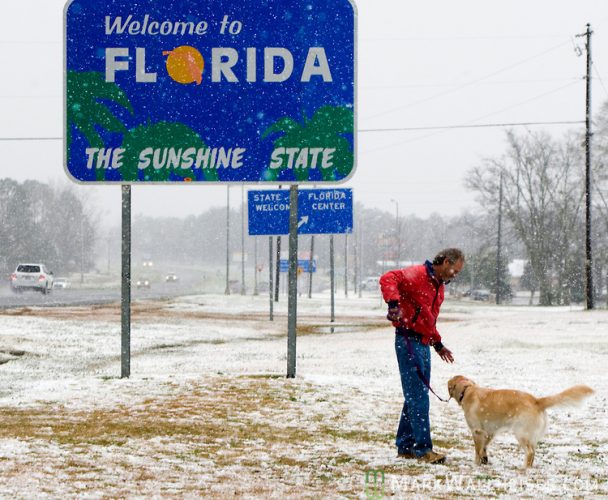
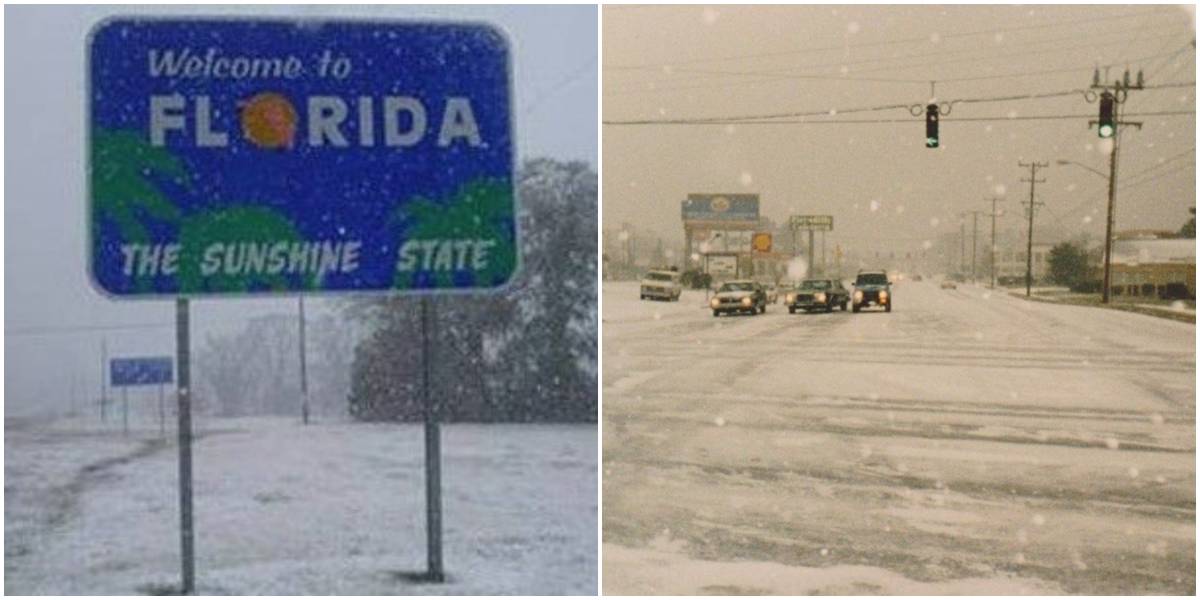
However, the most famous and widespread snowfall event in Florida’s history occurred on January 19, 1977. On this remarkable day, snow fell across virtually the entire state, reaching as far south as Miami and Homestead. While accumulations were generally light, typically a dusting or trace, it was the sheer geographical reach that made this event so memorable. People in Miami, accustomed to year-round sunshine, were astonished to see flakes falling from the sky. This remains the only time in recorded history that snow has fallen in Miami. Children who had never seen snow before ran outside to experience the novelty, and local news broadcasts treated it as an unprecedented phenomenon.
Other notable, albeit less widespread, snowfalls include:
- February 13, 1899: This was arguably the most severe cold snap in Florida’s history, with temperatures plummeting below freezing across almost the entire state. Snow accumulated in many areas, including along the Gulf Coast and even into Central Florida.
- March 6, 1954: Snow flurries were observed in North Florida, including Jacksonville.
- February 25, 1984: A light dusting of snow was reported in parts of North Florida, specifically around Jacksonville and Daytona Beach.
These events underscore just how extraordinary it is for Florida to experience snowfall. For most residents, seeing snow is a once-in-a-lifetime occurrence, and for many travelers, it’s something they’d never expect to encounter in a state famed for its tropical allure.
Understanding Florida’s Climate: Why Snow is So Rare
The primary reason snow is such a rarity in Florida lies in its geographical location and unique climate. Situated at a low latitude, much of the state lies within subtropical climate zones, transitioning to tropical in Southern Florida, including the Florida Keys. This means that even during the coldest months of December, January, and February, average temperatures typically remain well above freezing.
For snow to fall, two critical conditions must be met simultaneously:
- Freezing Temperatures: The air temperature from the clouds all the way down to the ground must be at or below 32°F (0°C).
- Sufficient Moisture: There must be enough moisture in the atmosphere to form precipitation.
In Florida, particularly during the winter, these two conditions rarely align. While cold fronts do push down from the north, bringing chilly air, this airmass often warms considerably as it travels across the temperate landmass and over the warm waters of the Gulf of Mexico and the Atlantic Ocean. The warm Gulf Stream current also plays a significant role in moderating coastal temperatures.
When a cold front is strong enough to bring freezing air into Florida, it often means that the moisture associated with the front has already been “wrung out” further north. Conversely, when there is ample moisture in the atmosphere over Florida, temperatures are typically too warm for snow, resulting in rain. It takes an exceptionally rare combination of a powerful arctic air mass plunging deep into the peninsula and a coincidental infusion of moisture at precisely the right time for snow to even be possible. This is why when snow does fall, it’s usually in the northernmost parts of the state and often appears as light flurries or sleet rather than heavy, accumulating snowfall.
The Impact of a “Snow Day” on the Sunshine State
When the unthinkable happens and snow touches down in Florida, the reaction is unlike anywhere else in the United States. It’s not just a weather event; it’s a cultural phenomenon.
Local Reactions and Media Frenzy
For Florida residents, especially children, a snow day is nothing short of magical. Many people have lived their entire lives without seeing a single snowflake, making even a light dusting an awe-inspiring spectacle. The novelty sparks an immediate flurry of excitement: people rush outside to take pictures of snow on palm trees, build miniature snowmen (often made of icy slush), and simply marvel at the unusual landscape. Schools, rarely equipped to handle freezing conditions, sometimes close, adding to the sense of an unexpected holiday. Local news channels go into overdrive, providing continuous coverage of the rare weather and sharing heartwarming stories of residents experiencing snow for the first time. It becomes a shared memory, a unique bond among those who witnessed it.
This contrasts sharply with regions accustomed to snow, where winter weather often brings disruptions, shoveling, and travel headaches. In Florida, the temporary inconvenience is usually overshadowed by sheer wonder and the joy of witnessing something truly extraordinary. It’s a moment that briefly unifies communities in shared astonishment and celebration of a climatic anomaly.
Minor Disruptions vs. Major Travel Experiences
While a Florida snow event can lead to minor disruptions like icy patches on roads or temporary school closures, it rarely causes the widespread chaos seen in northern states. The infrastructure isn’t designed for snow, but the minimal accumulation means the state quickly thaws and returns to its sunny normal.
For travelers, encountering snow in [Florida](https://lifeoutofthebox.com/florida] would undoubtedly be one of the most unique and unforgettable travel experiences of a lifetime. Imagine visiting Walt Disney World Resort in Orlando and seeing Cinderella Castle lightly dusted with white, or strolling along a Jacksonville beach with snowflakes swirling in the air. These moments, though incredibly rare, would transform a typical sunny vacation into a legendary tale to share for years to come. It fits perfectly into a “lifestyle travel” narrative, offering a truly unique, almost impossible, story that money can’t buy. While no one plans a Florida trip hoping for snow, the accidental witnessing of such an event would elevate a simple getaway into an extraordinary adventure, cementing its place in personal travel lore.
Beyond Snow: Experiencing Florida’s Winter Charm
While the prospect of snow in Florida is undeniably fascinating, it’s crucial for travelers to remember that such occurrences are anomalies, not expectations. The true charm of a Florida winter lies in its consistently pleasant, mild, and sunny weather, offering a stark contrast to the frigid conditions prevalent across much of the Northern Hemisphere.
When the Weather Isn’t White: Popular Winter Activities
The vast majority of visitors flock to Florida during the winter months precisely because of its predictable warmth. It’s the ideal destination to escape the cold, recharge, and indulge in a wide array of outdoor activities and attractions.
- Beaches: From the pristine sands of the Panhandle to the vibrant shores of Miami Beach, Florida’s coastline remains inviting. While the ocean might be a bit too cool for swimming for some, the beaches are perfect for sunbathing, shelling, long walks, and enjoying breathtaking sunsets. Destinations like St. Augustine, Fort Lauderdale, and Clearwater Beach are particularly popular.
- Theme Parks: Orlando reigns supreme as the theme park capital of the world. Walt Disney World Resort and Universal Orlando Resort are bustling with visitors seeking magical experiences. The cooler winter temperatures make exploring these expansive parks far more comfortable than during the sweltering summer months.
- Outdoor Adventures: Florida’s natural beauty truly shines in winter. Explore the unique ecosystem of Everglades National Park on an airboat tour, kayak through the mangroves, or go birdwatching in one of the state’s numerous wildlife refuges. Golfing is a prime activity, with courses across the state benefiting from the temperate climate. Fishing, boating, and hiking are also incredibly popular.
- City Exploration: Cities like Miami, Tampa, Orlando, and Jacksonville offer vibrant urban experiences, from world-class dining and shopping to arts and culture. The pleasant winter weather makes exploring pedestrian-friendly areas, outdoor markets, and waterfront promenades a delight. Even a trip to the iconic Key West in the Florida Keys is at its most comfortable during winter.
- Local Culture and Food: Winter is an excellent time to delve into Florida’s diverse local culture. Enjoy fresh seafood, explore Cuban influences in Miami’s Little Havana, or savor Southern cuisine in North Florida. Many outdoor festivals and events take place during these cooler months, offering a fantastic opportunity to experience the local lifestyle.
Planning Your Florida Winter Getaway
When planning your Florida winter getaway, focus on embracing the warmth and the incredible array of attractions the state offers, rather than anticipating an unlikely snowfall.
- Accommodation: Florida boasts an extensive range of accommodation options to suit every budget and travel style. From luxurious five-star resorts in Palm Beach and Miami Beach to family-friendly hotels near Orlando’s theme parks, charming boutique villas in historic St. Augustine, and spacious vacation apartments perfect for longer stays, you’ll find the ideal base for your adventures. Consider amenities like heated pools or beachfront access for optimal winter enjoyment. Booking in advance is highly recommended, especially for popular destinations like Orlando, Miami, and the Florida Keys, as winter is peak tourist season.
- Budget vs. Luxury: Florida caters to all types of travelers. You can plan a budget-friendly trip by exploring state parks, picnicking on beaches, and staying in more affordable hotels or apartments. Alternatively, indulge in a luxury travel experience with high-end resorts, gourmet dining, and exclusive experiences. Many resorts offer suites with stunning views and top-tier amenities.
- Family, Business, or Solo: Whether it’s a family trip to Walt Disney World Resort, a business stay in Tampa, or a solo adventure exploring the natural beauty of Lake Okeechobee and beyond, Florida offers diverse experiences. Look for accommodations and activities tailored to your specific needs.
- Tips for Travelers: Pack layers, as mornings can be cool, but afternoons are often warm. Sunscreen and hats are still essential. Renting a car is often the best way to explore, allowing you to venture beyond major tourist hubs. Engage with local tourism guides to discover hidden gems and authentic experiences.
In conclusion, while the question “When was the last time it snowed in Florida?” elicits fascinating historical anecdotes and highlights the extraordinary nature of such events, it’s not a weather phenomenon to factor into your travel plans. Florida’s enduring appeal as a winter destination lies in its reliable sunshine, balmy temperatures, and an abundance of attractions. Whether you’re seeking theme park thrills, serene beach escapes, vibrant city life, or adventurous outdoor pursuits, the Sunshine State promises an unforgettable winter getaway – one where the only white you’re likely to encounter is the sugary sand of its stunning beaches.
LifeOutOfTheBox is a participant in the Amazon Services LLC Associates Program, an affiliate advertising program designed to provide a means for sites to earn advertising fees by advertising and linking to Amazon.com. Amazon, the Amazon logo, AmazonSupply, and the AmazonSupply logo are trademarks of Amazon.com, Inc. or its affiliates. As an Amazon Associate we earn affiliate commissions from qualifying purchases.