
The story of the Texas annexation is a pivotal chapter in North American history, a tale woven with threads of independence, diplomatic maneuvering, and territorial expansion that irrevocably reshaped the map of the United States. More than just a date on a calendar, it represents a profound shift in geopolitical power, laying the groundwork for future conflicts and defining the character of one of the American nation’s most distinctive regions. For history enthusiasts and travelers alike, understanding this complex period offers a deeper appreciation of the landmarks, culture, and enduring spirit found across the Lone Star State today.
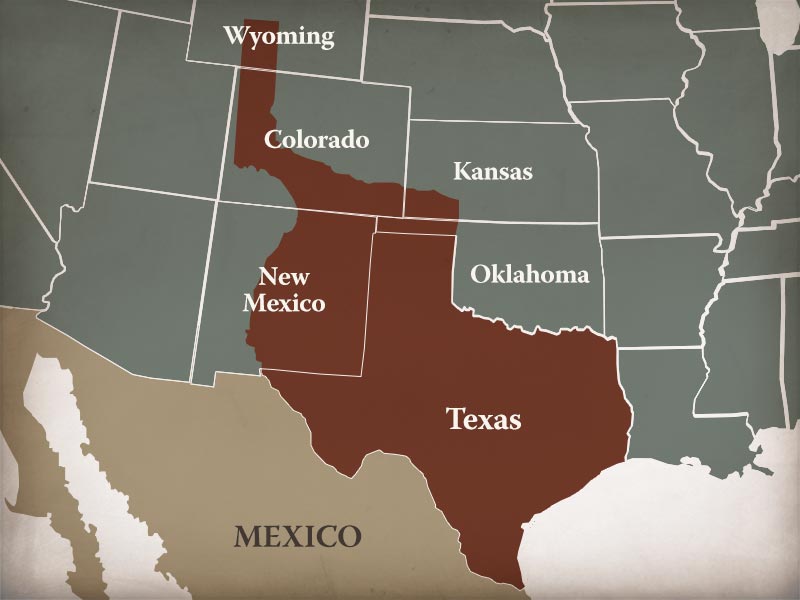
The annexation wasn’t a sudden event but the culmination of decades of tension, ambition, and strategic calculation. It officially occurred on December 29, 1845, when Texas formally entered the United States as its 28th state. However, to truly grasp the significance of this moment, one must journey back through the years of struggle for independence, the delicate balance of international relations, and the fervent domestic debates that raged within the young American republic. Exploring the places where these events unfolded allows visitors to connect directly with the past, transforming historical facts into tangible experiences.
The Road to Independence: From Mexican Rule to Lone Star Republic
The origins of Texas’ journey toward annexation lie in the early 19th century, a period marked by shifting empires and the relentless westward expansion of the United States. Mexico, having recently gained independence from Spain, sought to populate its northern frontier to ward off indigenous raids and solidify its territorial claims. This led to an open invitation for American settlers, an offer that would ultimately backfire.
Early Encounters and the Push for Settlement
In the early 1820s, figures like Stephen F. Austin, often hailed as the “Father of Texas,” led hundreds of American families into the fertile lands of what was then Mexican Texas. These settlers, primarily from the southern United States, brought with them their cultural norms, economic practices (including slavery, which Mexico had abolished), and a strong desire for self-governance. As the population swelled, cultural clashes and political differences inevitably arose. The Mexican government’s attempts to assert control, enforce its laws, and curb further American immigration met with increasing resistance.
For travelers interested in this foundational period, remnants of these early settlements can be found. While many original structures are gone, historical markers and small museums offer glimpses into the lives of these pioneers. Understanding the motivations and challenges of these early settlers provides crucial context for the dramatic events that followed.
The Texas Revolution and the Birth of a Nation
The simmering tensions erupted into open conflict in 1835, marking the beginning of the Texas Revolution. This tumultuous period, rich in heroic stands and tragic defeats, culminated in the birth of an independent nation. Key moments that defined this struggle, still commemorated in significant landmarks today, include:
-
The Siege of the Alamo (February-March 1836): A small group of Texan defenders, including legendary figures like Davy Crockett and Jim Bowie, held out for 13 days against an overwhelming Mexican army led by General Antonio López de Santa Anna. Though a devastating defeat for the Texans, the sacrifice at the Alamo galvanized the revolutionary cause and provided the iconic rallying cry, “Remember the Alamo!”
Visiting the Alamo Mission in downtown San Antonio is an absolute must for any history buff. This UNESCO World Heritage Site draws millions annually, offering a powerful, solemn experience. Beyond the mission itself, San Antonio’s rich historical district, with its vibrant River Walk and Spanish colonial architecture, provides a captivating backdrop for exploring this era. Numerous hotels and accommodations, from luxury resorts to charming boutique inns, cater to every traveler’s preference, making it an ideal base for a historical deep dive.
-
The Goliad Massacre (March 1836): Another tragic event where hundreds of Texan prisoners of war were executed by Mexican forces. This act further fueled Texan resolve for independence. The Fannin Battleground State Historic Site near Goliad commemorates this somber moment.
-
The Battle of San Jacinto (April 21, 1836): Just weeks after the Alamo and Goliad, General Sam Houston led the Texan army to a decisive victory over Santa Anna’s forces in a lightning-fast engagement. This battle effectively secured Texas’ independence.
The San Jacinto Battleground State Historic Site, located just outside Houston, is home to the towering San Jacinto Monument and a museum detailing the battle and the Republic of Texas. It’s an inspiring location, offering panoramic views and a profound sense of historical accomplishment. Nearby Houston provides a wealth of accommodation options, from urban luxury to budget-friendly stays, making it easy to combine historical exploration with modern city amenities.
On March 2, 1836, even before the victory at San Jacinto, delegates meeting at Washington-on-the-Brazos declared Texas an independent republic. The Republic of Texas was born, initiating a nearly decade-long period as an independent nation, often referred to as the Lone Star Republic. The Washington-on-the-Brazos State Historic Site, known as “The Cradle of Texas,” offers visitors a recreated village and museum where they can learn about the framing of the Texan constitution and declaration of independence. It’s a key stop for anyone tracing the state’s historical roots.
The Complex Path to Annexation: Diplomatic Tensions and Domestic Debates
Despite achieving independence, the future of the Republic of Texas remained uncertain. Its fledgling economy, ongoing border disputes with Mexico, and internal political divisions made immediate stability elusive. Many Texans, including their first president, Sam Houston, desired annexation by the United States. However, the path to union was fraught with obstacles.
A Decade of Delay: Why Annexation Wasn’t Immediate
For almost ten years, the United States hesitated to annex Texas. Several significant factors contributed to this delay:
- Mexico’s Refusal to Recognize Independence: Mexico never formally recognized Texas’ independence and warned that the annexation of Texas by the United States would be considered an act of war. American presidents, wary of igniting a conflict, exercised caution.
- The Slavery Question: Perhaps the most contentious issue within the United States was slavery. Texas was a slave-holding territory, and its admission as a state would upset the delicate balance of power between free and slave states in Congress. Abolitionists in the North vehemently opposed annexation, fearing it would expand the institution of slavery and increase the South’s political influence.
- European Interests: Great Britain and France also held interests in Texas, viewing it as a potential buffer state that could prevent further American expansion and provide new trade opportunities. Their diplomatic maneuvering complicated the situation, as the United States sought to prevent European powers from gaining a foothold on its southern border.
These intricate diplomatic and domestic debates played out in the halls of power in Washington, D.C., where the legacy of compromise and conflict still shapes the political landscape. A visit to the nation’s capital, exploring its iconic museums and government buildings, offers a powerful reminder of the profound decisions made there that shaped the nation.

Key Figures and Shifting Political Sands
The question of Texas annexation became a recurring theme in American presidential politics throughout the 1830s and 1840s.
- Andrew Jackson, sympathetic to the Texan cause, initially recognized the Republic of Texas on his last day in office but avoided annexation due to concerns about war with Mexico and the slavery issue.
- His successor, Martin Van Buren, also sidestepped the issue to avoid sectional strife.
- It was under the presidency of John Tyler, who viewed annexation as essential for American security and expansion, that the issue gained renewed momentum. Tyler, without strong party backing, pushed for a treaty of annexation, but it was rejected by the Senate in 1844, largely due to the slavery controversy.
- The turning point came with the election of James K. Polk in 1844. Polk, a staunch expansionist, campaigned on a platform that explicitly included the annexation of Texas and the acquisition of Oregon (a concept embodying Manifest Destiny, the belief in America’s providential right to expand westward). His victory was interpreted as a mandate for annexation.
The Official Act: Annexation and Its Immediate Aftermath
With Polk’s election, the gears of annexation began to turn irreversibly. The outgoing President Tyler, seizing the perceived popular support, presented a joint resolution for annexation to Congress. This method, requiring only a simple majority in both houses rather than a two-thirds vote for a treaty, proved successful.
The Moment of Union: Congressional Votes and Presidential Actions
In March 1845, Congress passed the joint resolution for the annexation of Texas. The resolution offered Texas immediate admission as a state, allowing it to retain its public lands and even divide itself into as many as four additional states in the future, if it chose. The Republic of Texas then held a convention that overwhelmingly voted to accept the terms of annexation.
Finally, on December 29, 1845, President Polk signed the act officially admitting Texas into the United States as the 28th state. This date marks the official end of the Republic of Texas and the beginning of Texas’ integration into the American Union. The event was met with celebration in Texas and the southern United States, though with apprehension and protest in the North and fury in Mexico.
The Texas State Capitol in Austin, a magnificent structure of pink granite, symbolizes this enduring legacy. Visitors can take guided tours to learn about the state’s legislative history, including the debates surrounding annexation and its subsequent development. Austin itself, a vibrant city with a unique blend of history, music, and culinary delights, offers an array of accommodations, from stylish hotels to quaint bed and breakfasts, perfect for an immersive trip.
The Mexican-American War and Redrawing the Map
As Mexico had warned, the annexation of Texas immediately escalated tensions between the two nations, particularly over the disputed boundary. Texas claimed the Rio Grande as its southern and western border, while Mexico maintained the traditional boundary at the Nueces River. President Polk deployment of troops into the disputed territory ultimately triggered the Mexican-American War (1846-1848).
This two-year conflict, though controversial, resulted in a decisive American victory. The Treaty of Guadalupe Hidalgo, signed in 1848, formally ended the war. Under its terms, Mexico recognized the Rio Grande as the boundary for Texas and ceded a vast amount of territory—including present-day California, Nevada, Utah, Arizona, and parts of Wyoming, Colorado, and New Mexico—to the United States in exchange for $15 million. This monumental land acquisition completed the continental expansion of the United States from the Atlantic to the Pacific and significantly expanded Texas’ western boundaries, although its final borders were further refined by the Compromise of 1850.
While much of the Mexican-American War took place beyond Texas’ borders, its legacy is evident throughout the American Southwest and Mexico. Museums in Mexico City offer a valuable perspective on the conflict from the Mexican viewpoint, providing a more complete understanding of this shared history.
Experiencing Texas History Today: Travel, Culture, and Legacy
The annexation of Texas on December 29, 1845, was more than just a political act; it was a defining moment that forged the unique identity of the Lone Star State. Today, its rich history is not confined to textbooks but is vibrantly alive in its cities, landscapes, and cultural traditions, inviting travelers to explore its storied past.
Iconic Landmarks and Must-Visit Sites
For those eager to delve into the history of the Texas annexation and its preceding events, a journey through the state offers an unparalleled experience:
- San Antonio: Beyond the Alamo, the city boasts several other Spanish colonial missions, forming the San Antonio Missions National Historical Park, another UNESCO World Heritage Site. These missions offer a glimpse into the early Spanish and Mexican heritage that shaped the region. Strolling through the Old San Antonio National Historic District evokes a sense of stepping back in time.
- Houston: As mentioned, the San Jacinto Battleground State Historic Site is a powerful tribute to Texan independence. The nearby Battleship Texas State Historic Site, while from a later era, stands as another testament to the state’s military pride.
- Austin: The Texas State Capitol is not only an architectural marvel but also a symbol of Texan statehood. Nearby, the Bullock Texas State History Museum offers comprehensive exhibits covering the state’s history from prehistory to the present, with dedicated sections on the revolution and annexation. For those interested in later American history, the Lyndon B. Johnson Presidential Library and Museum also resides in Austin, providing a different historical lens.
- Washington-on-the-Brazos State Historic Site: Often called the “Birthplace of Texas,” this site allows visitors to immerse themselves in the very spot where the declaration of independence was signed.

Planning Your Historical Journey: Accommodation and Experiences
A trip to explore the Texas annexation story can be tailored to various travel styles and budgets. For a truly immersive experience, consider a multi-city itinerary that connects these historical dots.
- Accommodation: In major cities like San Antonio, Austin, and Houston, you’ll find a vast array of accommodations. From luxurious suites and boutique hotels catering to upscale travelers seeking refined amenities, to family-friendly resorts with pools and activities, and budget-conscious options like extended-stay apartments or charming bed and breakfasts, there’s something for everyone. Consider staying in historic hotels in San Antonio’s King William District for a taste of 19th-century elegance, or opt for a modern downtown hotel in Austin that offers easy access to the Capitol and museums.
- Experiences: Beyond the landmarks, engage with local culture. Sample authentic Tex-Mex cuisine, a direct descendant of the region’s diverse history. Attend historical reenactments, often held at sites like the San Jacinto Battleground. Take guided tours offered by local experts who can bring the stories to life with vivid narratives and lesser-known facts. For outdoor enthusiasts, exploring the rivers and landscapes that played a role in these historical movements offers a different perspective.
- Lifestyle Travel: Whether you’re a solo adventurer tracing historical footsteps, a family on an educational vacation, or a business traveler looking to explore local history during downtime, Texas offers a fulfilling experience. Many sites are equipped with visitor centers, interactive exhibits, and accessible pathways, making them suitable for all ages and mobilities. Consider renting a car for flexibility, allowing you to explore smaller towns and lesser-known historical markers off the main routes.
The annexation of Texas remains a powerful testament to the complex forces that shaped the United States. From the bravery of its revolutionaries to the intricate dance of international diplomacy, this period offers a profound narrative that continues to resonate. By visiting its historical sites, engaging with its culture, and choosing accommodations that enhance the travel experience, one can truly understand when the Texas annexation occurred, and more importantly, why it forever changed the course of a continent.
LifeOutOfTheBox is a participant in the Amazon Services LLC Associates Program, an affiliate advertising program designed to provide a means for sites to earn advertising fees by advertising and linking to Amazon.com. Amazon, the Amazon logo, AmazonSupply, and the AmazonSupply logo are trademarks of Amazon.com, Inc. or its affiliates. As an Amazon Associate we earn affiliate commissions from qualifying purchases.