
Chicago, a city renowned for its architectural marvels, vibrant culture, and enduring spirit, has had the distinct honor of hosting not one, but two monumental World’s Fairs. These global spectacles were much more than mere exhibitions; they were powerful statements of human ingenuity, cultural exchange, and technological progress that profoundly shaped the city itself and left an indelible mark on the world. For anyone interested in travel, history, or the evolution of urban landscapes, understanding “when” these fairs took place is just the beginning of appreciating their immense significance.
The first, the World’s Columbian Exposition, captivated millions in 1893. Four decades later, during a period of global economic turmoil, Chicago once again opened its arms to the world with the 1933-1934 A Century of Progress International Exposition. Each fair, distinct in its era and ambition, offered visitors an unparalleled journey into the past, present, and future, forever altering perceptions of travel, accommodation, landmarks, and lifestyle. This exploration delves into the dates, the dazzling attractions, and the lasting legacies of these two extraordinary events that cemented Chicago’s place on the global stage.
The Dawn of a New Era: The World’s Columbian Exposition of 1893
The late 19th century was a period of immense change, innovation, and expansion in the United States. As the nation approached the 400th anniversary of Christopher Columbus’s arrival in the Americas, a grand idea began to take shape: a global exposition that would not only commemorate this historical milestone but also showcase American industrial might, artistic achievement, and cultural prowess to the world. Chicago, having risen phoenix-like from the ashes of the Great Fire just two decades prior, fiercely competed with cities like New York, Washington D.C., and St. Louis to host this momentous event, ultimately securing the bid.
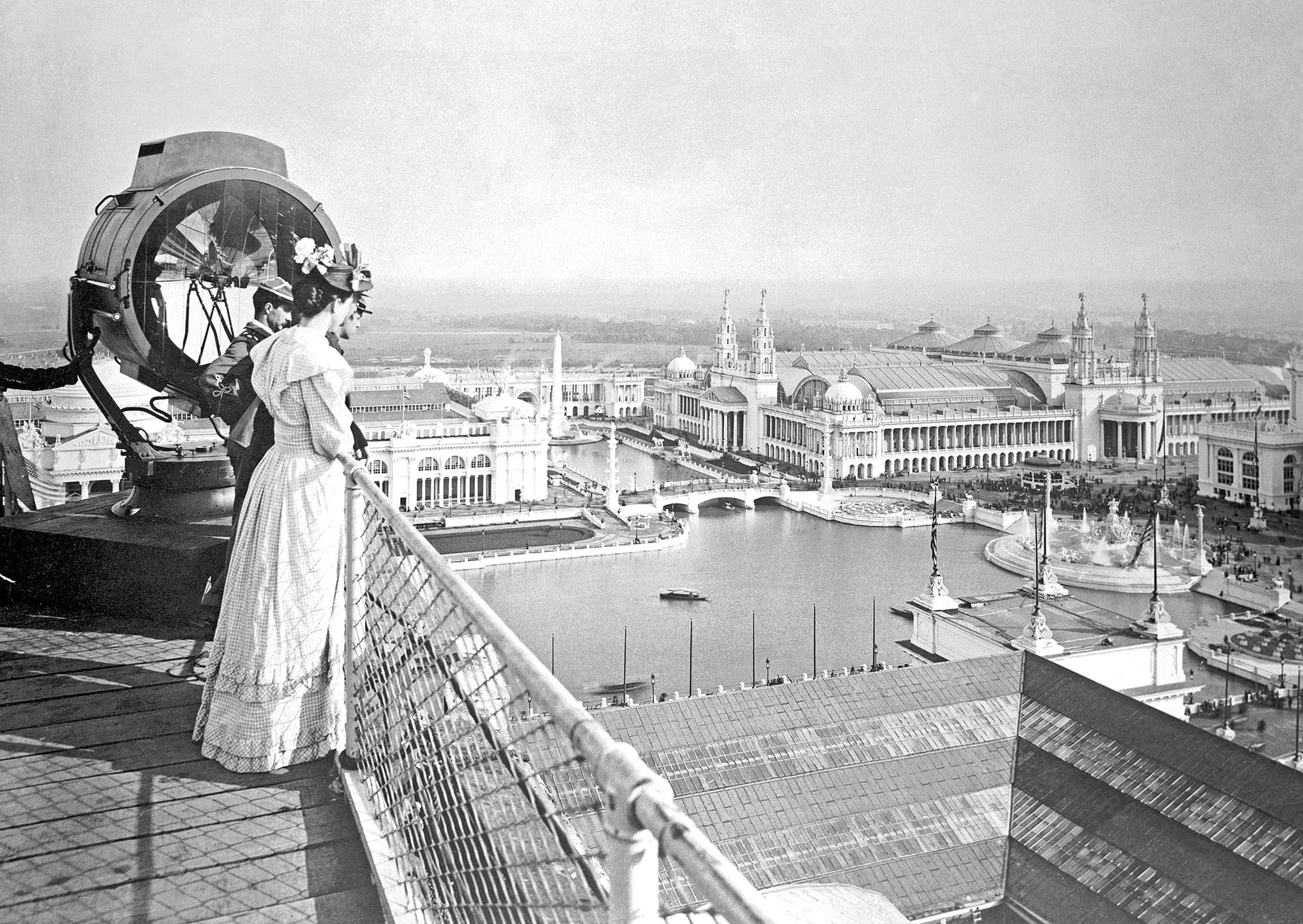
From May 1st to October 30th, 1893, the World’s Columbian Exposition transformed a sprawling 690-acre section of Chicago’s South Side, primarily centered around Jackson Park and the Midway Plaisance, into an ethereal wonderland. Designed by a dream team of architects and landscape artists including Daniel Burnham as Director of Works and Frederick Law Olmsted overseeing landscape design, the fair was a testament to meticulous planning and artistic vision. More than 27 million visitors passed through its gates, making it one of the most attended events in human history at that time.
A Grand Vision on the Shores of Lake Michigan
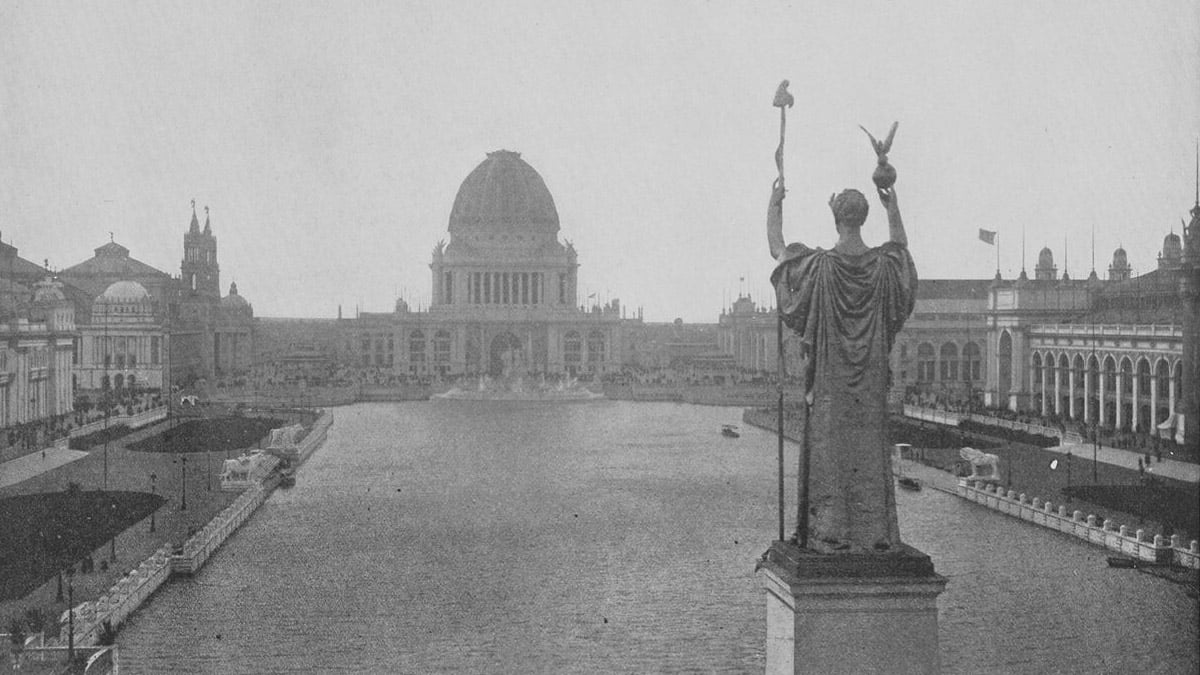
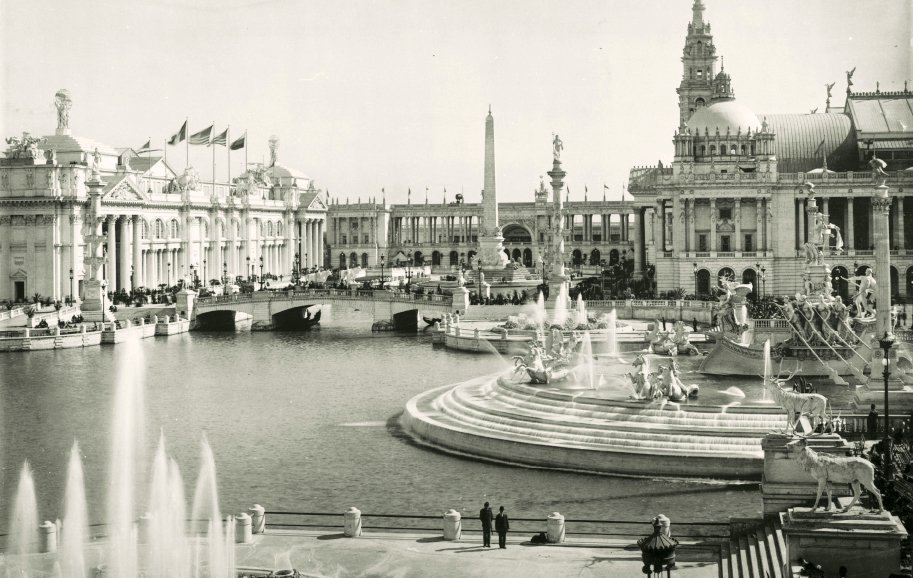
The architectural style of the 1893 fair became its most iconic feature, earning it the moniker “The White City.” A harmonious collection of neoclassical buildings, uniformly painted in white and adorned with intricate details, rose majestically around artificial lagoons and canals. These grand structures, intended to evoke classical Rome or Paris, were illuminated nightly by thousands of electric lights, a spectacle of unprecedented scale that mesmerized visitors and symbolized the dawn of a new technological age. The White City was not merely decorative; it was a carefully orchestrated urban plan, influencing the subsequent City Beautiful movement and inspiring comprehensive urban planning efforts across the United States, including Burnham’s own influential “Burnham Plan of Chicago.”
Beyond its architectural grandeur, the fair was a showcase of innovation. From Nikola Tesla’s alternating current system, which powered the entire site, to the world’s first large-scale Ferris Wheel, which offered unparalleled views of the exposition, the fair introduced countless advancements to the public. Visitors could marvel at the latest in transportation, agriculture, manufacturing, and art. Each building housed countless exhibits, representing nations from around the globe and states from across America. The fairgrounds themselves became a landmark, a temporary city built to inspire.
Experiencing the Exposition: Travel, Culture, and Innovation
For the late 19th-century traveler, attending the World’s Columbian Exposition was an epic journey. People traveled from all corners of the United States and internationally by train, steamship, and horse-drawn carriage. The influx of millions of visitors spurred a rapid expansion of Chicago’s burgeoning hotel industry. While modern luxury resorts and boutique hotels as we know them today were still decades away, grand hotels like the Auditorium Building and dozens of others provided accommodation, ranging from opulent suites for the wealthy to more modest rooms and boarding houses for the masses. The concept of tourism was taking on new dimensions, with guided tours, souvenirs, and dedicated travel services emerging to cater to the throngs.
The “Midway Plaisance” offered a different kind of experience – a vibrant, often controversial, array of amusements, cultural villages, and exotic performances. It was here that attendees could ride the original Ferris Wheel, sample foreign foods, or observe people and cultures from places as far-flung as Egypt, Japan, and Ireland. While some aspects reflected the colonial attitudes of the time, the Midway undeniably broadened horizons and introduced many Americans to global diversity for the first time. The fair was not just about seeing new things; it was about experiencing a new lifestyle, one where art, technology, and entertainment converged, setting a precedent for future global events and influencing everything from consumer product design to the development of amusement parks. The Art Institute of Chicago, still a prominent landmark and cultural institution today, was one of the few permanent structures built for the fair, embodying its commitment to art and education.
A Century of Progress: The 1933-1934 International Exposition
Four decades after the grandeur of the White City, Chicago found itself in a vastly different world. The Roaring Twenties had given way to the grim realities of the Great Depression. Yet, amidst this economic hardship, Chicago decided to host another World’s Fair, not just to commemorate its centennial as an incorporated city, but to ignite hope, inspire innovation, and offer a glimpse into a brighter future.
The A Century of Progress International Exposition ran from May 27th, 1933, to October 31st, 1933, and then, due to its overwhelming success, was extended for a second season from May 26th, 1934, to October 31st, 1934. This fair deliberately contrasted with its predecessor. Instead of classical elegance, it embraced modernism and the vibrant spirit of the future. Located on reclaimed land along Lake Michigan, primarily Northerly Island and parts of Burnham Park, it drew over 48 million visitors over its two-year run, becoming a beacon of optimism during one of the darkest periods in modern history.
Innovation and Resilience During the Great Depression
The architectural philosophy of the 1933-34 fair was a radical departure from the White City. Gone were the neoclassical facades; in their place rose bold, colorful structures in the Art Deco and streamline moderne styles. Architects were encouraged to experiment, using new materials like glass, steel, and aluminum, and emphasizing functionality, speed, and geometric forms. The buildings were painted in vivid hues, rejecting the monochromatic palette of 1893, symbolizing a dynamic and forward-looking vision. Lighting, a marvel in 1893, became an art form, with dramatic nighttime illumination transforming the fairgrounds into a spectacle of glowing towers and futuristic designs.
The fair’s theme, “Science Finds, Industry Applies, Man Adapts,” underscored its focus on scientific and technological advancement. Exhibits highlighted breakthroughs in transportation (including futuristic cars, streamlined trains, and the immense Goodyear Blimp and even a German Zeppelin airship that made an appearance), communication, medicine, and engineering. Visitors could walk through full-scale model homes demonstrating modern conveniences, witness live demonstrations of manufacturing processes, and explore pavilions dedicated to specific industries and scientific disciplines. The fair also featured a towering Sky-Ride that transported passengers across the fairgrounds, offering panoramic views of the futuristic landscape and Lake Michigan. It was a powerful counter-narrative to the Depression, demonstrating humanity’s capacity for progress even in adversity.
A Glimpse into Tomorrow: Modern Travel and Leisure
For the average American in the 1930s, the fair offered not just entertainment but a vital escape from the struggles of daily life. Travel to Chicago was becoming more accessible, with personal automobiles, improved rail networks, and even early commercial flights playing a role. The city’s hotel industry, though impacted by the Depression, still offered a range of accommodation options. While not as luxurious as the Palmer House Hilton or the Drake Hotel that catered to the elite, more modest hotels, motels, and rooming houses sprang up to welcome the millions eager to witness the “Century of Progress.” For many, this trip was a significant investment, a chance to briefly partake in a futuristic lifestyle.
The tourism experience at the 1933-34 fair was highly interactive. Unlike the largely static displays of 1893, many exhibits encouraged hands-on engagement, allowing visitors to feel like participants in the march of progress. Cultural performances and popular entertainment were also central, reflecting the evolving leisure habits of Americans. The fair helped to solidify the idea of mass tourism as an accessible and enriching activity, showcasing how science and industry could improve everyday life and foreshadowing the consumer culture that would flourish after World War II. It presented a vision of a comfortable, technologically advanced future, fueling aspirations and providing much-needed psychological uplift.
The Enduring Legacy of Chicago’s World’s Fairs on Travel and Culture
The World’s Fairs in Chicago were transient wonders, designed for temporary existence, yet their impact resonated far beyond their closing dates. They catalyzed architectural movements, reshaped urban planning, spurred technological adoption, and profoundly influenced how people traveled, experienced culture, and envisioned their future. For modern travelers exploring Chicago, the echoes of these grand expositions are still palpable, even if the magnificent structures themselves are largely gone.
Landmarks and Lasting Impressions
While the White City of 1893 was mostly demolished, a few key landmarks remain as powerful reminders. The most prominent is the former Palace of Fine Arts, now magnificently preserved and expanded as the Museum of Science and Industry in Jackson Park. This building stands as a testament to the fair’s architectural ambition and its enduring commitment to education and discovery. The Art Institute of Chicago, located near the heart of the city, was also a permanent structure built for the fair, and continues to be a world-class institution housing vast collections. The layout of Jackson Park itself, including its lagoons and general landscape, still bears the imprint of Frederick Law Olmsted’s original design.
The 1933-34 fair, largely built on landfill that became Northerly Island, left fewer direct architectural legacies, as most of its modern, temporary structures were dismantled. However, its influence on design, especially Art Deco and streamline moderne, can be seen in numerous buildings across Chicago from that era. Both fairs dramatically reshaped Chicago’s lakefront, contributing to the development of its expansive park system, which today includes iconic spaces like Grant Park and Millennium Park. These public spaces, accessible to all, are a direct fulfillment of the vision for a beautiful, open city, a concept heavily promoted by the 1893 fair and Daniel Burnham’s city planning principles.
Experiencing Modern Chicago: A City Shaped by Vision
Today, Chicago remains a premier global travel destination, continually drawing visitors from around the globe, much like its World’s Fairs once did. Its reputation as an architectural mecca, with towering skyscrapers, historic buildings by legends like Louis Sullivan and Frank Lloyd Wright, and innovative modern designs, can be traced back to the ambitious visions presented at both expositions. Visitors can embark on architectural boat tours, stroll along Michigan Avenue, or visit museums, all of which reflect the city’s rich design heritage.
The spirit of innovation and global connection showcased at the fairs continues to define Chicago’s vibrant cultural scene. From world-class museums like the Art Institute of Chicago and the Museum of Science and Industry to its diverse culinary landscape and performing arts venues, the city offers a wealth of experiences for every type of traveler. Accommodation options abound, from luxurious five-star hotels and boutique stays in historic buildings to modern apartments and family-friendly resorts, catering to every lifestyle and budget. Whether exploring the iconic Cloud Gate sculpture in Millennium Park or enjoying the gastronomic delights of a Michelin-starred restaurant, modern Chicago offers a lifestyle that blends historical grandeur with contemporary flair. The city’s efficient transportation network, once a novelty at the fairs, now seamlessly connects visitors to its myriad attractions.
In conclusion, Chicago hosted its influential World’s Fairs in 1893 and 1933-1934. These were not just events of their time but pivotal moments that projected the city onto the international stage, fostered profound advancements, and bequeathed a legacy that continues to shape its identity. Today, as a bustling hub of travel, tourism, and culture, Chicago stands as a living testament to the visionary spirit of its great expositions, inviting travelers to discover a city built on progress and innovation.
LifeOutOfTheBox is a participant in the Amazon Services LLC Associates Program, an affiliate advertising program designed to provide a means for sites to earn advertising fees by advertising and linking to Amazon.com. Amazon, the Amazon logo, AmazonSupply, and the AmazonSupply logo are trademarks of Amazon.com, Inc. or its affiliates. As an Amazon Associate we earn affiliate commissions from qualifying purchases.