
The question “When was Walt Disney World built in Florida?” often leads to a simple answer: its grand opening on October 1, 1971. However, this date merely marks the culmination of years of meticulous planning, secret land acquisition, groundbreaking engineering, and colossal construction efforts. The story of Walt Disney World is not a single building project, but rather a continuous saga of expansion, innovation, and reinvention that began in the early 1960s and continues to this day, making it a dynamic landmark and a cornerstone of global tourism.
To truly understand when Walt Disney World was built, we must journey back to the visionary mind of Walt Disney himself, exploring the ambition that drove him to acquire vast tracts of land in Central Florida, the challenges faced, the initial construction, and the subsequent decades of development that transformed a sprawling wetland into one of the world’s most visited destinations. This expansive resort, far more than just a theme park, encompasses diverse attractions, a vast array of hotels and accommodations, and a lifestyle experience that caters to millions of travelers annually, reflecting the core themes of travel, hospitality, and unforgettable experiences that define our exploration of the world.
The Genesis of a Dream: Walt Disney’s Vision for Florida
The impetus for building Walt Disney World arose from the unparalleled success, yet perceived limitations, of Disneyland in California. Opened in 1955, Disneyland quickly became a beloved destination, but Walt Disney grew frustrated by the lack of control over the land surrounding his park. Hotels, restaurants, and other businesses sprung up just outside his gates, often without the quality or thematic consistency he desired, detracting from the immersive experience he envisioned. He knew that for his next major project, he needed an immense, secluded property that would allow for complete environmental control and future expansion.
From Disneyland to the Florida Project
In the early 1960s, Walt Disney began discreetly scouting locations for a second, much larger resort. After considering sites in New York and other states, he settled on Central Florida. The reasons were numerous: the warm climate, accessibility for East Coast tourists, and crucially, the availability of large, undeveloped, and relatively inexpensive land. The land was primarily swampy and agricultural, a perfect canvas for a visionary to transform.
Under various shell corporations, Walt Disney began purchasing land in Orange County and Osceola County between 1964 and 1965. The secrecy surrounding these transactions was legendary, with locals only realizing the true purchaser when the sheer scale of the acquisitions made headlines. By the time the truth emerged, Disney had secured over 27,000 acres, roughly the size of Manhattan. This massive land bank was crucial, not just for a theme park, but for something far grander: the “Experimental Prototype Community of Tomorrow,” or E.P.C.O.T.. This was to be a real, functioning city of the future, a living laboratory for urban planning, innovation, and technological advancement, designed to showcase how people could live better. The theme park, which would become Magic Kingdom, was initially conceived as merely a funding mechanism and a tourist draw for this futuristic city.
A Legacy Interrupted: Walt’s Passing
The dream of E.P.C.O.T. and the entire Florida project suffered a profound blow with the untimely death of Walt Disney in December 1966. His passing left a significant void, as he was the driving force and creative visionary behind the project. The company was left with a massive landholding, a grand vision, and the challenge of bringing it to fruition without its founder.
It was Walt Disney’s elder brother, Roy O. Disney, who stepped out of retirement to ensure his brother’s dream would be realized. He famously insisted that the entire Florida project be named “Walt Disney World” in honor of his brother, declaring, “Everyone has heard of Disneyland, but they should know Walt Disney World is Walt’s dream.” Under Roy O. Disney’s leadership, the company decided to proceed with the theme park as the immediate priority, scaling back the ambitious residential E.P.C.O.T. concept for a later phase, which would eventually evolve into the second theme park, EPCOT Center.
Breaking Ground: The Construction of a Magical Kingdom
With the land secured and a revised, yet still monumental, vision in place, the actual “building” of Walt Disney World began in earnest. This was a monumental undertaking, unlike any construction project of its time, presenting unique engineering and logistical challenges that pushed the boundaries of what was thought possible.
The Mammoth Land Reclamation and Infrastructure
The first phase of construction, which commenced in 1967, involved massive land reclamation and the creation of an entirely new infrastructure. The acquired land was largely wetlands, necessitating extensive draining and earth-moving operations. Thousands of acres of swamp were drained, and countless tons of earth were moved to create the necessary elevations and foundations.
A critical component of this initial building phase was the creation of a vast network of canals, lakes, and roads. Two enormous man-made bodies of water, Bay Lake and Seven Seas Lagoon, were dredged, with the excavated earth used to create higher ground for the park and its surrounding resorts. This innovative approach transformed a once-unsuitable landscape into a stable, picturesque environment. Furthermore, Disney worked with the state of Florida to establish the Reedy Creek Improvement District, a special municipal entity that granted the company governmental powers over its property. This allowed Disney to plan, finance, and build its own roads, utilities, and emergency services, exercising the complete control Walt Disney had always sought. This self-governance was a foundational element, essentially building a small city from scratch, complete with its own regulatory framework, before a single ride was even assembled.
Building Magic Kingdom Park and Early Resorts
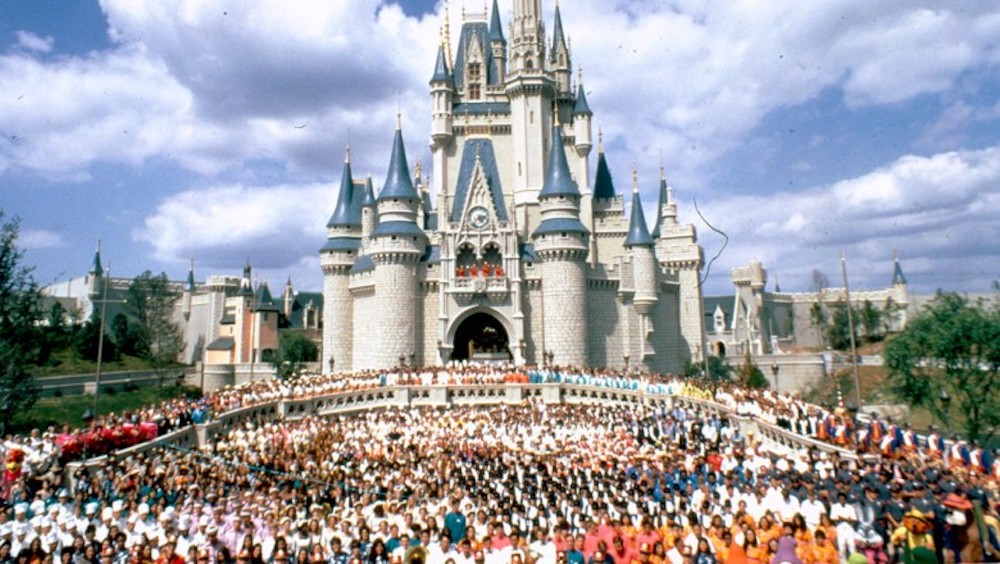
With the foundational infrastructure in place, construction shifted to the heart of the initial resort: Magic Kingdom Park. Beginning in 1969, the work on the park was relentless, employing thousands of construction workers, architects, and designers. A fascinating aspect of the park’s construction was the development of the “Utilidors” – a vast network of underground tunnels. Due to the high water table in Florida, true basements were impossible. Instead, the entire Magic Kingdom was built on an elevated berm, with the ground-level park actually being the second story. The Utilidors beneath served as service tunnels for cast members, deliveries, and waste removal, ensuring that the magic of the park above remained uninterrupted by the mundane realities of operations.
Iconic structures like Cinderella Castle rose from the ground, meticulously designed to create forced perspective and transport guests into a fairy-tale realm. Attractions, inspired by their Disneyland counterparts but often enhanced and expanded, were built concurrently. This massive undertaking involved not just the physical structures but also the intricate theming, landscaping, and technological systems required to bring a fantastical world to life.

Simultaneously, the first two flagship hotels were under construction: Disney’s Contemporary Resort and Disney’s Polynesian Village Resort. These accommodations were revolutionary for their time. The Contemporary Resort famously featured an A-frame design with the monorail running directly through its lobby, while the Polynesian Village Resort offered an exotic, South Pacific-themed escape. These resorts, along with Disney’s Fort Wilderness Resort & Campground, were crucial to the integrated resort experience Walt Disney envisioned, allowing guests to stay immersed in the Disney bubble from arrival to departure. Their construction was integral to the initial “building” phase, offering not just rooms, but extensions of the park’s magic and a new standard for luxury travel and family trips.
The Grand Unveiling and Rapid Expansion
The culmination of these Herculean efforts arrived on October 1, 1971, marking the official public debut of a new global destination.
October 1, 1971: Opening Day
On that historic day, Walt Disney World officially opened its gates to the public. Roy O. Disney, then 78 years old, presided over the dedication, fulfilling his promise to his brother. The initial offerings included Magic Kingdom Park, with its classic attractions like the Haunted Mansion, It’s a Small World, and 20,000 Leagues Under the Sea, alongside the Contemporary Resort, Polynesian Village Resort, and Fort Wilderness Resort & Campground. While the initial attendance was modest compared to later years, the reviews were overwhelmingly positive, heralding the arrival of a new, ambitious concept in family entertainment and tourism. The early success validated the immense investment and demonstrated the enduring power of Disney’s storytelling and meticulous attention to detail.
The E.P.C.O.T. Vision Reimagined: EPCOT Center
Following the success of Magic Kingdom, the promise of Walt Disney’s experimental community was revisited, though in a significantly altered form. Instead of a residential city, it evolved into EPCOT Center, a second theme park dedicated to human achievement, technological innovation, and cultural celebration. Construction on EPCOT Center began in 1979, and the park officially opened on October 1, 1982, precisely 11 years after Magic Kingdom.
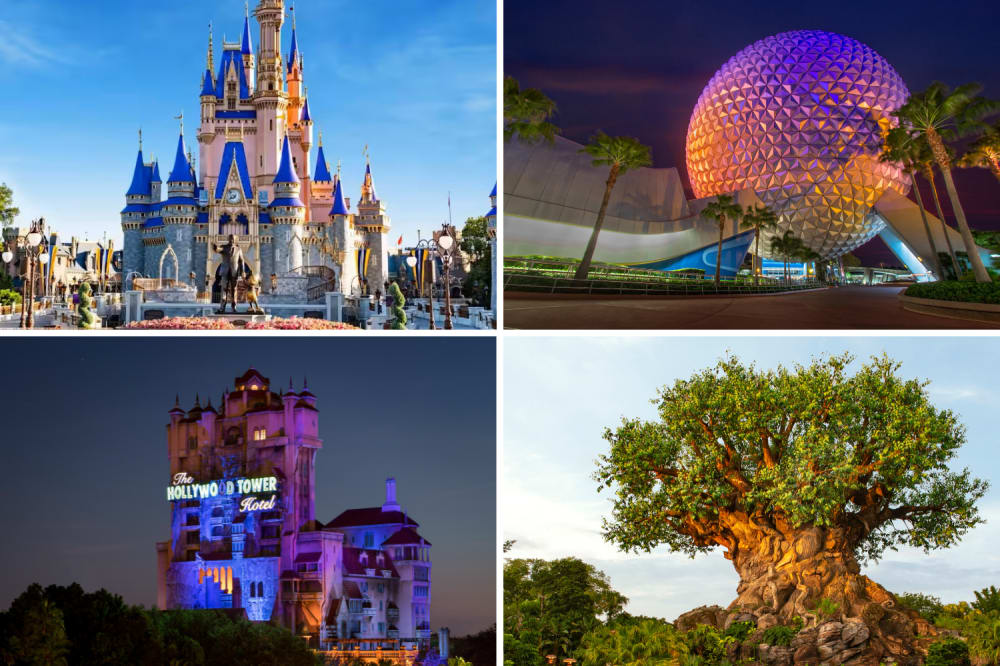
EPCOT Center was divided into two distinct realms: Future World, exploring technological advancements and scientific discoveries, and World Showcase, celebrating the cultures and cuisines of nations around the globe. Its iconic geodesic sphere, Spaceship Earth, quickly became a recognizable landmark. The creation of EPCOT Center marked a pivotal moment in the building of Walt Disney World, demonstrating its commitment to continuous growth and its evolution from a single park to a multi-park, multi-faceted resort destination, solidifying its status as a major global travel attraction.
Hollywood and Animal Adventures: A New Era
The late 1980s and 1990s saw two more theme parks added to the resort, further expanding its footprint and diversifying its offerings.
Disney-MGM Studios (now Disney’s Hollywood Studios) was built and opened on May 1, 1989. This park was conceived to celebrate the golden age of Hollywood and the magic of filmmaking. Its construction included iconic attractions like the Twilight Zone Tower of Terror and a focus on live entertainment and behind-the-scenes glimpses into movie production. The addition of this park provided a new dimension for visitors, catering to different interests and further enhancing the overall tourism experience.
Disney’s Animal Kingdom, the fourth and largest theme park by acreage, opened on April 22, 1998 (Earth Day). Its creation involved an entirely different kind of construction, focusing on vast natural habitats, intricate landscaping to replicate diverse ecosystems, and animal care facilities. The park emphasizes conservation and the beauty of the natural world, featuring thrilling attractions like Expedition Everest and the groundbreaking immersive lands such as Pandora – The World of Avatar. This park solidified Walt Disney World’s position not just as an entertainment hub, but also as a significant player in conservation and environmental education. Each new park represented a massive building project in itself, complete with unique architectural styles, infrastructure, and thematic elements, all contributing to the ever-growing complex that is Walt Disney World.
Continuing the Legacy: Innovation and Future Growth
The “building” of Walt Disney World did not stop with its four major theme parks. It has been a continuous process of evolution, adding more resorts, water parks, entertainment districts, and constantly upgrading its technology and attractions to remain at the forefront of the travel and tourism industry.
Beyond the Parks: Resorts, Water Parks, and Entertainment Districts
The sheer scale of Walt Disney World is evident in its vast selection of accommodations, representing decades of continuous construction. Beyond the initial hotels, the resort expanded to include over 30 themed resorts, ranging from value to moderate to deluxe categories, each offering unique amenities and experiences. Hotels like Disney’s Grand Floridian Resort & Spa, Disney’s Yacht Club Resort, and Disney’s Beach Club Resort were built to cater to diverse preferences and budgets, showcasing architectural marvels and immersive theming that define the Disney brand of hospitality.
Two major water parks, Typhoon Lagoon (opened 1989) and Blizzard Beach (opened 1995), were also constructed, offering additional recreational options and adding to the allure of a multi-day vacation experience. Furthermore, entertainment, dining, and shopping districts like Disney Springs (originally Downtown Disney) and Disney’s BoardWalk were developed and continuously expanded, providing vibrant nightlife and leisure activities beyond the theme parks. The creation of the Disney Vacation Club in 1991 also led to the construction of dedicated villa-style accommodations, offering a new model for long-term stays and vacation ownership, appealing to different lifestyle preferences within the travel community. Each of these additions was a significant construction project, contributing to the overall infrastructure and appeal of the resort as a comprehensive travel destination.
Modern Enhancements and the Future
In recent decades, the “building” of Walt Disney World has increasingly focused on technological integration and immersive storytelling within existing spaces, alongside new ride and land developments. Investments in infrastructure, such as the implementation of the MagicBand system, the My Disney Experience App, and the Genie+ service, have transformed the guest experience, streamlining everything from park entry to dining reservations. These digital enhancements represent a modern form of “building,” creating seamless and personalized itineraries for visitors.
Major physical constructions continue to evolve the landscape. Recent additions like Star Wars: Galaxy’s Edge at Disney’s Hollywood Studios and Tron Lightcycle / Run at Magic Kingdom are prime examples of the resort’s commitment to cutting-edge attractions and immersive themed environments. These projects involve vast budgets and sophisticated engineering, demonstrating that the building process is perpetual, driven by innovation and a desire to captivate new generations of visitors. The future of Walt Disney World promises continued development, with ongoing investments in guest experiences, sustainability initiatives, and new attractions, ensuring its relevance as a premier global landmark.
Walt Disney World: A Timeless Travel Landmark
In essence, “When was Walt Disney World built in Florida?” is a question with a complex, multi-layered answer. The initial groundbreaking for the entire project commenced in 1967, leading to the grand opening of Magic Kingdom and its first resorts in 1971. However, the construction of this iconic landmark is not defined by a single period but by a continuous, decades-long endeavor. From the ambitious vision of Walt Disney to the dedicated efforts of thousands of Imagineers and construction workers, Walt Disney World has been perpetually “built” and rebuilt.
It stands today as a testament to imagination, a marvel of engineering, and a vibrant ecosystem of travel and tourism. This colossal resort, covering nearly 40 square miles, embodies all the facets of a comprehensive travel destination: diverse attractions, world-class hotels and accommodation options, rich cultural experiences (even if curated), and various lifestyle choices, from luxury travel to family-friendly adventures. Its history of construction is intertwined with the evolution of modern tourism, offering lessons in planning, development, and sustained innovation. As a landmark, it continuously adapts, ensuring its legacy endures, not just as a place that was built, but as a place that is continually being built, evolving with the dreams and expectations of millions of visitors from around the globe who seek magic and wonder in Orlando, Florida.
LifeOutOfTheBox is a participant in the Amazon Services LLC Associates Program, an affiliate advertising program designed to provide a means for sites to earn advertising fees by advertising and linking to Amazon.com. Amazon, the Amazon logo, AmazonSupply, and the AmazonSupply logo are trademarks of Amazon.com, Inc. or its affiliates. As an Amazon Associate we earn affiliate commissions from qualifying purchases.