
For many, the name Five Points conjures vivid, often dark, images of a bygone era in New York City. Immortalized in literature and cinema, it stands as a potent symbol of urban struggle, immigration, and the tumultuous birth of a global metropolis. But where exactly were these notorious Five Points, and what legacy do they leave for visitors and residents today? Far from a simple dot on a map, Five Points was a crucible of cultures, a focal point of poverty and resilience, and a testament to the enduring spirit of those who sought a new life in America. This article delves into the history, geography, and lasting impact of this iconic New York neighborhood, guiding you through its past and present, and revealing how its narrative continues to shape our understanding of urban tourism and cultural heritage.
The Genesis of a Ghetto: How Five Points Was Born
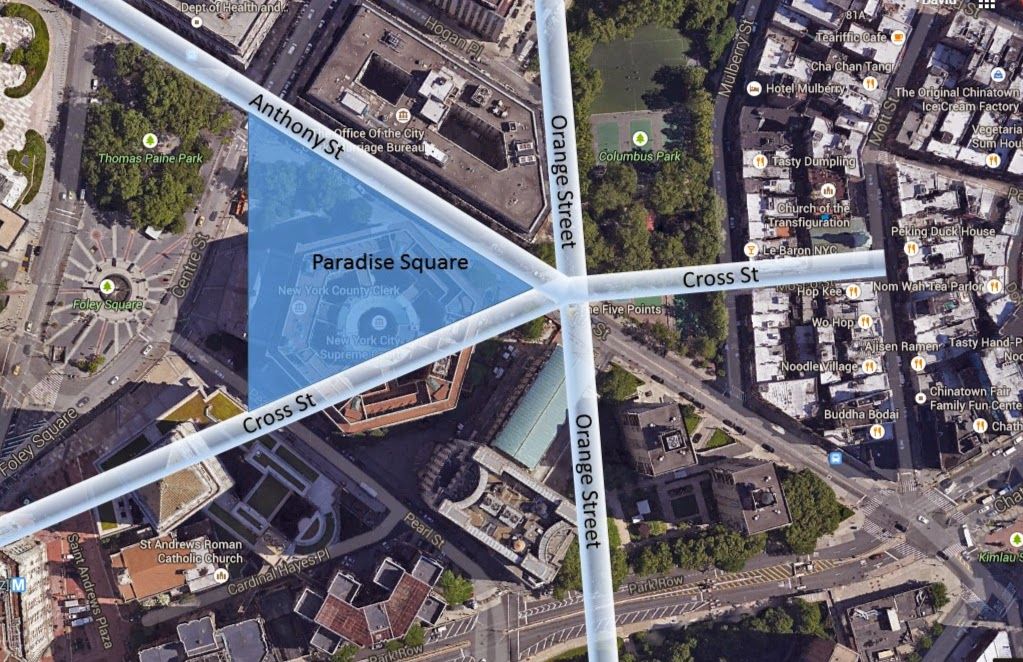
To understand Five Points, one must first look at the unique geographical conditions that gave rise to its infamy. The neighborhood was located in Lower Manhattan, roughly bordered by Centre Street to the west, the Bowery to the east, Canal Street to the north, and Park Row to the south. At its very heart was the eponymous intersection formed by the convergence of Anthony Street (now Worth Street), Cross Street (sections of which are now Mosco Street and Worth Street), and Orange Street (now Baxter Street), which originally met Little Water Street and Mulberry Street. This complex intersection gave the area its name, referring to the five distinct corners or “points” where these thoroughfares converged.
The critical factor in Five Points’ development was the prior existence of the Collect Pond, a substantial freshwater lake that once occupied much of the land. In the late 18th and early 19th centuries, as New York City rapidly expanded, the pond became severely polluted by surrounding tanneries and industrial waste. Deemed a public health hazard, it was decided the pond should be filled in. However, the task was poorly executed. The fill material consisted largely of garbage, refuse, and unstable soil, creating a swampy, malarial lowland unfit for stable construction. Buildings erected on this unstable ground quickly settled, cracked, and became prone to dampness and collapse. This fundamental flaw in urban planning laid the foundation for the squalor that would define Five Points.
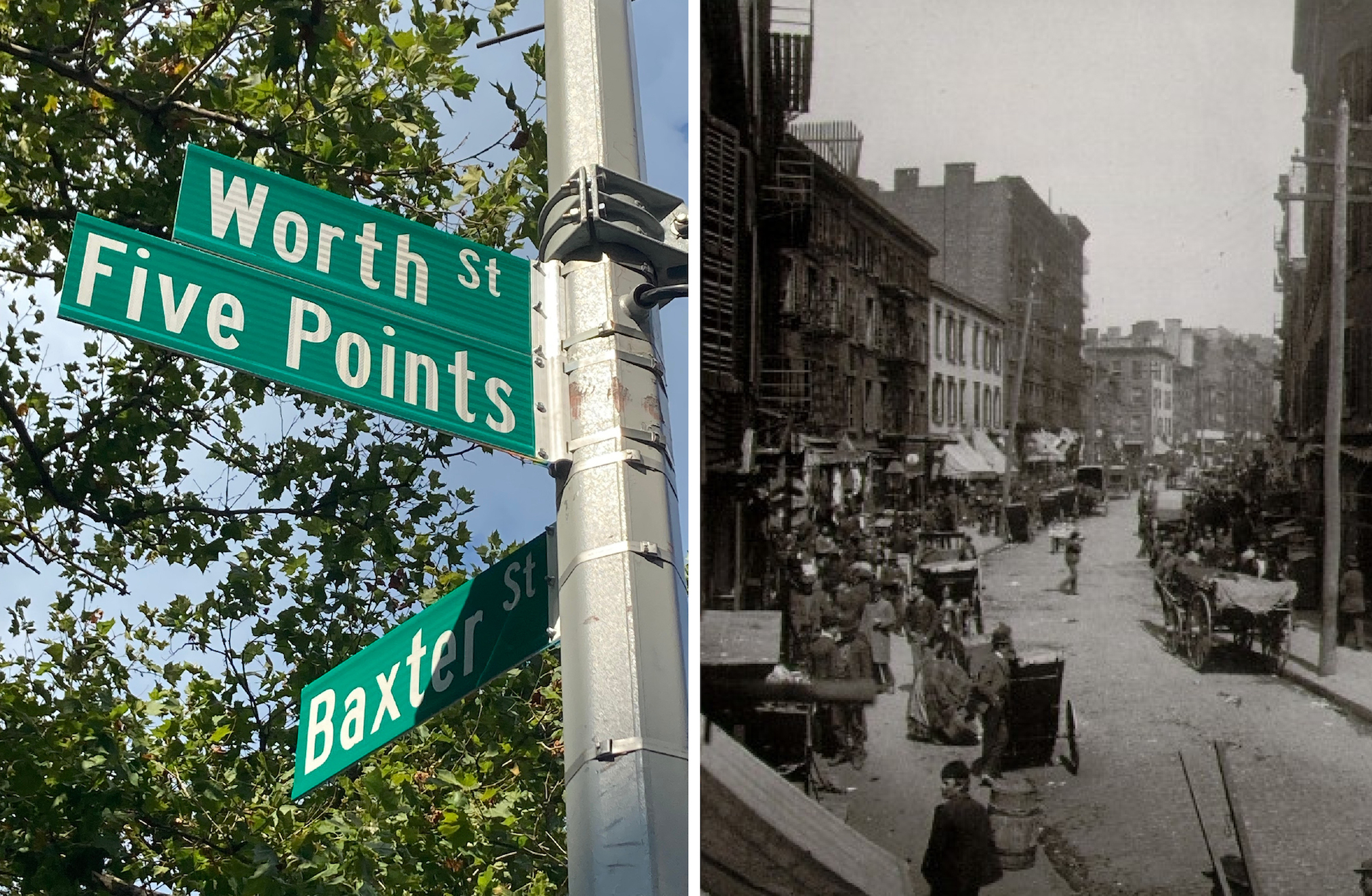
As the 19th century progressed, New York became the primary port of entry for millions of immigrants seeking refuge and opportunity. The cheapest available housing, albeit of the lowest quality, was found in the hastily constructed tenements of Five Points. Fleeing famine and poverty, waves of Irish immigrants in the 1840s, followed by Italian immigrants, German immigrants, and African Americans (both free and formerly enslaved) crowded into these dilapidated dwellings. The neighborhood quickly became one of the most densely populated slums in the world, a melting pot where diverse cultures clashed and mingled, forging a unique, if challenging, identity for the burgeoning city.
Life in the Heart of Five Points: A Struggle for Survival
Life in Five Points was marked by extreme poverty, overcrowding, disease, and crime. Tenements housed multiple families in single rooms, with appalling sanitation and ventilation. Open sewers, contaminated water, and the lingering stench from the filled-in Collect Pond created an environment ripe for epidemics of cholera, typhus, and tuberculosis. Infant mortality rates were astronomically high, and life expectancy was dramatically lower than in other parts of the city. For many, simply surviving each day was a triumph against overwhelming odds.
Despite these grim realities, Five Points was also a vibrant, if chaotic, community. Immigrant groups maintained their cultural traditions, opening shops, taverns, and places of worship that catered to their specific needs. The neighborhood pulsed with music, dance, and the cacophony of multiple languages. It was a place of both despair and resilience, where people struggled not only for survival but also for a semblance of dignity and connection. Dance halls like Almack’s (also known as Pete Williams’s Place) became famous, or infamous, for showcasing a blend of African American jigs and Irish reels, contributing to the birth of uniquely American forms of entertainment.

The Rise of Gangs and Political Machines
The dire conditions of Five Points inevitably led to a breakdown of social order, making it a hotbed of crime and gang activity. Local gangs, often organized along ethnic lines, vied for control of territory, protection rackets, and illicit enterprises. Names like the Dead Rabbits, the Plug Uglies, and the Bowery Boys became synonymous with the neighborhood’s violent reputation. These gangs provided a twisted sense of belonging and protection for their members in a society that often offered little support.
The political landscape of Five Points was dominated by Tammany Hall, the powerful Democratic political machine that controlled New York City politics for decades. Tammany sachems, or leaders, saw the dense population of Five Points as a vast voting bloc. They provided essential services, coal, food, and jobs to impoverished residents in exchange for their votes, solidifying their power through patronage and corruption. This symbiotic relationship, while exploitative, also offered a crucial lifeline to many immigrants struggling to navigate a new and often hostile country.
Five Points in Popular Culture: A Lingering Shadow
The vivid imagery and compelling narratives emerging from Five Points have profoundly influenced American culture, particularly in literature and film. Its raw, unfiltered portrayal of urban life, social injustice, and the immigrant experience struck a chord that resonates even today.
Literature and Historical Accounts
Journalists, reformers, and authors of the 19th century flocked to Five Points, often sensationalizing its dangers but also documenting the plight of its residents. Charles Dickens, during his 1842 visit to America, described Five Points in his American Notes as a place of “misery, degradation, and vice.” His descriptions, while perhaps biased, offered an early glimpse into the neighborhood’s notorious reputation for a wide audience.
However, the definitive modern work that cemented Five Points’ place in the popular imagination is Herbert Asbury’s 1927 non-fiction book, The Gangs of New York: An Informal History of the Underworld. Asbury’s meticulous, if sometimes embellished, accounts of the neighborhood’s various gangs, their leaders, and their violent conflicts painted a visceral picture of lawlessness and ethnic strife. This book became a foundational text for understanding the criminal underworld of 19th-century New York and served as the primary inspiration for future adaptations.
Cinematic Interpretations
The most prominent modern cultural representation of Five Points is undoubtedly Martin Scorsese’s epic 2002 film, Gangs of New York. Starring Leonardo DiCaprio, Daniel Day-Lewis, and Cameron Diaz, the movie brought Asbury’s work to life on a grand scale, depicting the brutal gang rivalries, the pervasive poverty, and the political machinations of the mid-19th century. While taking artistic liberties with historical accuracy, the film powerfully conveyed the atmosphere and struggles of the era, making Five Points a recognizable name for a global audience. The film’s intricate sets, though built in Italy, aimed to recreate the claustrophobic and often dangerous environment of the neighborhood, highlighting its significance as a historical landmark of human resilience.
Beyond Scorsese’s film, references to Five Points appear in numerous other works, from period dramas to historical fiction, reinforcing its status as a quintessential setting for stories of urban grit and the American Dream gone awry. These cultural touchstones ensure that even as the physical neighborhood transformed, its spirit and story continue to captivate and educate.
The Transformation: What Remains of Five Points Today?
The Five Points that Dickens observed and Asbury chronicled began to undergo significant changes in the late 19th and early 20th centuries. Social reformers, concerned about the blight and public health risks, initiated efforts to clean up and redevelop the area. The most significant intervention was the demolition of many of the dilapidated tenements and the creation of Columbus Park in 1897, occupying the very site of the notorious Paradise Square (the central plaza of Five Points). This urban renewal project was intended to bring fresh air, green space, and a sense of order to the former slum.
Over the decades, the old street grid was altered, buildings were replaced with municipal structures, and the demographics shifted dramatically. The waves of Irish and Italian immigrants moved to other neighborhoods or achieved upward mobility, their places taken by newer immigrant groups. Today, the area that was once Five Points is predominantly occupied by New York City’s thriving Chinatown, and portions of Civic Center with its courthouses and government buildings. Little Italy also borders the area to the north.
Experiencing the Legacy: A Modern Visitor’s Guide
For those intrigued by the history of Five Points, a visit to the modern-day locale offers a fascinating opportunity to connect with the past. While no physical “five points” intersection remains as it once did, the echoes of its history are present for those who know where to look.
-
Columbus Park: This tranquil park, a verdant oasis amidst the bustling city, is the undisputed heart of what was once Five Points. Standing here, one can almost feel the weight of history beneath their feet. It’s a popular spot for locals, particularly from Chinatown, who gather to play chess, practice tai chi, and socialize. The juxtaposition of modern community life with the area’s intense past is profound. The park features a statue of Confucius, reflecting the current demographic, but its historical significance lies in its location atop the infamous Paradise Square.
-
African Burial Ground National Monument: Just a short walk north of Columbus Park on African Burial Ground Way (formerly Elk Street), this solemn national monument offers a powerful connection to one of the earliest communities that inhabited the area. Discovered during construction in 1991, it is the resting place of thousands of free and enslaved Africans from the 17th and 18th centuries. The visitors’ center provides invaluable insights into the lives and contributions of early African Americans in New York, offering a crucial historical context that predates and runs concurrently with the Five Points narrative. It’s a poignant reminder of the diverse populations that shaped the city from its Dutch colonial past.
-
Exploring Chinatown and Little Italy: The vibrant streets of Chinatown, particularly Mulberry Street and Doyers Street (once known as “the Bloody Angle” due to gang violence), overlap significantly with the historical Five Points. Wander through these bustling areas to appreciate the continuous cycle of immigration and community building that defines New York. Enjoy authentic Chinese cuisine or venture into Little Italy for a taste of its enduring Italian heritage, remnants of the successive waves of immigrants who called this land home.
-
Museums and Historical Societies: For a deeper dive into the social history of Five Points and its inhabitants, visit institutions like the Tenement Museum on the Lower East Side. While not directly in Five Points, it vividly portrays the living conditions of immigrants in similar neighborhoods. The New-York Historical Society and the Museum of the City of New York also house extensive collections of photographs, documents, and artifacts related to the era, offering invaluable context for understanding urban lifestyle and travel through time.
Conclusion: The Enduring Spirit of Five Points
The historical Five Points no longer exists as a distinct, infamous neighborhood. Its streets have been reconfigured, its buildings replaced, and its central intersection transformed into a park. Yet, its story remains an indispensable part of New York City’s identity, a powerful narrative of ambition, struggle, and human resilience. It reminds us of the profound impact of urban planning (or the lack thereof), the challenges faced by generations of immigrants, and the enduring capacity for communities to forge identity in the face of adversity.
For travelers interested in deep dives into history and culture, exploring the remnants and legacy of Five Points offers a unique and sobering experience. It’s not about finding specific corners of vice, but about understanding the layers of history beneath the modern bustling streets of Chinatown and Civic Center. It is a poignant landmark of human history, inviting visitors to reflect on the city’s past while appreciating its dynamic present. As New York continues to evolve, the spirit of Five Points endures, a testament to the city’s perpetual reinvention and the indelible mark left by its most challenging chapters.
LifeOutOfTheBox is a participant in the Amazon Services LLC Associates Program, an affiliate advertising program designed to provide a means for sites to earn advertising fees by advertising and linking to Amazon.com. Amazon, the Amazon logo, AmazonSupply, and the AmazonSupply logo are trademarks of Amazon.com, Inc. or its affiliates. As an Amazon Associate we earn affiliate commissions from qualifying purchases.